

The Cathars are one of the most intriguing—and misunderstood—religious movements in medieval history. They flourished primarily in Southern France between the 12th and 14th centuries and attracted thousands with their austere lifestyle and radical theology. Yet at their core, the Cathars rejected foundational Christian teachings, including the real presence of Christ in the Eucharist.
To understand why, we first need to look at the worldview that shaped their beliefs.
A Revival of Ancient Gnostic Themes
Catharism was a dualistic movement. Followers believed in two opposing gods:
-
a good spiritual god who created the invisible world, and
-
an evil god (often associated with the God of the Old Testament) who created the material world.
In this framework, everything physical was viewed as corrupt, fallen, or inherently evil. This belief placed the Cathars squarely in line with ancient Gnostic movements that the early Church confronted in the first centuries.
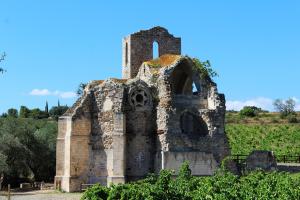
The Cathars taught that Jesus never had a true human body—He only appeared to have one. If Christ did not have a physical body, they reasoned, then the Eucharist certainly could not become His Body and Blood. For them, sacraments that used physical elements—water, oil, bread, wine—were automatically invalid. Material things couldn’t mediate grace because matter itself was considered evil.
This explains why Catharism clashed so fiercely with historic Christianity. Where the Church saw creation as “good,” the Cathars saw a prison for trapped angelic souls. Where Christians saw sacraments as channels of God’s life, the Cathars saw physical rituals that reinforced bondage to the material world.
A Threat the Church Couldn’t Ignore
By the 12th century, Cathar ideas were spreading quickly across Europe, especially in the Languedoc region. Their teachings were not a minor theological misunderstanding—they struck at the heart of the Incarnation, the sacraments, and the goodness of creation itself.
The Church recognized the seriousness of this growing movement and responded with clarity. Theologians began using Aristotelian philosophical language—particularly the distinction between substance and accidents—to articulate what Christians believed about the Eucharist.
This distinction allowed the Church to explain:
-
Accidents: the outward appearance of bread and wine
-
Substance: the deeper, essential reality that becomes Christ’s Body and Blood
This teaching wasn’t new. Christians had always believed in the real presence. But the controversy with the Cathars pushed the Church to express this ancient doctrine with greater precision.
The Birth of a Term: Transubstantiation
At the Fourth Lateran Council in 1215, the Church formally condemned Cathar teachings and used a word that would become central to Catholic theology: transubstantiation.
This term described what Christians had long believed—that although the Eucharist still looks like bread and wine, it becomes the actual Body and Blood of Christ. The word was new; the belief was not. Saints from the earliest centuries, including St. Ignatius of Antioch, St. Justin Martyr, St. Irenaeus, and St. Augustine, had all affirmed the real presence long before the Cathars appeared.
The Church wasn’t inventing something new in 1215; it was defending something ancient.
Correcting Modern Misunderstanding
Some modern voices mistakenly portray the Cathars as proto-Protestants who were persecuted by the medieval Church. But this is inaccurate. The Cathars weren’t reformers seeking a purified Christianity—they were proponents of a radically different religion rooted in Gnostic dualism.
They denied:
-
the Incarnation
-
the sacraments
-
the goodness of creation
-
marriage and procreation
-
the legitimacy of the Old Testament
Their worldview even led them to approve of suicide as a way to escape the “evil” material body.
In short, Catharism wasn’t a branch of Christianity. It was an alternative belief system that contradicted the Christian faith at its foundations.
A Final Word
The Cathars stand as a vivid reminder of why the Church has always defended the Eucharist so steadfastly. When the nature of Christ’s body or the goodness of creation is denied, the sacraments—and the very heart of the Christian story—begin to unravel.
Far from being innovators ahead of their time, the Cathars revived an old error the Church had already confronted: the Gnostic idea that spirit is good and matter is evil. The Church’s response reaffirmed a central truth:
God became man. God enters creation. And through the Eucharist, Christ gives us His very Body and Blood.
That teaching didn’t begin in the 1200s. It began in the Upper Room.











 Ad-Free & Subscriber Log-In