2022-10-23T15:13:09-05:00

Watch out for presentism in religious history. “Presentism” in history is judging the past by the standards of the present. Presentism is criticizing historical figures and events in the light of current knowledge and moral values. It can also refer to cherry picking history to make points about current issues. Presentism gets in the way of understanding history objectively, historians say, although they often disagree  about what precisely constitutes presentism. Also, I suspect that presentism alone isn’t the problem. It... Read more
2022-10-19T22:43:21-05:00

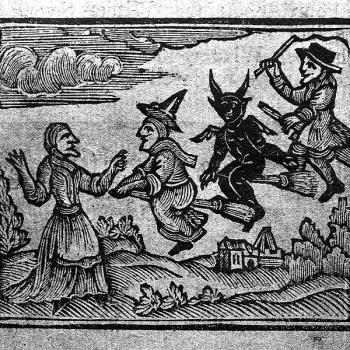
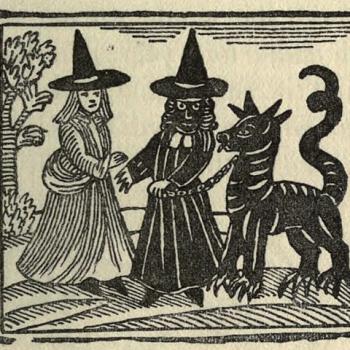
The last post was on the history of witches and how the European witch was mostly an invention of the Catholic Church in the Middle Ages.  Now let’s look more closely at the evolution of witches, especially the classic Hallowe’en witch, in religion and popular culture. Hallowe’en itself definitely has origins in pre-Christian European paganism. It evolved from a Celtic festival that marked the end of harvest and the beginning of winter —  Samhain in Ireland, or Calan Gaeaf in... Read more

2023-02-09T15:58:44-06:00

Let’s explore the history of witches, the queens of Hallowe’en. Witches inhabit spaces where religion and folklore overlap. The classic Hallowe’en witch, with her black pointed hat and flying broom, is a European creation. But there are myths from around the world about dangerous women with dark magical powers. This suggests a connection with Jungian archetypes. As Carl Jung explained it, The primordial image, or archetype, is a figure—be it a daemon, a human being, or a process—that constantly recurs... Read more

2022-10-16T13:32:26-05:00

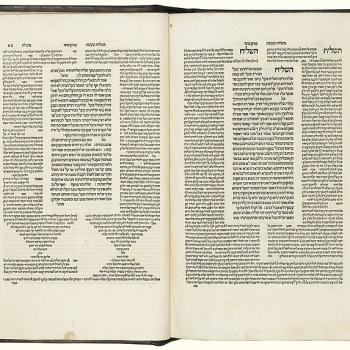
This post tells the story of publishing Jewish books in 16th century Venice. What was likely the first commercial publishing company of books in Hebrew began operation in Venice in 1515, and it produced wonderful editions of Hebrew scriptures, including the first printed Talmud. This is the fourth in a series on how printing technology affected the world’s religions. Johannes Gutenberg built the first printing press in Europe and published the first of his famous Bibles in 1452. What is... Read more

2022-11-05T14:40:33-05:00

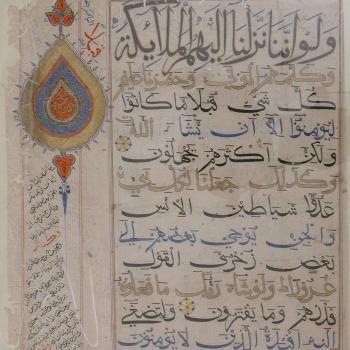
This is the third column in a series that explores how the invention of printing has impacted religion. Part One is about the beginnings of printing technology in China and how this supported the spread of Buddhism. Part Two shows how the introduction of the printing press to Europe made the Reformation possible and changed the way European Christians relate to the Bible. This column will look at the history of printing the Quran. The Quran (also spelled Koran or... Read more

2022-10-12T11:19:23-05:00

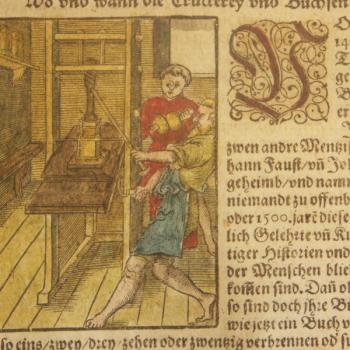
This is the second part of a series on how printing technology changed the course of religious history. To read the first part, about the beginnings of print technology in China and how this impacted Buddhism, see The Impact of Printing on Religion: Buddhism in East Asia. This post focuses on the printing press and the Reformation. The impact of printing on religion in Europe was something like a bomb that utterly changed the religious as well as the political... Read more

2022-10-12T11:17:17-05:00

Religion stumbled along for centuries before the invention of printing technology. Before printing was invented, scriptures had to be copied by hand. Sometimes they were memorized and chanted. But then came printing, and Bibles and sutras and sermons and all manner of religious expression could be easily published and mass distributed. But what was the impact of printing on religion? It varied. In Asia, printing tended to support religion. But elsewhere — especially Europe — the introduction of printing technology... Read more

2022-10-02T12:04:49-05:00

What is the connection between natural disasters and religion? The world’s scriptures often mention natural disasters — the biblical flood, for example. But the relation of natural disasters and religion in history is varied and complex. There is data showing that people who live in regions with a high risk of natural disasters exhibit more religiosity than people who don’t. Sometimes disasters are viewed as God’s judgment. Sometimes they are signs of some prophesized event. Here we’re going to look... Read more

2022-09-28T12:02:54-05:00

There is a new Global Faith and Media Study on how news media cover religion and religious issues. Apparently neither journalists nor religious people are happy with religious journalism these days. But it’s arguably been worse. Consider the s0-called Scopes Monkey Trial of 1925. You probably recall that a high school teacher in Tennessee named John Scopes was put on trial for teaching evolution, which violated Tennessee law. The trial became a media circus featuring two famous lawyers, Clarence Darrow... Read more

2022-09-26T11:14:40-05:00

The word Deism often comes up in early U.S. history and some 18th century European history as well. But what was Deism? George Washington refused to take Communion in his adult life, it’s widely reported. And he avoided mention of Jesus Christ in his writings. Historians interpret this to mean that Washington, while a regular Episcopal church-goer, was a secret Deist. Thomas Jefferson was much less secretive about his Deism. Late in his life he created his own version of... Read more

Follow Us!


TAKE THE
Religious Wisdom Quiz

I come in nine varieties including joy, peace, and self-control. What am I?

Select your answer to see how you score.


Browse Our Archives