

Any kid in the 1970s knew what song to sing when the end of the school year approached: “School’s Out” by Alice Cooper. The anthem chorus of the track, “School’s Out/ For summer,” held school-aged kids through those drab closing months. Most of those kids may have known Alice Cooper, but, arguably, these same kids may not know his history, least of all his faith-based testimony.

Alice Cooper, “School’s Out (2002 Remaster),” from the “Rock and Roll High School” soundtrack, 1972/2002, Warner Records Inc.
Growing up in a deeply rooted Christian environment, then moving away to the polar opposite, to find himself facing an out-of-control party-lifestyle, complete with drug and alcohol abuse. Fame took the growing Rock icon to the depths of defeat that nearly cost him his marriage, career, and life. Is this the same “Alice Cooper” who glossed the bedroom walls in Rock posters of a generation? Without question, “Yes.”
Looking Up From The Bottom
Alice Cooper climbed back from this low point to recover all he once lost, including his faith. The testimony of Alice Cooper may sound stereotypical on the surface. It’s the manner in which he contextualizes his testimony and reclaiming of his faith that separates him from others.
The “Alice Cooper” character is separate from Alice Cooper the man. Recognizing this difference, the man behind the eye makeup can, as he says, be a strong Christian working in Rock and Roll.
Few testimonies hold the ability to transform others. Hearing the testimony of Alice Cooper, in his own words, has that potential.
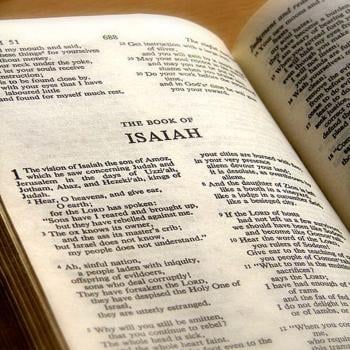
“O LORD, You are my God! I will exalt You; I will praise Your name. For You have worked wonders—plans formed long ago—in perfect faithfulness. Indeed, You have made the city a heap of rubble, the fortified town a ruin. The fortress of strangers is a city no more; it will never be rebuilt. Therefore, a strong people will honor You. The cities of ruthless nations will revere You. For You have been a refuge for the poor, a stronghold for the needy in distress, a refuge from the storm, a shade from the heat. For the breath of the ruthless is like rain against a wall, like heat in a dry land. You subdue the uproar of foreigners. As the shade of a cloud cools the heat, so the song of the ruthless is silenced” (Isaiah 25: 1-5 NJKV).
Performing And Narrating Faith
To frame the point, an excerpt from the album The Last Temptation (1994) highlights these points.
Alice Cooper, “Sideshow,” The Last Temptation, Epic Records, June 1994.
Is this a slideshow of the last temptation of Alice Cooper, or a slideshow of the last temptation of culture? Alice Cooper begs a subtextual question to society to recognize the temptations presented in the “freakshow” he qualifies as contemporary culture.
The complexity of Alice Cooper’s works is the double-entendre reading. One can read his works on the surface as punchy pop rock, which has its place in a modern, self-indulgent society. The other angle to entertain, following what Alice Cooper says about his work, is the coded religious reading. This level of sensitivity is one that most listeners are not adept at, willing, or able to uncover. When applying this reading, the cultural metaphors are refocused as warnings to humanity rather than an enjoyable pastime blase alignment of words.
Alice Cooper utilizes his dark, macabre vaudeville character and performance style to dislocate his faith from cultural empowerment. This operational level is subtle and other times overt. Audiences are being exposed to a double reading of culture through faith couched in the “Alice Cooper” character and stage performance. The theatre is the prop, a metaphor for contemporary culture. The music is the narrative, gently evangelizing and socially deconstructing culture through faith. A gift given to Alice Cooper, he binds together performance and expression to convey and share his Christian grounding.

Framing Religion, Presenting Faith
Alice Cooper’s later works, in particular, offer a highly sensitive critique of culture through an active and applied socio-religious, faith-based reading. Titles such as “Don’t Give Up,” “Stolen Prayer,” “Salvation,” and “My God” underscore this point. A curious relationship between these tracks is their slow, almost ballad-like start, which gives way to a rock middle texture. A conscious choice by Alice Cooper and his songwriting team positions these works in a serious light without sacrificing the Rock foundation of the band’s sound.
The involvement of these songs in the standard record release speaks to how Alice Cooper views his faith and artistic work; they are connected, not separate. Where another musician may localize these songs on a specific album, Alice Cooper qualifies his foundations of faith as central to his life and work. The inclusion of these works with others elevates the socio-religious, faith-based context of the surrounding songs.
One metal reviewer questions whether or not Alice Cooper’s album “Brutal World” is, actually, a “Christian Heavy Metal album?”
Is Alice Cooper’s “Brutal Planet” a Christian Metal Album?, JC Rock and Metal Reviews, June 2025.
Alice Cooper, Brutal Planet (2000) Full Album, December 2023.
The review discusses how this dark, sinister, and overtly heavy work by Alice Cooper is, in fact, a Christian commentary on society. Calling into the conversation, Alice Cooper’s troubled youth, party/drugs/alcohol/rock n’ roll lifestyle, walk away from Christianity, only to return later after dramatic physical, emotional, and life alterations, this album is written at a time when others would be composing lighter works, not one with such depth of tone and content.
Fans recognized this as a Christian Metal album well before critics were able to digest the paradox. With this release, Alice Cooper politely nudges his audience and soon-to-be fans to recognize their relationship with Christ and how faith functions in one’s life.

In His Words, A Testimony
Alice Cooper: A Testimony of Finding Purpose Through God’s Grace, Praise on TBN, August 2024.
In the discussion, Alice Cooper references the album “Dragontown.” Here are a couple of selections from the album, which outline Alice Cooper’s assessment and meaning of his faith in Christ, coded in Rock.
Alice Cooper, “Somewhere in the Jungle,” Dragontown, Indieblu Music, February 2003.
Alice Cooper, “I Just Wanna Be God,” Dragontown, Indieblu Music, February 2003.
An additional review of Alice Cooper’s life, testimony, and climb to Rock fame following his battle with drugs and alcohol, this selection includes live concert footage, which contextualizes Alice Cooper’s dual lives as a religious man and the Rock character.
Rock Discovery, “3 MINUTE AGO: Devastating News Details About Alice Cooper,” October 2025.
“Alice Cooper didn’t just perform horror — he lived it. On stage, he was the shock-rock messiah: swinging guillotines, hissing snakes, and turning nightmares into theater. Off stage, he’s Vincent Furnier — a husband, a father, a man of faith who’s been sober for over four decades. This is the astonishing story of the monster who found redemption. Born in a preacher’s home and raised on gospel before finding glory in chaos, Alice Cooper rose from small-town stages to global infamy with “School’s Out” and “Billion Dollar Babies.” He fell into the abyss of alcohol, lost himself, then clawed back with “Poison” and a renewed soul. Behind the dark makeup lies a survivor — a man who turned terror into art, sin into salvation, and left behind one of rock’s most enduring legacies” (Rock Discovery, October 2025).
The external dynamic change in the life of Alice Cooper is misunderstood by many. He clearly states that he was “cured” from drugs and alcohol abuse by God, noting that He is above all things and able to do exceedingly beyond human comprehension. Alice Cooper makes no mistake in stating this claim, one that he has literally founded his life upon.
A more expanded interview between Pastor Greg Laurie and Alice Cooper delves into other areas not explored in others.
Pastor Greg Laurie, “God, Drugs and Rock ’n’ Roll: An Interview with Alice Cooper,” Harvest Ministries, August 2019.
“In this exclusive one-hour interview, Pastor and Evangelist Greg Laurie sits down with rock legend Alice Cooper. Alice Cooper is widely considered to be the father of “Shock Rock” and has sold more than 50 million albums worldwide. While he is known for his music career, most do not know that he is a committed Christian.
“In this sprawling conversation recorded at “The Rock” (a Teen Center created and started by Alice), Cooper and Laurie chat about his faith journey, and how he has used his faith in Jesus Christ to help at-risk young men in his community.
“Growing up in a Christian home, Cooper always knew he needed Christ. But it took a dramatic turn in a drug-induced haze when he realized he needed to recommit to Jesus Christ or he was finished. The son and grandson of preachers, Cooper knew who Jesus was and knew that Christianity was true, yet he wanted to walk his path — a trail that led him to the heights of stardom, partying, and calling friends some of the biggest names in show business.
“Then it all changed. His marriage was falling apart, and Cooper was in the pits of alcohol and drug use when he decided to quit and get clean. He began going to church and says that it was fear of God that brought him around, that he was terrified of Hell, and it was fear that saved him, but the love of Christ that grew him.
“The conversation also includes musings by Cooper and Laurie about the so-called “27 Club,” various legends of rock and roll, as well as a discussion about depression, suicide, drugs, alcohol abuse, and the life it leads one to. The conversation in its entirety is a testament to the power of God and His transforming power and forgiveness, if we only accept Him and allow Him to change us for the better” (Harvest Ministries, August 2019).
An additional version of this conversation between Pastor Greg Laurie and Alice Cooper presents a further fine point on the reconciliation and salvation of Alice Cooper’s testimony.
Alice Cooper: How the Godfather of Shock Rock Met the King of Kings, Pastor Greg Laurie, November 2025.
“What happens when rock’s most infamous showman finds redemption — and discovers his true purpose? On this week’s episode of The Greg Laurie Show, Pastor Greg sits down with legendary rockstar Alice Cooper for an honest, electrifying conversation about faith, fame, addiction, and the power of second chances.
“Once dubbed “the villain of rock and roll,” Alice shares the untold story behind the persona — revealing how decades of stardom brought him face-to-face with despair, addiction, and spiritual emptiness. Together, Pastor Greg and Alice dig deep into life’s biggest questions: What does it mean to reach the top and feel nothing? Why do so many icons lose themselves chasing fame, wealth, or escape? What happens when you finally answer the one knock that matters? If you’ve ever wondered how someone can turn the darkest chapters of life into hope for others, Alice and Pastor Greg’s conversation will serve as the testimony we all need to never give up on others, or ourselves” (Pastor Greg Laurie, November 2025).
Taking the conversation in a similar yet different direction, Alice Cooper shares highlights from his past to articulate his valued belief in Christ and his life saved by grace.
Two other conversations with Alice Cooper, where he specifically focuses on his reliance on Christ for his work and life. Here, he adds to the involvement of Christian references in his seemingly dark vaudeville stage show and songs.
Yan Kees, “Alice Cooper on his Christian Faith,” March 2021.
Medi Media, “Alice Cooper talks about Jesus Christ,” August 2024.
Born Vincent Damon Furnier, Alice Cooper shows that he is more than a Rock music icon. He’s a saved man, by the grace of God, who took him from the brink of life. Growing up Christian, to abandon faith and eventually return, Alice Cooper has stated that he endured what for others would be death, but was given life to share his story, his testimony, proving to others that if he could repent, be saved, and live in the life given to him from Christ, anyone can.
To read more from Alan Lechusza Aquallo’s “The Sweatpant Sessions,” please consider subscribing for free and check out others on Patheos.














 Ad-Free & Subscriber Log-In