

“Be still, and know that I am God; I will be exalted among the nations, I will be exalted in the earth” (Psalm 46:10 NLT).
“A time to tear, and a time to sew; a time to keep silence, and a time to speak” (Ecclesiastes 3:7 NLT).
“But the Lord is in his holy temple; let all the earth keep silence before him” (Habakkuk 2:20 NLT).
“Truly my soul finds rest in God; my salvation comes from Him” (Psalm 62:1 NLT).
Reading Paul Simon’s Silence Through Scripture
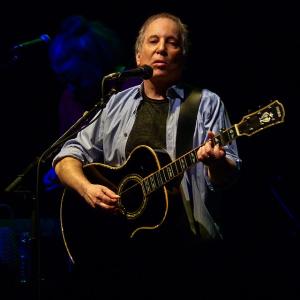
Each of these Biblical quotes (Bible Study, August 2025) has some relationship to the trajectory of the oeuvre of Paul Simon. Otherwise reluctant when it comes to expressing his religious beliefs, Paul Simon does not skimp when it comes to his Jewish roots and humanizing of faith. Yet, as interviews have noted, understanding or gaining a firm position on Paul Simon on his beliefs is limited in presentation and personally guarded.
Simon’s compositions do contain some level of religious inclination. At various times in his output, the themes of faith, belief, and religion expand and contrast. Still, Simon has not been silent on the point of holding religious influence in his work. Still, reporters have come to a consensus that deciphering faith in Simon’s work is left to the listener.
Psalm 46:10 emphasizes the importance of silence to recognize God’s sovereignty and presence. Paul Simon has come back to this theme in various ways in his work. Starting with the obvious “Sound of Silence,” Simon frames a perspective of inclusion and meditation.
Ecclesiastes 3:7 highlights the balanced nature of life’s experiences, including silence. Here, Simon articulates a worldly, human relationship to faith. In the album “Graceland,” looking at the residence of Elvis Presley as a metaphor for God’s grace, Simon includes the group Ladysmith Black Mambazo, along with other global music elements and bands from rock, pop, Mexican, South African/Sinaglesese, Francophone, and zydeco, to articulate a quiet longing and dependence on God. In addition, the track “Under African Skies”, “the figure of Joseph becomes the dual image of a dispossessed African black man and the New Testament Joseph” (Wikimedia Creative Commons, 2014/2025). Such subtlety in this chart-topping global pop album from 1986, Simon offers the world a chance to hear, from his perspective, a quiet relationship with God.
Habakkuk 2:20. calls for reverence and respect in the presence of God. Throughout his career, Paul Simon has noted his high regard for religion, particularly his Jewish faith. This faith-based backbone for Simon has held him throughout his troubled years, between 1983–1985, leading toward personal and professional growth. It would not be without this underscored observance and personal devotion, no matter how slight, Simon openly states that his most recent works, “Seven Psalms,” would not surface.
Psalm 62:1. expresses the rest found in silent communion with the Lord. It is in this verse that we can begin to capture a landscape image of the working faith woven in the works of Paul Simon. He has elected to remain personal with his faith, allowing others to recognize his humanistic viewpoints of religion, while surfacing his commitment to his Jewish heritage. Yet, in the arc of his works, with Art Garfunkel and as a solo artist, Simon has continued to explore his “silent communion with the Lord.”
A Musical Arc
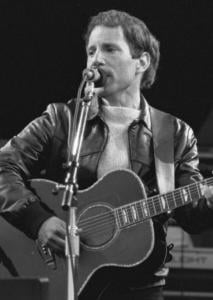
Giving a review to the complete fifteen-album-rich catalog of Paul Simon is beyond the scope of this writing, but possible in subsequent contextualized writings.
Selective works are possible to frame to gather some level and insight into how faith operates in Simon’s work. The song “Sound of Silence” follows the opening Biblical verses provided. It is the underpinning of spirituality, faith, devotion, with a tinge of obedience, that opens the dialogue into how faith and religion are expressed in the works of Paul Simon.
The album “Bridge Over Troubled Water” is iconic. Released in 1970, this record features some of Simon & Garfunkel’s most well-known songs, including the title track “Bridge Over Troubled Water” and “The Boxer.”
The song “Bridge Over Troubled Water” has been interpreted by many as a metaphor for faith and salvation. The lyrics express the idea that there is someone who can help in times of trouble and offer comfort and support. The album and concurrent song “Bridge Over Troubled Water,” likewise, relate to opening Biblical verses.
The 1986 album, which included the song “Graceland,” is widely regarded as one of Simon’s greatest works. It features collaborations with African musicians and explores various themes, including cultural identity and political turmoil. “Graceland” has connections to the Ecclesiastes 3:7 verse cited previously.
Both “The Boxer” and “Graceland” also contain references to spirituality and religious themes. In “The Boxer,” Simon sings about the need for perseverance and determination in the face of hardship, while in “Graceland,” he explores the idea of redemption and finding meaning in life through music and spirituality (Christian Educators Academy, September 2024).
The most recent work by Paul Simon, “Seven Psalms,” provides a collective landing point in the arc of these works.
A Recent Insight: Seven Psalms
The most recent work by Paul Simon, “Seven Psalms,” has already brought inquiry, attention, and acclaim to his work. Just over 30 minutes in length, this work is intended to be heard as a single acoustic statement.
“On Jan. 15, 2019, the veteran songwriter had a dream with the message “You’re working on a piece called Seven Psalms.” The dream was so powerful it roused him from his sleep in the middle of the night, and he wrote it down” (Q With Tom Power, CBC Arts, June 2023).
Paul Simon, Seven Psalms trailer, YouTube, April 2023,
The tracks are listed as: “The Lord”, “Love Is Like a Braid”, “My Professional Opinion”, “Your Forgiveness”, “Trail of Volcanoes”, “The Sacred Harp”, “Wait.”
Looking at the track list, it’s hard to imagine that the all-acoustic album had a long time to start, over a year of research, learning, and waiting.
Following the proverbial dream, Simon admitted he didn’t know anything about the Psalms.
“I mean, of course, I knew the word [Psalm], but I didn’t know exactly. And the Psalms in the Bible, I thought, ‘Well, I don’t know how to write this. I won’t be writing this. In fact, I don’t know how to even begin with this record.’ But then I thought, ‘Well, it wasn’t my idea anyway, so there’s nothing to do but wait’” (Q With Tom Power, CBC Arts, June 2023).
Falling back on his dream experience to help promote the work, Simon began to wake up between 3:00–5:00 AM with inspirations that needed to be notated.
“If I used my experience as a songwriter, it didn’t work. And I just went back into this passive state where I said, well, it’s just one of those things where words [were] flowing through me, and I’m just taking dictation. That’s happened to me in the past, but not to this degree.… I’ve dreamed things in the past — I didn’t necessarily think that they were worth noting. That’s why it’s unusual that I got up and wrote that down” (Q With Tom Power, CBC Arts, June 2023).
Divine inspiration? An arrival point in a mature musical career? A subconscious desire to leave a legacy? Suppressed religious longing finally coming to the surface? Each is possible to entertain. However, taking a closer look at Simon’s points, the resultant compositions could be a composite of each, but this is yet another possibility.
“Wait for the Lord; be strong, and let your heart take courage; wait for the Lord!” (Psalm 27:14 NLT).
The selection of themes, references, and narration of these points is where vulnerable craftsmanship takes center stage.
“In the opening movement of Seven Psalms, Simon portrays God as both protector and destroyer. “The Lord,” he sings, “is a virgin forest / The Lord is a forest ranger…/The Lord is the ocean rising / The Lord is a terrible swift sword” (Q With Tom Power, CBC Arts, June 2023).
Giving attention to God is nothing new in the history of music, or the Psalms for that matter. Simon is sensitive, however, to politely question God while retaining his human physicality and overarching dependence on God.
“I didn’t ask the question ‘If you think that there is a God, where is He?’ And I didn’t then say, ‘My answer is everywhere,’” Simon told Power. “‘The Lord is a terrible, swift sword,’ which is a [reference to] the Battle Hymn of the Republic. We happen to be in a battle right now. So yeah, that answers that question. But I didn’t pose that question to myself and then answer it.…
“This is what came out. And when things came out, I said, as I always do, ‘Well, do I believe that? Did I just say something that I think is a fair expression of what I feel?’ And if I said, ‘Yeah, I do. I believe that,’ I don’t know if it’s right or wrong, but yeah, if I have to express myself, I’ll do it that way, and I can live with that. I never get to say it perfectly, but it’s a pretty good try, and I’ll leave that there and move on to the next line” (qtd. in Q With Tom Power, CBC Arts, June 2023).
Is this Paul Simon deflecting the question? Is Simon trying to qualify his choice of musical reference rather than illuminating further his “dream” inspiration at the core of this work? Fair questions given this unsettled response from Simon. If we read the titles of the album “Seven Psalms” with a theomusicological analysis, a clearer reference to religion and faith comes into focus.
The core foundations of theomusicology, as written in-depth elsewhere, are personal testimony, evangelism, discipleship, biblically-centered text, community, and activism. Applying these to the tracks of “Seven Psalms,” Simon’s conscious/subconscious personal theological relationship comes to light.
“The Lord” — biblically-centered text; “Love Is Like a Braid” — community and discipleship; “My Professional Opinion” — personal testimony; “Your Forgiveness” — evangelism and activism; “Trail of Volcanoes” — community and discipleship; “The Sacred Harp” — evangelism; “Wait” — biblically-centered text.
Following Paul Simon’s points, then, we can re-read his interviews, which seek to firm his faith/religious principles concretely as ones which need only to apply another theomusicological angle to Simon’s works and statements to realize he is expressing a personal relationship with God, just in so many words. Paul Simon may not directly state his faith/religious views, but they are present, and more so than pop culture may, at first listening, realize, except for the latest fifteen record “Seven Psalms.”
Video Examples:
Paul Simon contemplates faith, death, and the existence of God, Q with Tom Power, YouTube, June 2023,
“Tom Power sits down with Paul Simon at the musician’s home near Austin, Texas, to discuss the inspiration for Simon’s 15th and latest album, Seven Psalms, and the big questions it explores” YouTube, June 2023.
Paul Simon on “Seven Psalms” and dreams, CBS Sunday Morning, YouTube, June 2023,
“Five years ago, Paul Simon said he was finished writing songs. But he couldn’t stop; new music was coming to him in dreams. The songs became the basis of his latest album, “Seven Psalms.” The 81-year-old Simon talks with correspondent Anthony Mason about the addictive nature of songwriting, and whether his hearing loss will mean the end of performing publicly” (YouTube, June 2023).
A Personal History Of Meaning
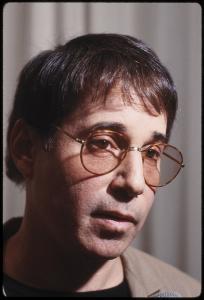
Born of a Jewish mother and a non-religious father, Paul Simon founded a complex religious identity laced with humanism, acknowledging “a” God, but falling short of any comprehensible inclination toward having a secure faith fellowship. Simon’s belief has been stated in multiple interviews, yet he continues to remain private on his personal religious commitment and direction, aside from his return to his Jewish roots.
“Simon’s religious beliefs have long been a subject of speculation and debate among fans and music critics alike. Some have claimed that he is a devout Christian, while others have suggested that he is an agnostic or an atheist…Part of the reason why Simon’s faith is so difficult to pin down is that he has always been a private and introspective person. He rarely speaks about his beliefs in public, and many of his songs contain ambiguous or metaphorical references to spirituality and religion” (Christian Educators Academy, September 2024).
Even from his early years, Simon included Jewish melodies in his songs and relied on religion, tradition, and culture as some of his major influences on his work. As his music career progressed, Simon noted his return to Jewish themes, melodies, and influence in his works. (Christian Educators Academy, September 2024).
“In a 2004 interview with The Guardian, Simon said that he was raised Jewish but considers himself more of a ‘secular humanist.’ In an interview with The New York Times in 2011, Simon said that he still has a ‘connection’ to Judaism and that he attends synagogue occasionally, but he doesn’t consider himself to be a ‘religious person.’ In an interview with Rolling Stone in 2016, Simon stated that he was raised in a Jewish family and that his parents were not particularly religious. He also mentioned that he was drawn to the mysticism of different religions and had an interest in the teachings of the Kabbalah. In a separate interview with The New York Times in 2018, Simon spoke about his search for meaning and said that he found it through music. He explained that he was not interested in organized religion and preferred to create his own spiritual path” (Christian Educators Academy, September 2024).
Paul Simon’s counterpuntal themes in his work balance between multiculturalism, personal struggles with faith, and religion vs. spirituality. Reaching across the songs and albums of his early and middle career, Paul Simon has continued to outline a sketch relationship to the security and foundation of his faith and religious beliefs. Side musicians have noted his open devotion, while Simon himself waffles on confirming this point. It is through an analytical review of his collected work, in cooperation with each other, that yields how intimate faith and religious dedication are to Paul Simon.
As a listening audience, we must stop short of making any dramatic claims about Paul Simon’s religious inclinations. Still, the title of his most recent work, “Seven Psalms,” does afford a clearer understanding of where Paul Simon is with his personal relationship and religious dedication to God.



 Ad-Free & Subscriber Log-In