

“He put a new song in my mouth, a song of praise to our God. Many will see and fear, and put their trust in the Lord” (Psalms 40:3 ESV).
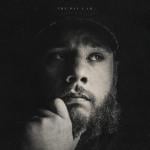
A Blavity article published on December 7, 2025, caught my attention, which discussed the work of the faith-based rapper Miles Minnick. The article went on to present this youngblood as one who is changing the current direction of gospel rap/Christian Hip Hop.

“Faith-based rapper Miles Minnick has quickly become one of the most talked-about young voices in Christian music. He fuses Bay Area hyphy energy and swagger with unapologetic faith and testimony, making him a standout to watch” (Martie Bowser, Blavity, December 7).
This statement follows the headline, which promotes Minnick as “redefining Christian Hip Hop.”
Given such a bold statement, it is deemed credible to investigate his work.
Minnick came to his faith by way of trying to meet girls.
“My friend invited me to church, and I didn’t want to go. … I was about that street life, but they took me in there to meet some girls. Long, long story short: I ended up encountering God. Like, I felt the presence of God touched me that day, fresh off the street, you know what I mean, and so that led me on a journey to investigate what that feeling was,” (qtd in Blavity, December 7).
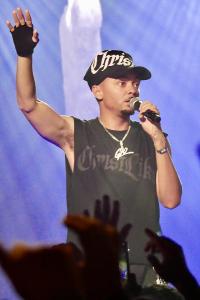
Taking his point further, Minnick asks the proverbial question, “What if I get my music to God while still remaining who I am?” (qtd in Blavity, December 7).
Following a solo performance at the Rolling Loud Bay Area festival, Minnick has since gone on to work with Lacre. “Currently [2025], Minnick is performing his “slaps for the soul” on the Reconstruction World Tour headlined by Lecrae, whom he considers the “pioneer” for the lane he now occupies” (Blavity, December 7, emphasis added).
Miles Minnick, Lifetime (Official Video), July 10, 2025,
Miles Minnick, Christlike (Official Music Video), November 2, 2023,
Knowing History
The naive approach that Minnick states about Christian Hip Hop is troubling. Minnick points to altar calls at his events as a signifier of his work’s importance.
“We’re literally praying for people at our concerts. We’re doing altar calls at our concerts. People are weeping and crying under the presence of God,” (qtd. in Blavity, December 7).
Christian Rapper’s Altar Call Goes VIRAL at World’s Largest Hip-Hop Festival, March 31, 2025,
Minnick’s response, as Martie Bowser notes, is to claim a contest to those who believe the emotional level of his shows is only for clout. However, alter calls at Christian Hip Hop shows are not new. Christian Hip Hop artists are known for providing prayers, altar calls, and testimonies during their shows. Highlighting this point specifically may be sensational for a secular reader, but those involved in sacred music, even marginally, will recognize the consistent use of prayers, altar calls, and testimonies at sacred music/worship concerts.
Dontae and Sevin Altar Call, December 29, 2018,
Dontae and Sevin Altar Call Pt. 2, May 6, 2015,
Martie Bowser does little in the way of helping Minnick when he touts accolades in his direction, giving him credit for bridging the gap between mainstream music and Christian Hip Hop. “Minnick has helped bridge the gap between Christian and mainstream hip-hop. His debut album, Via Dolorosa, positions him not only as a church kid who can rap but as a cultural bridge between Sunday service and viral playlists” (Martie Bowser, Blavity, December 7).
Selecting Words Carefully
A singular comment from Minnick underscores the need to pivot from celebrating young Christian Hip Hop artists based on the lack of local evidence of other supporting gospel rappers or Christian Hip Hop artists.
“We call this the new mainstream, right, where our kind of music is celebrated on these platforms, not just tolerated,” (qtd. in Blavity, December 7).
The comment has a genuine point and intent to drive home the need for others outside of the Christian music community or vernacular to ascertain the possibility of contemporary Christian music, specifically Christian Hip Hop, as a voice to speak to a younger generation. However, the arc of Minnick’s comment localizes him as one with the ability to execute such an action, almost single-handedly, but Lacre will certainly be by his side.
“It was easier to be accepted by the secular world, [said Minnick,] like I was doing Christian rap shows and songs and clubs and community events, and like these rap award shows and stuff, and like they would immediately just like rock with it, you know? Because at the end of the day, people just resonate with authenticity,…There are some cases where I would go in churches, and they look at me sideways or funny, like, ‘Who does this kid think he is?’” (qtd. in Blavity, December 7).
There is a need to reframe Christian Hip Hop/gospel rap as mainstream music. The popularity of this genre is well-documented and has evolved into its own canon. The disservice Martie Bowser presents in his Blavity review of Miles Minnick is to firm an already existing border between secular and sacred contemporary music. The initial intent of the Blavity article is to work against this border. Yet, a careful read and observation of the subtext of the article speaks to a necessity to appease a secular audience by way of contextualizing Miles Minnick as a neo-savior of Christian Hip Hop. Such a position needs to be avoided. Giving more attention to the currency of Christian Hip Hop illuminates the breadth and depth of this genre being progressed in the company by multiple artists working throughout the Christian Hip Hop vernacular.
Mixing Gospel
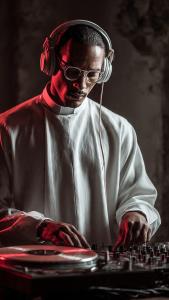
What the Blavity article does offer is the opportunity to address an area in the Christian Hip Hop vernacular that is underrepresented: DJ/House Christian Hip Hop/R&B/Soul/Neo Soul/Funk.
DJ artists and scratch artists have been at the helm of Hip Hop since the inception of the genre in 1973. Hip Hop culture would not be what it is without the creative involvement of Grandwizard Theodore and DJ Kool Herc, to name two responsible for developing the scratch, perfecting the mix, and expanding the layering and breakbeat use. Their importance to the genre is unquestionable and has prompted generations of budding DJs and an entire scratch culture. The cut/mix, rupture/flow, and layering that DJ/scratch artists have developed continue to grow as technology advances.
GrandWizzard Theodore, 2008 DMC U.S. Finals Showcase, February 18, 2008/2012,
A survey of Christian Hip Hop DJ/House, Christian Hip Hop/R&B/Soul/Neo Soul/Funk artists leaves one to desire more in this area. Christian Hip Hop is, without question, its own genre. The included vernacular (read: voices) in this genre are as expansive as in any other music genre. Yet, the area of Christian Hip Hop/R&B/Soul/Neo Soul/Funk is minimal in representation.
One possibility is that this genre, collectively speaking, as House music is witnessed outside of a sacred context (read: churches). This expression has historically been more suited to a rave or party environment. That’s not to say a worship night cannot be a party or avoid the signifiers of a rave. But, this has, by and large, been the approach. Thankfully, there are events currently taking place that defy this stereotype and include a contemporary rave/party environment for worship. One prime example is the Whosoever’s Movement and their Revival Nights. However, as integral as these events are for a younger generation, they still fall back on a band as a central sounding agent. Given the modern ease and accessibility of technology, the involvement of a Christian DJ should be a near non-sequitur. Certainly, audiences thrive on the human presence of a live band. But, following the globally expansive “House music” genre, younger audiences are equally equipped to viscerally enjoy a rave/party context focused on a DJ.
The lack of notable Christian DJs provides the other stumbling block. Those who work in this genre either work on a minimal level or strive to boost the depth of their vinyl record collection. Along this line, the knowledge of Hip Hop/R&B/Soul/Neo Soul/Funk, both sacred and secular, requires a Master’s degree unto itself. This is the high level that the most profound DJ/scratch Hip Hop artists have obtained, thus making their recordings and performances astonishing, if not jaw-dropping.
This should not be a deterrent for Christian DJs or scratch artists with the desire to populate this discipline. Taking advantage of current technology (i.e., online playlists, audio file catalogues, and AI searches) opens the door for an escalated involvement in this discipline. Further, taking advantage of secular pop music genres and mixing these with contemporary Christian pop/Rock/Hip Hop/R&B/Soul/Neo Soul/Funk music immediately adds multiple layers of prominence and creativity to a recording or performance. The steps need not start large; they just need to start.
To show the pregnant possibility of this genre, DJ artists DJ Chad B Smith, DJ Shaan Donn, and Supreme La Rock perform by example. Capturing the energy of the groove, the established history of the breakbeat, and the role of the disk jockey (DJ) to spin selections non-stop and back-to-back, videos and performances last for well over 30 minutes. Given the length that some pastors preach, this is a drop in the proverbial bucket timewise, but with a groove to go along with it.
Christian R&B & Hip Hop Mix 1.0, DJ Chad B Smith — Gospel R&B & Hip Hop, May 27, 2025,
2025 Christian DJ Mix, Gospel Hip Hop & R&B, DJ Shaan Donn, August 20, 2025,
Rare Gospel Mix, Soul Cuts & Funky Praise [Vinyl Studio Session] by Supreme La Rock, August 4, 2025,
CHRISTIAN GOSPEL HIP HOP & R&B REMIX MIXTAPE 2017, DJ BIG JAY, April 21, 2017,





 Ad-Free & Subscriber Log-In