

“Make a joyful noise to the Lord, all the earth!” (Psalm 100:1 NEV).
“Come, let us sing for joy to the Lord; let us shout aloud to the Rock of our salvation. Let us come before Him with thanksgiving and extol Him with music and song” (Psalm 95:1–2 NEV).
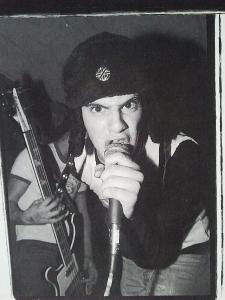
Punk is more than a musical genre; it’s a style, a way of life, and an expression of culture. Often not joined in a conversation of faith, Punk has come to serve the progress of faith for disenfranchised youth. Seeking identity is a complex area. Adding to this, the angst of youth further complicates this already dynamic area. Contemporary global culture, mass media references, political agendas, and the unstable educational structure compound youthful identity seeking, notably coming through by the aforementioned angst, anti-establishment, and counterculture directives.
At this juncture, learning about faith becomes important. However, it is at this same turning point that turning away from faith is often made. What is needed is a culturally expressive vernacular centered on the personal possibility and necessity of faith. Truth be told, many youth may not immediately turn to traditional forms, sound, or representations of worship music to help bring them to understand faith. This is the entry point for alternative musical genres to build these important bridges.
“[W]here faith and rebellion collide in the best way possible!” (Pastor Brad Rocks).
“More than just a curiosity, this connection [Judaism and Punk] shows how music [faith, religion, and culture] is shaped by diverse stories, and how the struggle for identity, justice, and expression is universal” (Adiuvist).
“[T]o be a punk was to liberate yourself from what had gone before” (Vivien Goldman, author/photographer of the New York 1970s Punk movement).
Taking a look at how Punk Rock has served to articulate faith and socio-religious culture, the intersectionality of Jewish and Christian Rock denotes a relationship that can help foster the progression, depth, and importance of faith, belief, and religious devotion.
How Did We Get Here?
The history of Punk has been well documented from multiple angles. To see how Punk’s original tenets remained stable while culture fluctuated, transposing these signifiers gives attention to how Punk has been and continues to be used by Jewish and Christian artists/bands to narrate a position of socio-religious identity, faith, belief, and devotion.
Starting in the 1960s-1970s, the first wave of Punk centered on fashion and style in the U.K., and was imported to the Lower East Side, New York.
The 1980s brought the second wave of Punk, expanding into pop culture and becoming more mainstream, which looked toward future aesthetic and cultural developments. The New Wave movement is one example of this outgrowth from Punk’s origins.
By the 1990s, the third wave of Punk (aka, post-Punk, new-Punk) expanded into the Grunge movement (aka, the “Seattle Sound”), making Punk aesthetics more mainstream. The original tenets of Punk begin to distort, bridging youthful angst, cultural protest, identity challenging, and a search for self, which rapidly becomes commercialized, leading to the accelerated decline of the third wave of Punk, and the eventual collapse of the Grunge movement, following the death of Nirvana’s Kurt Cobain, April 5, 1994.
The 2000s give way to a potential fourth wave of Punk with a socio-political agenda to codify contemporary cultural signifiers and digital globalization of the original tenets of Punk. A modernization of Punk in the 2000s takes hold of representation, expression, and varying levels of acceptance (physical, online). In this current thread of Punk’s history, artists and bands are becoming more unapologetic about social issues, including religious affiliations, and belief/faith disciplines.
Principal Foundations of Theomusicology
Taking advantage of the principal foundations of Theomusicology, expanded on the groundbreaking work of Jon Michael Spencer, the principles outline how faith is defined through contemporary music. Written in the application elsewhere about Christian Hip Hop, these foundational principles work in conjunction across faith-based contemporary music. The principal foundations of Theomusicology are discipleship, the message, biblically-centered lyrics, personal testimony, community, and activism.
Applying these to Punk Rock, it’s important to see how the foundations of Punk theory, ideology, and practice equally align. These foundations of Punk are qualified in musical approach, technique, a simple recording production, anti-establishment, rebellious, and countercultural rhetoric, a Do It Yourself (DIY) approach, a visible objection to establishment fashion, and journalism and reporting coming through the voice of the common fan, audience-goer, and later the highly sensitive, informed academic.
“Punk rock (or simply punk) is a subgenre of rock music that emerged in the mid-1970s. Rooted in 1950s rock and roll and 1960s garage rock, punk bands rejected the overproduction and corporate nature of mainstream rock music. Typically producing short, fast-paced songs with rough stripped-down vocals and instrumentation and an anti-establishment theme, artists embrace a DIY ethic with many bands self-producing and distributing recordings through independent labels…By late 1976, punk had become a major cultural phenomenon in the UK, giving rise to a punk subculture that expressed youthful rebellion through distinctive styles of clothing, such as T-shirts with deliberately offensive graphics, leather jackets, studded or spiked bands, jewelry, bondage clothing, and safety pins” (Wikimedia Commons, December 3, 2025).
“Punk rock is a genre of music that originated in the mid-1970s. Known for its raw sound, rebellious attitude, and DIY ethos, punk rock was much more than just music; it was a cultural movement that challenged societal norms. The genre rose out of dissatisfaction with mainstream culture, mainstream music, and even mainstream politics. It was an expression of youth rebellion, frustration, and the desire for change. The origins of punk rock can be traced back to the working-class neighborhoods of major cities, like New York and London, where bands sought to create music that was loud, fast, and simple.
“Punk rock provided an alternative to the polished and commercially successful music of the time. With its minimalist sound, fast tempos, and often political lyrics, punk became a voice for the voiceless. Today, punk rock is not only a musical genre but also a powerful subculture that continues to influence music, fashion, politics, and social movements around the world” (Our Music World, March 12, 2024).
With a sound that is fast, loud, and simple, lyrics that typically discuss anti-establishment and rebellious attitudes, countercultural in perspective, and an aesthetic ethos of DIY (Do It Yourself), often the most visible in a distinct fashion style, Punk has expanded from a localized garage band music of the late 1960s, early 1970s, into a mainstream aesthetic vernacular with outgrowths that continue to develop in pop, rock, and multiple styles of Punk.
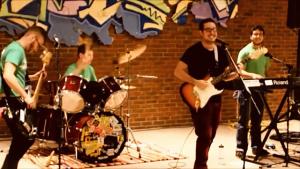
Jewish Punk Rock
“Jews are taught to wrestle with G-d, and to me that also means wrestling with our texts, our rituals, our traditions. When even the things you hold most sacred are always up for debate, I think that can lead to a level of comfort with deep questioning of how things are or are supposed to be. Pretty punk, yeah?” (violinist Elijah Oberman, The Shondes, qtd. in Subcultz, January 30, 2020).
The progressive and dynamic use of Punk through Judaism presents a relationship riddled with cultural dissatisfaction, elder disdain, and references to be anti-religious and unorthodox. Yet, as the research unveils, there’s a need in the younger Jewish community for this genre to help solidify faith and religious discipline.
Moshiach Oi, Punk Rock Jews (excerpt), March 12, 2015,
“Meet the boys of hardcore punk band Moshiach Oi, screaming at the top of their lungs to bring the Messiah into the world” (Punk Jews, YouTube, 2015).
Punk Jews, Full Movie, October 23, 2014,
“Profiling Hassidic punk rockers, Yiddish street performers, African-American Jewish activists and more, Punk Jews explores an emerging movement of provocateurs and committed Jews who are asking, each in his or her own way, what it means to be Jewish in the 21st century. Jewish artists, activists, and musicians from diverse backgrounds and communities are defying norms and expressing their Jewish identities in unconventional ways. In the process, they are challenging stereotypes and breaking down barriers. Meet Yishai, lead singer of Moshiach Oi; Radical performance group, the Sukkos Mob, the renegade Orthodox participants of Cholent; the Amazing Amy Yoga Yenta; Kal Holczler, founder of Voices of Dignity; and African American Jewish hip hop sensation Y-Love” (Punk Jews, YouTube, 2014).
What stands out is the marginal inclusion of Punk’s founding elements. Jewish Punk bands include religious cultural signifiers to articulate their grounded relationship in Judaism. Punk Rock, in the Jewish expressive vernacular, has and continues to have a winding journey to becoming understood and appreciated. Those invested in this artistic trajectory continue to profess their commitment to Judaism and the importance of Punk to help further confirm this personal relationship.
Oi Vey, Don’t Mess With The Jews, November 2, 2025,
Seeing how the principal foundations of Theomusicology operate in Jewish Punk, there are differences that immediately surface. Discipleship may not be readily apparent. Judaism, as a religious discipline, does not rely as heavily on discipleship as Christianity. The message in Jewish Punk follows the inclusion of cultural signifiers (i.e., language, fashion/style, religious practices). Biblically-centered lyrics can be transposed to relate to the Tora. Interestingly enough, this is an area that many contemporary Jewish Punk bands bring to the fore. A personal testimony remains an integral component in Jewish Punk. Without this personal connection, the genre may have otherwise collapsed before it even took hold. Community and activism are central to the Jewish faith in general. Building on this agency, Jewish Punk Rock involves high levels of community engagement and socio-religious activism, expressed in many areas beyond music making.
Christian Punk Rock
Christian Punk Rock has been well documented in multiple areas. The length, depth, and breadth of this genre need not be oversimplified and would, like Jewish Punk, deserve multiple writings to support fully.
Christian Punk Rock: The Rebellious Sound of Faith!, Pastor Brad Rocks, March 19, 2025,
“From the groundbreaking sounds of Altar Boys and One Bad Pig, to the infectious pop-punk anthems of Relient K and Stellar Kart, to the hardcore intensity of HEADNOISE and beyond — this video traces the origins, impact, and legacy of Christian punk. Discover how this genre has challenged the status quo, inspired countless believers, and been a powerful tool for spreading the Gospel with a punk rock edge!” (YouTube, March 2025).
Focusing on the fundamental principles of Theomusicology in Christian Punk Rock, the elements of discipleship, the message, biblically centered lyrics, personal testimony, community, and activism are each presented, valued, and strategically maintained.
“I am not ashamed of the gospel, because it is the power of God for salvation to everyone who believes, first to the Jew, then to the Greek” (Romans 1:16 NEV).
“The days are coming,” declares the Lord, “when I will make a new covenant with the people of Israel and with the people of Judah” (Jeremiah 31:31 NEV).

Mosh Pit Cousins
Jewish and Christian Punk Rock continues to unearth a relationship with wide-ranging application. A starting point is to see how these communities can come together, through Punk, to share faith, religion, and culture. The interconnected religious history between Judaism and Christianity continues to work in close proximity. Through the active socio-religious agency of Punk, Jewish, and Christian youth can begin to see well-needed allies in an ongoing troubled cultural context. Older generations may desire a conservative approach toward coming to and building faith. Younger generations seek a representative voice and identity in which to place and build faith. Sharing these commonalities, for Jewish and Christian youth, through Punk Rock, is an unexpected socio-religious lingua franca pointing to the grounding of faith, belief, discipline, and religious practice.














 Ad-Free & Subscriber Log-In