

“And the Lord spoke to Moses, saying, ‘Take Aaron and his sons, Nadab and Abihu, Eleazar and Ithamar, and set them apart from the rest of the people of Israel to be my priests’” (Exodus 29:28 NLT).
This track continues to follow me wherever I go.
DMX, Lord Give Me A Sign (Official Video), October 25, 2009
It was this track, years ago, which introduced me to the work of DMX. I had no idea who he was at the time. He came across my Christian Hip Hop playlist. Engulfed in whatever was distracting me, I allowed the sounds to drift, without paying any attention to the artist. I was not until the track came across speakers in multiple, unexpected areas that I stopped and gave attention to what I had been listening to, by that time, for years. “Who is DMX?” A question that opened the proverbial rabbit hole, into which I jumped.
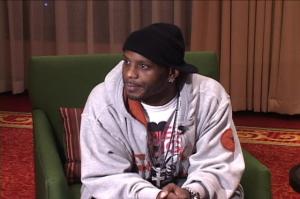
Honoring A Public Pastor
The Afrocentric journal The Root published an article on January 7, 2026, with the following title,
DMX Will Be Posthumously Ordained as a Minister in a Move That Proves His Divine Calling Was Always Real
“The late-DMX will be posthumously ordained as a Christian minister at the Foster Memorial A.M.E. Zion Church, a historic Underground Railroad site” (The Root, Jan. 7).
The title piques interest and questions. I have written elsewhere on the importance of the underrated evangelism of DMX. Testifying to secular audiences throughout his troubled career, DMX followed the legacy and devotion required for an evangelist, with the sensitivity and knowledge of a pastor.
“Earl Simmons, known to the world as DMX, was never just a rapper; he was a hood pastor who happened to sell 75 million records. While his legendary career was defined by five consecutive №1 albums and a gravelly voice that shook the rafters of hip-hop, it was his public wrestling with God that truly cemented his legacy. Now, nearly five years after his death in April 2021, the man who spent his life leading millions in prayer is receiving his flowers with a posthumous ordination” (The Root, Jan. 7).
Claiming ownership of the work presented by DMX, the Root qualifies him as a “hood pastor” with other noted points in his legacy, contextualizing DMX as a well-known, understood, and recognized evangelist (read: “hood pastor”), but an unordained formal pastor. A striking pivot from how the Root profiled DMX in the past.
This statement in the article, written by Rashad Grove, begins to hyper-sensationalize DMX.
“The Gospel Cultural Center is leading the ceremony and is honoring DMX for his transcendent music and spiritual impact” (The Root, Jan. 7).
Again, the evangelical work of DMX to secular audiences in the Hip Hop community and elsewhere was not widely glamorized during his lifetime. Yet, once this announcement of posthumous ordination was made by the Gospel Cultural Center, suddenly, DMX is a “hood pastor,” thriving without due recognition.
“Earl Simmons [DMX] wrestled with God in the public square, turning his pain into a ministry of raw truth,” Bishop Dr. Osiris Imhotep, founder of the Gospel Cultural Center, said in a statement. ‘This ordination recognizes the divine calling he fulfilled every time he spoke a prayer into a microphone’” (The Root, Jan. 7).
There is partial truth in this statement from Bishop Dr. Osiris Imhotep. DMX turned his troubled off-mic situations into ministry through his raps. He took to the stage loaded with human guilt and a desire to serve God. DMX recognized that those who supported his work were largely absent from the Word of God. He sought to share what he subtextually claimed as a calling to become a pastor.
“Despite the controversy in his personal life throughout the years, rapper DMX believes he has been called to become a pastor.
“‘That’s definitely the final destination. Or, a destination. You never know how far God is going to allow me to get or how many people He is going to allow me to reach,’ the 45-year-old rapper born Earl Simmons told the nationally syndicated morning radio show “The Breakfast Club.” ‘Before I go onstage, I pray that I’m able to just touch one person. If I’m able to touch just one person, then I’ve done something wonderful with my life, not just that moment’” (The Christian Post, July 2016).
“Blessed are those who are persecuted for righteousness’ sake, for theirs is the kingdom of heaven” (Matthew 5:10 NLT).
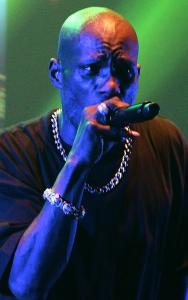
Blind Sight
Though DMX continued to have troubles personally, he never lost sight of his instinctive calling to be a pastor. DMX saw his art, rapping, as a segue to share and evangelise to the secular community.
“I do believe that God allowed my music career to create the platform, lay the foundation, gain the ear, and gain the credibility. When I do become a pastor, I don’t think I’m going to lose fans, I think I’m going to gain more,” he said on the popular radio show based in New York City. “Because of the music, because of the [cursing,] it stops them from listening to the music. The message is way more important than music” (The Christian Post, July 2016).
In 2012, DMX became a deacon, ordained at Morning Star Church in Arizona. Yet, he noted that he had a lot of personal soul-searching to do before becoming a full pastor and presenting his first service (The Christian Post, July 2016). It is this point that Rashad Grove neglects to qualify in his article. Rather, Rashad Grove elected to reveal an overly glorified representation of DMX, marginally touching on his personal struggles, and weighing heavily on his “Prayer” tracks, which accompanied his albums.
“The biggest step is not in studying, reading, but the warning to change the way you live. Wanting different things for yourself, and making that change because if you still want to drink and smoke, you could read as much as you want, that doesn’t mean you’re ready” (The Christian Post, July 2016).
“Remember what I told you: ‘A servant is not greater than his master.’ If they persecuted me, they will persecute you also. If they obeyed my teaching, they will obey yours also” (John 15:20 NLT).
Testify
It is worth noting that DMX did, in fact, present his first sermon in 2016.
“In 2016, DMX preached a sermon in Phoenix where he spoke about his battles with drug addiction, depression, and how his faith propelled him to keep fighting “the good fight.” No matter what struggles he faced, DMX always leaned on his faith in God to sustain him” (The Root, Jan. 7).
Therismos Foundation, Rapper DMX preaches his first sermon in church, and surrenders his life to Jesus!, September 9, 2016
“‘I believe God has called me to be a preacher,’DMX. This video recorded by BET Gospel, is the Rapper’s first opportunity to preach in the House of the Lord. His dream-come-true” (YouTube, September 2016).
What DMX did for the Hip Hop community surpasses what journalists covering this matter ascertain. DMX lived the complexities of being human, drug himself through personal turmoil and battles, challenged his faith, yet continued to return to what he felt was his ultimate calling, to become a pastor.
For the Hip Hop community, typically wrapped in controversies over money, fame, fashion, style, language, image, and media representation, DMX exemplified a path not foreign to these issues, but one centered on spiritual growth. This highly unpopular direction in the Hip Hop community is overlooked in the wake of this posthumous ordination. Journals poised to cover this news would best serve the secular communities by referencing both viewpoints of DMX, a man with a spiritual desire, and one who works in a spiritually devoid industry.
“DMX will be officially recognized as a Christian minister during a service held at the historic Foster Memorial A.M.E. Zion Church, Complex reports. The 164-year-old edifice was once one of the stations along the Underground Railroad. It was also known as ‘Freedom Church’ during the Civil War era for its role in guiding enslaved people toward liberty, making it a divinely poetic setting to ordain a man who spent his career helping a generation navigate their own internal darkness toward the light” (The Root, Jan. 7).
“For it has been granted to you on behalf of Christ not only to believe in him but also to suffer for him” (Philippians 1:29 NKJV).
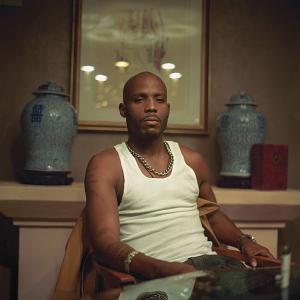
A Life Worth The Gospel
The Root would have added more credibility to its reporting on the ordination of DMX by reviewing journals that also covered this event. Simple reviews of MSNBC News, Christianity Today, The Rolling Stone, and even Jahkno TV would reveal additional views of DMX, his spiritual testimony, growth, and desired walk in faith. What the Root did publish was a glorified article, defining DMX as it desires readers to believe.
The article may look insightful to those not willing to read beyond a headline. Yet, the article published by the Root, regarding an important point in the Hip Hop and religious communities, minimizes the legacy that DMX worked, subvertly, to leave; one founded on a faith-based discipline, lined with human failures, and illuminated by a heartfelt, prayer-centered desire to fulfill a calling, to serve the LORD.
Praying As Discourse
To aid in the overarching profile of DMX and his faith walk toward, finally, becoming a pastor, the examples of his works and testimonies allow the Hip Hop artist to speak for himself, as he does with a heart of servitude and sacrifice.
DMX, Prayer (Audio), May 27, 2021
DMX, Prayer, From the album “Undisputed,” September 11, 2012
DMX, Prayer 1–5, February 20, 2007
DMX, Prayer III, December 11, 2012
DMX, The Prayer, From the album “The Year of the Dog Again,” March 3, 2006
Breaking The Machine, DMX GIVES A BREATHTAKING PRAYER!!!, February 13, 2020
DMX, Prayer (Live @ Smoke Out), August 14, 2009
DMX, Prayer (Woodstock’99), July 23, 1999
Intellectual Vibes Only, DMX Says His Last Prayer With Us Before He Dies & Shows Us How To Pray, April 6, 2021





 Ad-Free & Subscriber Log-In