

We all recount specific moments in our days where it felt like time stood still. The assassination of Dr. Martin Luther King Jr. holds that sober position all too well. Likewise, hearing the song dedicated to Dr. King from the band U2 summons a similar emotional chill.
Pride (In the Name of Love) has gone on to become an anthem, a question, and a personal memory. Speaking to generations decades after that shocking evening, Pride (In the Name of Love) sounds in the ethnic complexity of the American social fabric.
“When pride comes, then comes disgrace, but with humility comes wisdom” (Proverbs 11:2 NKJV).
What’s In A Name Anyway?
Pride (In the Name of Love) was released on September 3, 1984, and was recorded between May and August 1984. A global hit, joining the company of Sunday Bloody Sunday, Pride captures the American spirit and imagination, poised for the lived reality of civility.
Framed around the life of Dr. Martin Luther King, Jr., Pride has come to resonate across racial divides. However, the work is riddled with complications and inaccuracies. Overlooking the glaring error of the stated time of Dr. King’s assassination, Pride positions Dr. King’s legacy sociolinguistically on selfishness.
Merriam-Webster defines “pride” as follows,
“[T]he quality or state of being proud: such as a reasonable self-esteem: confidence, and satisfaction in oneself; pleasure that comes from some relationship, association, achievement, or possession that is seen as a source of honor, respect, etc.; exaggerated self-esteem; or,
sometimes Pride: respect and appreciation for oneself and others as members of a group, and especially a marginalized group: solidarity with a group based on a shared identity, history, and experience; a showy or pretentious group; ostentatious or showy display” (“Pride.” Merriam-Webster.com Dictionary, Accessed 18 Jan. 2026).
How did U2 intend to use the term? The first set of definitions functions against the work of Dr. King. If the band intended to follow the latter definitions, this begins to point in the direction of Dr. King’s work. Yet, even that falls short.
“Pride,” either as a noun or verb, is a description one might not associate with Dr. King, a pastor who laboriously worked for the benefit of his community, to the extent of putting his life on the line. But U2 elected to use that specific descriptor for Dr. King. This egregious error has become a stamp on the American pop cultural psychology, with no way to walk it back.
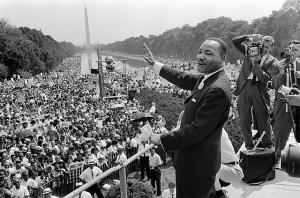
A Brief Overview Of Dr. Martin Luther King Jr.
January 19 was not too long ago, an unquestionable day of community activism and creative learning. We come to this proverbial day, January 19, 2026, Dr. Martin Luther King Jr. Day, as one under scrutiny.
To have arrived at such a point as a socio-political cultural identity can be critically read as an insult to justice. Civil rights continue to be segregated. Equity is accompanied by a negative sign. Identity is questioned, while power is scripted by a margin of one.
Most take the time on this day, January 19, 2026, Dr. Martin Luther King Jr. Day, to reflect on the legacy of Dr. King. If we listen to the subtext of his speeches, sermons, and commentaries, Dr. King would have us, the contemporary United States, not reflect but engage. Discourse is a matter of scholarship unless it is put forth relevantly and actively to express the consciousness of the social fabric. If there’s only talk and no personal employment toward credible change, this day, January 19, 2026, Dr. Martin Luther King Jr. Day, remains a reflection of time and a mere date on a homogenized calendar.
Recalling History
A short overview of the legacy of Dr. Martin Luther King Jr., provided by the National Civil Rights Museum, outlines why his work was instrumental during the 1960s and remains as such today, 2026.
“The legacy of Dr. Martin Luther King Jr. encompasses influential decisions, monumental actions, and steadfast progressions of humanitarian rights that reach far beyond the civil rights movement.
“A leader of all people, Dr. King never chose fear, but always chose courage and determination when fighting for civil rights in the face of oppression, ignorance, and violence. He refused to allow prison, violence, or the threat of death sway his end mission. Instead, he stood beside his goal of achieving rights for all through nonviolent protests.
“Dr. King maintained a vision for a more diverse America where all people enjoyed the benefits of equality. During a time when the opposition implemented legislation that withheld rights from people of color and expressed hatred through beatings and killings, Dr. King continued to take the high road.
“He realized that violence would play into the scheme of the opposition. He knew that violent retaliation would fit exactly into the assumed mold that many had formed regarding civil rights activists. Because of that, he constantly preached that nonviolence would ultimately allow the opposition to prevail.
“Dr. King also understood the impact of unifying the masses in the push for one common goal. Separately, attaining any significant progress would be a challenge. Collectively, he and other civil rights activists could affect policies and influence change nationwide. Dr. King’s leadership contributed to the overall success of the civil rights movement in the mid-1900s and continues to impact civil rights movements in the present.
“While King and other leaders generated momentous strides for equality, the push for civil rights remains a preeminent challenge today. We continue to experience poverty in the inner cities. We continue to fight for equal pay regardless of gender or race. We continue to battle education inequality. We continue to call for justice for all.
“Dr. King’s legacy provides a staple model for how we combat inequality today. We cannot get comfortable in our current state. Too many people are relying on us to recognize and fight the inequalities that exist today” (National Civil Rights Museum, n.d.).
It was later in the day, April 4, 1968, that the physical voice of Dr. King was silenced. Since that somber, historic day, America has thrust itself headfirst into a tangled web of civil rights disturbances, equity challenges, and racial injustices. The first question lingers as the last question, “Where do we, the American people and socio-political, cultural society, go from here?”
“On April 4, 1968, at 6:01 p.m. CST, Martin Luther King Jr., an American civil rights activist, was fatally shot at the Lorraine Motel in Memphis, Tennessee. He was rushed to St. Joseph’s Hospital, where he was pronounced dead at 7:05 p.m. at age 39” (Wikimedia Creative Commons, n.d., accessed Jan. 18).
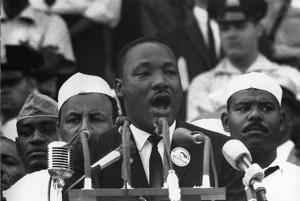
The Words
Dr. King did nothing more than speak and share his insights for all men, women, and children. As his presence and social value grew, pressure came from the opposition to reduce the volume and reel in the growing support. Here are selections from various interviews that Dr. King conducted. The points of the interviews and the context, as stated, remain all too insightful today.
History Channel, Martin Luther King, Jr.’s “I Have A Dream” Speech, January 13, 2018,
Martin Luther King’s Last Speech: “I’ve Been To The Mountaintop,” April 4, 2010,
Read the full speech here: https://kinginstitute.stanford.edu/iv…
“King was in Memphis to support the sanitation workers’ strike, a protest against dangerous working conditions and poor wages. At the time, King was also organizing the Poor People’s Campaign, aiming to shift the civil rights movement toward economic justice and addressing systemic poverty across racial lines. Despite threats against his life and poor weather that evening, King spoke to a packed church with fiery conviction. The most haunting and memorable part of the speech came at the end, when King spoke about the possibility of his own death: ‘I’ve been to the mountaintop… And I’ve seen the Promised Land. I may not get there with you. But I want you to know tonight, that we, as a people, will get to the Promised Land!’” (YouTube, April 2010).
The Martin Luther King, Jr. Center for Nonviolent Social Change, “How long? Not long!” (Our God Is Marching On), MLK, March 25, 1965, Montgomery, AL., March 24, 2025,
“We are not about to turn around,” Dr. Martin Luther King, Jr.
“At the culmination of the March 1965 Selma to Montgomery marches to protest for the removal of the discriminatory, racially motivated barriers to Black people exercising the right to vote, Rev. Dr. Martin Luther King, Jr. gave this speech on the steps of the Alabama State Capitol in Montgomery” (YouTube, March 2025).
Martin Luther King Jr.: “My dream has turned into a nightmare,” August 18, 2013,
“Dr. King explains the war in Vietnam was undermining the fight for social justice by breeding insensitivity to the suffering of South Asians and dulling America’s collective conscience” (YouTube, August 2013).
Contextualizing History
This video short needs to be contextualized currently. If we listen to the words and follow the lead of Dr. King to activate the language physically, community change becomes more plausible. All too often, at the still early years of the 21st century, agency is a point not only neglected but denied.
Dr. Martin Luther King Jr., “What America Owes To Its Immigrants”
“This short speech reframes immigration as America’s greatest source of strength — not a threat. Inspired by the moral cadence of Dr. Martin Luther King Jr., it challenges the fear, division, and political noise surrounding immigration today” (YouTube, Jan. 2026).
Full and Partial Interviews, Meet The Press
These additional historic interviews with Dr. King on “America’s longest news program,” Meet the Press, illustrate another side of Dr. King, one where he is in control of the moderation, not allowing his work to be seen as a subject for analysis, but one that is a living testimony.
C-SPAN, Reel America Preview: “Meet the Press” with Martin Luther King Jr., March 23, 2015,
NBC News, Martin Luther King, Jr. On NBC’s “Meet the Press” (1965), Archives, January 13, 2012,
“On March 28, 1965, Martin Luther King, Jr. appeared on NBC’s “Meet the Press” to discuss his historic five-day march from Selma to Montgomery, Alabama. One week after leading, King said that the demonstration was necessary not just to help push the Voting Rights Bill through, but to draw attention to the humiliating conditions in Alabama, such as police brutality and racially-motivated murder” (YouTube, January 2012).
Martin Luther King Jr. On Non-Violent Resistance, “Meet The Press,” April 17, 1960, October 1, 2013,
Martin Luther King Jr., Racism, A ‘Hate Filled Cancer,’ “Meet The Press,” August 13, 1967, October 1, 2013,
Twin Cities PBS, Martin Luther King Jr: The Lost 1959 Broadcast, November 26, 2019,
“In 1959, Martin Luther King Jr was known chiefly for his role in the successful Montgomery bus boycott. It was years before his “I Have a Dream” speech in Washington. Long thought lost, the interview was found and rebroadcast in 2009. In it, King sat down for his KTCA interview with L. Howard Bennett, a civil rights leader and the first African-American judge in Minnesota” (YouTube, November 2019).
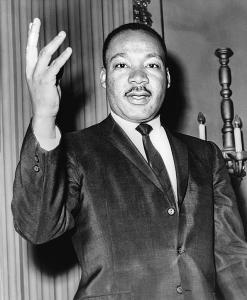
Pride (In the Name of Love) (Official Music Video), 1984/December 14, 2009,
“A band performance at legendary Northside Dublin venue ‘the SFX’ (St. Francis Xavier Hall), is set between scenes of the city’s docklands and the iconic Poolbeg towers in this video by Donald Cammell shot in August 1984” (YouTube, 2009).
“‘Pride (In the Name of Love)’ is a song by Irish rock band U2. It is the second track on the band’s 1984 album, The Unforgettable Fire, and was released as its lead single in September 1984. The song was produced by Brian Eno and Daniel Lanois. Written about the civil rights leader Martin Luther King Jr., ‘Pride’ received mixed critical reviews at the time, but it was a major commercial success for U2 and has since become one of their most popular songs, as well as being re-evaluated positively by many as one of the greatest popular rock songs of all time” (Wikimedia Creative Commons, n.d., reviewed Jan. 17).
An unquestionable historic track, Pride, has steered the course for generations since its 1984 release. The video contextualizes the group in their home environment, fitting for a track about a socio-religious activist who made his home area ground zero for his work.
“The song had been intended to be based on Ronald Reagan’s pride in the U.S.’s military power, but Stephen B. Oates’s book Let The Trumpet Sound: A Life of Martin Luther King, Jr., and a biography of Malcolm X caused Bono to ponder the different sides of the civil rights campaigns, the violent and the non-violent. In subsequent years, Bono has expressed his dissatisfaction with the lyrics, which he describes, along with another Unforgettable Fire song, ‘Bad’, as being ‘left as simple sketches.’ He says that he was swayed by the Edge and producers Brian Eno and Daniel Lanois, who played down the need to develop the lyrics as they thought their impressionistic nature would give added forcefulness to the song’s feeling, particularly when heard by non-English speakers. During recording sessions, Eno encouraged the singer to use nonsense words ‘as place holders for the yet-to-be-written lyrics.’ In U2 by U2, Bono said: ‘I looked at how glorious that song was and thought: ‘What the f*&^ is that all about?’ It’s just a load of vowel sounds ganging up on a great man. It is emotionally very articulate — if you didn’t speak English.” (Wikimedia Creative Commons, n.d., reviewed Jan. 17).
This background information sheds light on the work. Seeing how the band took up the theme of discussing Dr. King. The lack of narrative is ironic for a work about a man who has a legacy of culture-changing words.
If we read this a bit further, Pride begins to be seen as one rushed and, if sociolinguistics allows, is more prideful for the band than respectful toward Dr. King. Again, irony bites back. If this work is seen as one produced for the pride of the band, the fact that it has become a near anthem for social activism and cultural change. Given this, can we read Pride as a weaponization of Dr. King’s identity for the advancement and global popularity of U2? Is this, then, not an operation and example of pride? Sociolinguistically, yes; culturally, yes; theologically, yes. The rhetorical question comes with specific answers.
“The song contains the erroneous reference to King’s shooting as ‘Early morning, April 4,’ when it actually occurred after 6 p.m. Bono acknowledges the error, and in live performances, he often changes the lyric to ‘Early evening…’ The error was corrected on the acoustic version of the song included on the group’s 2023 album Songs of Surrender; the updated lyric is ‘In the evening, April 4’” (Wikimedia Creative Commons, n.d., reviewed Jan. 17).
This is a further example of the rushed nature of the work to satisfy a record contract. Given this error, which may have caused numerous school-aged youth to fail history exams about the Civil Rights, U2 coined an error in haste, subtextually framed on the band’s growing pride.
Biblical Pride
“Pride goes before destruction, a haughty spirit before a fall” (Proverbs 16:18 NKJV).
“Clothe yourselves, all of you, with humility toward one another, for God opposes the proud but gives grace to the humble” (1 Peter 5:5 NKJV).
Got Questions Ministries, “What does the Bible say about pride?”, June 21, 2024,
In this selection, Pastor Nelson spells out multiple biblical verses on why pride is sinful and how it directs our attention away from what God has made and provides. If we follow this simple point, the track Pride by U2 positions the band as following its individual and collective pride. How? The work uses the theme of Dr. Martin Luther King Jr. for its own progress. There’s nothing wrong with producing a work to celebrate the life and legacy of an individual. Such an approach to Dr. King is fitting. Yet, if we understand the reality of this track, for the band as individuals and a collective, the production was rushed, the narrative is confused, the historical reference is inaccurate, and the band generated worldwide fame from each of these points.
Not taking the time to reconcile these errors or make visible the background context of the work, along with the original desire to celebrate Dr. King, continues to compound the pride of the work. U2 has matured to a prominent position where, at this late time, making amends to these elements that outline the background reality of the track runs the risk for the band to either lose fans, popularity, or worse, stain their image. Could such a monolithic cultural identity actually speak up and confess these errors and willingly neglect to overstep the history of Dr. King for their own gain? The levels of pride continue to unfold.
Dr. Francessca Abii, “What is pride in the bible 5 things to do to deal with pride[?],” September 23, 2025,
“This video explains what pride is in the bible and the 5 things to do to deal with pride. The points that are highlighted are very clearly explained for anyone at any level of their Christian faith to understand and follow” (YouTube, September 2025).
This additional reference points out a question which should be asked: “Is U2 working within Christian principles regarding the work Pride?” The answer is a resounding “no.” One step further, if U2 is not working within Christian principles regarding the work Pride, then is the band sustaining a counter-narrative not only regarding Christian values but also the core operations and values of Dr. King? This is a firm “yes.” U2, then, has presented a false representation of their own work to support global civility. By producing a work with the operational definitions against those of its theme, Dr. Martin Luther King Jr., U2 has demonstrated the depth of their pride.
The Point Biblically Founded
“Pride is not merely a personal flaw; it is a sin that separates us from God. James 4:6 reminds us, “God opposes the proud but shows favor to the humble.” Pride can blind us to our own faults, make us resistant to correction, and create a false sense of self-sufficiency. It often leads to other sins, such as envy, anger, and dishonesty, as we strive to maintain an image of superiority” (Bible Study Tools, August 2, 2024).
This simple statement, based on biblical evidence, confirms the point about the track Pride (In the Name of Love) by U2 as one that, at its core and lived experience, is a song of pride, not love, as the parenthetical phrase clouds.
The last rhetorical question to pose may be: “What would Dr. King think?”








 Ad-Free & Subscriber Log-In