

Growing up in Hip Hop, you find yourself on either side of the East Coast/West Coast divide. Being from the West Coast, if you didn’t know about Snoop Dogg and support his prominence in Hip Hop, you found yourself ostracized by friends and, at times, family.

Snoop Dogg’s image became synonymous with a second wave of gangster rap. Retaining the stereotypical images and lifestyle of gangster rap (exoticizing women, drug and alcohol culture, crime and incarceration pride, extravagant living, glorifying fashion, and monumental stacks of money), Snoop Dogg took these elements to an indulgent level par none. Yet, somehow, Hip Hop continued to be drawn to his work and image. Building an empire on these advanced levels of a gangster rap image, Snoop Dogg took his smoke-filled persona to the mass media and the global public. Never apologetic for his actions, Snoop Dogg layered his tracks with just how prominent he was, where he came from, and why he deserved all the fame and fortune provided. This image solidified the expectations and desires for generations of young rappers to follow. Likewise, Hip Hop culture agreed with Snoop Dogg, elevating his dominion further. At his high point, in the late 1990s-early 2000s, Snoop Dogg was insurmountable as a Hip Hop artist, media icon, and spectacular celebrity.
“Cordozar Calvin Broadus Jr., known as Snoop Dogg, is a highly influential American rapper, record producer, and actor from the West Coast hip-hop scene. He gained prominence in 1992 through collaborations with Dr. Dre on “Deep Cover” and Dre’s album, The Chronic. Recognized for his distinctive drawled lyrics and themes related to West Coast culture and social issues, he has sold over 23 million albums in the U.S. and 35 million globally. His achievements include an American Music Award, a Primetime Emmy Award, and 17 Grammy nominations” (Popular Timelines, n.d.).
Who could forget the cameo appearance of Snoop Dogg in the 2003 Paramount Pictures film, fittingly titled “Old School.”
Old School: Mitch’s first party, Paramount Pictures, 2003.
From this media presentation to showcasing his support across community issues, Snoop Dogg prompted the world to see beyond his 1990s gangster rap beginnings.
“Had Snoop Dogg pretended to take a toke from the Olympic torch he helped carry to open the 2024 games, few people would have been surprised….But the now cannabis entrepreneur and elder statesman of hip-hop is in his respectable era — he’s a little older, a little wiser, and a whole lot more lovable” (CNN, qtd. in The Atlanta Voice, July 29, 2024).
From his early inception at the forefront of West Coast Hip Hop, to an acquitted murderer (by way of a self-defense argument), to a multi-million dollar entrepreneur, recognized as a motivational speaker, highly evolved community supporter, positive youth advocate, and now a new image of Christianity, Snoop Dogg has shown the importance of diligence, dedication, attention to personal detail, and, most recently the importance of a personal connection with faith.
”I used to answer hate with hate. Now I answer hate with love.” — Snoop Dogg
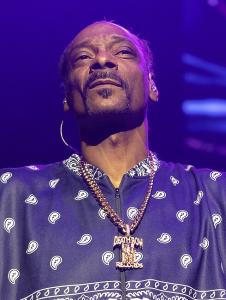
Transforming Legacy
“Death Row Records released Snoop Dogg’s first album, Doggystyle, in 1993. Dr. Dre mostly produced it. The album was a huge hit, selling over 800,000 copies in its first week and debuting at number one on the Billboard 200. Songs like “Who Am I (What’s My Name)?” and “Gin and Juice” quickly became classics because they mixed funky basslines, soulful samples, and Snoop’s unique way of writing lyrics. Doggystyle not only set the standard for West Coast gangsta rap, but it also made Snoop a household name around the world.
“But Snoop’s rise to fame wasn’t without problems. In 1993, he was charged with murder after his bodyguard shot someone. The trial that got a lot of attention hurt his early career, but Snoop was found not guilty in 1996. The lawsuits and violent fights over Death Row Records, like the East Coast-West Coast rivalry, put Snoop’s strength to the test. But he used music as a way to deal with his feelings and put them into his art” (Weekly Silicon Valley, July 12, 2025).
This tenacity and self-discipline served Snoop Dogg well. It would be in the 2000s when Snoop Dogg showed the ability to dynamically engage pop culture from multiple angles.
“Snoop Dogg became even more popular as a mainstream artist in the 2000s. He showed that he could mix hip-hop with pop and R&B when he worked with artists like Pharrell Williams and The Neptunes on songs like “Drop It Like It’s Hot” (2004) and “Beautiful” (2003). “Drop It Like It’s Hot,” from his album R&G (Rhythm & Gangsta): The Masterpiece, was a big hit on the Billboard Hot 100. This showed that Snoop was popular with people of all ages. He worked with artists like Justin Timberlake, Akon, and Katy Perry, which showed how versatile he was.
“Snoop Dogg has had an impact on more than just music. By the early 2000s, he was a huge part of pop culture, showing up in movies like “Training Day” (2001), “Starsky & Hutch” (2004), and “Soul Plane” (2004). His charming personality made him a natural fit for Hollywood, where he often played roles that fit his larger-than-life personality. Snoop also tried his hand at TV, hosting shows like “Doggy Fizzle Televizzle” and co-hosting “Martha & Snoop’s Potluck Dinner Party” with Martha Stewart. This was an unlikely but very successful partnership that showed off his charm and sense of humor.
“Snoop’s business sense has also been very impressive. He has started a lot of businesses, like his own record label, Doggystyle Records, and a cannabis brand called Leafs by Snoop. In 2021, he became a part-owner of the cannabis company Canopy Growth, which took advantage of his long history with marijuana culture. Snoop has also put money into tech startups like Reddit and Robinhood, which shows that he knows how to run a business” (Weekly Silicon Valley, July 12, 2025).
A snapshot of an individual who has slowly moved from a rapping style filled with misogyny, drugs, and crime, to one sporting a style most rap artists working in the mainstream Hip Hop industry would stray from, but welcome the income and star power.
“Snoop has spoken out for social causes in addition to music. In 2005, he started the Snoop Youth Football League, which gives poor kids in Los Angeles a chance to play organized sports and stay away from gangs. He also gives money to causes that support legalizing marijuana, changing the criminal justice system, and giving people in the community more power” (Weekly Silicon Valley, July 12, 2025).
Given this personal trajectory from the streets to running the streets in support of the US Women’s Gymnastics Team at the 2024 Paris Olympics, the accomplishments of Snoop Dogg reached one further landmark: his conversion to Christianity. An unexpected occurrence, but one that Snoop Dogg has not denied as being central to his later stages in life. Making this commitment in 2018, coming from being involved with the Nation of Islam, to a practicing Rastafarian, Snoop Dogg’s acceptance of his Baptist roots pushed the envelope for some supporters and introduced his work, principally his recent Gospel album and tracks, to others. The eyes of the public turned, inside and outside of Hip Hop, when Snoop Dogg released his Gospel-focused “Bible of Love” album (2018).
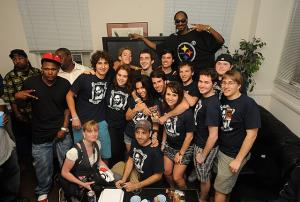
Snoop Dogg, Words Are Few (Official Video) ft. B Slade (2018),
The Steps Of A Walk
What I learned from Snoop Dogg is a bold gesture for sure, but one that points to how Snoop Dogg transposed his life once he made the personal decision to start his walk in faith.
In 2018, Snoop Dogg made his conversion to Christianity, specifically his root Baptist denomination. As a musical artist, Snoop Dogg embraced his Gospel music heritage. This stands out in his work around this time, and specifically in the record “Bible of Love.”
The vacancy of time between the release of his collaborative hits between 2003/2004 and 2018 begs the question: Is Snoop Dogg taking this time to search out his faith? His career change, more focused on movies and television appearances, gave his musical career a chance to be more of a featured artist, along with his growing entrepreneurship and the start of his philanthropy, all of which seem to be the outliers of Snoop Dogg taking a more inclusive look at his past to contextualize where he was going in the future. It was in 2012 that Snoop Dogg made the commitment to his Baptist faith.
In 2018, Snoop Dogg released his “Bible of Love” album, which solidified to the world of his conversion. There are, curiously, no defining points, statements, or interviews during this time, 2003/2004 to 2012/2018, which satisfy the assessment that Snoop Dogg, during this period, was making personal changes spiritually, which resulted in his full conversion and faith being announced through his Baptist doctrine. Still, this period, which is just over a decade, draws a curious inquiry into what Snoop Dogg was personally entertaining that eventually led to his spiritual acknowledgment and public display.
Jesus Saves, Did Snoop Dogg Choose Christ?, December 29, 2025,
An Unusual Divide
It is Snoop Dogg’s public post period, making public his faith conversion that created a divide between two communities, the Christian-faith community, and the Hip Hop community. These unlikely bedfellows each provided input on this action and spiritual testimony from Snoop Dogg. However, the actual vocalized points from these two communities are an ironic twist.
TV One TV, Snoop Dogg Responds To Criticism Of Gospel Album: ‘Are You Going To Heaven?”, March 30, 2018,
Dua Lipa Daily, Snoop Dogg’s New Gospel Album ‘Altar Call’: A Message of Love & Redemption, April 21, 2025,
Reactions from the Hip Hop community
As an interesting change, by and large, the Hip Hop community had qualified Snooop Dogg to his mature years, and had, oddly enough, very little to say. The personal commitment to put his faith first, from Snooop Dogg, conveyed minor mixed points of support and questions, but otherwise, these reactions were largely uneventful. One would have assumed that the Hip Hop community, the ones who have invested the bulk of time and money to Snoop Dogg’s evolution and resultant Hip Hop empire, would have more of a negative reaction. Yet, the Hip Hop community was comfortable with voicing mixed opinions to one the community sees as an “O.G.” (Old Gangster).
What came from the margins of the Hip Hop community were local pastors who were strongly opposed to Snoop Dogg’s announcement and personal commitment. The most negative reactions came from those who, on the surface, would seem to be delighted in the conversion of Snoop Dogg. The striking tone and points from these community pastors came as this small, yet vocal, group assumed the role they saw needed to come from the Hip Hop community.
The Remnant Voice, Gino Jennings EXPOSES Snoop Dogg: ‘You Can’t Be a Christian and Live Like That!, July 26, 2025,
The Real Gospel Chops, Bishop Patrick Wooden BLASTS Snoop Dogg For Supporting Gay Rights Over Traditional Family Values?, October 19, 2025,
These two examples point to the strong backlash against Snoop Dogg and his decision to dedicate his work to building his faith. Overlooking the community contributions by Snoop Dogg, this outcry against Snoop Dogg can be seen as more of an opening by some to promote their personal disgust with the overall Hip Hop culture. What is surprising is that voices from inside the Hip Hop community did not respond to these expressions against Snoop Dogg. What this insider silence does articulate is a basic consensus in the Hip Hop community with the decisions and changes Snoop Dogg has made. As Snoop Dogg was already supporting the Hip Hop community on multiple levels, these raised commentaries against Snoop Dogg were not taken too seriously or literally. In addition, Snoop Dogg did not fall into the trap of making hasty or demeaning responses. Such a gesture speaks to what can be seen as Snoop Dogg’s personal testimonial, don’t judge others.
“Do not judge, and you will not be judged. Do not condemn, and you will not be condemned. Forgive, and you will be forgiven” Luke 6:37 NKJV
“Why do you pass judgment on your brother or sister? Or you, why do you despise your brother or sister? For we will all stand before the judgment seat of God” Romans 14:10 NKJV
Reaction from the Christian community
In an unlikely move, the Christian community welcomed the announcement from Snoop Dogg of his conversion. Christian press published story after story in praise of this arrival by one who, only years earlier, these same publications would have held in suspicion.
Faithwire, the Facebook group “Light of the World,” made a post, the Christian Educators Academy, Beliefnet, Crosswalk, Christianity Today, the Religious Question, Joy News!, and hundreds of Instagram posts were published. These, and many others, shared a mostly positive acceptance and acknowledgement of Snoop Dogg’s news. There was a subtext of pride that ranged in depth across the Christian press about this specific moment. It’s as if the Christian community celebrated Snoop Dog’s conversion as a minor trophy for the community. This perspective could have gone astray, but the arc of input from this insider community held back from the temptation to boost Snoop Dogg’s acceptance of faith as an idol to broadcast to non-believers or use as a marketing commercial for Christianity.
Why the difference?
Snoop Dogg TV, From Gangster to Gospel to Redemption [Episode 1], October 19, 2018,
The Hip Hop community appears to be less concerned with Snoop Dogg’s actions. His aging credit may be stable in the Hip Hop discourse, but his more recent actions and personal changes seem to be of less importance overall. If this thread is followed, the Hip Hop community, the more popular side of the community, which is focused on spectacles, drama, and baths in social media attention, has all but dismissed Snoop Dogg as an elder rapper, past his prime, and speaking to a middle-aged or later Hip Hop audience.
In contrast, the Christian community celebrated the recent personal, professional, and religious changes by Snoop Dogg. It is the “born-again” promotion that Snoop Dogg touted throughout his conversion, as being taken a bit literally by the Christian community. By and large, the Christian community has framed Snoop Dogg as a symbol of modern-day conversion.
Barely enough time to share a testimony, Snoop Dogg’s acceptance of faith, and return to his Baptist roots brought a full bandwidth of support from throughout the popular Christian media. There is no doubt that this change is quite remarkable, dare it be phrased as a miracle. But to glorify this progress, from anyone, leans away from the importance of this acknowledgement. Idols can be produced in any manner, shape, or form.
Fortunately, Snoop Dogg has not broadcast or sensationalized his personal commitment to walk in faith. Rather, Snoop Dogg has let the public be the public. Snoop Dogg has given an even keel perspective to his acceptance of faith. Other than speaking about being “born again,” and the subsequent album release “Bible of Love,” Snoop Dogg has shown to take his walk in a personal and serious stance, exemplifying what we all should do.
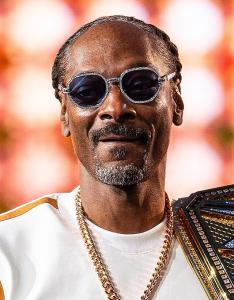
What Did I Learn From Snoop Dogg?
Is all I needed to know about how to hold oneself in a proper faith-based posture what I truly learned from Snoop Dogg? The point can be made, but it may be more accurate to consider how we can and should walk with a firm faith-based posture, which is what Snoop Dogg shares for us all to learn.
“Now all has been heard; here is the conclusion of the matter: Fear God and keep his commandments, for this is the duty of all mankind. For God will bring every deed into judgment, including every hidden thing, whether it is good or evil” Ecclesiastes 12:13–14 NIV.








 Ad-Free & Subscriber Log-In