

When you see a tagline like this, you know there’s going to be a response coming.
“Conservatism is rising. Just look at the music. Tradpop is dominating the charts and reflecting the conservatism of society” (Devika Rao, The Week US, August 21).
The article argues for the prominent return of conservative values, based on the inclusion of Christian-centered, Christian-inspired works charting in the Top 40/Top 50 throughout the 2025 summer. Justifying this inclusion in the rise of the current administration, the article cites Rolling Stone, Vox, Artistrack, and NPR as evidence. Qualifying a cultural desire to return to times long ago, the marketing anthem “Make America Great Again (MAGA)” is seen as the catalyst for this cultural shift.
“Much of this was attributed to President Donald Trump’s campaign, which was “based in part on nostalgia for a formerly ‘great’ time period in U.S. history when white identity was unthreatened and women held traditional roles.” Since Trump’s victory, Christian and Christian-adjacent music, especially by men, has broken its way into mainstream culture, capturing the zeitgeist of this political era. “In a time of increased polarization around religion, Christian-coded music has finally broken containment and conquered the airwaves,” (qtd. in The Week US, August 21).

Devika Rao, the author of “Conservatism is rising. Just look at the music: The radio reflects American culture” (The Week, August 21), works to claim a significant rise in faith-based, Christian-influenced work on the pop charts. For the author, this is evidence of a shift in the “zeitgeist” of American pop culture.
Taking a closer look at the Top 40/50 charts (August – September 2025), there is some room for this perspective claimed by the author. However, to claim that the zeitgeist of contemporary pop music is moving toward a faith-based, Christian-influenced musical landscape may overlook the scope and totality of the Top 40/50 charts.
I argue that some influence is seen in these charts by a select number of performers. Their musical presence does follow their personal values. However, these are limited and may not be readily recognized by most pop music fans.
The article encourages a critical review of these charts to see where and how these select performers, those noted in the article, are contextualized in the current pop music landscape. Reviewing YouTube, iTunes, and Top 40 Charts.net, there is some overlap with the rating, yet enough of a difference to question the argument presented in the original article by Devika Rao.
Mean What You Say
“It’s time to face the music. Conservative ideals have made their way back into mainstream pop culture. For the first time in more than 10 years, songs based on faith have been dominating the charts. This aligns with society’s shift toward more ‘traditional values'” (The Week, August 21).
Though there is no doubt that there are some artists ranking in the Top 40/50 who hold conservative values. To go so far as to say that the zeitgeist (read: the context of the culture) now is narrated by these changes is a bit of a robust statement.
A review of the Top 40/50 from the start of August-September 2025 reveals some truth about charting artists, the article supplies. However, there are others on the list who stand in contrast to this sanitizing discourse.
When Hunrx Ejae, Audrey Nuna & Rei Ami rank #1 (iTunes Charts, Top 40 Charts), and the article’s favored Alex Warren ranks #2, there is a thin line to divide here. Can the article say that there is a shift in the culture toward conservative values based on such a close ranking? Making the counter-argument, the result could be read as a tie.
Continuing further on the list provided by Top 40 Charts, we see Saja Boys, Andrew Choi, Neckwav, Danny Chung, Kevin Woo & Sam Uil Lee ranking back to back. The next time an artist the article supports is listed comes either with #8, Justin Bieber, “Daisies,” or Benson Boone, “Beautiful Things” at #17. This shows quite a divide between what the article qualifies as conservative music versus secular, sex-laden, scandalous video, and quasi-raunchy lyrics in pop music. Therefore, how can the article state that there is a shift in the zeitgeist? Further, the article claims the shift in Christian and Christian-adjacent music, which it says “has broken its way into mainstream culture, capturing the zeitgeist of this…era” (The Week, August 21). The article continues by quoting Vox, stating, “In a time of increased polarization around religion, Christian-coded music has finally broken containment and conquered the airwaves” (Vox qtd. in The Week, August 21).
On the iTunes Charts, the artist Cat Stevens ranks at #5, where Alex Warren and Luke Combs’ live version of “Ordinary” is listed at #14. Though up three levels and residing on the chart for twenty-five days, this puts fifteen tracks between the first faith-based work and the second. Such a point cannot be overlooked. It would be more apt for the author of the original article to qualify that there are works on these various charts that reference faith-based works and artists with conservative values. To publish an article making dramatic claims, relying on journalistic opinions rather than critiquing the pop music charts themselves, is problematic. A short review of the common pop music charts illustrates the actual musical zeitgeist. Though the majority of works and artists on these charts are not consistent with the argument in the original article, the reality is present.
Kendrick Lamar teams with the overly hyper-sexually explicit SZA on “Luther,’ listing at #21 on the Top 40 Charts. The article’s favored Benson Boone returns at #26. The spread between an earlier work by Benson Boone, “Beautiful Things,” which lists at #17, is nine. Again, such a spread in conservative-influenced artists, even by this one artist in particular, appears more sparse and wide-ranging on the Top 40/50 than the article would have readers assume.
A Shift Or An Inclusion
There is no doubt that the Top 40/50 list from late summer 2025 does include a shift from that of other years, with the inclusion of a broader range of artists. However, to dismiss the majority of the works on the list, which follows an industry, economically generated, musically minimal, hyper-sexualized visual and sound style as not being relevant or articulating the audience’s contemporary interest points to the overt bias of the article. Providing a balanced approach to the Top 40/50 charts, noting the inclusion of more conservative musicians would be more apt for a reading. Leaning heavily on the inclusion of select artists as a shift in culture and sound interest for pop culture is an empty assumption.

Another artist, the article uses as an example, is Jelly Roll.
“Christian artists like Jelly Roll and Brandon Lake have also been featured on the Billboard Hot 100” (The Week, August 21).
In looking at the noted pop music charts, Jelly Roll ranks #86 on Top 40 Charts, #32 on iTunes Charts, and does not make the YouTube Popular Top Songs, 2025, which caps the list at thirty. This does qualify with the noted comment that Jelly Roll ranks within the top 100 artists for the reporting cycle. Leaning on this low-ranking artist as evidence for a shift toward faith-based music dominating the pop music charts is a bit of a stretch.
Looking Under Another Rock
If we use another barometer to gather an understanding of the listening interest of contemporary pop culture, YouTube provides the “Charts, August 2025, Top Songs This Week, August 2025.” This list has been updated to date, August 31/September 1, with the range of viewers being 21,851 per day, and 1.2 million views as of August 2025.
The limited number of spaces available on this chart makes the ranking more critical. The videos included are based on YouTube channel views and the analytics from pop music charts. Both iTunes Charts and the Top 40 Chart yield the best selections from across viewer analytics to gather the most accurate listening and viewing of music throughout all genres.
A critical review of the YouTube Popular Top Songs list stands in stark contrast to the other journals and charts the article used to support its argument. The first time a supported artist from the article is seen, Benson Boone, ranks at #6. This states that five other selections do not satisfy the article’s conservative musical value. Rightly so. Such artists as Lady Gaga and Bruno Mars would have a hard time fitting the mold of being a conservative musician. Renee Rap, who ranks twice before Benson Boone, and Billie Eilish would have an equally difficult time with this definition. The prized Alex Warren’s track “Ordinary” does not make the YouTube list. Benson Boone, who is listed twice on the YouTube list at #6 and #28, is surrounded by such artists as Sabrina Carpenter, Billie Eilish, Doja Cat, Eminem, and Pharrell Williams.
An analysis of the charts, taking into account the articles that qualified, supported, and promoted conservative artists, illustrates that the artists mentioned and contextualized as evidence for a cultural shift toward conservative values are not chart-topping, as noted. The evidence states that there is a majority of lyrically bleak, sex-driven, drug culture-infused, industry-created artists, ranking well over a conservatively valued artist.
What’s In A Word Anyway?
“Summer 2025 has been a “stark cultural contrast from last summer,” said Semafor. This summer has been dominated by “tradpop,” a term “used to describe a hybrid of traditional pop infused with spiritual and country music elements,” (Artistrack, qtd. in The Week US, August 21).
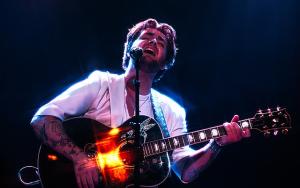
Tradpop, as a term, works. To position this as a genre is to place it as a subgenre of pop music, with an emphasis on “sub.” Positioning tradpop as a subgenre denotes the limited influence of this external genre.
“Songs under this umbrella ‘often include lyrics centered around family, faith, personal values and resilience’” (Artistrack, qtd. in The Week US, August 21).
Retaining tradpop in such a location allows for whatever hybrid styles the external genre desires to include. This placement allows for the music and artists to fulfill the white privilege identity and conservative political values that it desperately holds. The obvious outcome and analysis of the article’s provided sources clearly states the dominating pop music genre is filled with works and artists producing chart-topping sights and sounds outside of a conservative valued music discipline. This evidence is clear; audiences are seeking to support mindless and anemic musical works.
“Christian artists like Jelly Roll and Brandon Lake have also been featured on the Billboard Hot 100…It used to be that Christian music felt like a lesser version of whatever was popular,” said Holly Zabka, the president of Provident, a Sony subsidiary dedicated to Christian music, to NPR. In the music scene today, Christian artists “can now simply exist on the same level as all the other artists in the world” (qtd. in The Week US, August 21).
Readers will see “Billboard Hot 100” and possibly “Sony” in this part of the article. What is missed is the relationship these elements have overall. The term “featured” before “Billboard Hot 100” will be overlooked. This leads one to believe the artists listed before, Jelly Roll and Brandon Lake, are at the top of this “Hot 100” list. This is not the case.
“Sony” is a term nearly synonymous with the music industry. To see this word, and attached to the included artists, again, leads readers to believe that not only is a major recording label supporting conservative-valued artists, but also the tradpop genre. Again, this is a false assumption. Yet, the product placement of this word overlooks the entire statement, “Provident, a Sony subsidiary dedicated to Christian music” (qtd. in The Week US, August 21). The sentence actually is referencing Provident, which is a subsidiary of Sony. The word placement is a nice touch to have readers believe that Sony is supporting tradpop and “dedicated to Christian music.” Again, not a true claim.
Where Are We?
The article by Devika Rao has an attractive title. As one stepped into the music industry, the title caught attention. After giving this article fair and multiple readings, the points articulated here continued to be unanswered. The spark to respond comes from the desire to provide a balanced perspective on music and cultural discourse. What is absent throughout the article is what pop music charts the author reviewed before publishing this article. There is plenty of content provided by music journalists and secular music magazines. However, there is no reference to any pop music chart reviewed. When constructing such an article, for a major online magazine, this is a primary research technique to conduct, reference, and frame the argument further. Readers will be drawn by a catchy title and prominent music journals/magazines cited. However, those well-versed in contemporary pop music, whether faith-based or secular, will be looking for what charts to review to gain additional information and listening.
When an article makes such a firm position about pop culture, it is necessary to give the article an equally firm review and critique. This level of analysis unearthed the visible potholes in the analysis. Cultural critics should not overlook such an article. Deciding for readers based on wordplay and inaccurate data reading breeds misinformation or, to use a term in the current zeitgeist, “fake news.”











 Ad-Free & Subscriber Log-In