

Pop Hip Hop has strong implications. The “Pop,” when listed as a proper term, gives credit to a firm establishment of a genre. When listed in the diminutive “pop,” most understand this as a subgenre. Hip Hop holds a similar position with the title reference.
When reading Christian Hip Hop, the application of contemporary theomusicological discourse is necessary. The core elements of theomusicology must be engaged: personal testimony, discipleship, evangelism, biblical-centered lyrics/text, community, and activism. Without the involvement of the core elements of theomusicology, reading Christian Hip Hop, and the inclusive Christian music genres, the contextualization of theology through expressive culture is weakened.
“This Book of the Law must not depart from your mouth; meditate on it day and night, so that you may be careful to do everything written in it. For then you will prosper and succeed in all you do” (Joshua 1:8 NLT).

Framing Pop Music
The major centers of Christian Hip Hop continue to serve the broader Christian community with updates, news, new artists, and commentaries on what has become the “standard” for Christian Hip Hop. Sources such as Rapzilla, CCM (contemporary Christian music), and the Christian Beat are the top sources for those seeking to learn about and indulge in new Christian music.
Giving a closer review of these sources, a consistent profile comes into focus. Popular artists rise to the surface. A common theme resonates through each. Sources that otherwise appear open to sharing the new work in Christian music are seen as aligning with a particular style, genre, and intent. Rapzilla focuses on Christian Hip Hop, CCM elects to promote general Christian pop music for a worship-style audience, and the Christian Beat works to serve a similar worship-focused audience who may be more mature in age and are looking for music close to an R&B style.
When Pop Music Is Not Pop Music
If we understand the directions of each of these three top Christian music sources, the term “pop” becomes less of a reference to “popular” music and more of a “commercial.” Artists who are top-selling or streaming artists are the ones who gain the most visibility. New music, therefore, is the new track from these select artists. “Popular” music in this category reminds one of the historic payola scandal, where DJs (disc jockies) were paid by record companies to play certain artists several times during their on-air programs. Radio stations became a resource for conditioning what pop music was based on the economic gain from the record companies.
“…[W]ithin the music business, Payola referred specifically to a practice that was nearly as old as the industry itself: manufacturing a popular hit by paying for radio play” (Editors, History, The Payola scandal heats up, May 27, 2025).
The noted top three Christian music resources may not be working directly with this process, but the continued presence, showcase, and overwhelming visibility of specific artists leans in the direction of the spirit of payola. Now illegal, the intent and leverage of payola cannot be overlooked as a continued working mechanism in the music industry.
“The Payola scandal reaches a new level of public prominence and legal gravity on February 11, 1960, when President Eisenhower called it an issue of public morality and the FCC proposed a new law making involvement in Payola a criminal act” (Editors, History, The Payola scandal heats up, May 27, 2025).
What payola brought into question was the moral concern of how popular music was, in reality, understood as being popular by and for the American cultural fabric.
“Though it is widely agreed that the famous 1960 hearings on Payola merely reorganized the practice rather than eradicating it, those hearings did accomplish two very concrete things that year: They threatened the career of American Bandstand‘s Dick Clark and they destroyed the man who gave rock ‘n’ roll its name, the legendary Cleveland disk jockey Alan Freed” (Editors, History, The Payola scandal heats up, May 27, 2025).
Examining the artists who are the most prominent on the top three Christian music resources, it becomes evident that Christian pop, Hip Hop, worship, and contemporary music genres are determined by a market, economic definition. This disturbs the involvement and necessity of theomusicology to be applied.
Reclaiming Pop Music
Positioning the term “pop” as a vehicle for a “popular” identity demands a repositioning of the term.
Ashley Crossman, writing for Thought Co., gives a starting point on how pop and pop culture can be reclaimed.
“Popular culture (or “pop culture”) generally refers to the traditions and material culture of a particular society. In the modern West, pop culture refers to cultural products such as music, art, literature, fashion, dance, film, cyberculture, television, and radio that are consumed by the majority of a society’s population. Popular culture is comprised of types of media that have mass accessibility and appeal.
“The term ‘popular culture’ was coined in the mid-19th century, and it referred to the cultural traditions of the people, in contrast to the ‘official culture‘ of the state or governing classes. In broad use today, it is defined in qualitative terms—pop culture is often considered a more superficial or lesser type of artistic expression” (Ashley Crossman, Sociological Definition of Pop Culture: The History and Genesis of Pop Culture, Thought Co., April 29, 2025).
There is plenty to glean in this general description of pop culture to help realign the term for Christian music. Accessing theomusicology, pop culture, or specifically pop Christian music, is a majority of music expressed through cultural signifiers that serve the mass population. Coupled with the core elements of theomusicology, pop Christian music would maintain the core contemporary elements of theomusicology with musical styles that serve the internal and external communities (read: sacred and secular) and mass population (read: faith-based and non-faith-based).
Taking the analysis a bit deeper, a critical socio-religious reading extends the discourse on repositioning Christian pop music culture on the foundation of contemporary theomusicological elements, rather than an economic payola-styled distortion, understanding, and compressed accessible application.
“In his wildly successful textbook ‘Cultural Theory and Popular Culture’ (now in its 8th edition), British media specialist John Storey offers six different definitions of popular culture.
- Popular culture is simply culture that is widely favored or well-liked by many people: it has no negative connotations.
- Popular culture is whatever is left after you’ve identified what “high culture” is: in this definition, pop culture is considered inferior, and it functions as a marker of status and class.
- Pop culture can be defined as commercial objects that are produced for mass consumption by non-discriminating consumers. In this definition, popular culture is a tool used by the elites to suppress or take advantage of the masses.
- Popular culture is folk culture, something that arises from the people rather than is imposed upon them: pop culture is authentic (created by the people) as opposed to commercial (thrust upon them by commercial enterprises).
- Pop culture is negotiated: partly imposed on by the dominant classes, and partly resisted or changed by the subordinate classes. Dominants can create culture, but the subordinates decide what they keep or discard.
- The last definition of pop culture discussed by Storey is that in the postmodern world, in today’s world, the distinction between “authentic” versus “commercial” is blurred. In pop culture today, users are free to embrace some manufactured content, alter it for their own use, or reject it entirely and create their own” (Ashley Crossman, Sociological Definition of Pop Culture: The History and Genesis of Pop Culture, Thought Co., April 29, 2025).
Taking each point and seeing how it aligns with the elements of contemporary theomusicology, a different image of how Christian pop music can be ascertained.
Point 1 looks to evangelism and discipleship. Point 2 frames personal testimony. Point 3 captures biblically-centered lyrics/texts. Point 4 is the solid access to community and activism. Point 5 circles back to evangelism and discipleship. Point 6 illustrates the dynamic referential activation of personal conversion and spiritual relationship, and is articulated in personal testimony.
It is this latter descriptor, point 6, which the three prominent Christian music resources lean on to qualify their manufactured market-centered, economically-driven evaluation of Christian music.
“…[I]n the postmodern world, in today’s world, the distinction between “authentic” versus “commercial” is blurred. In pop culture today, users are free to embrace some manufactured content, alter it for their own use, or reject it entirely and create their own” (Ashley Crossman, Sociological Definition of Pop Culture: The History and Genesis of Pop Culture, Thought Co., April 29, 2025).
“These people honor me with their lips, but their hearts are far from me” (Matthew 15:8 NLT).
The three main Christian music resources work to establish an “authentic” position of Christian music, blurring the lines between pop culture (read: secular, non-faith-based) through an embraced manufactured product (read: Christian music), altered and produced by its own means (read: economic gain), rejecting any expressive work that is not aligned with the “authentic” definition.
Ironically, the argument in point 6 noted by John Storey, “authentic” versus “commercial,” comes together in the marketing of Christian music from the representation of the three major Christian music resources. The credibility and value of theomusicology as an aid to keep faith-based music contextualized within a biblically sound expressive environment is seen as the external, oppositional perspective.
The favored profile, recognized by the three main Christian music resources, is a pop, worship-style music with high potential for record sales, major online streaming and downloads, and an expanded in-demand touring schedule. The bottom line, pop Christian worship-style music has been reduced to an economic market-focused product, taking hold of the spirit of the payola process, advertised as authentic Christian worship music. The subtextual narrative, “If you don’t subscribe to our resource(s), follow, and buy the works from the artists we support, you’re not getting ‘authentic’ Christian worship music.”
“But I have this against you, that you have abandoned the love you had at first” (Revelation 2:4 NLT).
Audio Examples:

The First Shall Be The Last
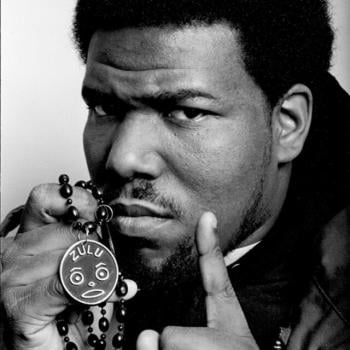
These two examples shed light on how the top three Christian music resources contextualize, represent, and control pop/Hip Hop Christian music. Juxtaposing an artist who would be accepted, DMX, with one who would not be accepted, Holy Ghost HotBoy, underscores the institutionalized payola spirit still at work in the contemporary pop Christian music genre. Discrediting this recognition follows the line of thinking established by the top three Christian music resources and the contemporary Christian pop/Hip Hop market. Giving a valuable read of the expressed operation of the contemporary Christian pop/Hip Hop market beings to unveil the depth of distractions mechanically and systematically at work in this corporate structure.
Some artists supported by the top three Christian music resources and the contemporary Christian pop/Hip Hop market display a “God over money” identity. This may be the intent of the artist, but it is, as the evidence shows, not the intent of the contemporary Christian pop/Hip Hop market. God may come first for the artist, but the market should be asked, “Who do you serve?”
“Trust in the Lord with all your heart and lean not on your own understanding; in all your ways submit to him, and he will make your paths straight” (Proverbs 3:5-6 NLT).












 Ad-Free & Subscriber Log-In