

“Fear thou not; for I am with thee: be not dismayed; for I am thy God: I will strengthen thee, yea, I will help thee, yea, I will uphold thee with the right hand of my righteousness” (Isaiah 41:10 KJV).
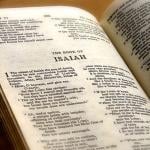
The Book of Isaiah remains a pillar for Christianity. A profound book of the Old Testament that strengthens, humbles, brings inquiry, and situates affirmation in Christianity. Written by the prophet Isaiah (739–681 BC), the work predicts the birth of Christ and unfolds the trajectory of His suffering for Christian salvation.
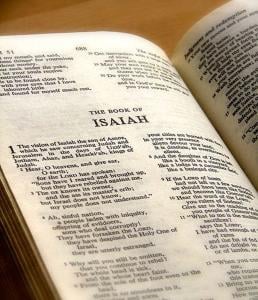
Insight for Living‘s Pastor Chuck Swindoll noted the following,
“The book of Isaiah provides us with the most comprehensive prophetic picture of Jesus Christ in the entire Old Testament. It includes the full scope of His life: the announcement of His coming (Isaiah 40:3–5), His virgin birth (7:14), His proclamation of the good news (61:1), His sacrificial death (52:13–53:12), and His return to claim His own (60:2–3). Because of these and numerous other christological texts in Isaiah, the book stands as a testament of hope in the Lord, the One who saves His people from themselves” (Insight for Living, 2009).
The resource Biblical Chronology notes the following contemporary application of Isaiah.
“Isaiah’s messages on justice, repentance, hope, and God’s sovereignty remain applicable. It calls believers to live righteously, trust in God’s promises, and look forward to His ultimate restoration of all things” (Biblical Chronology, April 21, 2025, emphasis in the original).
These points provide a brief overview of the depth and breadth of this seminal book. Further, three key themes from the Book of Isaiah help readers focus on the arch of Isaiah’s prophecies and their application to our contemporary times.
- Judgment: Isaiah warns of the consequences of turning away from God. He emphasizes that disobedience leads to exile and suffering. For example, chapters 1-39 detail God’s pending judgment on Israel for its idolatry.
- Comfort: Amidst the warnings are messages of hope and comfort. Isaiah reassures the exiles of God’s promise to restore them. The famous passage in Isaiah 40 speaks of comfort for God’s people, highlighting His care.
- Messiah: Isaiah introduces the concept of a future Messiah. Chapters 7:14 and 9:6 forecast the coming of a child who will bring peace. This prophecy finds resonance in New Testament readings, as Christians identify Jesus as the fulfillment of these predictions (Biblical Chronology, April 21, 2025, emphasis in the original).
Commonly divided into three sections, 1–39, 40–55, and 56–66, the Book of Isaiah holds a fortitude of biblical knowledge, faith-based understanding, personal application and devotion, reconciliation, and the affirmation of Christianity. A major tome in the Christian bible, and standing equally important in Judaism, the Book of Isaiah has an interesting history when it was “discovered.” The Times of Israel recounts the following,
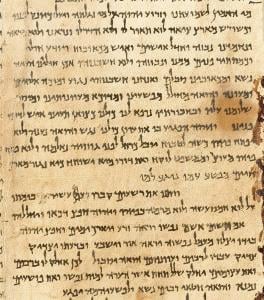
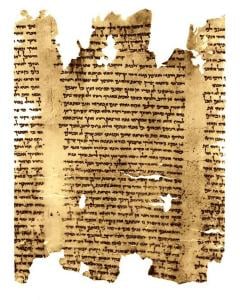
“[T]he oldest nearly complete manuscript of the Book of Isaiah was found among the Dead Sea Scrolls in 1947 by Bedouin shepherds near the Qumran caves in the Judean Desert. This artifact, known as the Great Isaiah Scroll (1QIsa a), is about 7 meters long and dates to around 125 BCE. It is the largest and best‑preserved biblical scroll ever found and is considered the oldest nearly complete book from the Hebrew Bible” (The Times of Israel, February 24, 2026).
Given these historic and contemporary points, the Book of Isaiah would be one profoundly aligned for a theomusicological employment and contemporary musical revelation. It’s the Heavy Metal band Warrior Psalmist who heard this call to action and provided selections from the Book of Isaiah, aptly expressed through their crunchy, gospel chorus-laden heavy metal approach.
A Different Theomusicological Approach
“Then I heard the voice of the Lord saying, ‘Whom shall I send, and who will go for us?’ And I said, ‘Here am I. Send me!’” (Isaiah 6:8 NKJV).
The Warrior Psalmist is a Christian Heavy Metal band. Embracing the core elements of the Heavy Metal genre (distortion, power chords, edgy guitar solos, deep, guttural vocals) along with open, strategically placed supporting choral lines, this band has presented a different approach to the Book of Isaiah. The entire book is not presented, but the arch and scope of this presentation is interesting to review.
Isaiah, Shouts, Full Album, April 23, 2026,
What the Warrior Psalmist does is take the scripture from different parts of the Book of Isaiah and represent the scripture through the band’s Heavy Metal style. For example, Isaiah 1, “Wash and Be Clean,” illustrates the expressive strategy.
Wash and Be Clean, Isaiah 1
The Warrior Psalmist invites those who are interested in Heavy Metal but may not be aware of Christianity, least of all the Book of Isaiah, the opportunity to enter into a contemporary, alternative faith-based application of scripture. The direct approach and ease of access offered can be of use for multiple audiences.
It Might Be A Good Fit
The question that would come to mind, from those outside of the Heavy Metal genre, would be “Is this genre and style applicable for such a weighty and important book of the Bible?” It can be argued that the rhetorical answer would be “Yes.”
It’s not uncommon for contemporary musicians and composers to take scripture or even full biblical texts and set these to music. The abundance of these productions is typically aligned with musical genres and styles most Christian audiences would find acceptable (i.e., gospel, contemporary pop, pop rock, quasi-country, alternative rock). To qualify one musical genre or style over another establishes an essentialist, authentic perspective founded on ownership of how scripture is to be musically represented. This action situates a musical segregation, a dominant aesthetic perspective, and an other-ing of scripture. Marginalizing how biblical texts are musically constructed for acquisition, and serving as an aesthetic discipleship, artistic testimony, community activism, and evangelism, works against the Great Commission to make disciples (Matthew 28:19-20) and the core elements of theomusicology.
The Warrior Psalmist provides an alternative expressive discourse, amplifying the Book of Isaiah. Taking this theomusicological approach, what better genre can there be than Heavy Metal to express the weight, power, depth, and strength of this important Biblical book? The piercing vocals, the screaming guitar lines, the magnification of text from the use of a choir, and the hammering of the drums can be seen as metaphors for how preachers and pastors have shared the Book of Isaiah.
Expression Over Separation
Forming a division between musical genres and styles that are allowed to speak about scripture fortifies a border between faith-based and non-faith-based listeners. Such an action maintains a posture of privilege and an insider-outsider binary without the ability for non-faith-based individuals to engage Christianity in an alternative, contemporary, and personal manner. What the Warrior Psalmist does, by representing this important biblical text, selections from the Book of Isaiah, is give license and liberty to those who are both outside of Christianity and those within the faith-based community to experience this important historic book from a different perspective. The engagement of Heavy Metal works as a sonic reality, an expressive realization of the necessity for one to comprehend the weight of the Book of Isaiah and witness the text as a living document, available for all.
Theomusicologically, the Warrior Psalmist executes a Heavy Metal expression and reading of the Book of Isaiah that does not compromise either scripture value or genre potential. What the Warrior Psalmist does, by the production of this formidable artistic task, is demonstrate how important multiple voices are to start the conversation about scripture, recognize the contemporary value of scripture, and provide an alternative reading of the Book of Isaiah for those who may otherwise feel objectified, marginalized, and aesthetically segregated from Christian music.
A perfect example of this is the track “Holy Is The Lord” based on Isaiah 6.
The core theological philosophy and call to action in this chapter are dynamically expressed in the musical representation. Cutting between vocals and screaming guitar lines with a choral background, this chapter, presented by the Warrior Psalmist, balances tension and release, illustrating the embedded nuance of the chapter. Fans of Heavy Metal will appreciate the interplay of scripture text and sound, while those knowledgeable of the Book of Isaiah will gain a varied approach to the text, sonically narrated to give life and meaning to the prophecy.
The Warrior Psalmist was apt not to set the entire Book of Isaiah to music. Doing so would run the risk of super-saturating the intent of the work. Electing to set an arch of the biblical text to Heavy Metal, the Warrior Psalmist left the door open for further examination and reading of the text by the listener. This approach speaks to both faith-based and non-faith-based listeners, who will have a similar and varied understanding of the scripture. Resisting the temptation to set the entire Book of Isaiah to music, the Warrior Psalmist heightens the contemporary urgency of reading the entire book, taking into account the focused power of Isaiah’s prophecy even without knowing that this strategy is being employed. A credible technique, an artistic choice, a sound theomusicological approach, a head-bangers delight, and a Bible-thumping, persistent, and unwavering beat, each working together as a sounding discourse of biblical truth, revelation, individual embracing, and a timeless spiritual vernacular.
“The Spirit of the Sovereign Lord is on me, because the Lord has anointed me to proclaim good news to the poor. He has sent me to bind up the brokenhearted, to proclaim freedom for the captives and release from darkness for the prisoners.” (Isaiah 61:1 NKJV).











 Ad-Free & Subscriber Log-In