

National Superhero Day was April 28—a day to salute one of America’s greatest contributions to pop culture. Ever since Superman started tossing cars in 1938, superheroes have been an integral part of our entertainment fabric. And they’ve not just entertained us; they’ve sometimes inspired us. T
But despite their moniker, these superheroes—especially in the last couple of decades—aren’t always the most heroic kids on the block. Sometimes, even these high-flying wonders can fall.
I’ve always loved me some superheroes. I’ve seen and reviewed most of the last 20 years’ worth of superhero movies from my perch at Plugged In, and I’ve even written a book about one. But lately, with the news so filled with rage and despair and just plain craziness—when it seems like the world could use a real role model—I’ve been thinking about what it means to be the good guy today. What it means to be a hero.
I have a few thoughts—and a few corresponding examples from the movies. Only one superhero made the cut for this list: Others could’ve landed on it, of course—it seems almost criminal that Batman, Superman and Captain America are all sitting on the sidelines for this exercise—but it felt like more grounded, less flashy heroes felt more appropriate.
So with that preamble out of the way, let’s dive in with some heroic characteristics and the characters that show them best.
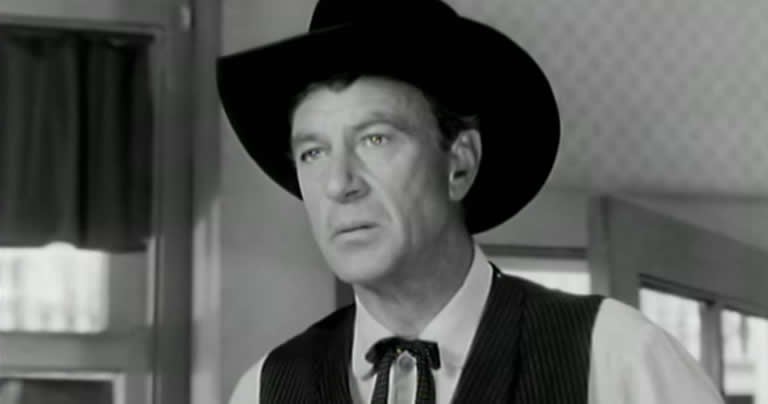
COURAGE: Will Kane, High Noon
Everyone knows that heroes must be willing to stand and fight for a righteous cause. Sometimes that can be a more figurative battle: The climax of Mr. Smith Goes to Washington is Jimmy Stewart’s Jefferson Smith giving an exhausting filibuster. Real-world heroes such as Gandhi and Martin Luther King, Jr., both showed courage by not fighting (as chronicled in Gandhi and Selma, respectively).
But for my money, few characters exemplify courage better than Gary Cooper’s Will Kane. In 1952’s High Noon, Marshal Kane is just about to retire and settle down with his beautiful new wife, Amy Fowler (Grace Kelly). But a gang of ruffians is coming into town the day before Kane and Amy are scheduled to leave—and they aim to kill Kane. As the town seems to collectively turn its back on the marshal, Kane has a simple choice: Leave and live, or stay and likely die.
Given its inclusion here, you likely know what he chose. While High Noon was panned by some for being too slow when it was released, this slow-burn Western earned Cooper an Oscar for Best Actor and is, unquestionably, one of the best Westerns ever made. Moreover, it sets the bar for courage that not even Captain America can quite hurdle.

HONESTY: Riley, Inside Out
Honesty is a critical, albeit underrated, element of heroism. Heroes must tell the truth: It’s a reason why George Washington became a national hero (what with his whole cherry tree thing) and Richard Nixon never got close. But it’s not the sexiest of values, and it can be a tricky one to illustrate in the movies.
That’s why I’m going with Riley, in part because her relationship with hard truth-telling is so subtle and, on the surface, so un-heroic. In Pixar’s magnificent 2015 film Inside Out, Riley’s family moved from Minnesota to California not-so-long ago, and the move’s been hard on the little girl. But—in part because her mother encourages her to put on a happy face for her father’s sake—Riley (voiced by Kaitlyn Dias) spends a good chunk of the film pretending that she’s fine. Everything’s fine. Until, quite obviously, it isn’t.
Finally, at the end of the film, she confesses. “You need me to be happy—but I want my old friends, and my hockey team,” she says, on the verge of tears. “I wanna go home. Please don’t be mad.” The scene feels both heartbreaking and beautiful: She wanted so much to please her parents. But in the end, she opted for truth. Hard truth that changed nothing, but changed everything. Sometimes honesty isn’t just about telling truth to power. It’s about telling the truth to ourselves.

HUMILITY: Cleo, Roma
It feels almost un-American to list this as a heroic virtue. When so many would-be heroes—more in the real world than fiction—shout, “Hey, look at me and how great I am!”, the idea that someone would instead downplay themselves to lift up others seems counter-cultural. Indeed, it’s counterintuitive. If heroes constantly encourage people to turn their attention away from them, how will anyone know about their heroism?
Roma, a deceptively quiet 2018 masterpiece from Netflix, gives us just such a hero in Cleo (Yalitza Aparicio), a Mixteca housekeeper for a family in Mexico City. Cleo does her best to blend into the background: It’s part of her job, after all. But she’s the glue that holds her employers’ family together. And when she becomes unexpectedly pregnant, that family realizes what a critical role she plays for all of them. I appreciate movies that somehow manage to celebrate unflashy virtues, and humility is—by its nature—the antithesis of flashy. Bravo to director Alfonso Cuarón for crafting this humble, beautiful, poetic work.
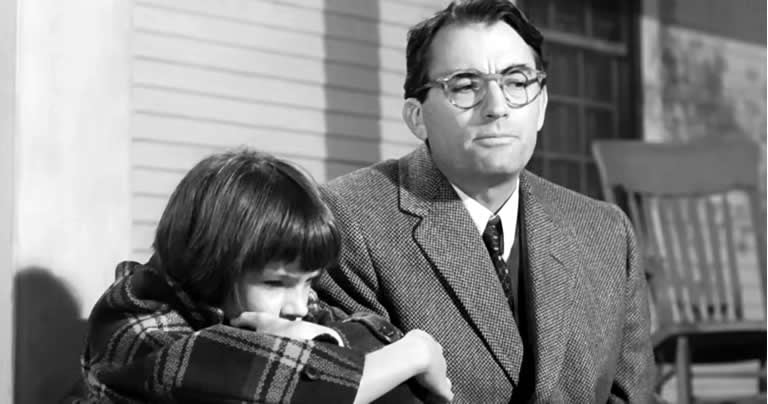
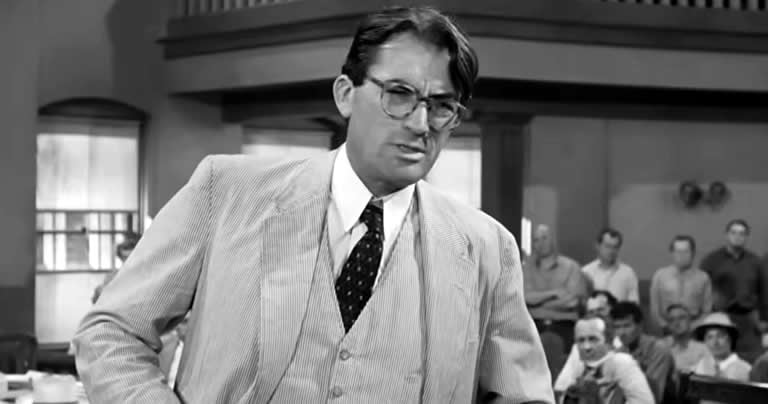
INTEGRITY: Atticus Finch, To Kill a Mockingbird
This comes with some of the virtues we’ve already talked about, and some virtues that are yet to come. But when I think of integrity, I think of one key element: You do what’s right, even when it’d be convenient (and even advisable) to look the other way.
And that sense of integrity is the reason why Atticus Finch, the lawyer in 1962’s To Kill a Mockingbird, is listed as the American Film Institute’s top cinematic hero.
Finch (played by Gregory Peck) must defend an innocent African-American man against charges that he raped a white woman. That’s not easy in this era of the deep South: He knows the cost will be high—not only for him, but for the rest of his family. And he cautions his daughter, Scout (Mary Badham) that a lot of people in town feel like he shouldn’t have taken the case. When Scout asks her father why he did, Finch says, “For a number of reasons. The main one is that if I didn’t, I couldn’t hold my head up in town. I couldn’t even tell you or [his son] Jem not to do something again.”
Finch’s legal defense—inspired, effective, unforgettable—proves to be one of cinematic history’s greatest moments. And it’s a reminder to us all to stand up for what’s right, no matter the cost.
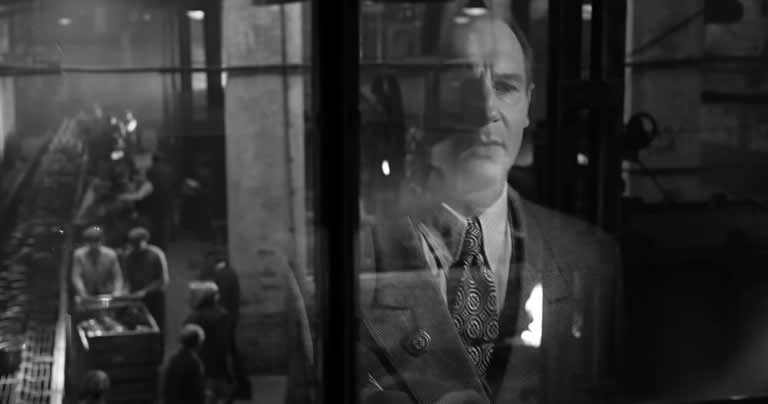
GENEROSITY: Oskar Schindler, Schindler’s List
This doesn’t refer to simply monetary generosity, of course. The idea of being generous can filter into plenty of other areas of our life without touching our wallets. The concept is all about putting others ahead of your own self-enrichment, and as such even the poorest of superheroes can and should embrace this sense of selflessness.
But here, let’s lean into both the literal and figurative meaning of the word—and to do so, it’s fitting to revisit Steven Spielberg’s 1993 black-and-white classic (curiously, the second “modern” black-and-white movie on our list). When the movie begins, Oskar Schindler (Liam Neeson) is a cynical businessman who wants to work with the biggest players in Poland at the time: Nazi Germany. He’s in it for the money: Heroism is the last thing on his mind. But as the film goes on, Oskar slowly changes. Yes, his dealings with the Nazis have made him rich—but he uses his fortune to save his Jewish workers. By the end of the war, Oskar is broke. But his workers give him a ring engraved with the Talmudic paraphrase, “Whoever saves one life saves the world entire.”
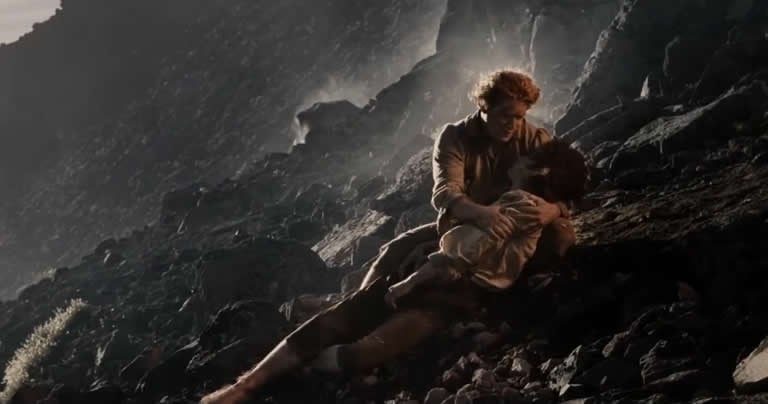
PERSEVERANCE: Frodo Baggins and Samwise Gamgee, The Lord of the Rings
The best of intentions don’t mean much if you can’t follow through. And sometimes heroism isn’t defined by one lightning-fast action but a slow, exhausting slog.
Welcome to Middle Earth, circa 3018 of the Third Age. The evil Sauron rules in Mordor and is prepping to overwhelm the rest of Middle Earth—and it’d be so much easier if he could find his magic ring. But in Peter Jackson’s monumental The Lord of the Rings trilogy (based, of course, on J.R.R. Tolkien’s books), that ring lies in the hands of the humble hobbit Frodo Baggins (Elijah Woods), who’s been sent to the heart of Mordor to toss Sauron’s favorite bauble into the fires of Mount Doom.
Accompanied by his faithful companion, Samwise Gamgee (Sean Astin), Frodo travels the length and breadth of Middle Earth to accomplish this task, enduring hardships and horrors aplenty along the way. Moreover, the ring itself is doing everything it can to bring Frodo down and return to its maker. Only Frodo and Sam’s collective ability to endure and persevere gives Middle Earth any hope. And in the end, even that is not enough: Frodo, exhausted, can go no farther—so Sam puts Frodo on his shoulders and carries him the rest of the way. Perseverance? Yeah, these hobbits can tell you all about it.
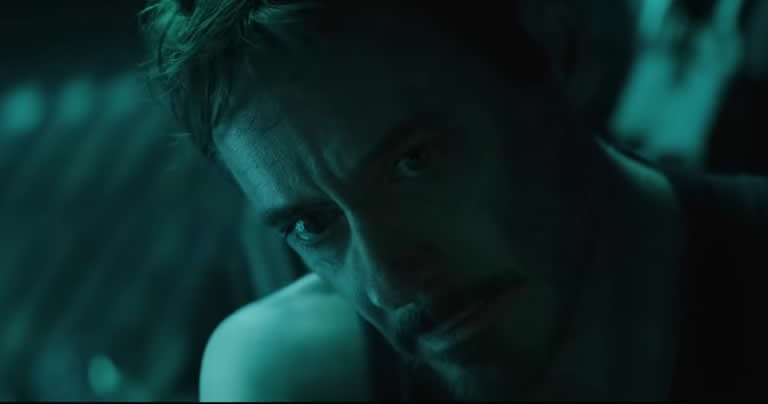
SACRIFICE: Tony Stark, Avengers: Endgame
Of all the traits listed here, this is perhaps the most heroic of them all—and the most explicitly Christ-like. And while the cinematic world has no lack of sacrificial heroes to point to, the one that came to mind immediately was Tony Stark’s Iron Man—a superhero who began his story arc as a deeply flawed wunderkind and made staggering progress toward true heroism along the way.
By Avengers: Endgame, there’s no question that Tony’s done his best to save the world at every turn. And in the previous movie, Avengers: Infinity War, it seems the cosmos has rewarded Tony (played by Robert Downey Jr.). In a literal snap (by evildoer Thanos wearing the godlike power of the Infinity Gauntlet), half the universe’s populace vanished. But while nearly everyone who was left behind lost someone who they loved, Tony was spared: He and the folks most precious to him remained.
But wouldn’t you know it, Endgame’s story arc gives Tony an impossible choice. Graced with the Infinity Gauntlet himself, he can “snap” the universe back to the way it was—but the resulting wave of power will undoubtedly kill him. Snap he does, though—sacrificing himself for a greater good. It was a stunning, fitting end to Tony’s nearly two-decade character arc—one that began with him saying this: “I shouldn’t be alive … unless it was for a reason.” That reason turned one of the Marvel Cinematic Universe’s most selfish superheroes into a Christ-like avatar—and brought at least a few fans to tears.
[If you’re interested in listening to me and my Plugged In cohort Adam Holz talk more about Iron Man, watch the video below.]
Are there other character traits that make up a hero? Undoubtedly. But in my opinion, these are the biggies. And as I think about how I could be a better person in my own life, this list might be a good place to start.











 Ad-Free & Subscriber Log-In