

“Do not follow other gods, the gods of the peoples around you” (Deuteronomy 6:14 NKJV).
Commercializing contemporary Christian Hip Hop
Recent articles from The Root, DLK Urban Gospel, and Hip Hop proclaim a clear, undisputed discursive trajectory for Christian Hip Hop, Gospel, and Gospel Rap. Titles such as “This New Wave of Black Artists is Fusing Christianity With Rap, R&B and AfroBeats” (The Root, February 11, 2026) and “The Future of Gospel EPs: Where Collaboration Is Headed Next” (DLK Urban Gospel and Hip Hop, April 8, 2026) tempt readers who are interested in the current movements in Christian Hip Hop. What these articles produce is a manufactured, self-referential, market-driven representation of Christian Hip Hop, Gospel, and Gospel Rap.
Even the subtitles codify this point: “From Lecrae to Limoblaze, these Christian artists are redefining gospel music and introducing a new generation to the genre one track at a time” (The Root, February 11, 2026). The artists included in each of these publications span the history of contemporary Christian Hip Hop with an emphasis given to the more charismatic, mega-church profile, prosperity gospel ideology, and vanity fair style of Christianity. Readers, then, are limited in the shared information, taking away a distorted, sociologically and philosophically deconstructed representation of Christian Hip Hop.
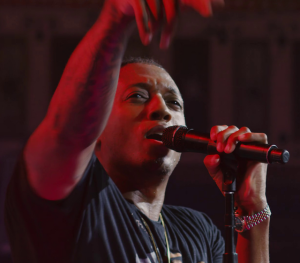
Placing economic value over biblical truth and using scripture references as trigger words/phrases to convey a false reference of Christianity defeats the importance of evangelism, discipleship, personal testimony, biblical-centered narrative, community support, and activism, or, in other words, the core elements of theomusicology. Publications framed as supporting faith-based discourse need to be critical of who they present, what the artists actually represent, how a published article will satisfy a faith-based audience, and to what degree they are willing to share core Christian values and beliefs. Operating outside of this objective relationship marginalizes faith-based literature, using, in this case, music and Christianity as a vehicle for market expression and economic gain.
The track “Lord and Savior” by Sam Rivera and Limoblaze points in the right direction. Used in the article published by The Root (February 11, 2026), this track begins to steer this capsizing musical ship in a direction noteworthy for interested faith-based audiences. The limitation remains the hypersensationalized image of Limoblaze and the near-comical landscape of the video.
“They lift it to their shoulders and carry it; they set it up in its place, and there it stands. It does not move from its place. Though one cries out to it, it cannot answer; it cannot save him from his troubles” (Isaiah 46:7 KJV).
The 1997 recording “Stomp!” by Kirk Franklin and God’s Property, defined by The Root as “encouraged millennials everywhere,” is a useful track to inspire interest in Gospel music. However, Kirk Franklin is more of a preacher than a rapper in this work. This would have been a useful note to state in the article, rather than leaving a reader to assume Kirk Franklin is the origin of Gospel Rap and contemporary Gospel music. Yes, there is a strong undercurrent of Gospel culture in the track “Stomp!” But, no, this is not the seminal work, as contextualized, giving the apex of contemporary Gospel music to arrive in 1997. That would defeat the included points of Angela Jollivette, “who previously oversaw the Grammy Awards’ Gospel and Contemporary Christian Music categories” and is cited throughout the article by The Root.

Giving Privilege and Authenticity
The online Christian Hip Hop/Gospel Rap journal DLK Urban Gospel published an article on April 13, 2026, that had a curious title, The Future of Christian Hip Hop: Where Faith, Culture, and Innovation Collide.
The article strives to articulate the future of Christian Hip Hop. However, the article misses the intent, confuses Christian Hip Hop with Gospel Rap, discredits theomusicology, and puts an emphasis on performer authenticity substantiated by public approval. The article emphasizes online exposure, which is valuable, but it overlooks how the core elements of theomusicology are necessary to be articulated. In doing so, the article turns to authenticity as the value, which is identified with audience approval, which the article equally states is not the overall intent for Christian Hip Hop, and, in a related article, is further contextualized in collaborations.
Given this argument, authenticity gives privilege, control, and authority to a particular artist, which, interestingly enough, DLK Urban Gospel and Hi Hop align with commercialized contemporary Christian artists. This further notes the misunderstanding and confused synonymous reading of Gospel Rap with Christian Hip Hop.
Gospel Rap is just that, rap, an element of Hip Hop culture, that is based on gospel, biblical text/lyrics, and is an element within Christian Hip Hop. Christian Hip Hop is an expression of Hip Hop culture, centering on Christianity, and includes the core elements of theomusicology (personal testimony, discipleship, evangelism, biblical text/lyrics, community, and activism). Confusing an area of Christian Hip Hop (read: Gospel Rap) with the larger archetypal genre (read: Christian Hip Hop) obfuscates how audiences, both faith-based and non-faith-based, will understand and come to engage the discourse.
In addition, what this misalignment does is place a biased commercialized emphasis on artists who marginally employ theomusicological elements in their work. Therefore, the weak productions by Lil Wayne (i.e., “His Name Is Jesus,” 2026) and the body of work produced by Lacre are granted privilege, control, and authority over the genre. This commercializes the genre, giving audiences little in the way of value, core Christian value, biblical truth, and community.
What takes place is a limitation of biblical knowledge, truncated scripture truth, and a marginalized, commercialized, pre-packaged Christian expression available online for the next download. This process sociologically, philosophically, and culturally deconstructs the agency of Christian Hip Hop. Publications, artists, online forums, and Christian music industry promoters who operate along this line put more emphasis and attention to the profile, visibility, and market sensibility of Christianity, using music, in this case, Christian Hip Hop, as their modality. The result is a trivialized, made-for-consumption, extracted, and tokenized form of Christian Hip Hop without sound biblical knowledge, intent, direction, or application.
Artists, Christian music industry promoters, and publications will argue against this analysis, but the evidence is sound and available. If this were not the case, artists such as Yung Lord Gospel (i.e., “God’s Power”) would not be ghettoizing Christian Hip Hop, including trigger words/phrases, and producing a mega-church, vanity fair Christian Hip Hop, charismatic, and economically-driven product rather than sound musical worship that seeks to share gospel truth, knowledge, and inspire community through artistic activism.
Potential Counterpoint
In contrast to the arguments put forth in articles from The Root, DLK Urban Gospel, and Hip Hop, several artists can be included. Da Young Disciples, Barrio But Born Again, Mikey So Christian, and Oddisee and Heno are a few examples.
Da Young Disciples is a collective giving attention to a youth-driven, contemporary Christian Hip Hop vernacular.
Barrio But Born Again is a critical Christian feminist Hip Hop representation. Interesting to note that the majority of pop Christian publications rely heavily on a male-centered musical expression. Therefore, it’s important to pinpoint that there is a strong contemporary critical Christian feminist Hip Hop voice active in the community, which focuses on the core elements of theomusicology.
Mikey So Christian is a work contextualizing community and the power of the biblical image. Emphasizing discipleship and evangelism, this work employs a contemporary, faith-based, street-preacher style, as noted throughout highly impactful Christian Hip Hop.
Mikey So Christian, With the Gospel (Feat. YMHim & Lul DreDay) Official Music Video, January 15, 2026
Oddisee and Heno are a duo that, on the surface, should not be profiled. Their narrative is complex, layered with personal testimony, and engages a critical application of Christian Hip Hop with a dramatic musical undercurrent.
Don’t Miss The Point Or Believe The Hype
Manufacturing music for a faith-based community. Turning the lens away from the core elements of theomusicology (discipleship, personal testimony, biblical-centered text/lyrics, evangelism, community, and activism). The exchange is for a mass-market (read: global) audience, with industry-focused commodification, a packaged product designed to meet an audience’s standards and style, with limited interest or investment in sharing biblical truth. Faith becomes the product; the artists become the salespeople. Sensationlizing Hip Hop through a socio-religious lens can produce a counterfeit representation of contemporary Christian Hip Hop.
The litmus test is, and should remain, how an artist and their work align consistently with the founding elements of theomusicology. However, this is well outside the discourse of Christian Hip Hop. Writers, advertisers, audiences, the recording industry, and artists/groups are more interested in the economic return on investment (ROI) than in the biblically centered work audiences, at their core, desire to have presented.
“Everyone is senseless and without knowledge; every goldsmith is shamed by his idols. The images he makes are a fraud; they have no breath in them” (Jeremiah 10:14 NKJV).










 Ad-Free & Subscriber Log-In