

In the first article in this series of three articles, “One Jesus, Four Gospels: Why They Disagree on Salvation,” we explored the four canonical Gospels for the assertions they have in common and especially for the variety of theologies which the various Gospel authors present.
We moved from basic personal theologies of Mark and Matthew to the community focus of Luke and the cosmic and mystical Gospel of John.
In the second article, we explored the theology of Paul the Apostle.
In this article, we will explore the unsettling theology of John of Patmos, the author of the book of
Revelation.

What does the book of Revelation say about how we might enter the Kingdom?
The book of Revelation is a major departure from the rest of the New Testament. The book was written by one who identifies himself as “John.” He gives no other identifying information. Scholars believe that he is not John, the son of Zebedee, nor the John of the books of John, I, II, and III. He wrote Revelation in a style of Greek that is too different and would have been most unlikely.
It is difficult to parse the theology of this John because of the terrifying and confusing images he invokes to describe his vision of the end of days.
In the Gospels, Jesus is portrayed as a teacher of peace and as the sacrificial lamb that was slaughtered to redeem mankind. In Revelation, Jesus is portrayed as an avenging king who comes to punish the earth and to separate mankind into the saved an unsaved. The saved will inherit, on earth, a glorious golden city. The unsaved, living and dead, are simply thrown into a lake of fire. There is no hell in Revelation.
It is important to keep in mind (since there has been so much insistence that Revelation was written about the ninth, 15th or 20th centuries) that his focus is on “Babylon,” which in the book is code for the Roman Empire and on events happening in his day.
The book is the author’s vision of what will happen when the end is near and fantastic creatures come to torment mankind. These torments are followed by the coming of the Messiah, the Anointed One who will come with a sword “in his mouth” to winnow the earth with a sickle until the very few who are saved will experience God’s Kingdom on Earth.
Most of the human race, living and dead, past and present, will be thrown into a lake of fire and will perish forever. They lose their everlasting souls entirely. The Jesus of Revelation is not the sacrificial Lamb, but a vengeful warrior who causes destruction, torture and death.
The book is an example of Jewish apocalyptic literature which was in vogue in Roman-occupied Judea. It can also be referred to as revenge fantasy. Again, the symbolism of Revelation is about first century Judea, NOT any time in the future.
Because of its extremely violent imagery and the difficulty in harmonizing it with the rest of the New Testament, the book’s inclusion was hotly debated before it became part of the canon.
The theology presented in Revelation differs significantly from the theologies of other New Testament books.
Expressed generally, those to be saved at the end of time include 144 Jews (twelve from each of the twelve tribes of Israel) and those Christians who are true believers, which he depicts as “servants of Christ.” These will be few. Most people will be cast into the Lake of Fire, where they will perish for all time. There is no eternal torment. The torment of humankind will take place on Earth. Hell, as we have come to visualize it, does not exist in Revelation. People are simply tossed into a Lake of Fire where their souls will perish forever.
Jesus is the only way to resurrection, that is the resurrection of all humans. His resurrection is the portent for the resurrections of all people, living and dead. However, before this resurrection can take place, all must be judged and the servants of Jesus will be “written in the Book of Life” and will inherit the Kingdom of God (on the Earth).
An interesting side note: Highly respected Biblical scholar, James Tabor, makes the case that the book of Revelation could stand by itself as an example of Jewish apocalyptic literature without the Christian reading if those references to Christ are removed. He cites several examples in which it appears that Jesus’s name was added to sentences that also make sense without references to Jesus. Here are two examples:
Chapter 22:16 “It is I, Jesus, who sent my angel to you with this testimony for the churches. I am the root and the descendant of David, the bright morning star.”
Chapter 1:4 John to the seven churches that are in Asia:
Grace to you and peace from him who is and who was and who is to come and from the seven spirits who are before his throne, 5 and from Jesus Christ,the faithful witness, the firstborn of the dead, and the ruler of the kings of the earth.
This is not the consensus of scholars, but makes for interesting speculation.
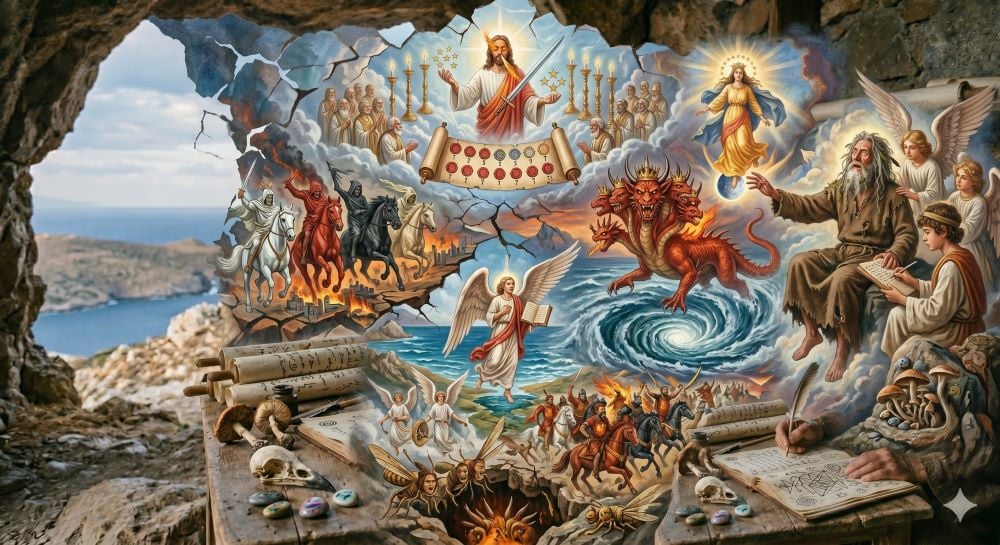
In any case, it is difficult to reconcile the theology of Revelation with the simple and straightforward theology of Jesus, Himself, or with the theology of Paul as he states in his letters. Jesus is never quoted as to these kinds of specifics in the Gospels. Acts, or Paul’s epistles. He speaks of the Kingdom, but in general terms. He certainly does not describe the rivers of blood and the fantastic beasts of Revelation. These elements seem to be the musings of the Revelation author.
In fairness, the author does tie his visions to passages in the Hebrew Bible, but a Jewish apocalypticist would be expected to do that whether he were presenting a text for Jews or Christians.
Are these stated theologies reconcilable?
For centuries, theologians and lay people have been trying to reconcile the various theologies found in the New Testament.
- The authors of Matthew, Mark, Luke, and John present their versions of our relationship to Jesus and to God and how to treat other people.
- Moving from the idea of how we are to behave, Paul stresses the idea that proper belief is the path to salvation. Paul also stresses that not only Jews could follow Jesus, and that converted gentiles did not have to follow the Law of Moses.
- This produced a conflict between Paul and James, the brother of Jesus, who insisted on observance of the Law, including the idea that men who converted need to be circumcised. One can only imagine how problematic this idea would be.
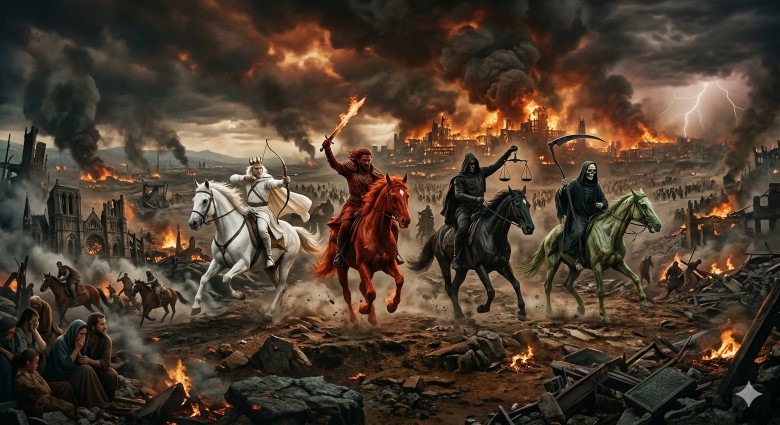
- Of course, the book of Revelation is the most difficult theology to reconcile. The Lamb of God becomes the Destroyer, the Punisher, the Killer of most of mankind for whom there is no appeal. Always keep in mind that the symbolism in Revelation refers to the Roman Empire (Babylon) and to the events in the author’s day and not to any time in the future.
It seems to me that for 2,000 years, we have attempted this reconciliation only by a re-negotiation of the text. Only by changing the understanding (and in some cases, the words), can the believer reconcile the differences in the theologies of the varied texts of at least six authors. I would further speculate that the spread of Christianity was personal (word off mouth) as well as political (Constantine). Only by acceptance of re-negotiated understandings, can we reconcile the theologies in the text.
What is the core message in the New Testament?
The one core message put forth by the Gospel authors as well as Paul, and John of Patmos is that Jesus is at the center of salvation. Whether his commandments (Keep specific parts of the Law, love God; love your neighbor) are the key to salvation, whether Paul’s ideas about proper belief, or whether John of Patmos’s fantastic visions are the correct emphasis for any individual, Christ is at the center of all of these theologies. It is up to us to make this reconciliation and negotiation of the text for ourselves.










 Ad-Free & Subscriber Log-In