

The Bible’s Surprising Stance on Slavery
The Bible does not explicitly condemn slavery. Several passages mentioning slavery do not present an arc toward the abolition of the practice. They do make commandments that support humane treatment of slaves, but even this can be shown to be unnecessarily cruel by modern standards.
The books of the Bible, written within a 700 to 500 year span, must be seen within the context of its place in history and with an understanding that Biblical authors were writing for a contemporary audience and that there were at least four general sources in the Torah (Pentateuch) alone. We will see that the Bible is not univocal (speaking with one consistent and lucid voice) about this subject.
When the question of a consistent Biblical position is posed to most Christians, I suspect their answer would be an unqualified “yes, the Bible speaks against slavery as an evil practice.”
I believe that they would be quite surprised to learn what the Bible actually says about the subject.
The Bible mentions slavery in numerous books and verses.
Author’s note: Biblical quotations are from the New Revised Standard Version, updated edition (NRSVue).

The Hebrew Bible
Slavery was quite simply a part of everyday life in the ancient world. The Hebrew Bible (AKA the Old Testament) discusses slavery at length and in some detail in several contexts.
The Hebrew Bible makes an important distinction between types of slavery.
The primary type discussed in the Hebrew Bible is indentured servitude for debt. Those holding such slaves were required to release debt slaves after six years. In addition, all Israelite slaves were to be released in a Jubilee year.
The laws governing slavery provide certain protections for Israelite slaves.
It was a different matter for non-Israelite slaves. Non-Israelite slaves (chattel slaves) could be wholly owned for life and bought and sold at their owner’s will. Owners could pass down ownership of chattel slaves to their heirs.
Non-Israelite captives of war could be taken as slaves or concubines.
The Hebrew Bible is not consistent, nor is it univocal regarding slavery
The Hebrew Bible books discussing slavery and the laws governing its practice are the books of Exodus, Deuteronomy, and Leviticus.
Exodus
Exodus, Chapter 21, gives Israel complex laws concerning slavery.
21 “These are the ordinances that you shall set before them:2 “When you buy a male Hebrew slave, he shall serve six years, but in the seventh he shall go out a free person, without debt. 3 If he comes in single, he shall go out single; if he comes in married, then his wife shall go out with him. 4 If his master gives him a wife and she bears him sons or daughters, the wife and her children shall be her master’s, and he shall go out alone. 5 But if the slave declares, ‘I love my master, my wife, and my children; I will not go out a free person,’ 6 then his master shall bring him before God. He shall be brought to the door or the doorpost, and his master shall pierce his ear with an awl, and he shall serve him for life.
7 “When a man sells his daughter as a slave, she shall not go out as the male slaves do. 8 If she does not please her master, who designated her for himself, then he shall let her be redeemed; he shall have no right to sell her to a foreign people, since he has dealt unfairly with her. 9 If he designates her for his son, he shall deal with her as with a daughter. 10 If he takes another wife to himself, he shall not diminish the food, clothing, or marital rights of the first wife.11And if he does not do these three things for her, she shall go out without debt, without payment of money…
16 “Whoever kidnaps a person, whether that person has been sold or is still held in possession, shall be put to death…
20 “When a slaveowner strikes a male or female slave with a rod and the slave dies immediately, the owner shall be punished. 21 But if the slave survives a day or two, there is no punishment, for the slave is the owner’s property…
26 “When a slaveowner strikes the eye of a male or female slave, destroying it, the owner shall let the slave go, a free person, to compensate for the eye. 27 If the owner knocks out a tooth of a male or female slave, the slave shall be let go, a free person, to compensate for the tooth.
We can see that these laws given by YHWH to the Israelites are noticeably complex and require close reading for the meaning. Keep in mind that we are talking about an ancient culture that evolved over a long period of time, given changing circumstances, and was influenced by the cultures and empires that surrounded it.
Until 722 BCE, ancient Israelites resided primarily in two kingdoms, Israel in the North and Judah in the South. After the Assyrian Empire conquered the northern kingdom of Israel in 722 BCE, the inhabitants scattered, many settling in the southern kingdom of Judah.
Deuteronomy
The Book of Deuteronomy, Chapter 15 gives additional laws and clarifications which might be seen as more humanitarian than those in the book of Exodus.
12 “If a member of your community, whether a Hebrew man or a Hebrew woman, is sold to you and works for you six years, in the seventh year you shall set that person free. 13 And when you send a male slave out from you a free person, you shall not send him out empty-handed. 14 Provide for him liberally out of your flock, your threshing floor, and your winepress, thus giving to him some of the bounty with which the Lord your God has blessed you. 15 Remember that you were a slave in the land of Egypt, and the Lord your God redeemed you; for this reason I lay this command upon you today. 16 But if he says to you, ‘I will not go out from you,’ because he loves you and your household, since he is well off with you, 17 then you shall take an awl and thrust it through his earlobe into the door, and he shall be your slave forever.
“You shall do the same with regard to your female slave.
Leviticus
Leviticus 25:44-46 provides laws covering the acquisition of slaves.
44 As for the male and female slaves whom you may have, it is from the nations around you that you may acquire male and female slaves. 45 You may also acquire them from among the aliens residing with you and from their families who are with you who have been born in your land; they may be your property. 46 You may keep them as a possession for your children after you, for them to inherit as property. These you may treat as slaves, but as for your fellow Israelites, no one shall rule over the other with harshness.
Verse 45 is confounding to anyone looking for a consistent position regarding foreigners. Verse 45 makes it clear (at least within its own context) that slaves may be taken from among foreigners living among the Israelites and even includes their families which are born “in your land.”

Contradictory voices
This seems to be a direct contradiction to one of the most oft-repeated laws, which stipulates that foreigners in the land be treated as “brothers,” that is, treated like fellow Israelites.
34 The alien who resides with you shall be to you as the native-born among you; you shall love the alien as yourself, for you were aliens in the land of Egypt: I am the Lord your God.
19 You shall also love the stranger, for you were strangers in the land of Egypt.
21 “You shall not wrong or oppress a resident alien, for you were aliens in the land of Egypt.
We can clearly see that different Hebrew Bible authors had differing views on how non-Israelites living in Israeli lands should be treated from “brothers” to “chattel slaves,” who, along with their families, could be bought, sold, and inherited. This differs from how Israelite debt slaves could be treated.
The New Testament
There are a number of references to slavery in the New Testament. It is important to note that the New Testament authors begin to evolve physical slavery to a spiritual condition between humans and YHWH. We will explore some of these ideas in more detail.
What do the Gospels say about slavery?
The four canonical gospels present a picture that is not altogether clear. In various places, the gospels speak of slavery, mostly reporting Jesus’s words and ideas. Two of the Gospels report Jesus’s interactions with slaves in his time.
Author’s note: the Greek word δοῦλος (doulos) is used to denote a non-free male servant who is obligated to do his master’s bidding. The word is often translated as “servant,” but the first century CE uses in the New Testament show that it is used to denote a person under the power of another.
Matthew 8:5-13 depicts Jesus healing the slave of a Roman Centurion.
5 When he entered Capernaum, a centurion came to him, appealing to him 6 and saying, “Lord, my servant is lying at home paralyzed, in terrible distress.” 7 And he said to him, “I will come and cure him.” 8 The centurion answered, “Lord, I am not worthy to have you come under my roof, but only speak the word, and my servant will be healed. 9 For I also am a man under authority, with soldiers under me, and I say to one, ‘Go,’ and he goes, and to another, ‘Come,’ and he comes, and to my slave, ‘Do this,’ and the slave does it.” 10 When Jesus heard him, he was amazed and said to those who followed him, “Truly I tell you, in no one in Israel have I found such faith. 11 I tell you, many will come from east and west and will take their places at the banquet with Abraham and Isaac and Jacob in the kingdom of heaven, 12 while the heirs of the kingdom will be thrown into the outer darkness, where there will be weeping and gnashing of teeth.” 13 And Jesus said to the centurion, “Go; let it be done for you according to your faith.” And the servant was healed in that hour.
Luke 22:50–51 narrates an episode in which Jesus restores the ear of the High Priest’s slave, Malchus, after Peter cuts it off with his sword.
50 Then one of them struck the slave of the high priest and cut off his right ear. 51 But Jesus said, “No more of this!” And he touched his ear and healed him.

What does Paul (Saul) say about slavery?
In his letter to the Galatians 3:28, Paul describes the relationship between mankind and YHWH as applying to all people, slave or free, male or female, etc.
28 There is no longer Jew or Greek; there is no longer slave or free; there is no longer male and female, for all of you are one in Christ Jesus.
In the disputed letter to the Colossians 3:23, attributed to Paul (but disputed as authentic by many scholars), Paul (?). admonishes slaves to work as they are working for the Lord, not for man.
23 Whatever task you must do, work as if your soul depends on it, as for the Lord and not for humans,
In the Book of Colossians 4:1, the author (probably not (Paul) gives instruction to masters.
1 Masters, treat your slaves justly and fairly, for you know that you also have a Master in heaven.
In the authentic (undisputed) Pauline Book of Philemon 1:16, Paul sends Onesimus, a slave of Philemon, back to his master but he admonishes him to treat Onesimus like a brother, not a slave.
16 no longer as a slave but more than a slave, a beloved brother—especially to me but how much more to you, both in the flesh and in the Lord.
In 1 Corinthians 7:21-24, Paul stated a belief that the world would end soon and that the Kingdom of God would be established on earth. He therefore preached that people should remain in their current situation and not to try to bring about social change.
21 Were you a slave when called? Do not be concerned about it. Even if you can gain your freedom, make the most of it.[a]22 For whoever was called in the Lord as a slave is a freed person belonging to the Lord, just as whoever was free when called is a slave belonging to Christ. 23 You were bought with a price; do not become slaves of humans. 24 In whatever condition you were called, brothers and sisters, there remain with God.
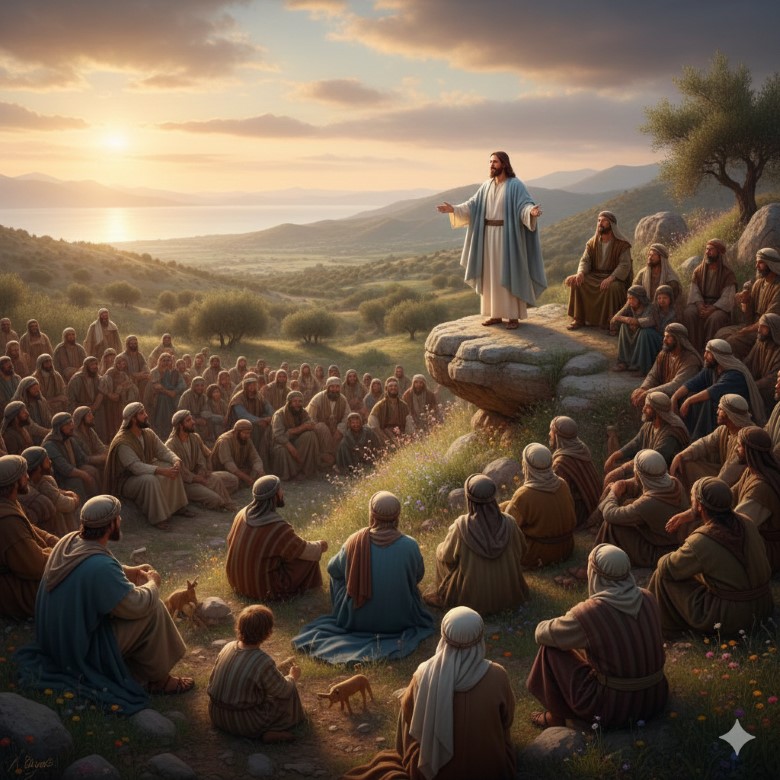
What does Jesus say about slavery?
As reported in the Bible, Jesus never explicitly condemned the practice of slavery in his time, but often used metaphors pertaining to slavery to enhance his teachings.
In the Gospel of Luke, Chapter 17:7-10, Jesus escribes how a slave should serve his master before he eats his own meal.
7 “Who among you would say to your slave who has just come in from plowing or tending sheep in the field, ‘Come here at once and take your place at the table’? 8 Would you not rather say to him, ‘Prepare supper for me; put on your apron and serve me while I eat and drink; later you may eat and drink’? 9 Do you thank the slave for doing what was commanded? 10 So you also, when you have done all that you were ordered to do, say, ‘We are worthless slaves; we have done only what we ought to have done!’ ”
In the Gospel of Matthew 24:45–51, Jesus teaches that a faithful slave should be rewarded and a wicked slave should be punished.
45 “Who, then, is the faithful and wise slave whom his master has put in charge of his household, to give the other slaves their allowance of food at the proper time? 46 Blessed is that slave whom his master will find at work when he arrives. 47 Truly I tell you, he will put that one in charge of all his possessions. 48 But if that wicked slave says to himself, ‘My master is delayed,’ 49 and begins to beat his fellow slaves and eats and drinks with drunkards, 50 the master of that slave will come on a day when he does not expect him and at an hour that he does not know. 51 He will cut him in piecesand put him with the hypocrites, where there will be weeping and gnashing of teeth.
Jesus’s teachings that challenge slavery
In the Gospel of Matthew 7:12, Jesus cites what has come to be known as the Golden Rule.
12 “In everything do to others as you would have them do to you, for this is the Law and the Prophets.
In the Gospel of Mark 10:43-44, Jesus flips the social order, saying that the faithful must become a “slave to all.”
43 But it is not so among you; instead, whoever wishes to become great among you must be your servant, 44 and whoever wishes to be first among you must be slave of all.
In the Gospel of Luke, Chapter 4:18, Jesus says that he has come to set captives free. While this is not a direct condemnation of the practice of slavery, Jesus makes it clear that “captives” will be set free.
“The Spirit of the Lord is upon me,
because he has anointed me
to bring good news to the poor.
He has sent me to proclaim release to the captives
and recovery of sight to the blind,
to set free those who are oppressed,
Jesus’s teachings of universal brotherly love and the Golden Rule are directly opposed to the first century CE practices of slavery.
Jesus used slave metaphors but never told masters to free their slaves.
Conclusions
It seems that we can draw some conclusions, even when the Scriptures do not provide a consistent position on slavery:
- Debt slavery and chattel slavery were practiced throughout both the Hebrew Bible and the New Testament.
- The Bible does not speak with one voice (it is not univocal).
- It is not possible to condone nor condemn slavery clearly on Biblical evidence.
- Hebrew Bible authors of neither the Torah, nor the prophets explicitly condemn slavery as a practice. As products of their environment and history, these authors were realistic about their times, a 300 to 700 year period from c 700 BCE to the last book (Daniel) written in the middle of the second century BCE.
- The Hebrew Bible was written, edited and redacted by many hands during its composition.
- With the exception of s few songs and Psalms, he Hebrew Bible’s earliest written books were the books of the Torah (Pentateuch), but even these are likely no older than 700 BCE and probably much younger.
- The acceptance of slavery as a practice seems to be in conflict with both the Laws of the Hebrew Bible and the teachings of Jesus and Paul.
- Western society has, at last (the end of the practice in the US is situated in the middle of the 19th century CE) abolished the practice because societal and political pressure forced its cessation, not explicitly attributable to Biblical teachings.
- Given this, it is clear that Jesus’s ethical teaching have had a strong influence on the cessation of the practice of slavery and other moral and ethical teachings.
I know that there are other voices and opinions and I welcome any and all comments. I am not a credentialed Bible scholar, but I am a student of the Bible and its uses and misuses.














 Ad-Free & Subscriber Log-In