

For more than 2,000 years, Christians have been evangelizing and converting non-Christians, promising a new good news understanding of God and of salvation from sin.
Officially, that new theology is contained in the New Testament of the Bible.
Priests, preachers and Sunday School teachers in every age since the first century CE. have presented Christian theology as a simple yet complete set of beliefs.
A close examination of the Gospels and the book of Acts describe a much more complex theology. In fact, the New Testament actually contains several different theologies.
In this article, we will discuss the books of the New Testament that tell, from the points of view of the Gospel authors, how they view jesus and their overall theologies.
The picture changes dramatically as the different authors present their version of what it means to be a follower of Jesus.

Does the New Testament contain a single theology?
On October 31, 1517, Martin Luther challenged the Catholic church’s complex hierarchy, structure and practice, nailing his 95 theses to the church door. He insisted that the Bible was the necessary and sufficient authority for belief (sola scriptura, scriptura sola) where the Catholic Church relied not only on the Bible, but also on the unquestioned authority of clergy and the veneration of Church tradition for its beliefs and practices.
But scholars and lay people have shown that the doctrine of sola scriptura, or reliance only on the Bible contains its own dogma and does nothing to make the theologies of the New Testament more clear and cohesive to the reader who is not a scholar of Biblical history and culture nor has attended seminary.
What are the specifics of each Gospel’s message?
Even if all church dogma is removed or ignored, there remain at least two seminal questions:
- What has God promised?
- What is expected of Christian people?
Given that the books of the New Testament were written by different authors at different times, it is easy to see that differences in the personal beliefs of these authors will reveal that differences in the theologies presented.
What does Jesus say about how we might enter the Kingdom?
In the Bible, there are four books which report about Jesus’s life, ministry and his death and resurrection. They were all written anonymously and were later titled Matthew, Mark, Luke and John. We consider the book of Acts as part 2 of the Gospel of Luke since scholars believe they were written by the same author. Each book presents a slightly different picture of Jesus, but they all point clearly in a consistent direction.
Matthew: Love Your Neighbor as the Path to Salvation
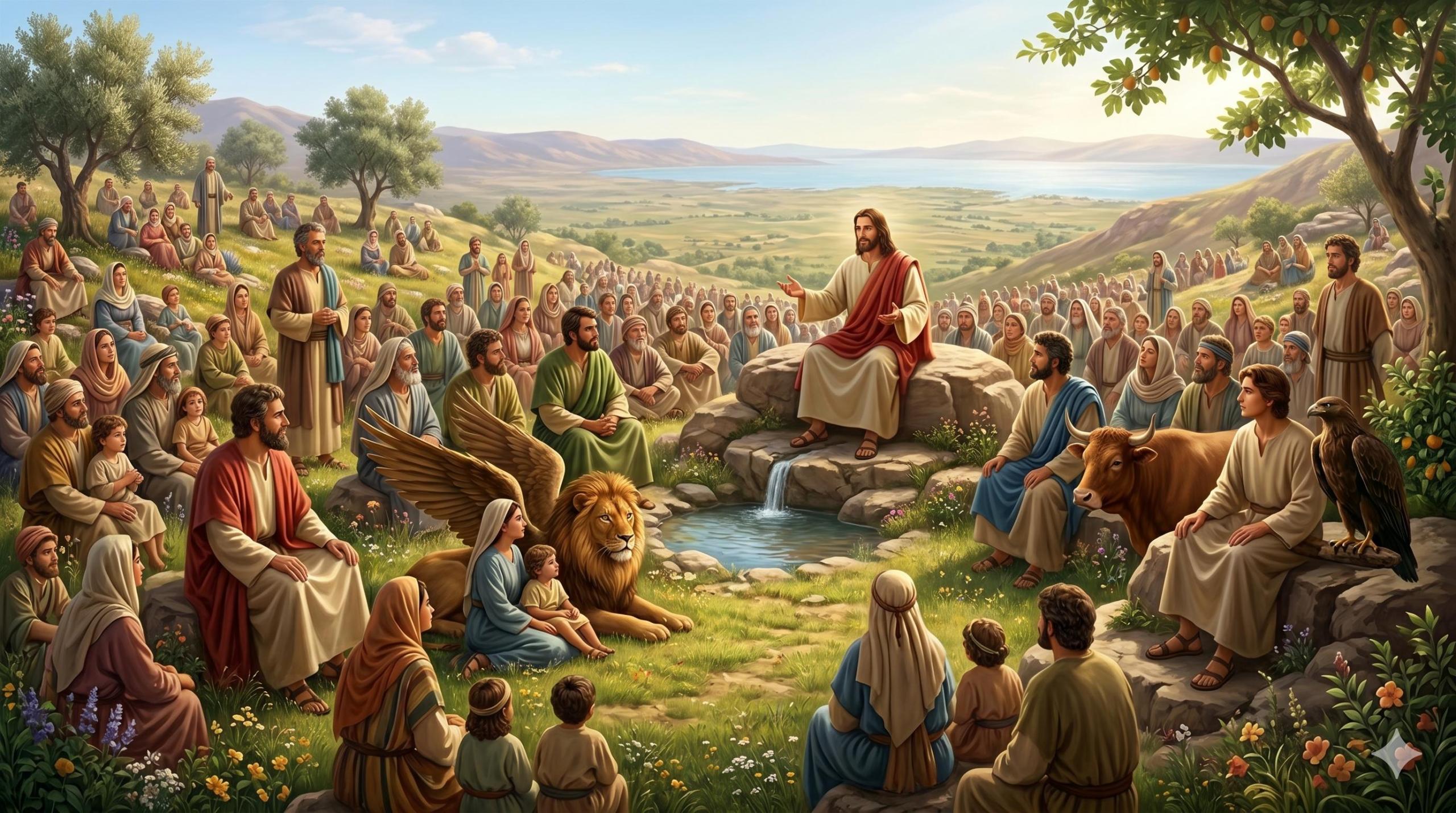
The gospel of Matthew, considered the most Jewish of the Gospels contains the most eloquent expression of the theology of Jesus, in which his teaching focuses on how humans are to relate to each other. This part of the book of Matthew specifies how God expects us to behave. It is known as the Sermon on the Mount. It comprises three chapters of Matthew but can be clearly seen in a simplified form in Matthew 5:3-11. A part of that sermon is known as the Beatitudes as quoted below.
3 “Blessed are the poor in spirit, for theirs is the kingdom of heaven.
4 “Blessed are those who mourn, for they will be comforted.
5 “Blessed are the meek, for they will inherit the earth.
6 “Blessed are those who hunger and thirst for righteousness, for they will be filled.
7 “Blessed are the merciful, for they will receive mercy.
8 “Blessed are the pure in heart, for they will see God.
9 “Blessed are the peacemakers, for they will be called children of God.
10 “Blessed are those who are persecuted for the sake of righteousness, for theirs is the kingdom of heaven.
11 “Blessed are you when people revile you and persecute you and utter all kinds of evil against you falsely on my account.
These few and clear statements can be seen to “flesh out” the second great commandment, Matthew 22:39.
39 And a second is like it: ‘You shall love your neighbor as yourself.’
In Matthew 25: 40, Jesus is quoted as having said:
40 And the king will answer them, ‘Truly I tell you, just as you did it to one of the least of these brothers and sisters of mine, you did it to me.’
Christian people, meaning well in their own perception, have, over the years, complicated this message and used it to justify things which are, in truth, far removed from any reasonable meaning that could be attributed to these verses.
From justification for executing “witches” to the Crusades in which thousands of Christians, Jews and Muslims lost their lives to justifications for slavery to the current day in which one world power has decided that empathy is a sin and that energy for use by humans is a sufficient reason for that power to own all the energy and by that fact, to rule the world. There is no thought for future generations. It has become a land and money grab. This stands in direct conflict with the Sermon on the Mount and everything that Jesus taught.
For the author of Matthew, the message is clearly to look after the sick, the poor, the hungry, the lonely. Through all the witness and all the parables, helping others in need is the path to salvation. The Gospel of Matthew is concerned with ethical behavior, based on Jesus’s teaching to “love your neighbor as yourself.
In addition, scholars have shown that the author of Matthew was concerned with the fulfillment of Hebrew Bible prophecies and constructed his Gospel to show that the coming of Jesus fulfilled these prophecies.
Mark: The Earliest Gospel’s Case for Redemption
Scholars agree that Mark was the earliest canonical Gospel written. The book contains much of the same information and relates the same events as the book of Matthew. Perhaps the seminal verse from Mark is Mark 16:16:
16 The one who believes and is baptized will be saved, but the one who does not believe will be condemned.
The author of the gospel of Mark was concerned about salvation as well. For him, Jesus’s suffering was God’s will and a part of the Divine plan. He asserts that Jesus’s death has paid a “ransom” for the souls of the faithful. This concept ties back to the Hebrew Bible’s ideas of redemption in the form of an alternative sacrifice for atonement. (See Genesis, chapter 22:1-19.)
Luke/Acts: Salvation Without the Cross?
The Gospel of Luke is seen by scholars as the first of two books that were written by the same author who wrote the Gospel and the book of Acts. While separated in the Biblical canon, the Gospel and the book of Acts form a whole.
Luke is related in many ways to Mark and Matthew but contains original material not found in Matthew and Mark. Together, Matthew, Mark and Luke form what are known as the Synoptic Gospels, which means seen together. These Gospels are similar in points of view and very different from the fourth Gospel, the Gospel of John.
For Luke, salvation is achieved only through a belief in Jesus and his resurrection and exaltation.
In the birth narrative, Luke (2:11) shows Jesus as one born a savior:
11 to you is born this day in the city of David a Savior, who is the Messiah, the Lord.
Luke (19:10) also states that Jesus’s whole mission is to find and save those who are lost.
10 For the Son of Man came to seek out and to save the lost.”
Luke is the Gospel that contains the story of the birth of John the Baptist, together with a birth narrative for jesus which tells the Nativity story differently than Mark/Matthew. It contains narratives for both John the Baptist and Jesus.
The Gospel tells of John the Baptist’s ministry and his baptism of Jesus.
The book narrates many stories of Jesus’s travels and his healing and teaching.
The theology of Luke’s Gospel is centered on Jesus’s life and teaching and can be seen as:
Surprisingly, Luke does not link salvation to Jesus’ death on the cross (except, perhaps, in
Acts 20:28). There is no reference in Luke to Jesus giving “his life as a ransom” (cf. Matt 20:28; Mark 10:45) or shedding his blood “for the forgiveness of sins” (cf. Matt 26:28). Instead, Luke finds the basis for salvation to be manifest in Jesus’ life and in his resurrection/exaltation.
The book of Acts of the Apostles (Acts) speaks of churches as assemblies or communities and his emphasis is on the people of the church and not any building or shrine.
Acts emphasizes and teaches evangelism and describes how the apostles travelled to spread the Good News.
These books are focused on the social behavior of Christians and how they spread the good news by their actions toward other people.
His emphasis is the spreading of the Gospel to a wider world, focusing not on Israel, but on the world-wide Kingdom of God.
John: The Word Made Flesh and the Cosmic Christ
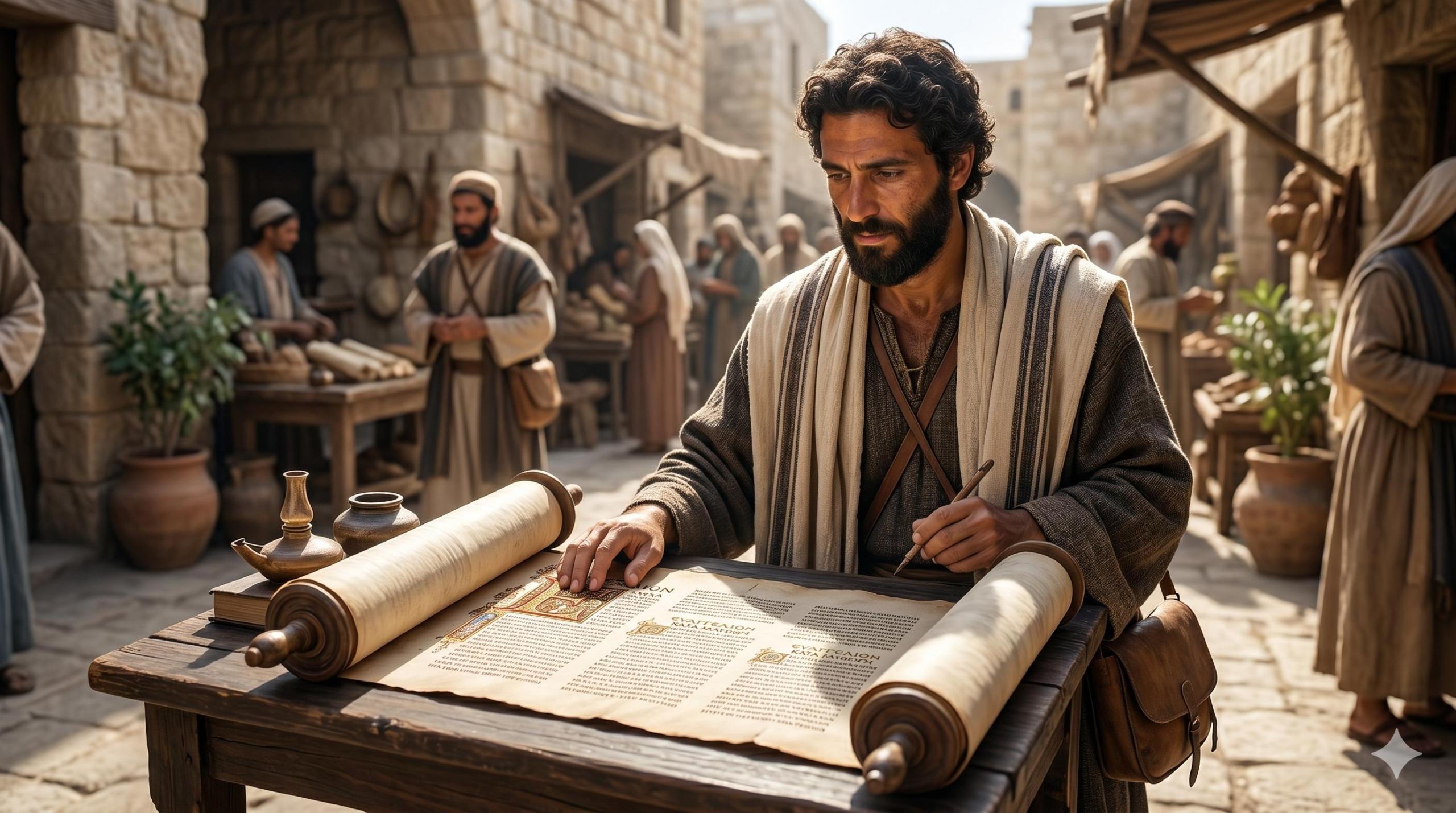
The Gospel of John, the fourth Gospel in the Bible, differs significantly from the Synoptic Gospels. It is the most spiritual of the Biblical Gospels. Originally thought to have been written, along with the letters of John I, II and III, by Jesus’ disciple, John the son of Zebedee and brother of James. Scholars no longer take that view. They see the Gospel as being written by someone else (the book was written anonymously like the Synoptic Gospels).
John depicts Jesus as the Christ (anointed one) and the Son of God who has established a “New Covenant” through his life, death and resurrection.
The literary and theological style is less earthly and more philosophical than the Synoptic Gospels.
1 In the beginning was the Word, and the Word was with God, and the Word was God. 2 He was in the beginning with God. 3 All things came into being through him, and without him not one thing came into being.
The “Word,” in this sense can be seen as related to the Greek philosophical logos:
Logos is an ancient Greek philosophical concept that signifies a divine intelligence or cosmic order governing the universe. Translated as “word,” it also encompasses meanings like “reason,” “thought,” and “principle.” Emerging around the sixth century BCE, logos represents a shift from mythological explanations of the cosmos to a rational understanding. Prominent later philosophers such as Socrates, Plato, and Aristotle expanded the concept, relating it to human reason and the principles of logic.
John attempts to re-define “the Word” as it relates to God’s relationship to his creation.
American pastor, author, and Biblical counselor Paul Tripp sums up this concept:
You could literally spend weeks unpacking these amazing words. “In the beginning was the Word.” This is meant to echo the first four words of the Bible, “In the beginning God.” Just as the words of Genesis put God at the beginning and the center of all that is, John puts Jesus in the very same place. Unlike any other man who ever lived, this one existed from the beginning of all that is.
Sometimes Jesus finds it difficult to convince even his own disciples:
9 Jesus said to him, “Have I been with you all this time, Philip, and you still do not know me? Whoever has seen me has seen the Father. How can you say, ‘Show us the Father’? 10 Do you not believe that I am in the Father and the Father is in me? The words that I say to you I do not speak on my own, but the Father who dwells in me does his works.
Jesus speaks of his oneness with God and with the potential for humans to share in this connection of “oneness.”
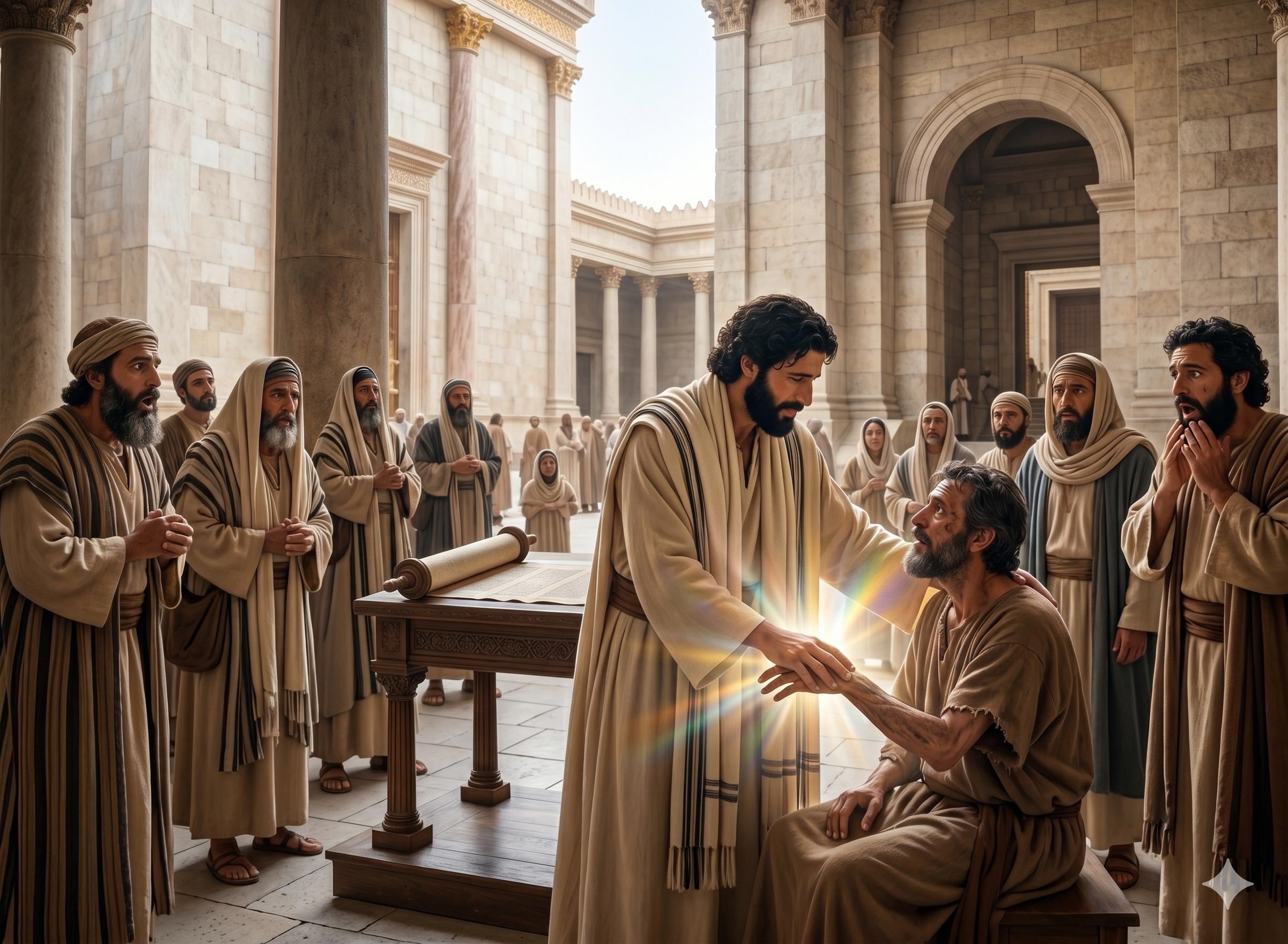
What can we say about how the Gospels tell the story of Jesus’s life on Earth.
Matthew is concerned with ethical behavior and his theology is stated in the Two Great Commandments: Love God with all your heart and soul and love your neighbor as yourself.
Mark tells of mostly the same events found in Matthew. The focus, however, is on the idea of ransom or redemption. This Gospel stresses the importance of baptism and belief in Jesus as the Messiah.
Luke/Acts depicts Jesus clearly as the savior of the whole world, not just in Judea but across the entire known world. It shows how the apostles began to spread the Good news far outside Judea and its mostly Jewish population.
John is the most cosmic and the most philosophical of the Gospels. In it, the author introduces a more esoteric understanding. His evocation of Jesus as The Word (logos) made flesh. This author begins to shift the focus from Jesus’s acts on Earth to more mystical and metaphysical questions.
What can we say about what theology the Gospels share?
In the canonical Gospels (Ehrman and Plese describe at least 15 other Gospels), while the narratives might differ, the primary focus is on Jesus and the necessity to acknowledge him and his relationship with the Father to achieve salvation.
Perhaps the simplest and most straightforward theology is in Matthew and Mark: Observe the Law and believe and follow the teachings of Jesus.
Luke/Acts move the spreading of the Good News outside Galilee and Judea and move its focus to the wider world. The main idea is the global spread of the Gospel message.
John introduces aa more philosophical approach. The author is concerned with the relationship of Himself to the Father and by extension, the relationship of all people to Him and to the Father as well. His approach is in how The Word is received and the beliefs that follow. He is more concerned with belief than with action. He believes that proper action will follow proper belief.
Conclusion
The theologies of the Gospels differ in many details but the central message is that Jesus and a belief in him is the way to achieve salvation and enter the Kingdom of God.
While the Gospels can give the reader a solid foundation in New Testament theology, the next New Testament authors (Paul and John of Patmos) took this foundation and built upon it a far more complex and controversial system of theology focused on the end times, which they believed were at hand.
In my next article, we will examine those authors and how they complicated what is essentially a simple message.













 Ad-Free & Subscriber Log-In