

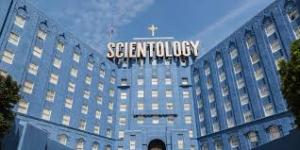
The Church of Scientology was founded by American novelist L. Ron Hubbard (1911–1986). Supporters see him as a visionary religious leader, while others call him an opportunist and a fake. His life and work are still very controversial. Scientology began with Hubbard’s 1950 book Dianetics: The Modern Science of Mental Health, which presented theories regarding trauma, the mind, and self-improvement. When the Church of Scientology was founded in 1953, these concepts evolved into a comprehensive religious system.
Stolen Valor.
Although reports of his military experience are controversial, Hubbard served in the U.S. Navy during World War II. Although he presented himself as a decorated war hero, official records indicate that he did not do much and that he made several mistakes in command. Hubbard was the subject of numerous legal investigations, including claims of fraud and tax issues. He was accused by his detractors of creating a large portion of his history, inflating his accomplishments, and using Scientology as a business.

In the Beginning…
Fundamentally, Scientology holds that people are immortal spiritual beings known as Thetans who have lost sight of their actual selves. Members attempt to transcend “engrams,” or bad mental imprints from past experiences, including alleged past lifetimes, through the auditing technique to achieve Clear, a higher state of awareness. From there, people can progress through what are called Operating Thetan (OT) phases of spiritual development.
Scientology is criticized for functioning more like a business than a religion. Its spiritual hierarchy compels members to pay hundreds of thousands of dollars for costly courses and auditing sessions to advance, especially to the upper “Operating Thetan” (OT) levels. Former members frequently talk about feeling under pressure to make ongoing financial obligations or gifts.
The Church has a history of using intimidation, harassment, and lawsuits to deal with journalists and critics. It was formerly said that opponents of Scientology might be “tricked, sued, lied to, or destroyed” under the now discontinued but notorious “Fair Game” policy. Many claim that even though the policy was formally discarded, its spirit still exists.

We Can’t Handle the Truth, Apparently.
Because it views psychiatry and psychiatric drugs as harmful and oppressive, Scientology is adamantly against them. The Citizens Commission on Human Rights (CCHR), one of its linked organizations, actively opposes psychiatry. This position, according to critics, keeps vulnerable members from getting the mental health care they need. Actor Tom Cruise famously opposed the use of mental health drugs in the early 2000s during his outburst heyday.
One of the most contentious new religious movements in contemporary history is still Scientology. Critics frequently characterize it as exploitative, secretive, and authoritarian, while supporters see it as a route to spiritual emancipation.








 Ad-Free & Subscriber Log-In