


Suppose for a moment that Jesus decided to come back to Earth. Tomorrow. Not as part of an official Second Coming, or to signal the end times, but purely to clear the air and separate fact from fiction. After all, 2,000-plus years after his death, there’s a lot of misinformation out there about Jesus—and he may have noticed.
One reason for any confusion is that Jesus never wrote anything down. So, there’s no definitive document to point to regarding his life or sayings. The earliest biblical account of Jesus is the Gospel of Mark which dates from around the year 70, forty years after Jesus’s death. (Some scholars believe the Gnostic Gospel of Thomas was also written about this time. See my story featuring Keith Gile’s book on Thomas here.)
The other three gospels in the Bible? They were written one to three decades after Mark. All four biblical versions are a result of oral stories that were passed from person to person to person, like a game of telephone that lasted nearly a century.
The Bible isn’t the only way to learn about Jesus.
There are literally tens of thousands of books about the life of Jesus. What especially interests me are the ones that don’t take the gospel, as well, “gospel.” This includes books by the religious scholar and translator Stephen Mitchell, the Franciscan priest Richard Rohr, the author and academic Jay Parini, and the Christian scholar Elaine Pagels, including her recent Miracles and Wonder: The Historical Mystery of Jesus.
What follows are misconceptions that I thought Jesus might want to clear up, if he were inclined to do so. They appear in no particular order and are based on the scholarly research noted above, as well as several other sources.
Jesus Sets the Record Straight
Clarification #1: “I never intended to start a new religion.”
Jesus was born a Jew and remained one throughout his life. He wouldn’t have known what the word Christian means or recognize what we call Christianity today. Jesus’s teachings were intended to reform Judaism and bring people back to God, not start a new religion. It was not until after his death that Christianity was formed.
Clarification #2: “Jesus is not my name.”
The man we know today as Jesus went by the Hebrew name Yeshua or Yeshu which in English translates to Joshua. Jesus would not have recognized the name Jesus Christ as his own. It is not until the New Testament is translated into English (it was originally written in Greek) that the name Jesus is used. The Christ portion of his name, which stands for the Messiah, was also tacked on well after his death.
Clarification #3: “I didn’t perform miracles. Those around me did.”
Jesus emphasized that he wasn’t the reason miracles of healing occurred. What really mattered was the faith of the person being healed. Jesus thought of himself as an instrument of God who enabled people to be healed through their own belief. For instance, in Luke 17:19, Jesus heals ten lepers and proclaims, “Rise and go, your faith has made you whole.” Your personal faith is what matters most.
Clarification #4: “If you want to pray, do it by yourself, in private.”
“Very early in the morning, while it was still dark, Jesus got up, left the house and went off to a solitary place, where he prayed” ~Mark 1:35
Richard Rohr says that for all its good intentions, public prayer does not give people “any inner experience of their own inner aliveness.” It does not help us access the “Indwelling Spirit” nor does it “transform people at any deep level.” In fact, public prayer “often becomes a substitute for any real journey of our own.” He surmises that “Jesus himself seemed to prefer a prayer of quiet. That’s why we see frequent references such as ‘in the morning, long before dawn, he got up … and went off to a lonely place to pray.’”
Clarification #5: “You don’t have to die to enter the Kingdom.”
Jesus had promised that the kingdom was coming “soon” and many of his earliest followers believed they would see the Kingdom of Heaven in their lifetimes. But in the Gospel of Luke, a twist is added: “for the kingdom of God is within you!” It is a vision centered on life now, not somewhere in the future. This is further explained in a passage found in the Gospel of Thomas:
His disciples asked, “When will the kingdom come?” Jesus replied: “It will not come by waiting for it. It will not be a matter of saying ‘here it is” or “there it is.” Rather, the kingdom of the Father is spread out upon the earth, and people do not see it.”
Clarification #6: “You are not separate from God or God’s presence.”
If we saw the world with Christ Consciousness, a state of higher consciousness that Jesus possessed, we would see that we are immersed in God. As Rohr explains, “the Divine Presence is here, in us and in all of creation, and not “over there” in some far-off realm.” God is present in the material world all around us.
Clarification #7: “I never set out to start a formal church.”
To quote Jay Parini, “Jesus never meant to found a formal church with rituals and organized practices, to ordain priests, or to issue doctrinaire statements that formed a rigid program for salvation.” Other than “follow me,” his only commandment was “to love one another as I have loved you.” In other words, you can follow Jesus and his message without attending church.
Clarification #8: “ I’m not the only child of God.”
Jesus believed that all of humankind were the beloved daughters and sons of God. In Elaine Pagels translation of the Gospel of Thomas, Jesus said: “When you come to know yourselves, then you will be known, and you will realize that you are the children of the living Father.” She believes a direct connection to God is inherent within all of us, waiting to be realized.
Clarification #9: “I did not die for your sins.”
While this has long been the view of the church, Stephen Mitchell dismisses this notion. In his words, “this is an idea Jesus couldn’t have approved of. As Jesus knew, God is unconditional love.” Jesus may well have accepted his death because he ultimately believed it was God’s will, part of a master plan he could not comprehend. But to pin his death on retribution for our sins is to paint a picture of an unjust God. Mitchell adds:
God is not some tyrant who demands the blood of an innocent victim in order to forgive people’s sins. God’s forgiveness is always present, whenever people are ready for it.
Clarification #10: “My message was never about worldly power or politics.”
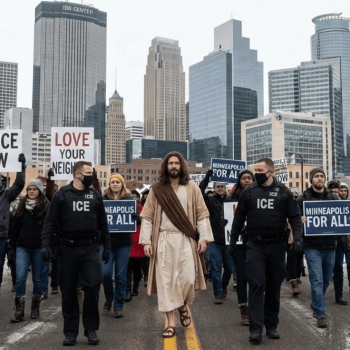
The historical reality is that Jesus’s ministry was focused on inner spiritual transformation. His core teachings are primarily about ethics, spiritual practice, and love and mercy. Not the governance of nations or the writing of laws. Seeking to impose the “Kingdom of God” through political force or legislation misinterprets his entire mission, which to transform hearts and minds.













 Ad-Free & Subscriber Log-In