

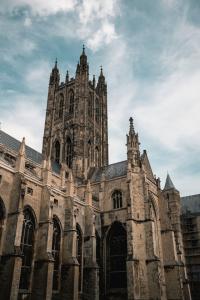
The election of the Right Reverend Sarah Mullally as Archbishop of Canterbury has inflamed tensions across the Anglican Communion. Although the majority of the church is comfortable with the choice, some members of Anglican family have said that they can no longer look to Canterbury for leadership – though not nearly as many as some would have you believe.
Most of those churches are in Africa and are members of what is known as GAFCON. But leaders of the Anglican Communion in North America (ACNA) have used the occasion to renew their objection to women’s ordination; and they have also used it to suggest that their objections have been justified by the response on the African continent.
In the west women’s ordination revolves around the fullness of the Gospel. By ordaining women we acknowledge the fact that the image of God can only be fully comprehended in both men and women, not by mena and women individually. Ordaining women honors the breadth of God’s healing intention. And, in turn, that healing intention is made evident when women and men consecrate the body and blood of Christ.
Ordination is not a right. It is a calling. But our choice ordain women is based upon Christian anthropology, soteriology, and sacramental theology. I would also note, it is based upon the logic of God’s saving work among us. Put rather more colloquially: If you baptize someone, you should be prepared for that person to be called to ordained ministry. If you ordain someone, you ought to be prepared for that person to be called to the episcopacy. And if someone is called to the episcopacy, then you ought to be prepared for that person to be called to an archbishopric.
But though I am in favor of Mullally’s appointment and – more generally – the ordination of women, I can understand why some of our Anglican brothers and sisters cannot bring themselves to ordain women. Their history is very different from that of other churches in the Anglican Communion. They face religious and cultural challenges that are unique to them – including Islamists who use women’s ordination as a wedge issue – in order to isolate the church. So, there are good pastoral reasons to let the dissenting churches pursue their own policy.
But, for the same reason, those members of the Communion should let the rest of the Communion pursue its own course, and it should forego threatening the rest of us with schism. That, it seems to me, is the essence of “Communion across Differences”.
What about our friends in ACNA? On that score, I confess to a certain amount of fatigue and frustration. The fact that some of their leaders would use the reaction in individual cases to make the argument that they were right and that women should not be ordained strikes me as cynical – a tedious effort to re-litigate a conversation about women’s ordination.
We had this conversation with them decades ago. They did not carry the day. They chose to leave The Episcopal Church, even though TEC remained a member in good standing of the Anglican Communion. They risked their own connection with the larger Communion and it didn’t seem to concern them then.
I wrote my first book on women’ ordination in 1996. Some of the best priests in the church who have responded to the call of God on their lives are women; and we have benefited by a fuller understanding of the church’s vocation through their efforts. ACNA’s time would be better spent answering the fundamental questions about their own ecclesiology that they have left unaddressed. And as a Communion, we should move forward across our differences.
Photo by Nishesh Jaiswal on Unsplash














 Ad-Free & Subscriber Log-In