

Humans may have developed consciousness recently. The clash of cultures and thoughts elevated the importance of language and metaphor. The physical gave way to the conceptual.
The Origin of Consciousness in the Breakdown of the Bicameral Mind by Julian Jaynes might be the most interesting book that I ever read.
Jaynes was an American psychologist, and this book was ambitious, sweeping in its reach, widely recognized as provocative, yet speculative. In 2006, Richard Dawkins famously said that the book is “either complete rubbish or a work of consummate genius, nothing in between.”
Almost twenty years later, Dawkins told me that he has still not decided whether the book is genius or rubbish.
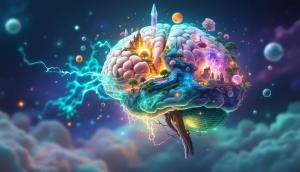
Humans May Have Developed Consciousness Recently…
“Consciousness poses the most baffling problem in the science of mind. There is nothing that we know more intimately than conscious experience, but there is nothing that is harder to explain,” according to philosopher David Chalmers. Consciousness is fundamental to Eastern philosophy, where Sat/Chit/Ananda or Being/Consciousness/Bliss describes the nature of Ultimate Reality.
Jaynes defines “consciousness” narrowly. In his view, consciousness does NOT refer broadly to wakefulness or sentience. Instead, consciousness refers narrowly to something like introspection. He believes that consciousness developed only in the last 5,000 years. He attributes the development of consciousness to culture, namely language and metaphor, rather than to evolution.
Before humans were conscious, Jaynes suggests that they originated thoughts in their creative and intuitive right brains that were transmitted as voices to their analytical and logical left brains. They interpreted these voices as the voices of gods, which directed their actions. Responding to these auditory hallucinations, humans were little more than animals or automatons.
Jaynes examined ancient Western art and literature and suggested that there is no evidence of introspection until around 3000 BCE. In The Iliad, there is no word for “mind.” Jaynes says, “No one is moral among the god-controlled puppets of The Iliad. Good and evil do not exist.”
…Spurred by the Clash of Cultures and Thoughts
Gradually, tribes of humans encountered tribes of other humans, with different cultures, languages and metaphors. And they heard external voices competing with their internal voices.
Jaynes thinks the clash of cultures led to the syncretic understanding of body and soul and the subsequent development of dualistic thought:
“So, dualism, the central difficulty in this problem of consiousness, begins its huge haunted career through history, to be firmly set in the firmament of thought by Plato, moving though Gnosticism into the great [Western] religions, up through the arrogant assurances of Descarte to become one of the great spurious quandaries of modern psychology.”
The erosion of homogeneous societies with rigid, hierarchical structures might have led to the breakdown of the bicameral mind. By the time of The Odyssey, there is evidence of introspection. The clash of cultures and thoughts elevated the importance of language and metaphor. The physical gave way to the conceptual, developing symbols “whose terms are all metaphor or analogs of behavior.”
Jaynes believed that the development of Western art showed humans associating with God, then worshipping God, then consulting oracles, then reading books. Finally, God all but disappeared. Simply, once we realized that we were not all having the same experience and thinking the same things (as might have been the case in the past), then we had to reconcile these different experiences and thoughts.
Jaynes wrote, “All of these concrete metaphors increase enormously our powers of perception of the world about us and our understanding of it, and literally create new objects. Indeed, language is an organ of perception, not simply a means of communication.” In an interview, he once said, “Words have meanings, not life or persons or the universe itself.”
Again, Jaynes is definding consciousness in a narrow sense, more like introspection or reflection than awareness or sentience or wakefulness. Still, he poses interesting questions about the impacts of culture and language and the possibility that introspection is a recent adaptation.
Jaynes is Admittedly Provocative, But Speculative
Jayne believed that the Hebrew Bible or Old Testament, written by many writers over a long period of time, chronicled the breakdown of the bicameral mind. He wrote, “No other literature has recorded this absolutely important event at such length with such fullness.”
He describes how Adam walked with God, then Abraham enjoyed fleeting glimpses of God, then the Jews read about God in the scripture. The writer of Psalms laments, “My mind thirsts for gods! for living gods. When shall I come face to face with gods?”
Jaynes admits that some of his theories are untested (or even untestable) and that they are based in Western thought, not Eastern thought. (Subsequent researchers have applied them in the East.) The book is ambitious and nuanced, so it is difficult to summarize with confidence.
Still, it is a fascinating and provocative book that challenges some common assumptions. Maybe God began as an auditory hallucination. Perhaps introspection is cultural, rather than genetic. Possibly we were not so different from other animals until only 5,000 years ago.















 Ad-Free & Subscriber Log-In