

Eventually, I will fall asleep for the last time. It’s OK if I do NOT wake up one day. I am grateful for the 25,000-odd days (and some of them were very odd!) that I DID wake up.
Do We Have Souls?
I wrote about the different gods, religions, and scriptures that people have chosen to follow here.
Assume that we were lucky to choose to worship the right god among 3,000 gods. Also, we chose to follow the right scripture among 1,700 books and the right religion among 10,000 religions. Still, many of these choices presuppose that we have souls. I wrote about the dubious existence of souls here. Would we believe differently if we discovered that we do NOT have souls?
Would we behave differently if we believed differently?
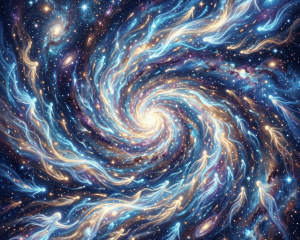
If humans evolved, then how and when did souls evolve? Do some animals have souls? So what is a soul? What does a soul do? Where do we find souls? Could we have damaged or missing souls, like damaged or missing toes? How do souls survive our physical deaths? What do souls transport? And where do souls travel? Also, how can a disembodied soul be rewarded or tormented?
Singer Tom Waits says, “We are monkeys with money and guns.” Do we truly believe that we are the culmination of creation, the single species created in the image of God? Only 50,000 years ago, homo sapiens were climbing trees for food, communicating in grunts, and coupling with Neanderthals.
Julien Musolino, a psychologist who wrote The Soul Fallacy, writes:
“Notice that the conclusion, if we want to be intellectually honest, should not be that there is no soul, but rather, that there are no good reasons to believe that we have souls, and that there are very good reasons to believe that we do not have souls…. In the end, the soul, like the emperor’s new clothes, has exactly the properties that it should have if it did not exist.”
So it’s OK if I do NOT wake up one day.
What If We Do NOT Have Souls?
In Mr g: A Novel About the Creation, poetic physicist Alan Lightman writes about the death of an old woman:
“At that moment, there were 3,147,740,103,497,276,498,750,208,327 atoms in her body. Of her total mass, 63.7 percent was oxygen, 21.0 percent carbon, 10.1 percent hydrogen, 2.6 percent nitrogen, 1.4 percent calcium, 1.1 percent phosphorus, plus a smattering of the ninety-odd other chemical elements created in stars.
“In the cremation, her water evaporated. Her carbon and nitrogen combined with oxygen to make gaseous carbon dioxide and nitrogen dioxide, which floated skyward and mingled with the air. Most of her calcium and phosphorus were baked into a reddish brown residue and scattered in the soil and the wind.
“But then we see that every atom belonging to her — or, rather, temporarily borrowed by her — truly does belong to everything and everyone…
“And the individual atoms, cycled through her body and then cycled through wind and water and soil, cycled through generations and generations of living creatures and minds, will repeat and connect and make a whole out of parts. Although without memory, they make a memory. Although impermanent, they make a permanence. And although scattered, they make a totality.”
Lightman suggests that there is “a whole… a memory… a permanence… and a totality,” but he does NOT suggest that we have eternal souls or that we retain our individuality or personhood.
Are We Simply Stirred into the Cosmic Soup?
In The Way, I wrote, “If we are ‘stirred into the cosmic soup,’ it seems unlikely that we would retain any individuality or personhood. After all, we certainly do not take our bodies and brains with us when we die, and we probably do not take our personalities and thoughts with us, either.”
To say that our energy may be stirred into the cosmic soup is NOT so different than saying that our bodies and brains will be stirred into the terrestrial soup. Just as the waves return to the ocean, our matter and energy might return to their origins, although they likely do NOT retain our individuality. So we might experience eternal life in an impersonal sense, but NOT in a personal sense.
The Universe may be configured like a great computer, where information is stored in an archive, analogous to a cloud. This information may be accessed by our brains, analogous to computers. Our brains may upload information to the archive or download information from the archive. Some programs may be executed in the archive, and some programs may be executed in our brains.
Some indigenous cultures, as well as some contemporary philosophers and physicists, describe an Akashic record or an archive. The archive may contain a record of every thought, emotion, and action of every living being. It may explain common para-psychological phenomena, such as extrasensory perception, near-death experiences, out-of-body experiences, and past-life recollections.
There are NOT Simpler Explanations for Some Para-Psychological Phenomena
Why do people assume that near-death experiences (NDEs) prove that there is an afterlife? NDEs may be the last thing that happens before death, not the first thing that happens after death. Also, why do some people assume that past-life recollections prove that we have eternal souls? These recollections may be glimpses of an Akashic record or an archive that is available to all of us.
Does an archive explain what Carl Jung called the collective unconscious, what physicist David Bohm called the implicate order or what biologist Rupert Sheldrake calls morphic resonance? Further, is it more likely that collective memory is contained in our genes or embedded in our conditioning, or that it is recovered from an archive that is available to all of us?
This is NOT woo-woo stuff. A recent cover story in New Scientist magazine is titled, “Does Space-Time Remember? The answers to the biggest mysteries might be imprinted in its very fabric.” Also, this speculative notion of an archive is NOT any more woo-woo than the speculative notion that we have eternal souls that retain our individuality and survive our physical deaths.
Why We Believe What We Believe
Will I be disappointed if I do NOT wake up one day? No, but many people would be disappointed if they did not wake up.
I wrote about why we believe what we believe here. Assume that we are merely animals who live our mortal lives. We are clinging to a small rock that is hurtling through cold, dark, endless space. We experience fortune and misfortune. Further, assume that our lives are alternately joyful and sorrowful until death or “lights out.” In the end, we simply get stirred into the cosmic soup.
Q: What would such a Universe look like?
A: That Universe would look EXACTLY like this Universe.
Does that sound disappointing to us? Why is that? We hold some beliefs because they provide security, NOT clarity. Would we believe differently if we conformed our beliefs to our reality, rather than conforming our “reality” to our beliefs?
It’s OK if I Do Not Wake Up One Day
Imagine that we let go of our fanciful, hopeful and speculative expectations of a personal, intentional and supernatural Universe. You might think that we lost a sense of comfort and security. But, in my opinion, if we let go of these fanciful expectations, we have traded a false sense of comfort and security for a realistic appreciation for the ephemeral and mysterious nature of the Universe.
Eventually, I will fall asleep for the last time. It’s OK if I do NOT wake up one day. I am grateful for the 25,000-odd days (and some of them were very odd!) that I DID wake up.











 Ad-Free & Subscriber Log-In