

Oneness underlies our apparent separation. Do we act or speak to proselytize people or to win an argument? Why? Do we act or speak to protect people or to seek understanding? Why NOT?
Many friends hold different political beliefs and religious beliefs. For me, spirituality guides me and informs my political beliefs. But some people are simply not concerned with their spirituality. And others embrace different spiritualities that produce different political beliefs. Still others embrace political beliefs that inform their spiritualities, not vice versa.
Sadly, some people have become estranged from family and friends over these differences. Sometimes, they differ in their politics. And, sometimes, they differ in their approaches to politics. Recently, several of my friends have burned out on these conversations, retreating from social media.
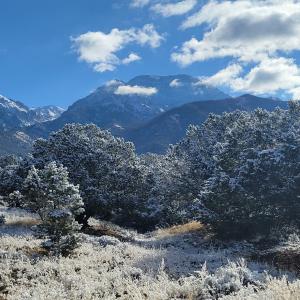
Oneness Underlies Our Apparent Separation
Should spiritual people avoid politics? Some of my friends say things like, “We are supposed to be in the world, but NOT of the world,” or “We are uniters, not dividers.” Agreed. They might state, “I wish that spiritual people would shut up when it comes to politics.” Perhaps.
Should spiritual people embrace politics? Some of my friends say things like, “We are supposed to be in the world, but NOT be worldly,” or “What use is spirituality if it is not engaged?” Agreed. They might state, “I wish that spiritual people would speak up when it comes to politics.” Perhaps.
And I wrote about shutting up or speaking up here. And Henry Shukman, a Zen teacher, quotes the great Tang Dynasty poet Du Fu from the eighth century:
“The nation is shattered. Mountains and rivers remain.”
Things are volatile in the relative realm of apparent separation, but they are unchanged in the Absolute realm. In The Way, I wrote, “I find that I live a better life when I live as if there is a Oneness, as if we are supposed to bring our understanding of the Absolute world, which is Oneness, to our relative world, which can seem disconnected and divided.”
Warriors and Peacemakers
In the Bhagavad Gita, Arjuna told Krishna that he did NOT want to fight. When Arjuna stated that he was a warrior, Krishna responded that he should certainly fight because fighting is his role. And each of us has a role: the activist and the contemplative, the peacemaker and the warrior.
Some loud voices in the spiritual writing space deliver tough messages, “stuff that needs to be said.” They can be blunt, challenging, even prophetic. Like prophets of old, they often speak the truth. We are fortunate to have people like this, who speak the truth, even when it is difficult to do so.
And some others in the spiritual writing space, like me, will say, “You might be right.” We can be conciliatory, nuanced, and open-minded. Consensus worked for me, in dealmaking and in writing. And in my opinion, we are fortunate to have people like this, who seek consensus, even when it is difficult to do so.
But, we will NOT be able to reach consensus with some people. They are too busy talking to listen. Or they are too attached to their beliefs to consider yours. Or they enjoy fighting for its own sake. Worse, some people will NOT listen to facts or they will NOT distinguish knowledge from beliefs, fact from fiction. And some people will NOT hesitate to offer opinions outside their expertise.
So, we each bring different personalities and perspectives to the conversation. But we will NOT all be warriors. And we will NOT all be peacemakers.
How Are We Supposed to Live?
The line between warriors and peacemakers is not so clear. And one of my friends is an activist, a Quaker, a pacifist who spent his life in peacemaking and public service. “I’ve always been a fighter, and I will fight to the end,” he recently told me. So is he a warrior? Yes, but he is NOT confrontational. So is he a peacemaker? Yes, but he is NOT passive.
In The Way, I wrote, “Absent egoic influences, we will act naturally, meaning that we behave in a manner that produces the least harm and/or the most help—that seeks harmony with the Oneness or the greater good.” Selfless actions are almost always appropriate, principled and wholesome actions.
My Buddhist friends often say, “Before enlightenment, chop wood, carry water. After enlightenment, chop wood, carry water.” That is, spirituality is NOT supposed to be detached from daily life. Do we act or speak to proselytize people or to win an argument? Why? Do we act or speak to protect people or to seek understanding? Why NOT? Are we encouraging Oneness or separation?
So, the mountains and rivers remain when the nation is shattered. And Oneness underlies our apparent separation.














 Ad-Free & Subscriber Log-In