Daughters of Eve: Clio Ajana

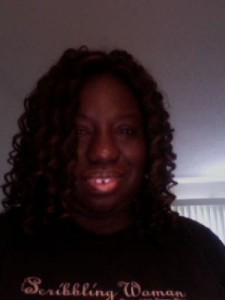
Name: Clio Ajana
Age: 46
Living: Writer and Educator
Location: Twin Cities, MN
A bit about myself…

My life in the Twin Cities includes writing, teaching, translating, dancing, collecting comic books and enjoying craftwork. I consider everything in my life to be touched by my religious practice and spiritual beliefs.

What is Hellenic Orthodox/Hellenic Alexandrian?

The religion is Hellenic Orthodox;  the spiritual tradition within the religion of Hellenic Orthodox that I practice is Hellenic Alexandrian (as in Alexandria, Egypt).  We are definitely traditional, not eclectic, but we are not British Traditional.  My group is a lodge of an international religious body (our structure is similar to a Masonic system, with a central organization and lots of decentralized lodges, temples and houses). We worship the Gods of Egypt, Greece, and Rome. Our belief system is pantheistic (divinity is indwelling in all created matter- rocks, trees, animals, etc.) and polytheistic (many deities, both masculine and feminine). We recognize three creational currents- male/male, male/female, and female/female. All such couplings create on some plane of existence, if not all on the plane of matter in which we all live. We acknowledge that all created matter is both masculine and feminine, no matter which gender a body is.

Our statement of Ethics, which promotes self-accountability and self-reliance, is known as the Witches’ Law. Our view of cosmology, including the three creational currents, is in the Universal Doctrine. Both of these statements describe what we believe and how we fit into the universe. http://www.ourladyofcelestialfire.org/law-of-the-divine.pg

What drew you to the Hellenic Alexandrian path?

Short answer: Lady Hecate.

Longer answer: I was able to have a full connection with the Gods, with pure divinity in the Hellenic Orthodox religion. I was able to come out as a woman, a lesbian and a witch on this path. I did not have to hide who I was from anyone and I could worship as I pleased.  Being in a GLBT- friendly group was very important to me.

How long have your been on this path?

I came to explore Paganism in 2004 and began to learn about the Hellenic Orthodox religion in 2005. I initiated in 2006.

How did you get into it?

I met my current group in 2004 at the Twin Cities Pagan Pride in Minnesota. I attended open worship rituals, including full moons, dark moons and sabbats for over a year before committing to the group. I was attracted by the people, the laughter and the acceptance of the Gods in everyday life. The style was closer to what I personally preferred in terms of structure. I liked knowing that everyone got together for all rituals and that might be several times a month or more. I thrived on that level of structure.

Can you describe some of your practices, both daily and seasonal, like which gods do you worship (if any), meditation, rituals, prayers, anything.

I do daily prayer, keep a journal, attend ritual practices on full moon, dark moons and sabbats (we have 9).  I have a full range of Gods I worship. A few would include Hecate, Ma’at, Thoth and Apollo.

Seasonally,our year runs from Saturnalia (December) through Pomonalia (October) with six weeks of rest at the end of the year before the next Saturnalia sabbat. During this six week period, I consider new projects and ideas I wish to put into place starting in December at the Saturnalia ritual.

My favorite Sabbats are Pomonalia, the remembrance of the dead and Brunalia (February), when the spark of creativity is renewed with the increasing light and the fires of Hestia and Hephaestus. I live in a colder climate, so this reminder that the light is returning is very important to me.

One aspect of my pre-Pagan life which has carried over into my current religious practice is the frequency and use of prayer.  When I have a problem, I speak with the Gods in prayer or

I go into circle (private ritual) to perform spells or simply to listen to what the Gods have to say.  I find it very grounding.

Our tradition has a grounding and centering practice which I find comforting to do on a daily basis or more often during the day, as needed.

I do meditate, but it comes and goes. I combine it with yoga more than anything religious.

What has been your experience of it spiritually (the most challenging, the most fulfilling, etc)?

The most fulfilling aspect of this religion is the deep connection with the Gods. I am home.

The most challenging aspect of practicing Hellenic Orthodox is the anonymity.  I am a traditional witch who holds Wiccan degrees, however I am not worshipping Celtic deities. I spend a lot of time explaining what I do both within the Pagan community and without.

What was your upbringing like in terms of religion?

I was raised traditional Fundamentalist/Baptist (think Holy & Sanctifed/apostolic groups of Southern Virginia)on my father’s side and AME (African Methodist Episcopalian) on my mother’s side. Church services were at least once a week. Summer visits to Virginia included services 2-3 times on Sunday.I attended Baptist nursery school, Catholic primary and secondary school, and a  Methodist undergraduate college located in the heart of Jerry Falwell country. I began to question Christianity at age 9, since I did not agree with the trinitarian principle. I began my practice of astrology and numerology as a teenager. In college, I left Christianity for Judaism.

After two years of positive interaction, I converted to Judaism and remained there for the next 18 years. Eight years after my conversion, I had a crisis of faith due to a series of deaths. Despite my active synagogue involvement, I was spiritually unfulfilled. In part, what I wanted was restricted by notions of gender and roles for women in traditional Judaism. I wanted to know that I was good enough as I was. I moved to Minnesota in 2004 and began to explore Paganism. After two years, I initiated into a polytheistic-pantheistic religion, the Hellenic Orthodox Religion which has origins in the forms of Hellenic- Numen-Kemetic systems.

Do your friends and family, coworkers know about your spiritual path? If not, why not?

Yes. Most of my friends are Pagan or Pagan-friendly.  My family knows about my spiritual path. Those co-workers familiar with my writing know about my spiritual path, but I don’t announce it just in passing.

Since I work in education, my religion and sexual orientation are not pertinent in my working life. As a writer, my work details my religious beliefs, so anyone who has attended my readings knows about my life and my faith.

Do you have a spiritual community? If not, would you like one?

Yes, I do have one and I am truly grateful for it.  While I could do this path as a solitary, I am grateful that there are others who share the joy and love of this path. Some things are hard to discuss with those who are not witches or Pagan.

How has the path changed you? How much of you stayed the same?

I often say that the ‘real’ Clio came out when I embraced my true self as a witch. I came out as a lesbian, fully supported and encouraged by my Pagan friends and my circle. That would not have happened before.  My prior religious background did not support my goals to become clergy without certain restrictions. This is not the case now.  I am more appreciative of myself and my own path. My confidence as a woman and more importantly, as a spiritual being has soared since I began this path.

What has stayed the same?

My sense of humor, an appreciation of my history and a need for a structured and disciplined religion has stayed the same.  My desire was for structure without patriarchal restrictions, and I found it here.

What recommendations would you have for someone who wants to explore this path? Resources, advice, etc.

  1. Find a Pagan Pride festival and go. Talk with people. Listen to what they say about themselves and their traditions. Pick up pamphlets.  Read them. Note which ones appeal to you. If someone invites you to a festival or a ritual gathering, consider it. Take a friend if you don’t want to go alone.
  2. Attend all the rituals you can at the Pagan Pride festival. a) They are public and usually fairly short.  b) You get an idea of what might appeal to you.
  3. Look at a Pagan newsgroup list (online or at any festival /gathering where there is a calendar of events). Go to something local. It doesn’t matter whether it’s a Tarot Q&A, a coffee chat, or an info session on staving, the idea is to meet new people who are pagan.
  4. Connections and people matter more on this path than books or what you can find on the internet. If you are far away and the internet is your only option, that is another matter. In that case, I would say find trusted online groups and at least 10-12 people to “interview” via email or Skype before committing to any one path.
  5. Take your time. I spent two years finding the right group for me, because I wanted group worship, rather than solitary worship. I wanted the discipline,the camaraderie, and a similar value structure.
  6. Resources: Witchvox http://www.witchvox.com/, Pagan Pride http://www.paganpride.org/,  Patheos http://www.patheos.com/Religion-Portals/Pagan.html; Daughters of Eve (for Pagan Women of Color) http://www.patheos.com/blogs/daughtersofeve/;
  7. This path is all about the experience. LIsten to your heart. Allow the Gods to come in.
  8. Don’t be afraid to ask and speak with others. As a black Pagan, new to the community, I found that some folks were very open about who and what they were. This helped me to navigate to where I wanted to be.  I try to return the favor whenever I see a woman or male of color at a festival or a gathering.

Were there a community of black pagans that helped you along your path? In the beginning? Currently?

No. In fact, I saw only four black pagans during my first three years: one left the community, two were solitaries and one was in my tradition, although we didn’t meet until much later.  Currently, I have more knowledge of black pagans through a few online groups and my friendships with other black pagans whom I’ve met in the past five years. I find the emergence of black pagan blogs and online groups to be a welcome addition. The sad reality is that these resources are still hard to find for someone who is just starting out.

What advice would you give to new black pagans/Wiccans upon the path?

1. Listen.  Then go home to consider what has been said.
2. Go to Pagan Pride and other Pagan festivals as much as possible. If you see another black pagan, speak to him or her. Listen some more.
3. Remember to be open to the Gods and accountable for all you say to others.
4. Pick your battles wisely.
5. There is  racism within the Pagan community. It’s an unfortunate reality. Some of it is a silent surprise that someone black would even consider a Pagan tradition or religion.  Be aware of it and keep your eyes on the prize: your faith.
6. Focus on yourself.  If you are “new” – figure out who you are, why you are here and what you need to gain to help yourself. Do not involve yourself (and it is incredibly easy to do) in pagan politics, drama and bullshit.  Your own path will lead you home.
7. Listen some more – to your heart, to what the Gods say to you and most of all to what you are learning about yourself.

Name one misconception of being a black witch, pagan, Wiccan that you personally feel should be addressed? How should the black pagan community combat it?

The misconception that I feel should be addressed is two-fold: first, the  presumption that blackness or black skin means that the individual is Christian; second, the presumption that black pagans only practice African traditions. In terms of the ‘box’ labeled “Perception of Black Pagans”, if you don’t fit, there doesn’t seem to be much out there.

I can see why many of the black pagans I’ve met online or in person have chosen to be solitary:

The black pagan community can combat it by being hyper-visibly present,regardless of one’s tradition, especially for those who worship non-African traditions. Not every person is going to worship the same deities or have the desire to do so. Why should this be a given if one is white, but not if one is black?

The more others can see that there are plenty of black and brown faces showing up worshiping at public circles and festivals, the more layers of bias  will begin to unravel and peel away from the perceptions of the larger Pagan community and the world at large.

Are you a pagan and/or Wiccan of color? African traditionalist, regardless of ethnicity? Email nouvellenoirgoddess@gmail.com if you’d like to be featured in DOE Q&A.

A Pagan Parenting Astonishment: What? You promote teen abstinence?!

A Pagan Parenting Astonishment: What? You promote teen abstinence?!

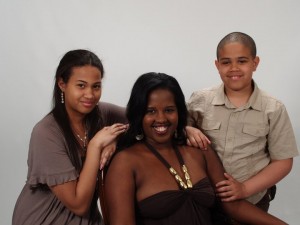
Nouvelle Noir Goddess and Children


Several years back, I partook of and facilitated a women’s group where we discussed various topics. A topic on teen abstinence came up and members of the group expressed bewilderment that I, a Pagan mother, promote teen abstinence with my children, alluding to the belief that only Abrahamic religion (majority Christianity) holds a monopoly on the concept and word. Yes, I was the only “out” Pagan mother on the page, a vocal one at that. It took me aback that individuals assume that the words virginity, virgin, abstinence, and chastity are perceived as Christian words and concepts.

“How do you promote abstinence in your belief?” was the primary question asked of me. I accentuated to the members that not all Pagan parents share the same methods, theos-doctrine, belief, or teach the same way. Similar to how many of them, who declare themselves as Christians, gave different responses. Some believe abstinence only until the covenant of marriage is the only way sex is prohibited. Some believe that masturbation is forbidden, while others would rather have their child masturbate than have sexual intercourse. The difference of parenting views on teen sex or sexual intercourse varies within Christianity as it varies within any parent, with or without a religion affiliation. It comes down to the values of the parent (and child).

With my own children, the sex talk began at a very young age with appropriate and inappropriate touching; whom is and is not permitted to see their reproductive organs, when, and causes of when, where, and whom. Causes such as their pediatrician is not permitted to see nor touch (examine) their reproductive organs without Mommy or Daddy present. Conversation on sex, sexuality, and reproductive function of organs has always been an ongoing dialogue within my home. I believe in the concept of “old enough to ask a question, you’re old enough to get an age appropriate answer.” Age appropriate answers are typically given in ways their minds can digest it. As a parent, my most important role is to nourish their true selves. A true self that is not societal, peer, or even dictated by me- influenced, but not dictated.  My ultimate goal is setting the path of theirs that will blossom.

Since many pagan paths, not all, don’t believe in some outside force making the final decisions of the self (the devil made me do it) it was clear at the very beginning that my children’s will would make final decisions. Therefore, as I don’t believe in a devil making an individual do deeds that goes against their better judgment, so it is that I don’t believe in the concept of peer pressure. At the end of the day, my children made the final decisions to act and react. I’ve modeled this with my own shortcomings as a parent by apologizing to them for my own actions. They’ve seen Mommy apologize to others. Yes, my apologies do have reasons (justifications), yet at the end; they are not to be excused by me, but the one who is offended. As a rebellious teen, I recall being annoyed with my parents blaming, which is excusing, my behavior by pointing to my peers (“ever since you started hanging out with Molly…” “Ever since you started to listen to that type of music…”). Each time my parents chose to blame my behavior on peers, society, or culture, I pointed it out (blaming everyone but me) and became even more rebellious. Until, finally, they saw me. Once they saw their child blossom into a young adult and gave responsibilities and accountability on that young adult… the rebellion stopped. I promised myself, and thus far kept such promise, that when I become a parent… I will see my children as individuals outside of me. Nobody controls their sexuality nor their being, but themselves. As painful as it is, remembering my youth and those who came, left, and stayed upon my path, those experiences, positive and negative, were tools for me, as a parent, to remember that at the end of the day, only I was responsible for my deeds. I’m accountable for my sexual expression, sexual constraint, sexual liberation, sexual moderation, sexual reproductive organs, and my sexual identity (not to be confused with sexual orientation). There is so much power in owning up to this. This power and acknowledgement of such power I knew instinctively to pass on to my children.  How can I teach them that nobody has the right to their bodies without their consent when I impose myself onto their bodies? It seemed hypocritical.

Accepting the fact that my children will one day be sexual creatures, I knew my role as mother is to assist them to feel confident and aware of this magnificent power. A power that can be corrupted like any other power but, at the same time, can be very much glorious. I did not shield them of the brutality, abuse, or misuse. I didn’t lie to them that sex can also be pleasurable under the right circumstance and with the right person. The virtue of compassion, empathy, charity, mutual love and respect are keys to a healthy sexual life. Such virtue is taught indirectly by my love and devotion to them since the moment of their conception and then directly introduced when we discuss sex, sexual responsibilities, love, and healthy relationships; with total honesty, effective communication, and trust. It’s their responsibility to harm none at all times (do onto others what you like done onto you). That includes knowing not only the intent of their relationship with self, moreover knowing the intent of others in relations to themselves. Does he/she love you for you? Or does he/she love the idea of love? Do he/she is giving themselves to you because that is what both of you desire? Or does he/she solely is giving themselves to you because that is only solely what they desire? Do you care for that person? Do you love that person? What is the understanding of your relationship with this person? Do you both share the same goals and/or end result? Like anything in life where there are actions, there are an equal and opposite reaction. So it is with sex. With our Wiccan Rede, “three times bad and three times good” explains the emotional and psychological effects of sex, romantic love, and relationships. As humans, we tend to personalize heartaches, mishaps, and joys… they truly do feel three times bad and three times good in the beginning (and at endings for that matter).

Teen Abstinence

My children are ages 17 (female) and 12 (male), now. They both have the same talk regardless of their gender. It’s important for them to understand not only their bodies, sexuality, and expression, but also of others. The hormonal change, puberty, comes in a point of their life where they are beginning to shift through who they are in correlation and a part from me, friends, and community. Figuring out ones place in the world, within and without, and managing the hormonal change is very exhausting… to the point of overdrive and feeling of having too much to handle. The reasonable process of elimination, in my opinion, is to omit sexual intercourse at this pivotal point in a young and blossoming maiden and gent’s life alleviates the unnecessary overload of hormones. For the act of sexual intercourse brings in another increase and added chemicals. This is where I truly believe that science and spirituality truly coexist harmoniously. Never mind the surge of hormones, at times very euphoric, of puppy love, crush, physical attractions, and physical attractions plus the added bonus of compatibility. Hormonal balance and being able to know thyself to maintain such balance is too much.

I recall one day that I neglected to unlock the door for my daughter who was expected to come home from school (I actually overslept). I heard the door banging and immediately jumped up to open. The first thing out of my mouth was an apology… Out of nowhere, my 12 year old, sweet child became a three-eyed monster, enraged one minute and crying the next. Upset that the door was locked in anger, and crying-hurt that I would forget about her. I knew immediately the hormones were surging in her body were fairly new to her. Calmly, I asked her to sit down with me, breathe; I lit some frankincense and had her meditate. Meditate on her day and what she is truly upset with. Was the door being locked the straw that broke the camel’s back? Indeed it was. I understood that, at times, individuals displace their frustrations toward who they love the most. We spoke about displacement, conflict resolution, and her hormonal change that has magnified all these events. We mapped out a plan for such days (premenstrual, during menstrual, and post). What food to avoid and what foods to intake, and relaxation exercises that she can do in the middle of class unbeknownst to anyone. I’m currently working on this process with my 12 year old son and his change. The redirecting of frustration and low impulse control was something I had taught my children in the beginning stage of childhood, from toddler. Now, I had to reinforce those tactics, tune some up, and some we discard due to age appropriateness.  As I continue the dialogue of “the change” I manage to slip into the conversation of sex… another added hormone that is better wise dealt easier to manage when the other change slows down or no longer to exist. Typically, those changes vary, but a rule of thumb in my home is early 20’s (20’s for the peak of the brain growth).

If I had to pick and choose my battles with my children, understanding and respecting their own their sexuality, I would much prefer for them to wait until after puberty to explore, in-depth, with sex. Sure, like many I do desire for them to experience this within wedlock. However, I would be hypocrite if I expected that from my children knowing damn well I didn’t wait for wedlock. As a parent, the realization that children will do what you do more often than what you say shouldn’t be taken lightheartedly. The argument of “Well, I’m an adult and you’re a child” doesn’t sit well with most teens who either, 1. Cannot wait to be an adult and would take that argument as a rite of passage of adulthood 2. Believe they’re an adult now just the parent refuses to see it. As a parent, I meet my children halfway, they’re in the middle… not a child, but not quit an adult. I would be negligent if I didn’t give them information on STI/STD, HIV/AIDS. I would be even more negligent if I didn’t give them information on how to protect themselves from STI/STD, HIV/AIDS, and unplanned nor desired pregnancy. In addition, I stressed to my children if they feel they cannot come to me, they do have their pediatrician who is obligated by law to confidentiality, even from me—their own mother. The only time they’re not bound by it is harm to themselves or others; responsible sex isn’t inside the confidentiality. It’s important for my children to know that I’m not the only reliable source they have. I chose to come to an agreement of a nonfamily reliable source, so I revealed to them the truth about patient confidentiality. Again, remembering my youth of hopping onto a bus, walking a few blocks, and into a health clinic and discussing personal matters to a complete stranger was very uncomfortable; so uncomfortable that I didn’t return. My children are comfortable with their physician. It’s my desire to keep it that way and, when it becomes time when they outlived their pediatrician, together or independently they must have a health professional they can trust and talk to.

Recent studies show the decline in teen sex and teen pregnancy. This may be good news and hallelujah praising for abstinence only until marriage campaign. It’s really worthy of acknowledging in the context of national statistics. Breaking it down to locations (such as school districts who only teach abstinence only vs. those who teach abstinence, sex education and birth control is not grim). However, are these statistics really accurate? Especially in the context of individuals who romanticized the era of our grandparents and forbears. If we really divulge into the past in regards of teen sex and teen pregnancy rates, it’s much higher than today. The only difference between our time and days of ole is that teens were having sex and becoming parents (most often females) within marriage. In our days, the thought of a 14 year old getting married is a disturbance, if not taboo. We no longer live in the days where our daughter’s only source of income is through marriage. We no longer live in an era where living until the age of 90 is infrequent. Our times shun teen marriages (especially prior to completing high school). In our times, we have a gap; infancy, childhood, pre-adolescent, adolescent, and adulthood. The times that some people romanticized didn’t. We’re truly blessed to live in our times, give and take. Yet, when it comes to sexual intercourse, sexuality, and balancing the change of childhood into adulthood… we and our children are pretty fortunate. Childhood goes by quickly, adulthood is much longer. There is plenty of time to enjoy sex within adulthood. Childhood, I tell my children, savor it. Even pointing to the example of how our society worships youthfulness and innocence, even the older folks (fyi: I’m in the demographics of older folks in my children’s eyes). Why rush something that most adults wouldn’t mind to relive from time to time?  I couldn’t fathom the responsibilities that my forebears bare at age 13, 14 to deal with their hormonal change, marriage, sexual change, and pregnancy hormones all at once. I don’t envy them, at all. I admire their resilience, yes. Envy as in desiring to switch places? Nope.  Our ancestors fought the stop of teen marriage for they understood the responsibility on a young maiden and gent. If we look at the teen pregnancy and teen sexual intercourse rates compared to our ancestors, we must be honest… it has decline. The difference is marriage being taken out of the equation. We already know the hormonal change of love and lust that is built up in teens was indirectly addressed in the past with the answer of teen marriage. Now that marriage is off the table. How do we, as parents answer address it (I previously address this in the beginning)? We really need to discuss openly and honestly about those feelings. Even to what I call share-gasm (sharing personal experiences, within limits, or experiences of others with our children, and using other peoples experience as teaching moments-with respect. I call it share-gasm for my children love it, to the point of excitement when I share. It’s orgasmic for them). With the way our society has been evolving, as of late, many people don’t really consider marriage until their late 20’s to mid-30’s. Even now, many people are marrying for their first time as late as 40’s, for career and financial stability are values and goals placed first. Many young women and men are seeing the struggles of their parents, many strive to be financially and career stable to afford the luxuries of rearing their own children; flexibility in workplace hours that affords them to spend quality time for children. Many are seeing that 20’s is the time to explore and discover ones true self. Through traveling and taking up hobbies without the obligation of family (family includes spouse with no kids and spouse with kids). After high school, if a child goes away to college, it’s a period in which one is beholden to mostly themselves.

Resurrecting the Primordial Virgin

Prior to the redefining of virginity, as we know today in the meaning of someone who had never had sexual intercourse. The virgin wasn’t determined by her sexual status of broken hymen, first time he/she penetrated/been penetrated nor the first time it was consensual loving sexual penetration. The virgin status was of a man and woman who was unbeholden to a child(ren) or spouse. The only moral obligation the virgin had was of his/her own conscience and/or autonomy. The virgin status exists from the time of birth until the time of marital union or becoming a custodial parent. Being a virgin for life wasn’t taboo nor to be looked upon in clemency. Being a mother/father wasn’t seen as surpassing the virgin either. Both archetypes and/or status were equal and each important for community, rarely at odds and rarely made to feel incomplete. What consenting adults do or do not do wasn’t made an issue. Who grown adults marry, do not marry, why you’re not married, why don’t have kids, and the likes was clearly the virgin and couple personal issue. The need to know of intimate details is a non-factor when virgins applied beyond closed doors (or public places with discretion). As long as the adults harm none, including themselves (unplanned pregnancy, STI’s, HIV/AIDS, self-medicating via the use of sex). It’s really not of anyone’s concern. Yes, as painful as it is… yours truly, as a parent, when it comes to my own children. My children’s happiness is my concern and their sexuality isn’t the whole of it. If they’re happy, truly happy with their sexuality and lifestyle when they are grown adults, I’m happy for them. That includes if they choose to remain the primordial virgin throughout their adult life.

Resurrecting the Vestal Virgins, Metaphorically or literally: 10 years of training, 10 years of service, and 10 years of training others

When my Abrahamic friends ask of what theos I use to promote abstinence until marriage, I immediately share-gasm the Priesthood (priestess) of the Vestal Virgins (retold to both my children of different genders). If we had the years the priestess served Vesta we come back to my ideal age of what I believe stable to “settle down” and/or have children. We know today that most marriages of teens and young, 20’s, adults end up in divorce due to still trying to discover self out, change of perceptions, values, and likes. I can honestly say that what interest me in my 20’s has changed dramatically since the time I’ve reached 30’s. Heck, what I believed at age 20 drastically changed when I hit 25. For 30 years the women of the priesthood devoted their time to Vesta. Metaphorically, for the first 30 years of life we dedicated time to discovering a huge chunk of ourselves. We will always learn about ourselves as long as we walk and breathe on this realm/lifetime. Nonetheless, the changes of the first 30 years is drastic vs. gradual. A period where I truly believe and desire within my heart for my children to remain symbolically Vestal Virgins. Discover who you are with confidence before huge familial commitments. Balance your natural gender hormones prior to dealing with the chemicals that surge during sexual intercourse and hormones released during pregnancy (for some males, decrease during fatherhood).

To conclude; yes, this pagan mother believes and advocates teen abstinence. I simply don’t demand abstinence only.

On Children

Kahlil Gibran

Your children are not your children.

They are the sons and daughters of Life’s longing for itself.

They come through you but not from you,

And though they are with you yet they belong not to you.

You may give them your love but not your thoughts,

For they have their own thoughts.

You may house their bodies but not their souls,

For their souls dwell in the house of tomorrow,

which you cannot visit, not even in your dreams.

You may strive to be like them,

but seek not to make them like you.

For life goes not backward nor tarries with yesterday.

You are the bows from which your children

as living arrows are sent forth.

The archer sees the mark upon the path of the infinite,

and He bends you with His might

that His arrows may go swift and far.

Let your bending in the archer’s hand be for gladness;

For even as He loves the arrow that flies,

so He loves also the bow that is stable.


Goddess HERstory : Candid Conversation (video)

Goddess HERstory : Candid Conversation (video)

I’m enchanted to introduce our readers to two wonderful people within our community who is devoted to speak, educate, and provide a sanctuary within our path of the Gods. More precise the path of the Goddess.  Below is a brief introduction by Jawanza Amennum on the latest video blogging, Candid Conversation, on youtube.


Candid Conversations is a not just a talk show! It is dialogue between masculine & feminine divinity in the persons of Seshait Astarte the Modern Day Goddess & “^SEHU?!.” the Unapologetic Goddesss-Worshipper (Jawanza Amennun). It has as its focus ALL matters concerning sacred sexuality, goddess-centered ritual & ancient matriarchal HerStory. The hosts are the co-founders of Goddess HerStoryn Inc. And the conversation takes place online twice a month & is posted on youtube as well as the media page on our websitewww.goddessherstory.org.

  • Part 1
    YouTube Preview Image


A Racist or A Phobic?

A Racist or A Phobic?


“My journey has taken me past constructions of race, past constructions of mixed race, and into an understanding of human difference that does not include race as a meaningful category.” (Spencer in Penn, 2002, p.10)

My latest post is written slightly regarding identifying myself as raceless as well as providing a brief description of what raceless is. The second part is going marginally into the depth of individuals, primarily my voice, who are raceless and dealing with a world that can appear entirely absolute. Currently, our political climate has been beset with the overuse, at times inadequately applied, with the term racist and racism. My deepest fear is that overuse of such words will desensitize many individuals; including the very persons it clearly identifies with. I, for one, have become immune to many vulgarities. They no longer bother me. One: I know who I am. Two: It has become such a buzzword that it causes me nothing but annoyance. Seriously, can an individual come up with something extraordinary? I’m bored by it.

This brings me back to fear. Fear. Are all accused as racist actually racist? The definition of a racist is a person with a prejudiced belief that one’s race is superior to others. Fear is the absence of one’s superiority. It’s the unpleasant emotions that someone or something will cause pain, a threat, a danger to their entire being. Fear does cause one’s emotions to erupt in erratic ways, one being anger. Anger doesn’t consistently equate to feelings of superiority.

I’ve notice those who are branded with such title, racist, don’t feel they are superior at all. Some have no issues with a race, simply the stereotypical culture that a race, based on their culture-society, is identified. Some are not articulate in expression; in turn, they do speak blindly ignorantly.  Some have no issues with other races (or ethnicities), just one particular race (or ethnicity). This is where the “I’m not racist; I have a (fill in race or ethnicity, etc.), who are (fill in the race or ethnicity). These individuals laugh for they know the word and the definition doesn’t fit them. A prime example is Lou Dobbs, who I’ve often heard being called a racist. Is he really? He is married to a Mexican-American woman.  I may not know too much about his wife. I can only imagine those who are first generation American, or immigrants who came to America as children, or generational children/adults who identify with two different nationalities blended into two different cultures. For a Xenophobe, they’re not as intimidating and easily understood. No, I don’t believe Lou Dobb is a racist. I do believe he may be Xenophobic; one with an intense or irrational dislike for people from other countries or people they do not know. The key word is irrational.  Somehow, he has disassociated his wife from Mexicans; either because she is a legal immigrant, she was born in the United States, her culture is a blend of American, or what have you. He reminds me of a date I had with a man who rambled off his disdain for Haitians. I sat there, very still, fuming in rage and, at the same time, desiring to laugh right in his face. Especially when he stated, “I can see a Haitian a mile away. They have this distinct nose and smell to them.” Okay, that is when I began laughing. I signaled the waiter for the check and told him that our date is at an end. When he inquired why, for he was totally shocked, I replied, “You couldn’t see me a mile away and your nose apparently isn’t working. I’m Haitian.” I purposely omitted the “American” for I didn’t desire him to justify his ignorance by using my “Americanism.” The man isn’t racist (he is Caucasian) but Xenophobic, particularly of Haitians, Cubans, and other islanders. I’m sure, due to his location, residing in southern Florida where there is a high population of Caribbean immigrants. I understood the selection of his phobia, due to his location, but will NEVER excuse it. I also understood that saying this to a black person isn’t the first, for I’ve met Xenophobic black individuals as well. Impromptu example is that I’ve been asked what my ethnicity is: “You have that exotic look to you.  You can’t be African-American. Are you from Somali?” Although Somali is a country in Africa, for many individuals, they are not considered Africans. Similar to how some people exempt those from Turkey or Armenians as being non- Europeans. On the other hand, pending on how the individuals construct inquires or make a statement, I wouldn’t cast them off as xenophobic. The latter example (you can’t be African-American) is blurred with innocent ignorance and a high level of being aware (most of the Trans-Atlantic slave trade is from African people off the West coast countries. Somalia being of the East makes sense. Nonetheless, African-Americans don’t necessarily mean you’re generational black who has ancestors since the beginning of the slave trade on United States land, and among other factors that I will not go into depth here, now).

On top of Xenophobia, I realize individuals within our society, not to say our society is unique, have the following (not limiting to the following, as well);

Negrophobia: fear or contempt of black people and their culture.

Blancophobia: (at times, referred to as Albophobia), fear or contempt of white people and their culture.

Colorphobia: a fear or contempt of people of a particular skin color.

Individuals may not have issues with black or white people, only issues, fear or contempt, with the stereotype of a culture (particularly, music genres that create a subculture). My earlier post used the two examples of African-American country singer, Darius Rackur, and Caucasian-American rapper, Eminem. Those who adore Darius Rackur and bastardized Eminem with racially charged words (acting white, acting black) are exhibiting Negrophobia, contempt of what they view black culture is; and Blancophobia, contempt of what they view what white culture is. Another paradigm and definition of Negrophobia and Blancophobia is absolute disdain for skin color, the obvious, specifically. I will refer this as hard negrophobic and blancophobic. Individuals who are hard Negrophobic and Blancophobic don’t care to know ones nationality-ethnicity, culture-subculture, or see too many skin variations. They simply classify, within their mind, people as black and white (think of the historic one drop rule and the terms applied of mix race individuals as “passing” of either white or black). Another prime example is American-Indian (from India) Nikki Haley, governor of South Carolina, may not cause fear or contempt in an individual as her American-Indian Republican comrade Bobby Jindal. Both Jindal and Haley Anglicized their birth name to sound more American, English. They both came from a familial religious background that isn’t Christian. They both speak openly about being immigrants from India. The only difference between them, besides gender, is skin hue variations. Individuals who are Negrophobia may classify Bobby Jindal as black and see him as a threat. In contrast, Blancophobic individuals may view Nikki as white and may see her as a threat. Despite both of them being an American, Indian-Americans, and may share same values and cultural heritage. This can be very confusing to individuals who prescribe race as nationality, culture, religion, language, and tribal identification.

My assessment is that during the historic racial classification in United States, prior to the one drop rule, colorphobia began, the fear of a particular skin color, especially when ethnic groups began to intermarry, inter-reproduce and their offspring easily assimilating into society. Oftentimes, in high political positions. Individuals who are colorphobic may not fear black skin, like my complexion, or white skin. It’s the “unknown” skin color; the browns, reds (stereotypically, derogatory, referred to Native Americans), yellow skin.  Historically, inside the United States a hierarchal ladder was given to separate the slave based on privilege. African ethnic group were separated (brown paper bag) and those who were lighter were given a false sense of privilege; including those who were classified as indentured servants who were most often Caucasians from various nationalities that isn’t English (Ireland, Scotland).  I’ve come across many individuals cling on to the fact indentured servants were indentured for several years; many were indentured for life for the most minor infractions. Many of them receive the same punishment for the infractions as the black counterpart (whipping, branding, etc., including the raping of the women). The privilege was false for they were slave with a fancy term.  A term to disassociate from the obvious mistreatment (indentured servants is to slave as enhance interrogation is to torture when it comes to water boarding). It’s similar to individuals who are verbally abuse would proclaim, “Well, at least my abuser doesn’t hit me.”

Colorphobia, again my assessment, is still prevalent in our society when Native Americans have the highest teen drug rate, sexual violence against women rate, dropout rate, and lack of resources. Native Americans contain to no media reporting. It’s not what is mostly talked about or represented in the media or what is rarely talked about or represented in the media. It’s what isn’t reported in the media period that frightens me.  For it builds the, ‘At least I’m…” when individuals outside of the black and white are being just as abused, if not worse…even neglected. This can bring about a form of contempt of being not even represented at all.

Within the African-American community, colorphobia isn’t the same as being racist. I’ve encountered many individuals who identify as black, proud to be black, and appear to have blancophobia. Nonetheless, they may display disdain for, shall I say, a darker shade of black. In contrast, individuals who are black, proud to be black, may have blancophobia but do have colorphobia against a lighter shade of black. Are they racist? Considering the fact they take no issues with being black or individuals who are clearly white; solely issues with lighter shade of black. They acknowledge the light shade skin is black but have contempt of. Within the African-American community one may refer to this as “self-hating.” Honestly, I’m placed off with the term for the individual may exhibit a profound love of themselves and others except for certain skin pigmentation. This is not only unique to African-Americans only. I’ve met Caucasians who holds similar colorphobia of anything too pale or anything too dark (the Italian derogatory slur Guinea comes to mind, towards dark-skin Italians). As I’m typing this, this brings me back to a bumper sticker my father has found it so offensive but hysterical. It stated, “My guy is blacker than your guy. Who’s the racist now?” This is in reference to the Obama vs. Cain debate where the climax of throwing ‘racist’ around is redundant. Before anyone starts deterring off topic and decides to send me a comment regarding Cain and Obama, my father is a Republican and I am a registered Democrat since the time of voting. However, I’ve become very politically independent as of late. Voting based on issues and policies vs. political party. Yes, I’ve voted Republican as my father has voted Democrat. We’re the moderates-Independents, the swing voters that party rhetoric doesn’t appeal to us.  Akin to how we get to know individuals vs. going about group labels.

Now, that’s out of the way. The bumper sticker brought me back to racism. The bumper sticker slogan brought my attention to colorphobia, taking issues with a particular skin color even though the individual within the skin color belong to the United States classification of race (of course it’s a tongue in cheek slogan making a mockery of the word racism being thrown so “liberally” as of late, in my father’s eyes). Both Cain and Obama are self-identified as black men (Yes, Obama is mix race. Yet, he has identified as an African-American, black American in his last census). The issue isn’t really about black but the particular shade of black for some individuals. For some, Cain skin color isn’t a threat or to be feared of. Obama’s is, and in reverse with Cain’s skin color is seen as threat but Obama’s is. American-Black Muslims may not be seen as a threat but Muslim with brown skin is (or an Arab). It’s colorism not racism that really needs to be discussed to really achieve human equality for all. Simply calling an individual a racist without specific is a non-defeating. For we’re not addressing the individual issue, along with societal. At times, the word “racist” is being thrown at individuals who simply have a logical reason to dislike or not agree with an individual.

Parallel to how a non-believer speaks about the “crazy Christians” to a Christian who believes in evolution, is pro-choice, and believes prayers should be left out of school. It’s the non-spoken understanding that the non-believer is not speaking about that type of Christians. I’ve received the same comments as a Pagan. Individuals bashing Pagans freely around me for I’m not perceived as that type of pagan (i.e.; wearing black, bunch of jewelry’s, etc. As a follower of ATR, I don’t wear all white or have my hair wrapped up and in braids).  So, it is with simply calling an individual and/or institution who may exhibit Negrophobia-Blancophobia (especially when it comes to perceive stereotype of culture, fashion, and slang that derives from the music subculture), Colorphobics, and Xenophobic (who may have issues with a specific nationality; the individual may have no issues with brown skin Honduran, just brown skin Mexicans) a racist. We must be more specific when we speak, in order to heal and grow. We must understand the individual through their experiences and not our own. Through their minds’ eyes vs. our own mind’s eye. To move more and more forward, we must move to be more and more articulately specific.

“As societies grow decadent, the language grows decadent, too. Words are used to disguise, not to illuminate, action: you liberate a city by destroying it. Words are to confuse, so that at election time people will solemnly vote against their own interests.”  -Gore Vidal


Black Girls in Suburbia Documentary: This Suburban Black Girl Story

Black Girls in Suburbia Documentary: This Suburban Black Girl Story

YouTube Preview Image

Black Girls in Suburbia is a documentary that takes an in-depth look into individual black women who were raised and/or live in a predominately white community. I must admit, the trailer is a bit too melodramatic in my personal opinion. Notwithstanding, it shouldn’t dismiss the actual pain of what these brave individuals share with the filmmakers; the balancing act of being true to oneself while defining, at times reeducating,  societal prejudice of what black is and is not, what white is and is not,  and what I am as a person am and what I am not.  The pain I felt may possibly be the same as the women in the trailer, it’s just I prefer to call the taunting bullying and the idea that an ethnic group behaves, acts, believes, and lives under a monolithic umbrella as a small world view (AKA ignorance). As a child, I had troubles with stereotypes regarding ethnicity due to the fact of being first generation American from parents who came from a predominately black country.  On school breaks, from the time of my earliest recollection to the end of my high school year, I would live in the New England United States and Haiti. I had two homes in two different countries. Both countries define race differently. In America, it’s a combination of skin hues, culture, and other factors. In Haiti, it was very simple. Either you were born in Haiti or you’re not. That simple. Regardless of skin hue, it was either you’re Haitian or you’re not, regardless of skin pigment. Contrary to what the United States media displays, Haiti has a 5% non-black, under United States classification of race, population. It also has a middle- to rich-class. The political issues in Haiti were more of classism. In the United States, there are both and our culture facilitates it with “acting black” and “acting white” stereotypes. In terms of classism, there is “trailer park” and “ghetto” when behaviors are deemed by an individual as uncouth or inappropriate. Both terms, that are locations where the underprivileged stereotypically reside, are used to debase another.

My personal, and life, experience wasn’t double-consciousness as defined by W.E.B De Bois as, “a world which yields him no true self-consciousness, but only lets him see himself through the revelation of the other world. It is a peculiar sensation, this double-consciousness, this sense of always looking at one’s self through the eyes of others, of measuring one’s soul by the tape of a world that looks on in amused contempt and pity. One ever feels his two-ness,–an American, a Negro; two warring souls, two thoughts, two unreconciled strivings; two warring ideals in one dark body, whose dogged strength alone keeps it from being torn asunder.” My experience is of racelessness as defined in the following passage:

“Racelessness is far more complex because people who transcend race are actually aware of how race negatively affects the daily existence of people of color. They have very likely experienced discrimination, yet they respond by understanding those situations as part of a broad societal problem; one in which they are deeply embedded, but not one that leads to their subscription to racial identity,” according to Rockquemore, as cited on a website for race transcenders.

Someone who is race transcendent, or raceless, may choose to identify by ethnicity instead, or emphasize another part of their personal heritage, such as nationality, language, or culture.

“… According to professor Jennifer Hochschild, who teaches “Transformation of the American Racial Order?”, there are three groups of people that might refuse to identify by race: 1) disaffected (probably white) people who believe the world is post-racial and that we should all be color-blind; 2) recent immigrants for whom American racial categories simply do not resonate nor make any sense; and 3) bi-racial or multiracial people who do not identify with any particular racial category.”

I would like to add to Jennifer Hochschild’s groups of people who might refuse to identify with race, who are white, are raceless (those who would identify themselves as; Irish-Americans, Italian-Americans, for an example). They understand “white privilege” in the context of class. I’m sure if we search out Caucasians who reside in a predominately black community, they may have experienced the effects of discrimination from both individuals: white and black. In the case of white, it may be classism or culture. This is where the “acting black” comes from. It comes from the culture of music; since music determines fashion and language (slang), the fashion that identifies with the music genre. I’ve met individuals who take no issue with African-American country singer Darius Rucker (lead singer of Hootie and the Blowfish), but will squirm if a male dressed like Eminem (Marshall Bruce Mathers III). For some, Darius appears less threatening than a white man who dresses like Eminem or Black Sabbath. Residing in suburbia, I realized the difference between racism, prejudice, and American culture/society that permits racism and prejudice to continue, in which continues the acceptance of ignorance. Scientific studies have proven that our culture produces stereotypes that individuals adopt, either knowingly or unknowingly. These are stereotypes that continue the cycle of educational tied in with economic disparities.

In the case of talking, sounding, and “acting white” it’s one major root cause that many African-American children faces that prohibits them to excel academically. Many African American children who enjoy a subject or desire to do well in school to secure an economically stable future are oftentimes discouraged with name calling, bullying, and accused of being a nerd, with the addition to race baiting. Speaking proper English is “not black.” Listening to a certain music genre that is not dominated by black entertainers that also influence the fashion culture, is “not black”. Not being interested, as well as doing poorly, in American, ethnic based sports (basketball, football) is not black (American for soccer, in countries outside the U.S. football,  is stereotypically viewed as a white sport or a sport for the middle- to wealthy-class). The American media perpetuates these stereotypes and, sadly, people believe them as truth-including the ethnic group that is stigmatized by them. The lack of inadequate funding to areas of poverty (rural and urban communities) is the tip of the proverbial iceberg. The living conditions (violence, alcoholism, drugs, etc.) within those communities are what we see this being played out in our politics, media, and music. What’s not discuss, with passion,  is the affect our media, and we as people, define what white and black is that is also affecting the academic achieving gap of African-American and Latino communities.  As a child, I was hurt hearing such naming calling and bullying thrown at me. Not for myself, but for the individual who threw them at me. It’s really sad that academic achievement is taboo, for the other alternative is poverty, economically struggling/dependency, and, at times, prison.

Living in suburbia, I’ve witnessed that, in the grand scheme of things, we’re not that different. Academic excellence in certain communities can be seen as stigmatizing for children. The Revenge of the Nerds is the prime example of anti-intellectualism. The double whammy is the skin pigmentation and culture. For immigrants, and children of immigrants, it can be the added bonus of how much one can assimilate or learn America’s racial classification. A prime example is the use of the words; Eurocentric, Caucasian, and white people. As a first generation American who lives in suburbia, I learned that in U.S culture of race individuals from Armenia, Turkey, and Azerbaijani are exempt from what is considered Caucasian or Eurocentric. I must admit, to this day, it doesn’t make sense for scientifically and geographically speaking, they’re the scientific term of Caucasian (people from the Caucasoid) and the countries are in Europe. Likewise, I’ve found that individuals in America view the continent of Africa in one monolithic umbrella. When, on the continent of Africa, the black folks also have their own ethnic classification, even within countries. Similar to the difference in culture of northern, southern, mid-west, and pacific coast states, even within the states. So, it is with black girls in suburbia. We experience the suburban life different for many reasons. What we do share with one another is the balancing act or racelessness. What we share with all individuals with our skin hue is the racial disparity, prejudice and/or racism, within individual institutions and individual people; wage disparities, racial profiling of the criminal justice system, promotion discrimination,  housing discrimination, and other discrimination based on our race (for black women, both race and gender). Our struggles are the same, but also different. One doesn’t necessarily have to relate to it, just try to understand it.

Daughters of Eve Q&A: Ebonee Herron-Newson

Name: Mrs. (Tiffany) Ebonee Herron-Newson

Location: Union City, Georgia

Website: The Life of an African-American Wiccan

Social Networking Site: The Life of an African-American Wiccan on Facebook

How long have you been a Wiccan/Pagan? What drew you to the path?

I’ve been a Wiccan for about 14 years now. Around that time I was experiencing traumatic personal family issues. At the time, my family and I were living in Germany, on a military base. While in Germany, there was another family who was pagan. They introduced me to paganism by allowing me into their circles and practices. I found deeper solace with their practice than my Christian background. I attempted numerous of times to reach out to the clergy (Christians), I felt a deep let down. I had to make appointments vs. able to walk in and receive help. With paganism, the family; they were there for me no matter what time of day. In addition, I had a family member who suffered from mental illness. Instead of telling my family member that they need to address the mental illness and seek scientific modern assistance, they believed only prayer would “caste the demons” out. Whereas with Paganism, science and religion is compatible. I received more spiritual help with modern views by my friends and “clergy” who were Pagan. The family made my decision very much easier for I already made a decision to leave Christianity, yet I also wasn’t ready to leave any form of spirituality. It made my decision to leave Christianity much easier having the pagan family nearby to turn to.

I began to research numerous paths under the umbrella of Paganism. It was Wicca that called me. Particularly the goddess Morrigan who consoled me the most. Since then, I’ve been Wiccan.

How has the path changed you? How much of you stayed the same?

The path changed me in the sense of more confident in myself. Particularly, my sexuality. What I mean by my sexuality is that my prior religious background forbidden; nail polish, earrings, shorts and skirts particular passed your knees. My body is very ‘curvaceous.’ I felt to be made ashamed of my big breast, curvy body, and big behind. All these characteristic is naturally me and no matter how much I tried to conceal these characteristics, they showed no matter what I wore. I never felt “good enough” I felt I wasn’t permitted to be a female. It was worse when I became pregnant at nineteen and unwedded. I felt ostracized.

Walking the Wiccan path made me unashamed to be naturally me… feminine, a mother, and yes… a sexual being. I no longer feel shame or dirty. I feel…. well, ME. As for how much of me that stayed the same; I like to say everything else. I am still down to earth, compassionate, and easy going person who doesn’t care for drama (as well as dogma).

What inspired you to create blog?

I wanted to represent an African-American/black Wiccan. Yes, there are other blogs out there of many black pagans. Yet, not too much of an individual who is actually Wiccan.. I follow the Wiccan Rede, the Sabbats, Esbats, and the gods/goddesses that I do incorporate into my practices are Celtic. My path is 14 years and counting. Therefore, it is neither a phase nor a fad. This is my religion. Wicca is my way of life and who I am.  Even my daughter is being raised in Wicca.

Name one misconception of being a black witch, pagan, Wiccan that you personally feel should be addressed? Within the black community? Within the pagan community, as a whole? What steps/ strategy should black pagans take to combat the misconceptions?

I believe within the black community, especially in the southern states (I reside in Georgia), there is a lot of misconception of “evil” supernatural forces that disguises itself in Wicca (anything that isn’t Christian for that matter). That our horn god is actually the devil in disguise. It is completely false for we don’t believe in harming anyone, especially ourselves. We don’t make blood sacrifices who wish anyone ill (due to the threefold law). Our practices is very similar to Christian practices; we give thanks, we pray, we believe in uplifting our community and each other. It’s just our “religion” is another name.

As for steps we should take; is communication, communication, and communication. To allow them into, even if they sit and observe, our rituals. Yet, not make a big to do with our rituals for it could be too much. Yet, show them the day to day rituals and/or prayers. I’m not saying to tell EVERYTHING for there are things we do keep to ourselves (similar to silent prayers are kept in secret). Yet, to be more open. Oh, to also make it (rituals and explanations) simple as possible.

What is your personal practice, spiritual/religious identity that you go by? Why do you choose such title?

Eclectic Wiccan:  I call myself an eclectic Wiccan. I prefer to go by this for I don’t go by Gardnerian Wicca or other branches of Wicca. Although I mostly work with Celtic patheon the majority of the time. There are times that Roman gods/desses calls to me for an example. Yes, they are far in-between but I must recognize and admit this.

Tell us about your practice: Are you solitary? Do you attend group rituals? Do you belong to a group? Why do you choose such practice?

I’m solitary, as we speak. In the future I may seek group rituals. Just at this point in my life right now, it’s too chaotic to commit to a coven. The last time I was in a group ritual was when I was 15, in Germany.

What was your religious background prior to your current path?

I was raised Christian, very typical. Denominational wise, Pentecostal by my mother and I attended Southern Baptist private school. Both Southern Baptist and Pentecostal are very much similar. There is not that much difference in the teachings (doctrine). Especially when it comes to women/girls roles.

What type of audience do you feel would benefit from your blog?

I believe newbies can find something that sparks their interest in my blog. As well with pagan/Wiccan mothers for I do post about my daughter and how I incorporate my practice in teaching her.

What deity (deities), if any, you most work with?

I mainly work with Celtic but I work with Greek deities. For Hecate does work with me, often.

What advice would you give to “new” black pagans?

Follow your heart, your path– no matter what people will say or may think. For it’s your path and your happiness. You are living YOUR life, not others.

Daughters of Eve: Megan

Name:  Megan Henry

Location: Philadelphia/New Jersey

Website: Working on it…

Social Networking Site: Facebook

How long have you been a Wiccan/Pagan? What drew you to the path?

For about four years.  I started out going into Wiccan. That was the most available at the time.  Although I have grown away from any organized religious practice and now am immersed into more of a shamanistic practice.  I found any organized religion a bit too dogmatic and patriarchal for my tastes.

How has the path change you? How much of you stayed the same?

I have changed in the oddest of ways.  Having been raised Catholic, in a Baptist home….yea…and some of y’all will understand all of that!  LOL. I have to say that ever since I have taken a pagan path, I have become more Christ-like.  Strange, but true.  I find that, through paganism and being a solitary practitioner, that I am asking the hard questions about myself, my immediate world, and the world around me, as well as my place in it.  Not only does paganism challenge you to ask the questions, but what I LOVE about paganism is that it challenges you to experience and live your beliefs…to find out your OWN answers and live by them.  You are also allowed to change and thus, change how you live.  I learned how to not judge myself and thus, not to judge others.  I am still learning that hard lesson.  The biggest difference, though, is the living what you believe.  Not all pagans do this…they are like anyone else.  It is just that paganism puts you to experience your beliefs and as you experience them they cease to be beliefs and become truths.  I’ve seen bits and pieces of this in organized, mainstream religions, but not to the extent that I have found in Paganism.  I just love it.

I am still my “self”.  I am more joyous and react to issues that come up in a different way.  I have a lot less anger around me and that is a wonderful thing.

Name one misconception of being a black Pagan/Wiccan that you personally feel should be addressed within the pagan community and within the black community.

I have been fortunate to have found a wonderful community of pagans in South Jersey who never made me feel outside their circle because of my race.  In fact, they welcomed my difference because they wanted the opportunity to hear my view and share my perspective with them.  There are a lot of misperceptions about black people in all white communities.  South Jersey is particularly ripe with racism and in very subtle ways.  Some of that spills over into the pagan community.  It becomes tempered but, on occasion, I do get odd looks from people or they assume that I am associated with an African pagan practice.  I had a friend who continually thought I that I should look into the Yoruba practice.  I did, as I am generally open and found that I didn’t like it because it was too patriarchal and too formal for my tastes.  Too many rituals and rituals where women cannot participate or vice versa.  However, do note that I am definitely a devoted solitary.  I love being a solitary.  So, my mindset, I think, is slightly different than others who prefer something more organized and communal.  So, I think I’d ask those who are not of color, that they not assume anything about us, like they would a white person.  Just as an Italian may be drawn to a Celtic practice and that is accepted…it should be accepted that a black, Asian, or Latino may also be drawn to practice that is not connected to their heritage in this incarnation.

The black community.  Weeellll…I think that there are many who are in the closet about what their true beliefs are.  As “out” as I am about my beliefs, I have to say that if I am around folks who are of the mainstream religions, particularly “Christian” that I will keep my thoughts to myself.  These days I am just not up for a pointless argument about it.  I’d like to think I pick my fights judiciously.  So, when I am in the company of the religionists (my term only) I will either say nothing or voice my opinion in a secular way.  I think I have a bizarre fear that they may gang up on me and try and lay their hands on me to exorcise Satan out of me or something.  Whew…the thought!!!  I’ve been in services where they just might do it!!! LOL!!!  However, I wish the black community was more open to the idea that we are a VERY diverse people and instead of assuming what a belief system is because of what a book or a minister says, to find out for themselves what it is about.  Unfortunately, the purpose of many mainstream religions is about control and ego.

How should the black pagan community combat this?

Continue to grow, learn, and experience your belief system….so it is a truth and less a belief.  Doing this alone you will stand out from the rest and people will approach you (as is what happens to me) and begin to ask you questions.  Some questions are as simple as “how is it that you look so joyful most of the time?”  Other questions may be more in-depth.  But become prepared.  Also, be open.  Some people, even ministers or leaders in the mainstream faiths have something worthwhile to say outside of prepping for the collection plate.  So, as we ask them to be open, we also must be open.  There are enlightened ones in all faiths…and they NEED to be right in the midst of all confusion happening in the large religions.  My experience, so far, shows me that most people are not ready to tackle the responsibility that comes with a pagan or indigenous path.  I am in awe of what is asked…and I grope forward daily to find my way back to Source every day.

As an individual; what do you inspire to do to combat misconceptions of black pagans?

To continue to grow as a soul.  To make better choices in all aspects of my life, to not judge and learn what real love is all about.  I don’t need to step out and make a spectacle to garner attention to how different I am from the majority.  I can just be.  That is all that is needed.

Is there a message in your future project of African American Pagan documentary that you want the viewers to grasp? What is the message?

I’d like to tell “our” stories and experiences of how we began this path and the journey.  In one of my meditation groups I had a woman (Hispanic) listen as about 12 people shared how they started on their path.  The stories were amazing and very diverse, most had a catalyst of some sort, usually a death of a loved one (as was my case), to intense psychic awakenings or spiritual activity.  This woman, who was last to speak broke down crying because she had begun to hear voices, sought out psychiatric help and they found nothing wrong with her, sought out medical help (auditory issues) and found nothing wrong.  Some of the stories she heard were exactly what she was experiencing.  She wasn’t crazy (I don’t like to say crazy. But, it is quick and to the point) …and it turned out she was experiencing a quick and intense awakening.  She found her support there for a few months and then decided to pursue a shamanistic practice.  I happened upon her months later and she was so much more at peace. My point is that although our experiences are similar, the difference is in the details…the colorful details of our people.

One other instance for me, was when I first embarked on this path, and at the time I embraced Wicca.  I was pretty much out with it, and I work at an office, and my department had hired a temp for a few weeks.  She was a black woman, and although I had not spoken about it, this woman perceived that I was of some sort of pagan path.  I didn’t wear anything at the time, so I think she picked up on it psychically.  I remember she said to you “you are brave for being out”.  I asked her what she meant.  She replied…your religious path.  I stopped dead in my tracks…I turned around and asked her what she practiced, and she said she was a witch, and practiced Wicca for years.  We were the same age so we spoke about it in depth.  Her story of living in Harlem with her three children and how she had and continued to hide her practice for fear of reprisals in the community.  I believed her, too.  Our people live in tremendous fear, planted by the mainstream religions, i.e., Satan, demons, etc.  Not to say that those energies do not exist, however, in general it is just the “evil” within that particular soul that is in confusion, not an outside entity. So, our community lives and perpetuates fear, plus the fear from the religious organizations that if people were to actually take responsibility for their own actions, and KNOW the God within…their structures and organizations would most likely be empty, they’d have no money.  LOL!

The message I’d like to bring to black pagans is that…they most definitely are not alone, and they can, if they choose, to reach out to other black pagans for support if needed, that we can also write books, make CDs, step into the hyper new age arena with a spiritual message that ALL people could identify with and learn from.  When I go to some of the spiritual expos I am so disheartened when I see no representation or maybe one or two black or Latin speakers.  Our history here is so amazing…I mean our people survived slavery!  Yes…we are still here, and that alone, coming into this incarnation as a black person affords me a genetic make up to withstand all sorts of trials and tribulations.  This alone can be shared with those who are not making it, or the struggle is so burdensome to them they are sinking (or perceive themselves to be sinking).  I told one fellow who comes to me periodically for advice to “pick your behind up, stop whining, and move your ass!!!”  He was shocked as he had never been spoken to in that manner.  He later thanked me and laughed very hard and said…”you know what…that fucking worked!!!!”  He still struggles with many issues, but from that he knows he CAN change his own life…sometimes by just moving his ass.   And who talks like that…except some of our folks!!!!  LOL!!!  I didn’t grow up in the ghetto, but my cousins did so I picked up a lot of the vernacular, lest I get beat up.  LOL.

Our lives are colorful in a way that others may not understand, and as pagans we can share that color and help anyone move forward.  I believe that is ultimately the only reason we are here.  To help ourselves and others move back to Source.  Nothing is as important. Not a career, not money, not a house, a car, fine clothes, sex, a husband or wife…or even children.  Our only purpose is to get back home….our real home.

What type of audience do you feel would benefit from the documentary?

I believe anyone who is open to another perspective would benefit.  I would like black pagans to be able to use the documentary to connect with each other.  New pagans to get some answers as they struggle to find the answers within.  And those outside paganism to realize that we are not Satan or demonic and that paganism isn’t what they assume they’ve been told it is.  At the least it would be a very enjoyable series of stories…hopefully ending with people asking more questions than when they started.  it would also be nice that black folks who see it will be able to contact another black person to discuss or help with whatever issues they are going through.  In our culture it is perpetuated that only white people have the answer.  Well, they don’t…not even for themselves.  Ultimately, we have to find our own answers, but the path to that realization becomes very, very interesting.  And then, the magic happens when you see that Source works through EVERYONE!!!!

Can you tell us a little bit about yourself?

I am an eclectic, solitary shamanistically bent.  Always evolving.  I am also a musician (opera singer now a jazz something singer) working on a CD, I have a very tiny, tiny intsy wintsy body work practice (energy work, not massage), I am a life coach (really good at that), and I work 3 days a week at a law firm.  What fun!!!!  I also started teaching voice at a cultural center.  I am good at that…

What was your religious/spiritual background prior to your current path?

I was raised Catholic.  But my home life was Christian Baptist.  My Catholic experience was just awful.  The racism was so thick growing up.  We’d go to church and the place would be packed with people, but our pew would be empty!!!  No one wanted to sit next to us.  But, we went anyway.  The strength of black people!!!!  When I got out of catholic school, which ended Catholicism for me and my family as well.  The story of why I was raised Catholic is that my mother couldn’t get pregnant and an Italian woman offered to do a Novena for a couple of months or so.  She asked that if my mom got pregnant that she raise me Catholic.  Well, that did the trick.  A month after the Novena, my mom was pregnant with me.  So she kept the bargain and raised me Catholic.  I spent years actually believing much of what the indigenous religions belief.  I have no idea where it came from; I think it is past life remembrances.  At one point I completely immersed myself in Christianity and even studied 6 years with Jehovah’s Witnesses.  That was the last straw I think.  That made me physically ill.  Then I had a catalyst and my soul would not be denied.  I screamed out to God…who are you?  And it showed me who it is.  It was magnificent.  And I’ve been connecting myself to that energy ever since.  Questioning, getting answers…experiencing …

How would you “label” your current path (Ifa, Wiccan, eclectic, Hellenic, etc.)?

Eclectic.  I have a base in Wicca, I just don’t identify with all the ritual, and what I call party favors (statues and whatnots) etc.  For instance my first Wicca ritual everyone took out their knives and things, and I used my finger.  LOL…everyone just stared at me.  I replied quite naturally that I don’t need to use anything to channel my energy…it is within me and my finger is enough.  (Gasp!!!!)  I am also very shamanistic I completely connect with the energies of animals, plants, universal energy.  But I do love Wicca, there are such great spiritual ideas in Wicca.  Love it….I’ve just morphed.

What deity (deities) and/or pantheon do you work with ( or the most)?

I work with what I call “Source”, the energy what many would call God.  It is neither male nor female, although I very much so connect to female energy, and am an avid supporter of women’s liberation from themselves.  It is all…is the best way I can describe it.

What are your practices? Solitary? Do you belong to a group/coven?

I am a solitary.  I had a bad experience with a so called coven…and that was the end of my Wiccan days.  I mean the idea that someone thinks they have power over another, or has more understanding than another because of years of practice….well that experience showed me the complete opposite.  There are those who have been practicing any particular path for years and don’t know more than my puppy!!!!  Yikes!!!

Even though I am a solitary, I do belong to a spiritual group.  We meet once a week, and it is different in that it focuses on everyone’s sovereignty.  We created a safe space to share anything and everything.  It is so wonderfully different.  So when I feed the need to be in the company of others or have questions…I go there.

Were there a community of black pagans that helped you along your path? In the beginning? Currently?

No…it would have been nice.  I’ve met black pagans as individuals in my travels, usually in a metaphysical store and had the most AMAZING conversations.   There is a black pagan community of sorts happening in Brooklyn, NY.  I’ve not been able to connect with them.  We have so very much to contribute to the pagan community and the global community as well.  I meet them here and there.  Usually 2 -3 a year.  I’ve not been able to engage them, but I am going to put forth a stronger effort.

What advice would you give to “new” black pagans/Wiccans upon the path?

Do as ye will, harm none.  That is the most incredible phrase ever…if you really think about it, and put it into practice.  There is not much more that you need.  It does need some discussion though.  For instance, some people think that saving is helping…saving is an invasion.  As you move forward in your spiritual growth you learn that some souls NEED to experience difficulty to truly learn a lesson.  Saving a person robs them of that experience (thus I think that is one reason why people get resentful if you “help” them).  Even really awful experiences.  I tell people that unless a person explicitly asks for your help…step off!!!!  Respect their souls!!!!  It seems to be particularly difficult for psychics…but I think they get a bit caught up in their ego too.  Gotta love ‘em, though.

Are you a pagan and/or Wiccan of color? African traditionalist, regardless of ethnicity? Email nouvellenoirgoddess@gmail.com if you’d like to be featured in DOE Q&A.

Matronage, Patronage, and Spirits

Matronage, Patronage, and Spirits

I’ve come across numerous inquiries regarding the paths of the Gods, Goddesses, Elements, and Spirits. The most common question I’ve received is regarding how one knows who are their matron and/or patron deity is. This piece is to lightly discuss the basics of matronage and patronages.

For beginner seekers, I often suggest working with deities that are automatic matrons and patrons due to birthright, pending which path you’re drawn to. For instance, Yamaya of the Yoruba tradition is one of the automatic goddesses/orishas matrons from descendants of children who traveled into the Disaporas during the Trans-Atlantic slave trade. She promised the children she guided, protected, and received into her waters that their children and future descendants will forever be her children. Regardless if the descendent went from “black” to “white” (passing as white by mixed race children during the time of slavery was a very common practice to receive freedom and/or preferential treatment). Being of direct Haitian descent, Erzulie Dantor, the mother of Haiti, is also my matron. Therefore, my matrons are Yemaya (due to being a descendent of the slave trade) and Erzulie Dantor (due to being of Haitian descent). Yes, you may have more than one matron (don’t allow anyone to tell you otherwise). Nonetheless, I do feel more connected to Erzulie than Yemaya. This is normal connection when an automatic matron feels a bit distant with you. To use an analogy: automatic matronage is similar to surrogacy. The surrogate mother is the womb/vessel that the child is kept safe within until birth. Yet, the egg that is fertilized is the biological and/or true mother. How I view this: Yemaya is the womb and Erzulie Dantor is the egg that I’m created from. I love them both, yet biologically, I’m Eruzlie’s. Granted, it’s possible for the surrogate mother to love her child just as much as if it came from her own egg. Many surrogates are active in their child(ren)’s lives.

Automatic matronage and patronage varies on location of birth (Romulus and Remus protects their citizen/children of Rome), date of birth (born on their feast day), history of lores (as how Yemaya promised that all descendants of the slave trade are her children), and prior communication from family members. What I mean by this is that Minerva is also my matron. My father offered me to her (before my conception) if she accepted him as one of her children. She wasn’t going to have my father, but the offer (naming me after her) appeased her. I did the same with my own children. Granted, my bond is stronger with Minerva (Especially in Medica form) than is with my own father. Yet, a bond nonetheless.

Second indication and/or exercise how to determine your matron/patron deity (deities) and/or spirits, is a self-exercise of knowing yourself. What are you drawn to you? Even reflecting what brought you comfort, joy, and security– especially during childhood. For instance, as a child, I always felt a deep reverence for cemeteries. As a child, I would walk to the nearby cemetery to read a book or cloud watch. Oftentimes, I would read aloud to the spirits of the cemeteries (talking or reading to headstones that looked as if they hadn’t been visited for years). It wasn’t until later that I was told that I was guided by loas (orishas, gods, spirits) of the dead and crossroads, especially being born on one of the many feast day of the Lemures (no accident). The deep connection I had with the cemetery is similar to those who find comfort in the woods. I personally find reflecting on the elements of youth: a time of innocence. Reflect on what seasons brought you joy, what school subjects you find interesting; were you excellent at art, sports, writing, and poetry? Childhood memories do hold keys of the earlier signs of when the gods and elements attempted to contact you prior to “outside” forces shutting them down. When you recall those source of happiness, revisit them… do they still hold that same feeling of bliss? If they continue to do so… research the elements and gods that are affiliated with the source of such comfort. Now, whomever “captures” you is most often your deity/spirit.

Don’t be discouraged if the sources of what once brought you solace no longer does. Many spirits and deities come to us in our time of need. Yet, once the need is no longer—they move on. Not to say that they no longer love you, it’s their time to step back and allow you to continue on YOUR journey. Similar to “human” parents who take a step back and allow their children to live their life on their own accord. They’re still there and ever present—yet, the exact ‘need’ is no longer needed, shall I say.

Lastly, what brings you happiness now? What brings you comfort presently? As a child, I loved storms. I remember my father taking me out during hurricane Gloria in 1985. The “rageful” winds felt like gentle kisses. I recall my father whispering, “Hekua Yansa!” Typically, I would ask him what something he said, that I had no idea what he is talking about, meant. Yet, I was too enthralled with the storm. Laughing hysterically when I saw a nearby tree plunge to the ground, I twirled around in the rain (keep in mind- I was only eight years old). I had no fear with storms, still don’t, but sheer fondness and a feeling of security and protection. Late in life, I moved to a town popular for beaches (I reside five minutes walking distance from the Atlantic Ocean). I had to be near water, particularly salt water (Yemaya’s domain) and when storms come… I understood why many are intrigued to be near the ocean (despite it being very dangerous). It was later in life that I knew Oya have been calling me. It all made sense; my childhood relaxation of cemeteries (Oya, guardian of cemetery and crossroads), storms (Oya’s domain), and water (Oya’s primordial domain prior to Yemaya’s claim). My “comfort” shifted, but lead me straight back to Oya. Find a connection to your past and current “soothe. Not all elements are alike and their deities who have specific domains, pending the specific elements.

Although I do have a connection to water, I feel intensely with saltwater vs. freshwater. My father loves freshwaters and his matron is Osun (Oshun), the goddess/orisha of freshwater/sweet waters. Even different rivers have different “feels.” While searching for your matron deity, one must be specific on what draws them. First, be board (water) then take it a step further and be more specific (fresh water, sea water, air in the form of ice, water in the form of rain, etc.). In addition, yes, it is possible to not have any specifics–simply loving the elements, no greater or lesser, in all its forms.

I hope this edification is clear for those who are searching for their matron/patron and deity. They do tell you who they are via symbolism and emotions. It first takes to “Know Thyself” to know their names… listen and feel for their message. At times, even our own personalities will reflect them (like mother/father like child). Brightest Blessings!

Daughters of Eve Q&A: Cosette

Name: Cosette

Location: Miami, FL

Website/Blogspot: http://unhub.com/cosette

Social Networking Site: http://twitter.com/byjupiter

How long have you been a Wiccan? What branch of Wicca do you practice?

I’ve been identifying as Wiccan since about 1995 while I was still in high school. I was largely a self-taught solitary, but I attended public circles and had a few Pagan friends. In 2007, I was initiated into the Georgian Wicca tradition.

What drew you to Georgian Wicca? How is it different than Gardnerian Wicca?

Although the coven I belong to is pretty eclectic and egalitarian, the founders are Georgian and were open to training interested members of the coven. The Georgian trad is an excellent fit for me because it has a traditional foundation, but is very much a living tradition. It’s flexible and full of colorful people.

Georgian Wicca is an initiatory, oath-bound tradition with a degree system and is similar to Gardnerian Wicca and its close relatives, but perhaps the most significant difference is that the Georgian tradition doesn’t trace its initiatory line to one of the old English covens. It was founded by George Patterson in 1970 in the United States.

How has Wicca changed you? How much of you stayed the same?

Paganism in general gave me a different way of understanding deity and a holistic approach to the world. Thinking of the world as a web where everything is interconnected shifts the way we treat our environment and each other. It has fed my interest in environmental issues and social justice. For me, Paganism is earthy and social, about community, honoring the gods, spirits of the land, and our ancestors. It’s about those connections. Wicca is more internal for me and one important aspect of it is magick as a vehicle for self-improvement and personal growth. Change is the only constant, as they say, and those themes dominate my Craft and my life.

Tell us about yourself? Your upbringing?

I was born in Havana, Cuba and came to the U.S. with my family in 1980 during the Mariel boatlift. My family settled in Miami. I grew up in a conservative Roman Catholic home, but it was mostly rooted in cultural tradition. My family’s Catholicism is personal; they’re not church-goers. I was baptized when I was six years old and received my First Communion when I was 10. Then I told my parents I didn’t want to continue and they were fine with that.

When I was about 11, I discovered a book on Greek mythology and that put me firmly on the pagan path. That same year, I begged my mother to buy me the Parker Brothers Ouija and I was delighted to unwrap it Christmas morning much to the horror of other adults in the room who said it was dangerous and possibly demonic. I laugh when I recall that day. My mom also bought me my first book on Wicca when I was 14. It was a used copy of Buckland’s blue book that I found at a local thrift store. In high school, I befriended my hippy, feminist teachers who talked about “the goddess”, took me drum circles on the beach during the full moon, and viewed witchcraft as a woman’s birthright. One of them gave me my first tarot deck. My dad has helped me drill holes in Yule logs for candles and glue pine cones to sticks to create a thyrsus. I’m very fortunate that the adults in my life have allowed me to cultivate my interest in Paganism.

I understand some misconceptions that is out there is that if you’re born in certain countries and identify yourself as Pagan/Wiccan there is a “shellshock”, shall I place “nicely”, that you’re not an adherent of one’s country “folk religion”. In your case, it would be the affiliation of Cuba with Santeria/Yoruba based religion. How do you address the misconceptions?

It may seem odd that I’ve adopted Wicca, the only religion England gave the world, as Hutton says, as my faith. If I were still living in Cuba, I might be a santera; who knows. But, as an American, I feel just as much an heir to America’s British cultural and political heritage that has been influenced by other European cultures as well as the classical world. It’s not that far from me ancestrally either. Cuba was colonized by Spain, which people seem to forget is also in Europe and has seen many different cultures and rulerships in its history including the Iberians, Celts, Greeks, and Romans.

There are other reasons I reject the idea that a person should adhere to their so-called ethnic religion. For starters, there is the problem of defining what ethnicity is. What if you were adopted and just don’t know very much about your ancestral heritage? What if you’re living far from your place of origins and don’t feel any connection to it? What if you have fundamental theological disagreements with the religion of your ancestors? What if you just feel called to something else?

Are there any elements of Santeria you take with you into your current practices? What are they?

Over recent years, I have slowly been exploring Santeria. Through its divination system, it was determined that Ogun is my patron orisha and I have received the Warriors. Working with them has become a standard part of my Pagan practice. I’ve learned a lot about working with ancestors and I love the music and dance of Santeria.

I don’t really blend Santeria and Wicca, but there are some Santeria elements that I would introduce to future students or coven, such as working with ancestors, mediumship, trance, possession, and celebrating initiation annually.

In the Latino community is there a misconception of Paganism/Wicca that you would like to address? Within the pagan community as a whole?

In South Florida, there are many Hispanic Pagans; Hispanics are not really a minority here, but my guess is that most Hispanics are completely unfamiliar with contemporary American Paganism. There is a rise in Evangelicals, but the Hispanic spiritual landscape includes the worship of saints, Mariolatry, indigenous traditions, brujeria, Spiritism, and the African-originated religions like Lukumi, Ifa, and Candomble, so I think Hispanics could understand Paganism easily enough.

I’m not sure what misconceptions Pagans carry about Hispanics other than those that run through the over culture already — that we’re all the same (brown and Mexican, apparently), that we’re all poor and uneducated “illegals” popping out babies, abusing welfare, and avoiding taxes. But I’ve never been at the receiving end of racial hostility from a fellow Pagan. That I’m Hispanic is either unnoticed or a non-issue. There was only one time where I remember feeling uncomfortable. It was during a workshop at PatheaCon 2010 and I was asked to identify myself as an immigrant. I went from being white to other in about 10 seconds.

I understand we mentioned Santeria; yet many Afro-Caribbean/Latin America “folk religion” also blends Christianity. In my case, my mother is Roman Catholic with no Vodou affiliation. So, I grew up with a Roman Catholic Christian background by my maternal side; while my paternal side is Vodou, yet my father is very eclectic. Therefore, I understand just because you do blend Santeria in your current practices doesn’t necessarily equate that your prior religious background is Santeria (just needed to clarify this for our readers); what was your religious background prior to Wicca?

That’s right; Santeria is a syncretic system that merges Yoruba religion with Roman Catholicism and some indigenous traditions. Spiritism is also an important element of it. Cuba is a traditionally Catholic country, but in some instances Catholicism is modified or influenced with Santeria and it is not uncommon for a person who practices Santeria to identify as Catholic.

My parents are Catholic, but generally only go to church for sacramental rituals such as baptisms or matrimony. After the communist revolution of 1959, religious practice in Cuba was restricted so perhaps that’s why they’re not such avid practitioners. My mother has vaguely mentioned having gone to a drumming ceremonies as a child, but Santeria was not part of my upbringing at all. My parents don’t know much about it, but I’ve noticed that certain things that they think are Catholic are actually Santeria practices.

I don’t recall ever identifying as Catholic. So much of it just didn’t make sense to me and, even as a child; I rejected its doctrinal theology dealing with salvation through Jesus Christ. Life seemed pretty good when I was 10 and it was hard to be preoccupied with ideas of sin. As I grew older and more cognizant of social issues, I rejected the church’s position on sexuality and gender issues. I don’t’ think of myself as ever having been anything but pagan.

What inspired you to create your blog?

I love technology and I began blogging with AOL Journals because I wanted to see what it was all about. I was hooked right away. I loved the sharing of information and how communities grew around blogging. I hardly remember that first blog now, but I do remember one entry where, in response to one of John Scalzi’s blogging challenges, I created a little paper man with his face and took him out on a day of witchy adventures where he was initiated via the Great Rite with Barbie, but ultimately sacrificed for angering my coven mate’s cat. I moved to Blogger in March 2006 as part of an exodus when AOL began running ads on journals and censoring content. I just blog about the things that interest me.

What type of audience do you feel would benefit from your blog?

I blog and share Pagan news through the Pagan Newswire Collective and I also manage the blog for Cherry Hill Seminary so maybe it’s ironic that I don’t have specific goals for my own blog or a particular audience in mind. I blog about Paganism from primarily a Wiccan perspective, share my thoughts about various issues, and use the blog to explore and process. I think anyone interested in Wicca or in seeing what a Wiccan is like could benefit from my blog.

What deity (deities), if any, do you work with?

I work with Ogun a lot. Ogun is my rock. He clears the path for me, inspires me, and guards me as I walk it. I have tremendous love for Ogun. Recently, I realized that Yemaya has also been a constant force in my life and I feel I owe her a great deal. Brigid entered my life when I joined my coven. She has a permanent place on my altar.

What advice would you give to “new” Wiccans of color? Wiccans/Pagans who are interested in “Eurocentric”/ “modern Paganism” path; yet may feel conflicted with “abandoning” their “native folk religion” path?

Give yourself permission. It’s worth reflecting on what folk religion is, why it might not call to you, and what draws you to European paganism, but there is a lot of misinformation and, quite frankly, a lot of nonsense about ethnicity surrounding Paganism and society in general. Humans have been traveling the world for 100,000 years now, intermixing, and adopting and syncretizing each other’s cultural and religious beliefs and practices. I don’t see any reason to stop now.

Are you a pagan and/or Wiccan of color? African traditionalist, regardless of ethnicity? Email nouvellenoirgoddess@gmail.com if you’d like to be featured in DOE Q&A.

Daughters of Eve Q&A: Nila Dominique Latimore

Name: Nila Dominique Latimore

Location: Ovanåkers, Sweden

Website: Dollmuffin.blogspot.com , Nilaexplosion

How long have you been a Wiccan/Pagan? What drew you to the path?

In 9th grade, about 8 years ago, I became good friends with a Wiccan and I asked him about it. He would allow me in on his esbats and sabbats whenever possible. In the beginning, I just learned by watching the compassion for nature he had and then tried to become more involved. It was a bit hard because my mom at the time was a very strict Baptist. When I would go to friends’ houses for celebrations and rituals, I didn’t let my mother know. I look back on it and know it was wrong (concealing from her mother), but it had brought me to where I am now.

How has the path changed you? How much of you stayed the same?

I began as an eclectic Wiccan, but I explored other paths after two years. I looked back into Christianity as a Universal Unitarian. I looked into Buddhism as well but, ultimately, I felt most connected to The Goddess and the path I had become so connected to when I was beginning high school. Now, I’ve learned what feels right to me spiritually and to go along with the ride rather than follow others’ paths so strictly.

What inspired you to create “Nilaexplosion” blog?

It was started when I lost my phone. I couldn’t remember the last time I used it nor what day it was. I was out of the country on vacation, extremely relaxed, and thought, I need to document important days as well as the mediocre ones. So, it’s not particularly focused on one thing. I talk about everything I love, from extreme music to vegetarianism, about my path to my garden and my little kitten, Moshi.

Name one misconception of being a black witch, pagan, Wiccan that you personally feel should be addressed? How should the black pagan community combat it?

I choose not to let many people know directly about my path, but those that do generally ask the same questions. Firstly, they tend to assume that I practice voodoo. Once it’s established that that’s not my practice and that I also don’t believe in the same type of magic as Harry Potter, they ask why I worship Gods and Goddesses from European cultures instead of ones from my own. I just explain that I believe they are essentially all the same. When I choose to call them by a name, I choose from European pantheons because I feel more connected to them for some reason. It may be from first learning about Wicca with those names in mind or it may just be from a deeper spiritual connection to them.

I don’t really know how else one in the black pagan community would combat the misconceptions we confront but to be honest and sincere when answering such questions. One day, paganism itself will be more widely accepted and I believe to get there we must respond in a manner that is gracious and informative.

What is your personal practice, spiritual/religious identity that you go by? Why do you choose such title?

I am an eclectic Wiccan. I call myself that because it really is the best way to describe my practice. I take several different rituals and celebrations from different pantheons. Depending on my mood, I call the God/Goddess by different names. So, I am most comfortable being called an eclectic witch.

Tell us about your practice: Are you solitary? Do you attend group rituals? Do you belong to a group? Why do you choose such practice?

I am a solitary witch. I have attended group rituals back in the USA but, since moving here, I haven’t found any groups to practice with. I do think I would still mostly work solitary just so I don’t feel too influenced by others, but I would love to find one for special celebrations and rituals.

What was your religious background prior to your current path?

My mother raised me and my brothers as Baptists, but I cannot say I had ever fully accepted it. In my teens, I realized that I didn’t truly have a religion and thought I should look into it.

What type of audience do you feel would benefit from your blog?

Anyone who is looking for a good read would probably like my blog. I’m a fairly witty writer. I don’t enjoy reading anything that isn’t entertaining, so I try to my everyday commonplace life sound a bit more amusing.

What deity (deities), if any, you most “work” with?

I mostly just refer to the feminine divine as Goddess or Lady and the masculine as God. If I had to choose one deity, it would be Nyx or Nótt. I feel most connected to the Goddess at night and it feels right.

When did you move to Sweden?

I moved here last December to be with my sambo, live-in boyfriend. I was also here a few months last year as well. It’s an amazing country.

What is the difference of being pagan in the United States vs. Sweden?

They are much more accepting people. Whenever I have talked about it to someone, they ask questions, wanting to know more about my practice. I have yet to receive a dubious look or been unaccepted for my beliefs. And, the Scandinavians are much more intoned with their history and folklore. They know the Norse Gods and Goddesses and the stories from the Poetic Edda. They also do very witchy things and not know it. In the region I am in, they burn a giant hay-goat around the holidays. Their days of the week are named after the Norse deities. They call Christmas Jul, pronounced exactly like Yule. And they celebrate Midsummer; I believe it is the second largest holiday here.

What are the similarities of being a pagan in the United States and Sweden?

Being solitary, the move to Sweden hasn’t really changed too much with my practice. I still do my rituals and celebrate the same way.

How has the move to Sweden changed your practice? How has it stayed the same?

I go on meditative walks a lot more, which I couldn’t do in the city, not like here. I feel much more connected to nature. I live on a farm in a rural valley town now. I can take a nice, long walk in the forests or along the river in the back yard. I also grow my herbs now, which is quite nice. I can do rituals under the stars and moon without any light pollution, which I believe has made practicing my witchcraft more powerful than before.


Are you a pagan and/or Wiccan of color? African traditionalist, regardless of ethnicity? Email nouvellenoirgoddess@gmail.com if you’d like to be featured in DOE Q&A.