Lessons from Releasing in Life


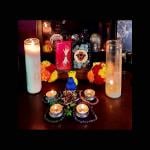
She was a force, both of strength and love.  She taught me to be who I am and yet it took a while to realize that.  She was born on Samhain and so it is so natural to celebrate her on that day; both for her birthday and also because the veil is thin.  She comes to me then.

But in celebrating her life, I also recognize her death… and path to her rebirth.  Two years have passed since she took on the form of a phoenix in my kitchen.  So many things left unsaid and so many things not heard.  She left a great silence when she left and yet so many lessons I strain my ears to hear, they are there and I know she is making me work for them.

We never really prepare for the release of someone we love even though we know that death is a part of the greater cycle of life.  While the details of the how are not given to us, the what is bound to happen.  I don’t know that we can prepare fully, I don’t know that is possible because the human heart feels so strongly and loves so deeply.  I know that my mother was a part of the intricate fibers that make up my heart; no true separation is possible.

Between my mother’s Christian upbringing and my own Pagan beliefs, I still have not been able to reconcile all the pieces of the outcome.  I think that my spiritual views were tested, and so were my cultural ones.  Nothing made sense and I have come to realize that it is not always suppose to.

A wise counselor I worked with for seven years use to say “understanding is just the booby prize”; meaning that we want things to make sense but they won’t always.  That reflex is a human response to wanting control of those things in life that feel as if we are out of control.  Understanding won’t make the outcome different; we cannot change what has happened but can re-frame the way that we interpret and internalize them.

I have come to understand that my faith has been the glue that held the house together, even when I did not know it was possible.  In reconciling my past with my present, my loss with what I have gained and my hope with my pain, I am beginning to live beyond…..

I do not like to think that her death taught me lessons I needed to learn, but I know that they did.  And with that, I want to take the opportunity to encourage everyone to tell that person you love them, hug others, speak from your heart, let the small shit go and be present.  Too many things go unsaid and are left to wonder about after the window of opportunity has closed.  I can’t remember if I told her I loved her that morning when I left the house, but I say it everyday since.

The mundane worries of the world easily sidetrack us from fully appreciating every moment.  May we all take those moments and run with them….. Blessed Be to all, to those who have lost and to those who have gone.

Written for my mom’s program the night before the memorial:


My Mother – The Poem


My mother was a soldier, a warrioress in plain clothes
My mother was like a psychic, she knew things only a mother knows
My mother was a healer, medicine with one caress
My mother was a chef, her fried chicken was the best
My mother was a fighter, stubborn with her cause
My mother was a real woman, support without pause
My mother was a forgiver, leaving the dark to share the light
My mother was independent, providing for her own
My mother was brilliant, making the worst conditions feel like home
My mother was beyond words, memories forever sketched in stone
My mother smelled of love, comforting in all ways
My mother had many children, loving in all her days
My mother was like a phoenix, rising from any despair
My mother is now an angel, she had too much love to share
My mother was a lover, loved me till her last breath
My mother is immortal, still living beyond death
My mother is forever with me, in my heart she is mine to keep
I will always miss my mother, I will see her when I sleep.

Crystal Blanton, ©2010

Posted in Uncategorized | 4 Comments

The Open-Minded Fallacy


This blog-post comes straight from my gut and is the subject of a recent discussion I got to have with the wonderful Brett Hillman during a, too brief, Skype conversation a few nights ago. It’s a subject near, and dear, to my heart only in that it makes me chuckle whenever I see someone proudly bandy the concept about.

So here goes; No one should have to say how open-minded they are.

I’m probably alone in this belief or at least part of a very unpopular minority. Open-mindedness means a willingness to learn, observe, empathize, and listen; four actions that are evident in ones ability to ask questions, show intellectual and emotional vulnerability, take risks, and accept the likely occurrence of being wrong.

It is apparent in the way one speaks to others, one’s ability to engage in dialogue with those who may disagree, and how one may frame their arguments. It’s a rare trait shared by the likes of Sagan, Jung, or Einstein. Open-mindedness is knowledge, tempered with wisdom, and a splash of good old fashioned skepticism towards one’s self perceptions as well as the perceptions of others. A well-rounded appreciation of human infallibility.

It’s not a natural stat one can roll for. No religion , political party, social class, race, or sexual orientation gets a +5 to their open-mindedness upon character creation. No one group has a “tag” on being anymore open-minded than any other. I’ve met devout Catholics and staunch Republicans who deserved the banner more than some liberal band-wagoners who trumpet the term as if it’s the only redeeming quality in their arsenal of personal achievement.

In the end open-mindedness is an asset but it’s not an end all be all and it’s not something that is attained by simply saying one has the trait. It is cultivated, nurtured, curb-stomped a few times, put in the dryer, and pulled out two sizes too small. It’s then restitched, reassessed, and trudged out again, this time with less filler and more natural material.

This state of receptivity is merely a jumping off point leading towards inquiry, experimentation, research, and analysis. Open-Mindedness does not mean a lack of critical thinking skills or the current new age predilection for claiming all things have ‘validity’ when many things do not. There is a big difference between curiosity and plain social/intellectual lying.

Finally, like “honorable” or “priest/ess” this trait is not self-assignable. It is a subjective observation that can, at best, be given by an outsider looking in. With this in mind, out of all of the adjectives available to note the great thinkers, philosophers, and scientists, “open-minded” is rarely ever used.

In short, it’s modern usage has become little more than the shallow territory of the intellectual showman; very loud, but with very little to say.

So the next time you hear someone use this phrase-du-jour, perk your ears, squint your eyes, and really pay attention. Often, the dross you’ll end up with will be nothing like the treasures the individual will claim to possess.


Posted in Uncategorized | 3 Comments

Respect as a Spiritual Requirement

Respect is a large thing in my life.  I find that it is a large concept in many people’s life, especially within my culture.  I was raised to understand that respecting the next person is not something that is a choice but an expectation.  My mother and my father were born and raised in the south (which is the norm at some point in the family tree of Black people) and so respect was engrained and could equate to what was a life or death situation.

Needless to say I was raised not to talk back, speak when spoken to and show the upmost respect to my elders.  While I have not always subscribed to this in my adulthood in a way that my mother would agree with, it is something that is a part of my personal make up as a Black woman and as a professional.  What I have come to really understand is that this does not always translate in the Pagan community.  There is no direct correlation in the Pagan community that means respect to one another the way that it did for me growing up.  I think about how we are going to sustain the Pagan community and struggle with how that might look when we are not always able to respect one another and the contribution that each of us make.

Instead of gripping on the problem, since any given person could share a handful of experiences that fall into this category, I instead want to think about what message I would want to say to support solutions to this problem in our community.  To do this, I will speak with the voice of my mother and other ancestors that have passed on this lesson to me as it is applicable here.

It is important to mention here (because I just have to) that this is not pointed at any one person or situation.  It is also not a claim of innocence on my part and we all make some of the same mistakes in our journeys of growth, I am no different.  And with that…

  • Your actions will always speak louder than your words.
  • Your ability to show respect and appreciation to another person is an example of how much you respect and appreciate yourself.
  • You cannot love anyone else until you love yourself.
  • Your ancestors are the shoulders in which you stand on in order to have the opportunities you have now.
  • Respect is earned, not given.
  • Treat others how you want to be treated.
  • “Respect for ourselves guides our morals; respect for others guides our manners” – Lourence Sterne.
  • and the last one is a quote from Eldridge Cleaver of the Black Panther Party for Self Defense….. “Respect commands itself and it can neither be given nor withheld when it is due”.

It is important that we show examples within our community by extending to one another what the Gods have extended to us.  While we speak of our direct lineage to the divine, let us treat one another accordingly.  If I am of the Goddess, so are you.  And while we are building a community together, let us sustain it together.


Posted in Uncategorized | 17 Comments

Lost Traditions

I find it amazing how many things have been lost from my families culture and our history.  I wish I could have understood how important it was to have written down all the things I saw and heard from my mother or other relatives so that I could have them to pass down to my own children.  It is always frustrating to know that there are so many things that have not been documented and therefore lost to me because documentation was not a staple within our history.
This realization has become even more profound for me since the passing of my mother, the keeper of all the information that connected me to my relatives and our history.  My mother knew all that I needed to know and I figured I would continue to learn it from her as time passed.  I did not think about the fact that one day she would also be gone and with her would be all the history, recipes and even stories that I wanted to know and learn.

While I remember some of the things I was taught in my childhood, there are so many things I did not think to ask about.  I was reminded of this when another fellow blogger wrote about black eye peas on New Years day for prosperity.  I have such memories of my mother making black eye peas and talking about things like soaking them.  Being from the south, she was full of traditions and was a believer of symbolism.

I imagine this is very common in our culture and find it quite frustrating and sad to have years of tradition being replaced by current pop culture.  There have been so many aspects already lost to us and the fact that we continue to neglect our ability to make note of our customs is something I feel we need to really take a look at.  This is especially important for families like mine where I am integrating my birth culture with my Pagan culture and teaching that to my children.  In passing  down tangible concepts to the kids, along with history and family culture, I have the chance to instill pride and a connection that leads to a better understanding of who they are.  I want this for my children and I want to see the traditions of my family and my spiritual family preserved.  It is my job to see that through.

In my path to record traditions old and new for the future generations of my family, I plan to work in 2012 on a project to develop a method of recording our experiences and cataloging traditions.  Recording my mother’s recipes for snickerdoodles can be a resource for ritual cakes and the history of our ancestors could be a vital part of the Samhain ritual.

This adventure could lead to a deeper understanding of my own family history and for this I am grateful.  It brings me closer to my own family make up and to the roots of my mother; reminding me of the connection that will always be present with my mother and with my ancestors.

Posted in Uncategorized | 5 Comments

Politics, Views and the Gods

from Heeb Magazine, 2003

This is not a political blog. This blog is meant to be a mesh of two worlds that are really one in the hearts and minds of African American Pagans. The dynamics of Blacks in America often have been political and we could argue that even the classifications of race itself is a political statement. How do you separate the issues of a race from the very politics that have been used to classify them within this nation from the day they were brought to the shores of this new world?

With that, I think that talking about my journey as a spiritual being and that of a Black woman will always border political discussions and the politics of such a society as this. And while we are moving throughout our walk in life, the observations of events that come across my path make it hard not to conceptualize the incredible amounts of conflict between the challenges of a minority race in the U.S. and the spiritual principals that I value as a person on a spiritual path.

One thing that I value as both a Black woman and a Pagan is the human struggle of those who are underprivileged, in need and deprived of the sense of village that a community and society should bring. The very children that should not become a part of a presidential discussion that uses generalizations and assaults the character of those who live in poverty. I was very disheartened and hurt by the statements of Newt Gingrich when speaking about poverty and impoverished children. Once again I saw perpetuations of stereotypes spread to the masses by a person of power; harming the community and labeling those who happen to have less financial stability as others. When did we become a society that is quick to judge and uses limited factors to insert judgments and perceptions on others? Unfortunately this has been the mode of operation in these parts for as long as history will take us.

And let’s face it, these discussions about how poor children should work as junior janitors after school to learn the ethics of working is aimed at those who are the poorest of the poor. I am sure that the image that is being referred to is not a little Caucasian girl living in a Caucasian town. We are talking about the inner city and urban areas of the United States that are inhabited by a majority of African American, Hispanic or other minority ethnicities. We are referring to the images of cities like Oakland, Harlem, Detroit, Baltimore and other poverty stricken areas.

So let me get this straight? We should take children who are living through circumstances of a lack of resources, drug ravaged areas, substance abusing parents, crime, homelessness, gangs and a disproportionate amount of persistent mental illness within their communities and make them work as junior janitors or librarians so that they can grasp the importance of becoming the working poor in America? We should put these “poor” kids to work so that they can value the concept of working to survive instead of after school programs, counseling, tutoring, life skills programs and even preparing them for college? In addition, where are the jobs coming from that we are going to give to these children? Are we taking jobs out of the hands of adults who could potentially provide for their families so that we can teach “poor” kids a lesson?

I think on this and wonder how come the rest of society is not as outraged at these concepts as I am. I think about the importance of living within a village where we support one another and look for ways to encourage each other to move towards a greater understanding of his or her power in the world. While there is nothing wrong with working as a janitor or librarian, we should not be limiting children to dream within any framework. Kids are suppose to be learning how to dream beyond their circumstances. Visions of high school graduation, college and even fulfilling their dreams should be focus. This could be the path to self sufficiency and collective power within our impoverished communities. We might as well suggest that they become rappers or basketball players so that we can all stay within the stereotypes of what whole groups of people are good for.

What would the Gods think of these statements? I personally think that the Gods would be outraged at the blatant disrespect for life that is usually hidden behind race, socioeconomic class or circumstances. The Gods represent an array of diversity that show incredible triumph through adversity, giving hope to the most unfortunate of life’s circumstances. The mythology of the Gods tell us stories of death, murder, rape, abuse and even poverty. Look what happened to those “poor” people; they became Gods and Goddesses worshiped around the world for their stories, strength and ability to rise above the very elements in life that have otherwise been debilitating.

And if referring to Obama as the foodstamp president was not enough, Let’s take a moment to listen to one of the comments that Gingrich said about these children. “Really poor children in really poor neighborhoods have no habits of working and have nobody around them who works,” he said. “They literally have no habit of showing up on Monday. They have no habit of staying all day. They have no habit of ‘I do this and you give me cash’ unless it’s illegal.”

With the spirit of learned judgments in society and the intense conditioning of learned helplessness, it is important to remember that people who are poor know a lot more than illegal activities. They show up on Monday. They show up on Tuesday, Wednesday, Thursday, Friday, Saturday and Sunday as well, in the harshest of conditions and facing the coldest glare of a unsympathetic society. They show up for love, acceptance, food, a hug and some hope. You cannot generalize any category of people and assume that the commercialized version of the poor is a true reflection of the experiences of a group of people.

My priestess work and my professional work go hand in hand within these communities, presenting a image of the Goddess in a pair of Old Navy jeans, a smile and a pentacle around her neck. The Goddess lives inside of me by being immersed with the fibers of my being and guiding my message of hope to those who want what they do not know how to get in life.

I challenge those who are reading this to look within themselves and assess your own messages of judgments and perceptions of others. Challenge those around you that are feeding into a stereotype of any group of people and using that as a means to evaluate worth, hope, value or others future contributions to society. I challenge you to push against subtle comments of alienation and prejudice that is a part of our society in systematic ways and has been for a long time. I challenge you to open your eyes and view the world through the lens of the Gods and Goddesses that you worship, looking upon the problems of the world as a barrier to the care and enlightenment of your children.

Use your knowledge to pray for those who have yet to find the answers to a more peaceful and enjoyable existence here due to the incredible complexities that can complicate what appears to be the simplest of requirements for a successful life. And lastly I would say to look at the compartmentalization that you might have when separating your spiritual self and your political self. For those who live in the bodies of darker skin, there is no separation and can feel impossible to look at life from the eyes of a Black person that is separate from the Pagan inside. Consider allowing your spiritual self a intricate part of evaluating the wrongness around us everyday and the impact that has on others. If you are not angered by the insensitivity of todays politics, you should ask yourself why.

Posted in Uncategorized | 15 Comments

Guest Post: Ritualized Rhythm

For thousands of years dance has played an integral role in ritual and religion. For many, it was story telling and theater that led to the formation of their ritualized services. Eventually the origin stories themselves may fade but the dances, emotion, and resonance remain. For African Americans, many of whom have very little links to our ancestral pasts, our own dances and rituals have often been scandalized, sexualized, or out right vilified as unfit for public consumption.

Search You Tube for African dances and you will see a variety of styles from the highly stylized ecstasies of the Yankadi to the lesser known dances of the Xhosa and Woodaabe; each movement represents a concept or theme. Boasting, welcome, coming of age, fertility, or plain “I want to have fun.” can be communicated through the wave of an arm or a steady hip bump to the sound of beating drums.

Even before becoming a follower of Dionysos I loved to dance. Growing up in the south, I learned square dancing in middle school and the compulsory arms-length-away dancing of high school prom. As I entered the pagan community I discovered new dances, most of which involved skipping in circles or some other form of dance accepted by the gentry of Europe’s past and passed along to their children.

It wasn’t until I discovered African, Indian, and  Middle Eastern styles of dance that I finally felt “free.” A body of curves, strength, and energy were ignited by the pulsing drums, hypnotic chants, and shouts of joy emanating from the throats of women who looked like me.  Dance went from a portion of ritual, to being ritual itself and once my hips became involved there was no stopping me.

See, despite being fit, I have hips. Hips made for bearing children, and bumping doors closed,  and swiveling in a fitted pair of jeans. In my opinion, my hips are made for dancing, for scooping out the best part of a beat and accentuating it with my femininity. Historically within Western culture, the bodies of women of color and especially black women are viewed as naturally lewd or made for the sole purpose of sex. By the time you combine these stigmas with the festive dances of some cultures where the hips, stomach, and buttocks are put to motion, it’s no wonder a dance of beauty, creativity, or fiery worship to one individual can become another person’s“trash.”

Sadly, some African Americans have completely forgotten just how powerful and wonderful our dances are. This isn’t to say that all black pagans should practice some form of ethnic dance, but I wonder why more of us aren’t bringing our rhythms, and our hips, to the community. I wonder if this is part of our fear that we will be seen as “hood rats” or worse for daring to shimmy and praise the gods to the beat of drums that are our own. Perhaps I’m generalizing too much.  Instead of asking this of all black pagans I say this for fellow dancers for, and to, the gods.

Each movement can be devotion, acceptance, and a shedding of the stigmas against out bodies so many of us have, subconsciously, internalized. Dancing with our hips, to the drums that drive us, to the shouts we’ve long forgotten is a way of showing the gods that not only have we opened ourselves to our brothers and sisters within the pagan community but that we’ve also worked to accept ourselves in our entirety.

Perhaps we will see some kind of change soon enough. Belly dance has become an acceptable form of dance for women of all races and is welcomed in most pagan settings. As more women, and especially black women, embrace Bhangra,  Raqs Baladi, and Nmane we can not only learn about new cultures and share this experience with others, but we can also gain acceptance and love for our own hips, lips, and fingertips in the many shapes and forms they take.


    “These hips are big hips.
    they need space to
    move around in.
    they don’t fit into little
    petty places. these hips
    are free hips.
    they don’t like to be held back.
    these hips have never been enslaved,
    they go where they want to go
    they do what they want to do.
    these hips are mighty hips.
    these hips are magic hips.
    i have known them
    to put a spell on a man and
    spin him like a top “ 

    Lucille Clifton (1936-2010)

K. Pythia Theocritos has been a practicing pagan, both in and out of the community, for 11 years. She is currently a devotee of The Olympians, editor of He Epistole; A Hellenic Polytheist Newsletter, and proud purveyor of self-deprecating humor. Having studied eclectic Wiccan-influenced magical practices, she seeks to construct, for herself, a ceremonial magic system based on Greco-Roman symbolism instead of the, typical, Judeo-Christian archetypes. This project, combined with her studies in alchemy, have forced her to convert her blood into pure caffeine for efficiency. She is engaged in a wonderfully playful inter-faith marriage; is the personal butler of 4 cats, and is fond of a good drink, a few laughs, and profanity when it fits the surrounding company.

Posted in Uncategorized | 4 Comments

Daughters of Eve: Clio Ajana

Name: Clio Ajana
Age: 46
Living: Writer and Educator
Location: Twin Cities, MN
A bit about myself…

My life in the Twin Cities includes writing, teaching, translating, dancing, collecting comic books and enjoying craftwork. I consider everything in my life to be touched by my religious practice and spiritual beliefs.

What is Hellenic Orthodox/Hellenic Alexandrian?

The religion is Hellenic Orthodox;  the spiritual tradition within the religion of Hellenic Orthodox that I practice is Hellenic Alexandrian (as in Alexandria, Egypt).  We are definitely traditional, not eclectic, but we are not British Traditional.  My group is a lodge of an international religious body (our structure is similar to a Masonic system, with a central organization and lots of decentralized lodges, temples and houses). We worship the Gods of Egypt, Greece, and Rome. Our belief system is pantheistic (divinity is indwelling in all created matter- rocks, trees, animals, etc.) and polytheistic (many deities, both masculine and feminine). We recognize three creational currents- male/male, male/female, and female/female. All such couplings create on some plane of existence, if not all on the plane of matter in which we all live. We acknowledge that all created matter is both masculine and feminine, no matter which gender a body is.

Our statement of Ethics, which promotes self-accountability and self-reliance, is known as the Witches’ Law. Our view of cosmology, including the three creational currents, is in the Universal Doctrine. Both of these statements describe what we believe and how we fit into the universe. http://www.ourladyofcelestialfire.org/law-of-the-divine.pg

What drew you to the Hellenic Alexandrian path?

Short answer: Lady Hecate.

Longer answer: I was able to have a full connection with the Gods, with pure divinity in the Hellenic Orthodox religion. I was able to come out as a woman, a lesbian and a witch on this path. I did not have to hide who I was from anyone and I could worship as I pleased.  Being in a GLBT- friendly group was very important to me.

How long have your been on this path?

I came to explore Paganism in 2004 and began to learn about the Hellenic Orthodox religion in 2005. I initiated in 2006.

How did you get into it?

I met my current group in 2004 at the Twin Cities Pagan Pride in Minnesota. I attended open worship rituals, including full moons, dark moons and sabbats for over a year before committing to the group. I was attracted by the people, the laughter and the acceptance of the Gods in everyday life. The style was closer to what I personally preferred in terms of structure. I liked knowing that everyone got together for all rituals and that might be several times a month or more. I thrived on that level of structure.

Can you describe some of your practices, both daily and seasonal, like which gods do you worship (if any), meditation, rituals, prayers, anything.

I do daily prayer, keep a journal, attend ritual practices on full moon, dark moons and sabbats (we have 9).  I have a full range of Gods I worship. A few would include Hecate, Ma’at, Thoth and Apollo.

Seasonally,our year runs from Saturnalia (December) through Pomonalia (October) with six weeks of rest at the end of the year before the next Saturnalia sabbat. During this six week period, I consider new projects and ideas I wish to put into place starting in December at the Saturnalia ritual.

My favorite Sabbats are Pomonalia, the remembrance of the dead and Brunalia (February), when the spark of creativity is renewed with the increasing light and the fires of Hestia and Hephaestus. I live in a colder climate, so this reminder that the light is returning is very important to me.

One aspect of my pre-Pagan life which has carried over into my current religious practice is the frequency and use of prayer.  When I have a problem, I speak with the Gods in prayer or

I go into circle (private ritual) to perform spells or simply to listen to what the Gods have to say.  I find it very grounding.

Our tradition has a grounding and centering practice which I find comforting to do on a daily basis or more often during the day, as needed.

I do meditate, but it comes and goes. I combine it with yoga more than anything religious.

What has been your experience of it spiritually (the most challenging, the most fulfilling, etc)?

The most fulfilling aspect of this religion is the deep connection with the Gods. I am home.

The most challenging aspect of practicing Hellenic Orthodox is the anonymity.  I am a traditional witch who holds Wiccan degrees, however I am not worshipping Celtic deities. I spend a lot of time explaining what I do both within the Pagan community and without.

What was your upbringing like in terms of religion?

I was raised traditional Fundamentalist/Baptist (think Holy & Sanctifed/apostolic groups of Southern Virginia)on my father’s side and AME (African Methodist Episcopalian) on my mother’s side. Church services were at least once a week. Summer visits to Virginia included services 2-3 times on Sunday.I attended Baptist nursery school, Catholic primary and secondary school, and a  Methodist undergraduate college located in the heart of Jerry Falwell country. I began to question Christianity at age 9, since I did not agree with the trinitarian principle. I began my practice of astrology and numerology as a teenager. In college, I left Christianity for Judaism.

After two years of positive interaction, I converted to Judaism and remained there for the next 18 years. Eight years after my conversion, I had a crisis of faith due to a series of deaths. Despite my active synagogue involvement, I was spiritually unfulfilled. In part, what I wanted was restricted by notions of gender and roles for women in traditional Judaism. I wanted to know that I was good enough as I was. I moved to Minnesota in 2004 and began to explore Paganism. After two years, I initiated into a polytheistic-pantheistic religion, the Hellenic Orthodox Religion which has origins in the forms of Hellenic- Numen-Kemetic systems.

Do your friends and family, coworkers know about your spiritual path? If not, why not?

Yes. Most of my friends are Pagan or Pagan-friendly.  My family knows about my spiritual path. Those co-workers familiar with my writing know about my spiritual path, but I don’t announce it just in passing.

Since I work in education, my religion and sexual orientation are not pertinent in my working life. As a writer, my work details my religious beliefs, so anyone who has attended my readings knows about my life and my faith.

Do you have a spiritual community? If not, would you like one?

Yes, I do have one and I am truly grateful for it.  While I could do this path as a solitary, I am grateful that there are others who share the joy and love of this path. Some things are hard to discuss with those who are not witches or Pagan.

How has the path changed you? How much of you stayed the same?

I often say that the ‘real’ Clio came out when I embraced my true self as a witch. I came out as a lesbian, fully supported and encouraged by my Pagan friends and my circle. That would not have happened before.  My prior religious background did not support my goals to become clergy without certain restrictions. This is not the case now.  I am more appreciative of myself and my own path. My confidence as a woman and more importantly, as a spiritual being has soared since I began this path.

What has stayed the same?

My sense of humor, an appreciation of my history and a need for a structured and disciplined religion has stayed the same.  My desire was for structure without patriarchal restrictions, and I found it here.

What recommendations would you have for someone who wants to explore this path? Resources, advice, etc.

  1. Find a Pagan Pride festival and go. Talk with people. Listen to what they say about themselves and their traditions. Pick up pamphlets.  Read them. Note which ones appeal to you. If someone invites you to a festival or a ritual gathering, consider it. Take a friend if you don’t want to go alone.
  2. Attend all the rituals you can at the Pagan Pride festival. a) They are public and usually fairly short.  b) You get an idea of what might appeal to you.
  3. Look at a Pagan newsgroup list (online or at any festival /gathering where there is a calendar of events). Go to something local. It doesn’t matter whether it’s a Tarot Q&A, a coffee chat, or an info session on staving, the idea is to meet new people who are pagan.
  4. Connections and people matter more on this path than books or what you can find on the internet. If you are far away and the internet is your only option, that is another matter. In that case, I would say find trusted online groups and at least 10-12 people to “interview” via email or Skype before committing to any one path.
  5. Take your time. I spent two years finding the right group for me, because I wanted group worship, rather than solitary worship. I wanted the discipline,the camaraderie, and a similar value structure.
  6. Resources: Witchvox http://www.witchvox.com/, Pagan Pride http://www.paganpride.org/,  Patheos http://www.patheos.com/Religion-Portals/Pagan.html; Daughters of Eve (for Pagan Women of Color) http://www.patheos.com/blogs/daughtersofeve/;
  7. This path is all about the experience. LIsten to your heart. Allow the Gods to come in.
  8. Don’t be afraid to ask and speak with others. As a black Pagan, new to the community, I found that some folks were very open about who and what they were. This helped me to navigate to where I wanted to be.  I try to return the favor whenever I see a woman or male of color at a festival or a gathering.

Were there a community of black pagans that helped you along your path? In the beginning? Currently?

No. In fact, I saw only four black pagans during my first three years: one left the community, two were solitaries and one was in my tradition, although we didn’t meet until much later.  Currently, I have more knowledge of black pagans through a few online groups and my friendships with other black pagans whom I’ve met in the past five years. I find the emergence of black pagan blogs and online groups to be a welcome addition. The sad reality is that these resources are still hard to find for someone who is just starting out.

What advice would you give to new black pagans/Wiccans upon the path?

1. Listen.  Then go home to consider what has been said.
2. Go to Pagan Pride and other Pagan festivals as much as possible. If you see another black pagan, speak to him or her. Listen some more.
3. Remember to be open to the Gods and accountable for all you say to others.
4. Pick your battles wisely.
5. There is  racism within the Pagan community. It’s an unfortunate reality. Some of it is a silent surprise that someone black would even consider a Pagan tradition or religion.  Be aware of it and keep your eyes on the prize: your faith.
6. Focus on yourself.  If you are “new” – figure out who you are, why you are here and what you need to gain to help yourself. Do not involve yourself (and it is incredibly easy to do) in pagan politics, drama and bullshit.  Your own path will lead you home.
7. Listen some more – to your heart, to what the Gods say to you and most of all to what you are learning about yourself.

Name one misconception of being a black witch, pagan, Wiccan that you personally feel should be addressed? How should the black pagan community combat it?

The misconception that I feel should be addressed is two-fold: first, the  presumption that blackness or black skin means that the individual is Christian; second, the presumption that black pagans only practice African traditions. In terms of the ‘box’ labeled “Perception of Black Pagans”, if you don’t fit, there doesn’t seem to be much out there.

I can see why many of the black pagans I’ve met online or in person have chosen to be solitary:

The black pagan community can combat it by being hyper-visibly present,regardless of one’s tradition, especially for those who worship non-African traditions. Not every person is going to worship the same deities or have the desire to do so. Why should this be a given if one is white, but not if one is black?

The more others can see that there are plenty of black and brown faces showing up worshiping at public circles and festivals, the more layers of bias  will begin to unravel and peel away from the perceptions of the larger Pagan community and the world at large.

Are you a pagan and/or Wiccan of color? African traditionalist, regardless of ethnicity? Email nouvellenoirgoddess@gmail.com if you’d like to be featured in DOE Q&A.

Posted in Uncategorized | 5 Comments

Stereotypes and Misinformation

Some experiences cannot compare to others. I know there are many differences in opinions that lead one to believe he or she has the answers to any given situation and the “rights” from “wrongs” in the world. In reality our personal views on life are build by a variety of elements that create the current take on reality. Reality is not the same for everyone and this is important in the building of understanding and becoming more sympathetic to the world around us.

I can count numerous times when I have had the realization of how tiring it is to come up against the views of others that are based in mis-perceptions and exist among the prejudices of skewed experiences. It is often overwhelming and disheartening because it seems to be a continuous dynamic that minorities have had to encounter for so long. I have had this experience in my own life and identify with what it means to have to live among the stereotypes that have been thrust on society.

I write a lot about this type of thing because it is my passion. I also feel that these types of perceptions are often ignored in many communities, including the Pagan community, but it can isolate members from actually being a part of that very community. That is one of the reasons that Daughters of Eve will continue to lend a uniqueness to our Pagan culture; we have never before had a medium where Black people within the Pagan path have been able to just talk about experiences, culture and occurrences that influence their paths.

It seems as if I am not able to escape the misguided views that make up the limited understanding of my ethnic culture and it often feels like others attempt at reinforcing old stereotypes that are not accurate and still harmful for the Black community. Whether someone is making references to our ability to be “real” Pagans, our intelligence, poverty, our intentions or even that Black people don’t know how to care for our own kids; this dynamic in society at large has got to stop.

So I would like to take this opportunity to clear up a select few of the many misconceptions of Black people, Black culture, Black Pagans or poverty that I have heard in the last 2 weeks. Only 2 weeks folks, because if I were to write something for everything I have heard in the last few years, I could write a series of books. I would title them….. Everything You Thought You Knew About Black People was Wrong.


Let us start…..

Black people are just Black people:

although our culture is different and we might have different historical experiences, Black people still bleed red. We have bones, veins, a brain, heart and even feelings. The amount of melanin in our skin does not dictate our physiological make up and our potential in life. Due to the fact that we are in the same species as other races, we can even procreate with others. We are no closer to being monkeys as another person might be to his or her local zoo.


Black culture is still a culture:

Many times people from other cultures may not understand another person’s culture because they have no context to understand it with. I do not pretend to know the significance behind certain meals, practices and faiths of those who may have been born and raised in Africa, Japan or even the middle east. I have a clear understanding that I am ignorant to the ways of many other cultures because I have not been a part of them. People often don’t understand that this applies to us as well. Although our culture is Americanized and has been separated from our ancestral cultures, it is still a culture that should be respected. We have our own foods and practices just like other cultures. Not all Black people would know how to cook asparagus correctly, just like I don’t know how to make Chinese food and someone else doesn’t know how to cook greens. Our preferences are not based on something as black and white as only wanting to eat fast food, nor can others assume that our food of preference is to eat unhealthy foods just because it does not add up to a Caucasian society’s version of healthy.

Black culture is not…

Black culture is not big rims, sagging pants, rap music, gold teeth, black hoodies or $300.00 pairs of shoes. Those are choices that are often based in other components that make up a person’s preferences. “Acting” Black has nothing to do with those elements and it is simply ridiculous to think that someone who is wearing their pants low or talking slang is trying to be “Black”.

Poor does not equal ignorant or ghetto:

The amount of money that someone has is not a automatic indicator of how much intelligence he or she has. There are incredibly smart people in poor areas, just like there are smart people in the middle class. To assume that poverty equals bad choices and a lack of intelligence is saying more about the person who perceives that than the people that are being talked about.

We are a diverse people:

You cannot push any group of people into a box, assuming that they are all alike. Generalizations seldom work for any group of people, and especially not for Black people. We are dark, light, pale, red, yellow with black hair, brown hair, sandy hair and blond hair. We have blue eyes, grey eyes, brown and hazel eyes. We are thin, tall, short and thick. Our lineage has been mixed with many different cultures over the hundreds of years here in the United States, making it impossible to isolate physical elements or to make any assumptions of who we are. We are doctors, teachers, police officers, counselors, computer technicians, mechanics, Christians, Pagans, Muslims, poor people, middle class, rich people, criminals, geniuses, drug addicts, pharmacy technicians, mothers, fathers and citizens.

Black Pagans are diverse too:

Just because a person is Black and Pagan does not mean that he or she works with Egyptian or African Deities. We are as diverse as the Gods themselves and connect to the variety of pantheons regardless of the hue of our skin or the kink of our hair. You cannot assume that any one spiritual path or reflection of deity will relate to a person just because of the color of his or her skin.

Black people are strong people:

Don’t let the commercialization of stereotypes confused you from the actual strength and ability of this group of people. In every facet of the world Black people are a part of society, show incredible force to survive beyond generations of adversity, prejudice and oppression. We have helped to build this country with hard labor and the sweat on our brow.

And in closing (for now), we should remember that these stereotypes continue to alienate people from truly relating with one another. As we become a more aware society that celebrates the true nature of diversity and cultural respect, let us really learn to acknowledge the many differences that make up the very diversity that has helped to build this very nation. Let us stop acting like we know what is best for others because we assume that we understand who they are and the culture they come from. While I can relate on a human experience with others, I cannot make assumptions about their culture and the way that one lives. Just because I think I know what is best for people does not make it so, my ideas are just my ideas unless they are backed by facts and studies.

Instead of judging others by our own set of standards that may not apply; let us ask questions and learn from one another. And while our Pagan community is becoming more openly inclusive of a myriad of different type of people, let us remember that we are all faces of the divine. Judging one face of the divine is like judging them all, or your own.


Posted in Uncategorized | 6 Comments

A Pagan Parenting Astonishment: What? You promote teen abstinence?!

A Pagan Parenting Astonishment: What? You promote teen abstinence?!

Nouvelle Noir Goddess and Children


Several years back, I partook of and facilitated a women’s group where we discussed various topics. A topic on teen abstinence came up and members of the group expressed bewilderment that I, a Pagan mother, promote teen abstinence with my children, alluding to the belief that only Abrahamic religion (majority Christianity) holds a monopoly on the concept and word. Yes, I was the only “out” Pagan mother on the page, a vocal one at that. It took me aback that individuals assume that the words virginity, virgin, abstinence, and chastity are perceived as Christian words and concepts.

“How do you promote abstinence in your belief?” was the primary question asked of me. I accentuated to the members that not all Pagan parents share the same methods, theos-doctrine, belief, or teach the same way. Similar to how many of them, who declare themselves as Christians, gave different responses. Some believe abstinence only until the covenant of marriage is the only way sex is prohibited. Some believe that masturbation is forbidden, while others would rather have their child masturbate than have sexual intercourse. The difference of parenting views on teen sex or sexual intercourse varies within Christianity as it varies within any parent, with or without a religion affiliation. It comes down to the values of the parent (and child).

With my own children, the sex talk began at a very young age with appropriate and inappropriate touching; whom is and is not permitted to see their reproductive organs, when, and causes of when, where, and whom. Causes such as their pediatrician is not permitted to see nor touch (examine) their reproductive organs without Mommy or Daddy present. Conversation on sex, sexuality, and reproductive function of organs has always been an ongoing dialogue within my home. I believe in the concept of “old enough to ask a question, you’re old enough to get an age appropriate answer.” Age appropriate answers are typically given in ways their minds can digest it. As a parent, my most important role is to nourish their true selves. A true self that is not societal, peer, or even dictated by me- influenced, but not dictated.  My ultimate goal is setting the path of theirs that will blossom.

Since many pagan paths, not all, don’t believe in some outside force making the final decisions of the self (the devil made me do it) it was clear at the very beginning that my children’s will would make final decisions. Therefore, as I don’t believe in a devil making an individual do deeds that goes against their better judgment, so it is that I don’t believe in the concept of peer pressure. At the end of the day, my children made the final decisions to act and react. I’ve modeled this with my own shortcomings as a parent by apologizing to them for my own actions. They’ve seen Mommy apologize to others. Yes, my apologies do have reasons (justifications), yet at the end; they are not to be excused by me, but the one who is offended. As a rebellious teen, I recall being annoyed with my parents blaming, which is excusing, my behavior by pointing to my peers (“ever since you started hanging out with Molly…” “Ever since you started to listen to that type of music…”). Each time my parents chose to blame my behavior on peers, society, or culture, I pointed it out (blaming everyone but me) and became even more rebellious. Until, finally, they saw me. Once they saw their child blossom into a young adult and gave responsibilities and accountability on that young adult… the rebellion stopped. I promised myself, and thus far kept such promise, that when I become a parent… I will see my children as individuals outside of me. Nobody controls their sexuality nor their being, but themselves. As painful as it is, remembering my youth and those who came, left, and stayed upon my path, those experiences, positive and negative, were tools for me, as a parent, to remember that at the end of the day, only I was responsible for my deeds. I’m accountable for my sexual expression, sexual constraint, sexual liberation, sexual moderation, sexual reproductive organs, and my sexual identity (not to be confused with sexual orientation). There is so much power in owning up to this. This power and acknowledgement of such power I knew instinctively to pass on to my children.  How can I teach them that nobody has the right to their bodies without their consent when I impose myself onto their bodies? It seemed hypocritical.

Accepting the fact that my children will one day be sexual creatures, I knew my role as mother is to assist them to feel confident and aware of this magnificent power. A power that can be corrupted like any other power but, at the same time, can be very much glorious. I did not shield them of the brutality, abuse, or misuse. I didn’t lie to them that sex can also be pleasurable under the right circumstance and with the right person. The virtue of compassion, empathy, charity, mutual love and respect are keys to a healthy sexual life. Such virtue is taught indirectly by my love and devotion to them since the moment of their conception and then directly introduced when we discuss sex, sexual responsibilities, love, and healthy relationships; with total honesty, effective communication, and trust. It’s their responsibility to harm none at all times (do onto others what you like done onto you). That includes knowing not only the intent of their relationship with self, moreover knowing the intent of others in relations to themselves. Does he/she love you for you? Or does he/she love the idea of love? Do he/she is giving themselves to you because that is what both of you desire? Or does he/she solely is giving themselves to you because that is only solely what they desire? Do you care for that person? Do you love that person? What is the understanding of your relationship with this person? Do you both share the same goals and/or end result? Like anything in life where there are actions, there are an equal and opposite reaction. So it is with sex. With our Wiccan Rede, “three times bad and three times good” explains the emotional and psychological effects of sex, romantic love, and relationships. As humans, we tend to personalize heartaches, mishaps, and joys… they truly do feel three times bad and three times good in the beginning (and at endings for that matter).

Teen Abstinence

My children are ages 17 (female) and 12 (male), now. They both have the same talk regardless of their gender. It’s important for them to understand not only their bodies, sexuality, and expression, but also of others. The hormonal change, puberty, comes in a point of their life where they are beginning to shift through who they are in correlation and a part from me, friends, and community. Figuring out ones place in the world, within and without, and managing the hormonal change is very exhausting… to the point of overdrive and feeling of having too much to handle. The reasonable process of elimination, in my opinion, is to omit sexual intercourse at this pivotal point in a young and blossoming maiden and gent’s life alleviates the unnecessary overload of hormones. For the act of sexual intercourse brings in another increase and added chemicals. This is where I truly believe that science and spirituality truly coexist harmoniously. Never mind the surge of hormones, at times very euphoric, of puppy love, crush, physical attractions, and physical attractions plus the added bonus of compatibility. Hormonal balance and being able to know thyself to maintain such balance is too much.

I recall one day that I neglected to unlock the door for my daughter who was expected to come home from school (I actually overslept). I heard the door banging and immediately jumped up to open. The first thing out of my mouth was an apology… Out of nowhere, my 12 year old, sweet child became a three-eyed monster, enraged one minute and crying the next. Upset that the door was locked in anger, and crying-hurt that I would forget about her. I knew immediately the hormones were surging in her body were fairly new to her. Calmly, I asked her to sit down with me, breathe; I lit some frankincense and had her meditate. Meditate on her day and what she is truly upset with. Was the door being locked the straw that broke the camel’s back? Indeed it was. I understood that, at times, individuals displace their frustrations toward who they love the most. We spoke about displacement, conflict resolution, and her hormonal change that has magnified all these events. We mapped out a plan for such days (premenstrual, during menstrual, and post). What food to avoid and what foods to intake, and relaxation exercises that she can do in the middle of class unbeknownst to anyone. I’m currently working on this process with my 12 year old son and his change. The redirecting of frustration and low impulse control was something I had taught my children in the beginning stage of childhood, from toddler. Now, I had to reinforce those tactics, tune some up, and some we discard due to age appropriateness.  As I continue the dialogue of “the change” I manage to slip into the conversation of sex… another added hormone that is better wise dealt easier to manage when the other change slows down or no longer to exist. Typically, those changes vary, but a rule of thumb in my home is early 20’s (20’s for the peak of the brain growth).

If I had to pick and choose my battles with my children, understanding and respecting their own their sexuality, I would much prefer for them to wait until after puberty to explore, in-depth, with sex. Sure, like many I do desire for them to experience this within wedlock. However, I would be hypocrite if I expected that from my children knowing damn well I didn’t wait for wedlock. As a parent, the realization that children will do what you do more often than what you say shouldn’t be taken lightheartedly. The argument of “Well, I’m an adult and you’re a child” doesn’t sit well with most teens who either, 1. Cannot wait to be an adult and would take that argument as a rite of passage of adulthood 2. Believe they’re an adult now just the parent refuses to see it. As a parent, I meet my children halfway, they’re in the middle… not a child, but not quit an adult. I would be negligent if I didn’t give them information on STI/STD, HIV/AIDS. I would be even more negligent if I didn’t give them information on how to protect themselves from STI/STD, HIV/AIDS, and unplanned nor desired pregnancy. In addition, I stressed to my children if they feel they cannot come to me, they do have their pediatrician who is obligated by law to confidentiality, even from me—their own mother. The only time they’re not bound by it is harm to themselves or others; responsible sex isn’t inside the confidentiality. It’s important for my children to know that I’m not the only reliable source they have. I chose to come to an agreement of a nonfamily reliable source, so I revealed to them the truth about patient confidentiality. Again, remembering my youth of hopping onto a bus, walking a few blocks, and into a health clinic and discussing personal matters to a complete stranger was very uncomfortable; so uncomfortable that I didn’t return. My children are comfortable with their physician. It’s my desire to keep it that way and, when it becomes time when they outlived their pediatrician, together or independently they must have a health professional they can trust and talk to.

Recent studies show the decline in teen sex and teen pregnancy. This may be good news and hallelujah praising for abstinence only until marriage campaign. It’s really worthy of acknowledging in the context of national statistics. Breaking it down to locations (such as school districts who only teach abstinence only vs. those who teach abstinence, sex education and birth control is not grim). However, are these statistics really accurate? Especially in the context of individuals who romanticized the era of our grandparents and forbears. If we really divulge into the past in regards of teen sex and teen pregnancy rates, it’s much higher than today. The only difference between our time and days of ole is that teens were having sex and becoming parents (most often females) within marriage. In our days, the thought of a 14 year old getting married is a disturbance, if not taboo. We no longer live in the days where our daughter’s only source of income is through marriage. We no longer live in an era where living until the age of 90 is infrequent. Our times shun teen marriages (especially prior to completing high school). In our times, we have a gap; infancy, childhood, pre-adolescent, adolescent, and adulthood. The times that some people romanticized didn’t. We’re truly blessed to live in our times, give and take. Yet, when it comes to sexual intercourse, sexuality, and balancing the change of childhood into adulthood… we and our children are pretty fortunate. Childhood goes by quickly, adulthood is much longer. There is plenty of time to enjoy sex within adulthood. Childhood, I tell my children, savor it. Even pointing to the example of how our society worships youthfulness and innocence, even the older folks (fyi: I’m in the demographics of older folks in my children’s eyes). Why rush something that most adults wouldn’t mind to relive from time to time?  I couldn’t fathom the responsibilities that my forebears bare at age 13, 14 to deal with their hormonal change, marriage, sexual change, and pregnancy hormones all at once. I don’t envy them, at all. I admire their resilience, yes. Envy as in desiring to switch places? Nope.  Our ancestors fought the stop of teen marriage for they understood the responsibility on a young maiden and gent. If we look at the teen pregnancy and teen sexual intercourse rates compared to our ancestors, we must be honest… it has decline. The difference is marriage being taken out of the equation. We already know the hormonal change of love and lust that is built up in teens was indirectly addressed in the past with the answer of teen marriage. Now that marriage is off the table. How do we, as parents answer address it (I previously address this in the beginning)? We really need to discuss openly and honestly about those feelings. Even to what I call share-gasm (sharing personal experiences, within limits, or experiences of others with our children, and using other peoples experience as teaching moments-with respect. I call it share-gasm for my children love it, to the point of excitement when I share. It’s orgasmic for them). With the way our society has been evolving, as of late, many people don’t really consider marriage until their late 20’s to mid-30’s. Even now, many people are marrying for their first time as late as 40’s, for career and financial stability are values and goals placed first. Many young women and men are seeing the struggles of their parents, many strive to be financially and career stable to afford the luxuries of rearing their own children; flexibility in workplace hours that affords them to spend quality time for children. Many are seeing that 20’s is the time to explore and discover ones true self. Through traveling and taking up hobbies without the obligation of family (family includes spouse with no kids and spouse with kids). After high school, if a child goes away to college, it’s a period in which one is beholden to mostly themselves.

Resurrecting the Primordial Virgin

Prior to the redefining of virginity, as we know today in the meaning of someone who had never had sexual intercourse. The virgin wasn’t determined by her sexual status of broken hymen, first time he/she penetrated/been penetrated nor the first time it was consensual loving sexual penetration. The virgin status was of a man and woman who was unbeholden to a child(ren) or spouse. The only moral obligation the virgin had was of his/her own conscience and/or autonomy. The virgin status exists from the time of birth until the time of marital union or becoming a custodial parent. Being a virgin for life wasn’t taboo nor to be looked upon in clemency. Being a mother/father wasn’t seen as surpassing the virgin either. Both archetypes and/or status were equal and each important for community, rarely at odds and rarely made to feel incomplete. What consenting adults do or do not do wasn’t made an issue. Who grown adults marry, do not marry, why you’re not married, why don’t have kids, and the likes was clearly the virgin and couple personal issue. The need to know of intimate details is a non-factor when virgins applied beyond closed doors (or public places with discretion). As long as the adults harm none, including themselves (unplanned pregnancy, STI’s, HIV/AIDS, self-medicating via the use of sex). It’s really not of anyone’s concern. Yes, as painful as it is… yours truly, as a parent, when it comes to my own children. My children’s happiness is my concern and their sexuality isn’t the whole of it. If they’re happy, truly happy with their sexuality and lifestyle when they are grown adults, I’m happy for them. That includes if they choose to remain the primordial virgin throughout their adult life.

Resurrecting the Vestal Virgins, Metaphorically or literally: 10 years of training, 10 years of service, and 10 years of training others

When my Abrahamic friends ask of what theos I use to promote abstinence until marriage, I immediately share-gasm the Priesthood (priestess) of the Vestal Virgins (retold to both my children of different genders). If we had the years the priestess served Vesta we come back to my ideal age of what I believe stable to “settle down” and/or have children. We know today that most marriages of teens and young, 20’s, adults end up in divorce due to still trying to discover self out, change of perceptions, values, and likes. I can honestly say that what interest me in my 20’s has changed dramatically since the time I’ve reached 30’s. Heck, what I believed at age 20 drastically changed when I hit 25. For 30 years the women of the priesthood devoted their time to Vesta. Metaphorically, for the first 30 years of life we dedicated time to discovering a huge chunk of ourselves. We will always learn about ourselves as long as we walk and breathe on this realm/lifetime. Nonetheless, the changes of the first 30 years is drastic vs. gradual. A period where I truly believe and desire within my heart for my children to remain symbolically Vestal Virgins. Discover who you are with confidence before huge familial commitments. Balance your natural gender hormones prior to dealing with the chemicals that surge during sexual intercourse and hormones released during pregnancy (for some males, decrease during fatherhood).

To conclude; yes, this pagan mother believes and advocates teen abstinence. I simply don’t demand abstinence only.

On Children

Kahlil Gibran

Your children are not your children.

They are the sons and daughters of Life’s longing for itself.

They come through you but not from you,

And though they are with you yet they belong not to you.

You may give them your love but not your thoughts,

For they have their own thoughts.

You may house their bodies but not their souls,

For their souls dwell in the house of tomorrow,

which you cannot visit, not even in your dreams.

You may strive to be like them,

but seek not to make them like you.

For life goes not backward nor tarries with yesterday.

You are the bows from which your children

as living arrows are sent forth.

The archer sees the mark upon the path of the infinite,

and He bends you with His might

that His arrows may go swift and far.

Let your bending in the archer’s hand be for gladness;

For even as He loves the arrow that flies,

so He loves also the bow that is stable.


Posted in Uncategorized | 7 Comments

Goddess HERstory : Candid Conversation (video)

Goddess HERstory : Candid Conversation (video)

I’m enchanted to introduce our readers to two wonderful people within our community who is devoted to speak, educate, and provide a sanctuary within our path of the Gods. More precise the path of the Goddess.  Below is a brief introduction by Jawanza Amennum on the latest video blogging, Candid Conversation, on youtube.


Candid Conversations is a not just a talk show! It is dialogue between masculine & feminine divinity in the persons of Seshait Astarte the Modern Day Goddess & “^SEHU?!.” the Unapologetic Goddesss-Worshipper (Jawanza Amennun). It has as its focus ALL matters concerning sacred sexuality, goddess-centered ritual & ancient matriarchal HerStory. The hosts are the co-founders of Goddess HerStoryn Inc. And the conversation takes place online twice a month & is posted on youtube as well as the media page on our websitewww.goddessherstory.org.

  • Part 1
    YouTube Preview Image


Posted in Uncategorized | 2 Comments