Confession, absolution and The Big Lebowski

Yesterday I came across an ABC News/Nightline request for help with a story they’re hypingreporting:

“Leboswki” fans unite! One die-hard fan of “The Big Lebowski” has taken the Coen Brothers’ film to a whole new level with founding The Church of the Latter Day Dude, an emerging religious movement based around the “life and teachings” of Jeff Bridges’ character, “The Dude.”

“Nightline” is looking for “Lebowski” enthusiasts, who are already following the word of “The Dude,” or who would consider following it, for an upcoming segment. To participate, you must be 18 or older and be able to be in New York City the afternoon of Monday, April 23. Fill out the form below and a “Nightline” producer may be in touch with you.

One fan, eh? Way to build a huge story around a major trend involving … “one die-hard fan.” And they wonder why folks are cynical about religion news coverage.

But I wanted to highlight one story that I thought did a great job of looking behind-the-scenes at something many religious adherents deal with in their daily worship life: confession.

The Washington Post‘s Theresa Vargas looked at how some Catholic priests are trained for confession. Here’s how it begins:

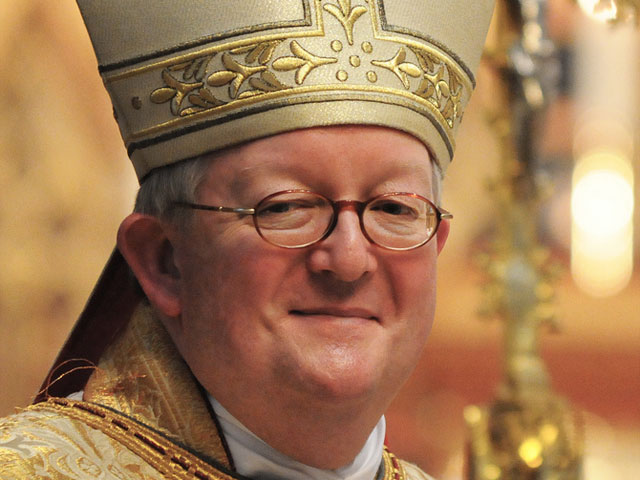
Steven Rohlfs sets the scene. It’s a Saturday afternoon, and a line has formed outside the church confessional. An elderly woman walks into the screen-divided booth and kneels.

“Bless me, Father, for I have sinned,” Rohlfs croaks in his best old-lady voice. “It’s been two weeks since my last confession.”

Doctors and pilots aren’t the only ones who practice before leaping into high-stakes vocations. So, too, do priests.

This weekend is the holiest of the year for the nation’s more than 65 million Catholics, drawing both the devout and the casual attendee to church. Many will also use the occasion to step into a confessional and divulge all manner of wrongdoing.

For penitents, it can be an intimidating encounter, even in an age when misdeeds often take the form of unapologetic status updates. But they may not be alone in their fears. For a priest, at least at the beginning, hearing confessions can be a nerve-racking task — which is why four men about to be ordained gather in Monsignor Rohlfs’s office on a recent afternoon to practice.

I’m not Catholic but Lutherans have private confession as well. I didn’t avail myself of the practice until I went through training many years ago. We had a congregational seminar and an expert (the sainted Dr. Ken Korby) explained to us how it would work. He had heard confessions for decades and told us that he’d heard people confess to breaking every single commandment. He lingered as we contemplated what that meant. He also explained how absolution worked. It was wonderful training and it got me to my first confession.

As anyone who has confessed their sins individually knows, it can be a terrifying and dramatic experience. And one of the things that I actually don’t like to think about is how difficult it may be for a pastor or priest. Still, this article handled that issue quite well, perhaps because it was focusing on priests in training rather than seasoned veterans. There are some great quotes in the piece:

“You wouldn’t want to throw anyone in without any experience,” says Rohlfs, who has been rector of Mount St. Mary’s Seminary since 2005. “It would be like going to the emergency room and the doctor says, ‘I’ve never seen a patient.’ ”

There is a fascinating look at what a practice confession looks like and some discussion about how many people go to confession. For instance:

Rohlfs say he believes that more people are going to confession than they did a decade ago, but not as many as did 50 years ago. Little data exist on confessions, but the Center for Applied Research in the Apostolate at Georgetown University looked at the rates in 2008. That study found that about 24 percent of Catholics go to confession once or several times a year and that only 2 percent go once a month or more. The rest go less than once a year or never.

The purpose of the class isn’t just to prep the seminarians but to also teach them how to get people to go to confession more often, including adding hours for confession year-round.

We get some great details about the lives the seminarians lived before seminary, including one who was conflicted about becoming a priest because of the child sex abuse scandal and another who was a tobacco executive.

The one thing that really stuck out for me was that nowhere in the piece did it mention absolution — that is, the forgiveness of the sins being confessed. I’m now curious if this was a reporting error or if it’s a doctrinal distinction between Catholics and Lutherans. For Lutherans, the most important job of the pastor is to pronounce the absolution.

I also wondered if they received training in what we would call the confessional seal — the prohibition against revealing anything that a penitent confesses. I imagine that many priests and pastors would love such training.

It’s just a great idea for an article and a fascinating read. But now I’m curious about the distinctions between how churches handle this as well as the training they offer.

Print Friendly

  • Jerry N

    Absolution is central to the rite of confession or reconciliation; this was an oversight.

  • http://www.dudeism.com The Dudely Lama

    Ha ha. I’m the “one fan.” But we have 150,000 ordained Dudeist Priests and several contributors, for instance, at our online publication, The Dudespaper (www.dudespaper.com)

    If you wonder why people are cynical about religious reporting maybe you should look no further than your own rug, dude. You just mentioned The Big Lebowski because any article that mentions the holy film gets lots of traffic. Your article has nothing to do with Dudeism or The Big Lebowski! And you didn’t even look into what you’re blathering about! Dude, you’re being very undude. Laughable, mang.

  • Richard Mounts

    Mollie,

    Forgive me but I just have to say it : Lutherans got confession? (I’m picturing in my mind the years-old “B.C.” comic strip in which one of the characters yells, upon seeing a walking clam, “Clams got legs!”)
    For me, this is on par with learning in the mid-90′s that there is an Episcopal/Anglican order of Benedictine monks!

    On a serious note, though, I’d be intrested in knowing that Lutherans have confession, too; if Lutheran miniters are trained similarly. I also want to know the theology of Lutheran confession and how it might be different from the Catholic. Given that Martin Luther was an Augustinin friar/priest, how did his training and education influence the devlopment of Lutheran confession. Maybe there wasn’t space for all this. Maybe I’m just too inquisative.

  • mdevlin

    @The Dudely Lama I don’t normally comment here, but I’m writing this on the off chance that you read this comment. GetReligion.org is not a blog that provides religion news. It’s a blog where religion news is discussed. The mention in this post wasn’t meant to highlight Dudeism but to highlight how a news outlet was going about the process of making a piece on Dudeism. That’s why the Dude isn’t discussed directly.

  • R9

    Dudeism looks like a meeting of 90s slacker culture and religion parody? Maybe it has something to say about the practioners. Any link to spiritual-but-not-religious? Is this the same sort of people who hang an FSM poster on their wall? Those who were teens watching the Big Lewbowski in the cinema are this decade’s 30-somethings, what is the patterns of belief amongst them likely to be?

    (Duuude. Mollie needs to relax. All that snarking must be stresful.)

  • Julia

    A friend who is an ex-priest told me that their preparation included some really off-beat sins that neither he nor any of his classmates thought they would ever hear in the confessional. To his surprise, he later heard them all, too – even bestiality.

    Yes, leaving out absolution is incredible. That’s what confessing your sins is all about. And, contrary to what non-Catholics might believe, priests are urged to confess frequently themselves. They cannot give themselves absolution. And purporting to absolve a partner in sin is one of the worst sins possible.

  • Martha

    The bit about the “old lady” confessing her daughters’ sins (‘I tell them constantly how God is angry with them for falling away from their faith’) is also important – in confession, it is emphasised, you are supposed to confess your own sins not those of others (so even if you were confessing, say, to adultery you could not say “I am having an affair with Ms Jones/Mr Smith” but just “I am having an affair”).

    But yes – this all falls under “moral theology” and “casuistry”, and the handbooks produced for confessors which covered every possible sin, what extenuating circumstances might apply, and the penances to be imposed. An example of a much-simplified modern one is here. I have no idea what modern seminaries are like, but training for the sacrament of reconciliation does involve a lot more than just a couple of practice classes of hearing mock confessions.

    That being said, it wasn’t a bad article, and frankly I’m so glad nowadays to read something about the Catholic church that isn’t couched in terms of “More scandal revealed!” or “Sinister mediaeval cult hates women, gays, wants to crush all our freedoms under its jackboots!” that I’ll take anything :-)

  • http://www.dudeism.com The Dudely Lama

    Come on Mollie (mdevlin?). The segue between your mention of Dudeism and your mention of the other article was so diaphanous you could drive a camel through it, as the man said. And you didn’t even look into what Dudeism was.

    I realize getreligion.org is a commentary site, but your dismissal of Dudeism didn’t even serve any function in the article. I can’t tell you how often people reference The Big Lebowski in order to draw eyeballs on the ‘Net. I can’t guarantee this was your m.o. but why else would our humble doobie be grafted onto your ornate flagon of communion wine?

    Even we slackers put more work into our research and execution. But we’re not really slackers. We’re a modern branch of philosophical Taoism. If you’d like to make up for your casual heave ho why not write a scathing editorial about our movement, free of awkward transitions and ecclesiastical mumblecore? Thankie.

  • Mollie

    The Dudely Lama,

    Please review our commenting policy as well as “Why We’re Here.”

    This is not the location to discuss religion but, rather, how the mainstream media covers religion news.

    Best,

    Mollie

  • tipi tim

    If memory serves Mollie is one of those 150,000 ordained Dudeist Priests.

  • http://www.dudeism.com The Dudely Lama

    Ah, I see. So my request for an article was out of line. But, still, what was your point? What did Nightline do wrong?

  • Mollie

    The Dudely Lama,

    No problem!

    And I’m not entirely sure what my point was. I just wanted to raise the topic for discussion more than anything else.

    The way stories are created has been a topic of interest recently. Even Nightline acknowledges that “one dude” (i.e. you!) isn’t sufficient for a story that will purport to show a trend. The manner in which they’re working hard to find people to fill a narrative in order to “report” a trend is just interesting.

    Put another way, think of all the things they’re not asking to find. And why.

    Taken as a whole, is the picture the media presents about how people practice religion skewed in any way? What other systems of belief practiced by “one dude” aren’t getting play. What other systems of belief practiced by more than “one dude” are ignored.

    I don’t necessarily have any answers here, I just think it’s interesting to think about how the media presents the religious landscape.

  • Mollie

    tipi tim,

    I’m just a fan of the movie. Although, I must admit, I had to watch it twice to get into it. My husband married me in any case. He’s a patient one.

  • R9

    I assume the complaint here isn’t that somehow Christianity is going to be forgotten in a wave of Dudeism in the media. This is, what, one brief piece for some news magazine show?

    If we’re asking “what other systems of belief should be getting some airtime” I guess the answer would be to look at what other small religions are out there, that might be more worthy of a slot.

    I hear there are about 200 thousand Zoroastrians. How are they doing? Or, what new religions have popped up lately?

    Although I still think the angle here is as much about pop-culture and 90s nostalgia as religion.

  • Chris M

    This reminds me of the Jedi religion stories in the UK press a year or two ago.

  • Julia

    And the flying spaghetti monster.

  • http://www.dudeism.com The Dudely Lama

    Also, I think that Nightline article was more of an attempt to invite Dudeist Priests to be interviewed about our burgeoning movement. They didn’t want a mob of folks who love the movie but aren’t strictly Dudeists showing up, so they posted what is sort of a casting call. I can see how it’s a bit ambiguous though.

    To be honest, I’ve been a bit disingenuous here. Everytime someone dismisses Dudeism as a joke I like to get on the comments and raise a little Walter (a character in the movie who blows his top over every trifling ignominy), just to see how people react. But the really odd thing is that hardly anyone ever gives us a hard time! When I started this I expected to get a lot of hate mail and shoddy reportage but the opposite has been true. We have a genuinely easygoing attitude towards other religions and we try to be sincere so maybe the media senses that. Or maybe they don’t know what to make of us so they take a hands off approach.

    Anyway, no harm intended. Just wanted to figure out what the article was all about. One thing I can get very undude about is ambiguity. My pomeranian peeve.

  • Scribbler

    Regarding the query about the Lutheran practice of Confession and Absolution, we understand that this is the ongoing application of the Sacrament of Holy Baptism. The penitent comes to confession to receive anew what is his through the water and Word– that Christ Jesus has provided satisfaction for all sin without exception, and in His stead and by His command the called and ordained minister here applies to the penitent that full and free forgiveness. There is no penance, for the work is Christ’s for us. It’s all gift. And since all is forgiven, and all is done by Jesus, the minister serving as confessor may not do other than speak the absolution, provide such encouragement and instruction from God’s Word as may serve in the given situation, and speak no more of any sin confessed. The seal of the confessional to the Lutheran pastor is absolute, and at ordination a pastor vows never to reveal anything confessed. There is no exception.

    If a person comes to a pastor not confessing, but boasting of unrepentant sin, or detailing his plan to commit a sin, the seal of course cannot be applied, for there is no confession happening, and no absolution (indeed in such a situation the sins spoken must be retained against the person) and the serious offense before God and man must be spoken clearly. And if harm is intended, or has resulted in such situations, the pastor will report it to the proper authority. But this concerns those who do not come seeking forgiveness. To such as seek it, forgiveness is given.