Should pro-choice activists be asked Gosnell questions?

The New York Times Sunday Magazine ran a Mother’s Day interview with, who else, the head of Planned Parenthood. Planned Parenthood does a few things that people either love or hate, but none so much as aborting more than 300,000 unborn children each year.

The media are firmly on one side of this issue and have done quite a bit to help out Planned Parenthood, a truth laid painfully bare during the Komen Foundation for the Cure situation last year, which I chronicled extensively. That was when the private foundation devoted to fighting breast cancer decided to pull out of funding the country’s largest abortion provider. The media didn’t view this as a story with two sides but went to the mat to force Komen to cave in. It worked. Within days, they were bullied into relenting and agreed to give money to Planned Parenthood.

Some media outlets perpetuated a falsehood about Planned Parenthood — that the organization offers mammograms. It doesn’t. Months (and years) after those mistruths were shared (by Planned Parenthood, President Obama and the media), some media outlets corrected the information. See here, here and here.

That cozy relationship is also shown in this Times magazine piece. These interviews are generally fluffier for friends of the paper than foes, but fluffy in general.

You can see where that might be a problem when dealing with the head of an organization that, again, aborts more than 300,000 unborn children each year. If, you know, you think that’s troubling.

But even so, the interviewer does not in any way shy away from political questions. That could be a good thing.

Do we see tough questions about whether the Cleveland kidnapper should be charged with murdering his unborn children by forcibly aborting them? No.

Do we see any questions, tough or non, about the biggest abortion-related story of the year — the murder trial of abortion doctor Kermit Gosnell? Dear reader, I have to tell you. The answer is no!

Just by way of example, Catholic news director Anna Mitchell is having trouble getting anyone at Planned Parenthood to accept her interview request. She offers these sample questions for journalists who are able to get interviews with Planned Parenthood:

First, I read a report that Gosnell’s lawyer, during cross-examination, downplayed the procedures in his clinic by saying they were common in the abortion industry at-large. Is this true? If Gosnell’s procedures are not standard to the industry, what is standard procedure? The latest string of videos from Lila Rose’s Live Action confirms at least that Gosnell’s is not the only clinic that would be willing to let a baby die after a botched abortion (http://www.liveaction.org/inhuman/videos/) – are there more? Should these doctors be punished if the evidence proved they did not provide life saving care for the child?

Second, the conditions in Gosnell’s clinic were revolting, to say the least. He could quite possibly become a poster child for legislation that would require abortion clinics to have the same standards as hospitals. I know that most – perhaps all – abortion rights groups have opposed these bills in the past, saying it would force too many clinics to shut down. In light of the Gosnell case, will that position change? Wouldn’t hospital-like requirements ensure that every clinic provides a clean, safe environment for women? Wouldn’t it be better for a woman to travel farther away if it meant lessening her risk of STDs, infections or even death? If you remain opposed to these kinds of standards, why?

Instead, you won’t believe the hot-off-the-presses questions that New York Times interviewer Andrew Goldman and his editors signed off on instead of anything on, say, Gosnell:

[Read more...]

So a rabbi and a priest and 20 parents walk into hell

YouTube Preview Image

So, how many GetReligion readers will be able to forget watching the Robbie Parker press conference, accompanied by the image of his blue-eyed, angelic lost daughter Emilie?

Not me, that’s for sure.

I was struck by his early reference to the gifts given to her by “her Heavenly Father” and, while that is very standard Christian language, the minute the network aired a picture of the young family, with it’s three young daughters, I immediately wondered if they were Mormons. I, for one, have not seen a clear reference on that point, but the fund in memory of Emilie Parker is based in Ogden, Utah. Also, did anyone else note the poignant reference to his final chat with his daughter?

Here is The Washington Post on that subject:

One parent who lost a child, Robbie Parker, spoke to reporters Saturday evening. He expressed sympathy for Lanza’s family, saying, “I can’t imagine how hard this experience must be for you.”

Parker said that Emilie, the daughter he lost, was blond and blue-eyed and could light up a room. “All those who had the pleasure to meet her would agree that the world was better because she was in it,” Parker said. He recalled the last time he saw Emilie, on Friday morning as he headed to work. He had been teaching her Portuguese, and so their last conversation was in that language.

“She said that she loved me, and she gave me a kiss and I was out the door,” said Parker, whose family moved to Newtown eight months ago. “I’m so blessed to be her dad.”

One wonders why this young medical worker had learned Portuguese. There could be a missionary link in there, somewhere.

But never mind, as in many reports on his remarkably graceful press conference, the faith content and language vanished in the Post copy. One can only ask why.

The memorial rites and funerals will, of course, contain plenty of religious images and passages, with a heavy emphasis on issues of theodicy. This is well and good. I’m writing on an issue related to that myself, this week, for Scripps Howard.

While many have mentioned the close-knit clergy of this community, I keep waiting for evidence that this is more than a mainline Protestant, Jewish and Catholic town. Has anyone seen evidence of those serving evangelical, Mormon or Pentecostal believers?

The New York Times and Washington Post each offered clergy stories, which, together, gave readers a kind of “so a rabbi and a priest walk into hell” scenario. The top of the Times piece appears to be an eyewitness report from a reporter standing silently on the edge of a quiet room in the funeral home:

It was early Sunday, the first time that Veronique Pozner had seen the boy’s body since he was shot to death in his first-grade classroom two days before. A sheet covered his body up to his neck, and a social worker had urged Ms. Pozner not to remove it. She obliged, but began to wail, alternately telling her son to leave this “dark, horrible world,” and beseeching him to come back.

Rabbi Praver began to speak softly. He told her that though Noah had physically left this world, he was not lost to them because his soul lived on. He asked her if she remembered her 6-year-old self and when she said she did, he told her that “when we become adults, our 5- and 6-year-olds didn’t die with us; they’re contained within a larger vessel.”

He was offering, he said, a kind of “spiritual morphine.”

And then, in the Post, there is the spiritual minefield in which Msgr. Robert Weiss has living for several days now:

The 66-year-old priest is known as Father Bob to the 3,500 families who belong to St. Rose of Lima Catholic Church. On Sunday, what Father Bob craved — after long hours of counseling and grieving and not enough sleep — was a good Scotch and a place to let go. Half of the 20 children killed at Sandy Hook Elementary were members of Weiss’s congregation, and he had baptized many of them.

After the 10:30 a.m. Mass on Sunday, in a rectory full of law enforcement officers and priests, Weiss wept.

Nothing at seminary had trained him for this week. Nothing about his 13 years at St. Rose. Nothing about his understanding of the world.

“I thought about Paul,” said Weiss, his black clergy shirt unbuttoned and his white collar in his shirt pocket like a pen. “Paul said, ‘In my weakness I find my greatest strength.’?”

Can we assume, in this day and age, that readers will know that “Paul” is actually St. Paul and that the priest is offering a broad paraphrase of the famous imagery in 2 Corinthians 12:9?

And He has said to me, “My grace is sufficient for you, for power is perfected in weakness.” Most gladly, therefore, I will rather boast about my weaknesses, so that the power of Christ may dwell in me.

I would assume that many readers needed the missing details, but I could be wrong.

This story includes quite a few eyewitness details that I have not seen in print before, since the monsignor arrived on the scene at Sandy Hook Elementary School very, very quickly with two other priests. He was there as the reunions between parents and surviving children slowed and slowed and then stopped. Try to imagine watching this scene:

Reunion after reunion whittled the lines down, leaving only parents, empty-handed and desperate. They were taken to the nearby firehouse where the Sandy Hook Volunteer Fire and Rescue Company operated.

Weiss walked over, too. He knew half the parents from St. Rose. He had officiated at their weddings and the baptisms of their children, some of whom were now unaccounted for. Inside the firehouse, parents texted relatives, called babysitters to stay late and called around to likely places where their missing children might have gone.

That room, too, was whittled down.

Soon, the parents needed a priest, right then and there:

In the room of folding chairs, time passed. Weiss felt the tension rising in equal measure to the sense of dread. Parents started coming to him with regrets.

A mother said she shouldn’t have taken her daughter’s DVD player away. “She wasn’t a bad child,” the mother told Weiss. Another mother who came to Weiss said it was her fault she sent her daughter to school that morning. She blamed herself, telling the priest she wasn’t fit to raise her other children.

About 3 p.m., Connecticut Gov. Dan Malloy came into the room. The gruesome announcement was his to make: 27 people inside the school had been killed, and 20 were children. All would be taken to the medical examiner’s office.

With the news came the most raw display of human grief that Weiss had ever seen or imagined — wailing, weeping, screaming, people sinking to
the floor. …

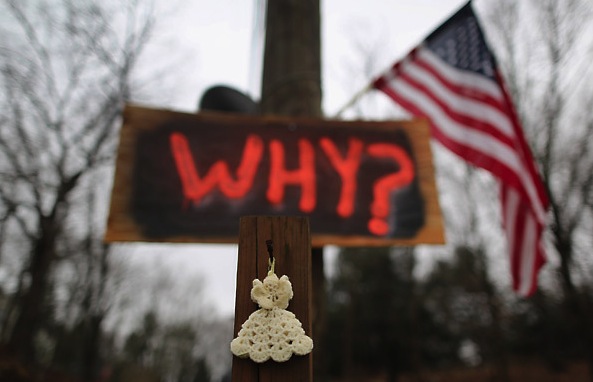
In all those hours of counseling and comforting, no one asked the priest, “Why?” The question came later, starting on Sunday, and Weiss did not have an answer.

And that’s the end of the story. I, for one, would like to know more about what the priest said at that point.

Perhaps he truly was silent or said that he had no answer, no answer at all. I have my doubts about that. Then again, I grew up in the home of a pastor who finished his career as the chaplain in the Texas Children’s Hospital, working with the parents of young cancer patients. I know that chaplains rarely offer simple answers. But I have heard few settle for silence.

Top 10 ways BuzzFeed doesn’t get Christianity

Two minor media incidents yesterday made me wonder if some of the problems we see with how religion news is covered relates simply to language differences. The first came about in a panel discussion about whether Hurricane Sandy had any political implications. (By the way, see if you can find any ghosts in this New York Times video “Lights Out In Rockaway” about the rough situation those in Queens continue to face a week after the storm hit. The folks in the video say that FEMA and the Red Cross have been AWOL, but I noticed that some relief workers had shirts indicating they were part of religious relief efforts.)

Anyway, on Meet The Press, “Today” show host Savannah Guthrie was speculating that the hurricane would help President Obama reach out to independent voters as opposed to the base voters he’d previously targeted:

“This is a campaign built to turn out the base of the party. And here was a moment, handed to him seemingly from above, where he could look like that strong, independent, steady in a storm, very appealing to the middle-of-the-road voters. And I might add to unmarried women voters who are going to be very key in this election.”

See? Secular reporters talk about theodicy, too! They just talk about it a little differently. Sandy killed 110 people, left millions without power, destroyed homes and untold property. But God (or, er, something “from above”) can bring good things out of it, too … such as help to President Obama’s re-election campaign. It does make me wonder if or how Guthrie covered the Senate candidate’s comments suggesting that even those lives conceived in rape are valuable to God.

Anyway, the other minor incident I came across was the powerful BuzzFeed editor Ben Smith’s remarks when he linked to a perfectly typical BuzzFeed article (They tend to hype everything for maximum page views. It works. And yes, the headline is a joke about their style.) about religious outreach by the Romney campaign. The relevant portion for our purposes:

Reed emphasized that it was the religious duty of Christians to cast their ballots, saying the “Bible clearly teaches” that there is an obligation to take part in their government.

“We believe being registered to vote, being educated, and going to the polls is part of our witness as believers, because we are dual citizens,” Reed said, referring to the “Kingdom of Heaven” and the United States.

Ben Smith tweeted out a link with the line:

Hard to imagine a rabbi or imam telling his flock, as Ralph Reed does here, that they are “dual citizens”

Well, as you can imagine, his 112,699 followers had a bit of fun with it. For instance:

@SluBlog: Good grief, dude. http://bible.cc/philippians/3-20.htm …

@BrentSirota: It’s Philippians 3:20. Why would a rabbi or imam make reference to that?

Smith retweeted some of the responses he got and further explained:

I guess it struck me in the context of the frequent accusations that Jews have dual loyalties. Not the concept, just the phrase.

And that led to more interaction:

@JayCostTWS: Read Augustine’s City of God.

It is a great suggestion that reporters read City of God if they want to understand this concept. But Smith surprised me by responding:

Went to a hs called Trinity and read City of God in college. No excuse at all :(

I know it’s what we should all do, but it’s nice to see a journalist who is not defensive and takes correction and admits error.

It’s also interesting that one could have some familiarity with these concepts and still forget them while on the politics beat. Just a good reminder for us all that our own obsessions and frameworks might not be universally shared.

Pearls before Net commenters (or a Godbeat gem)

A reader sent along this story in the Washington Post headlined “Parents accept daughter’s rare illness as’‘God’s will’” with a note:

Strange that the Post doesn’t ridicule this family for believing that their plight is God’s will.

The piece ran in the Post but it was wisely picked up by Religion News Service and was written originally for The Tennessean. I have been meaning to highlight it for weeks and am thankful to have the opportunity to revisit it. In a way, the reader comment shows everything about what made the piece so amazing. The subtext the reader alludes to, of course, is the ridiculous way in which the media handled a Senate candidate’s theological reflection on why bad things happen if God is God. The media coverage was an embarrassment, it was clearly partisan, and it lacked any nuance or depth.

I had already mentioned Amy Sullivan’s work as a rare exception to this mess but I would also like to point out Jeffrey Weiss’ piece in Real Clear Politics headlined “Richard Mourdock’s Mystery of Faith.” Rather than aim for political point-scoring, Weiss used the Mourdock statement as a hook to explore the various ways that religious adherents address questions of theodicy. Even if just kept to Christianity, there are a variety of ways of looking at this issue.

Now, the Tennessean story has absolutely nothing to do with Mourdock. But it does show how a capable religion reporter can introduce questions of theodicy in a respectful and even-handed manner. The piece, written by Bob Smietana, is breathtakingly beautiful. The subjects are ideal candidates for a deep dig into the questions and the reporter doesn’t avoid dealing with the difficult implications of their beliefs. I don’t even want to excerpt it because I want everyone to read the whole thing, but it begins:

Eric and Ruth Brown of East Nashville believe nothing about their infant daughter Pearl Joy’s life is a mistake.

They say God gave Pearl her bright red hair and wide blue eyes, as well as the genetic disorder that cleft her upper lip and caused her brain’s development to stall in the first weeks in the womb.

“Things didn’t go wrong,” Eric Brown said. “God has designed Pearl the way he wanted, for his glory and our good.”

That belief has sustained the Browns over the past six months, ever since a routine ultrasound halfway through Ruth’s pregnancy revealed that Pearl, their third child, has alobar holoprosencephaly, a rare genetic condition that’s almost always fatal. A specialist told the Browns she would probably die in the womb and advised them to end the pregnancy early.

It’s one thing to talk about God’s will when life is good. It’s another when a doctor is saying your baby won’t live. The Browns were forced to consider religious, medical and ethical issues most parents never will.

And nobody could make their decision for them.

The Browns never even considered not going forward with the pregnancy. They believe that Pearl is “fearfully and wonderfully made,” as Psalm 139 puts it, and God alone should decide when she lives and when she dies.

Perhaps it’s not until you read the comments at the various newspapers that either picked up or copied The Tennessean‘s story that you realize how counter-cultural and shocking the Browns are to many people in the world. The comments on some of these stories were just unbelievably hurtful and negative. I wished I hadn’t read them. After I read Smietana’s story, I was so curious about the Browns that I began following Eric’s Twitter feed. At first he was also hurt by the negative comments. But he also noticed that their story was provoking many beautiful comments from people who had made similar decisions to them and from people who were thinking things through about how to handle the challenges of life.

Reading all of these comments further demonstrated to me that Smietana handled all of these questions very well. I should warn you that the article is a tear-jerker. Reading it, I was reminded of the brother of one of my best friends. He and his wife were surprised to find out that their second child had severe health problems at birth. The way they loved and cared for her during the few months she lived was beyond inspirational to me. I have grumbled, at times, about how stories like theirs never make “news,” even though they’re dramatic and fascinating. Well, I was wrong. It just takes a good reporter who is observant and knows the community and how to write a story about how faith is lived.

There is much more to this story, but I think it’s best to just read it for yourself. And hopefully it gives some much needed encouragement about professionalism on the Godbeat.

Pearl photo via Shutterstock.

Pod people: Theodicy, pinnochios and the war on women

Last week was not one of the best for the mainstream media. I just wrote a lengthy screed about how awful the coverage, or the lack thereof, was about an Indiana Senate candidate, the administration’s handling of a terrorist attack by Muslim extremists in Libya and a so-called “war on women.” You know which one didn’t receive much coverage from most outlets and which ones did. And you can hear me talk about it on this week’s Crossroads podcast.

The only thing I will add is that the mainstream media missed an opportunity to talk about religion in a mature manner because of their single-minded focus on horserace politics. What I wish we would have seen is what some alternative media outlets excelled at this past week, looking at theodicy and different theological approaches to the question of why good or bad things happen. By wanting to push a political narrative, the media lost the opportunity to educate, inform or even just reflect the values of the communities they seek to serve. And I can’t help but think it’s a great example of why the media have lost so much trust in the public they seek to profit from.

Anyway, I don’t want to spend too much time harshing on the horribly biased week the media had. I had figured I’d have to write a “Got News?” piece about the failure of the media to call out President Obama for a particular statement he’s been making quite a bit. A statement that turns out not to be true. But the Washington Post‘s “fact checker” looked into the statement:

 “You’ve got issues like Planned Parenthood, where that organization provides millions of women cervical-cancer screenings, mammograms, all kinds of basic health care.”  — President Obama during an interview on “The Tonight Show,” Oct. 24, 2012

The media have also made this claim. I will never forget the ABC News piece that led the nightly news with a fabrication about Planned Parenthood providing mammograms. You can read my piece about it here. It’s a common statement from President Obama, as the Post piece explains, providing multiple examples. And all year long this claim has been repeated by the most powerful people in the country.

Only problem? Well, it’s not true. Or, as the Washington Post puts it:

The problem here is that Planned Parenthood does not perform mammograms or even possess the necessary equipment to do so. As such, the organization certainly does not “provide” mammograms in the strict sense. Instead, its clinics provide referrals and direct low-income women toward resources to help pay for the procedure.

It is good to correct inaccurate statements! All year long I have been frustrated by how this inaccurate statement has been bandied about. A casual news reader might be under the impression that Planned Parenthood’s most noteworthy work is the mammograms it supposedly provides (you’ll note how rarely the 300,000 abortions get mentioned or the $500 million in federal subsidies it receives each year get mentioned).

But I want to show how the Post concludes it’s “fact check”:

The president has suggested time and again that Planned Parenthood directly provides mammograms, but the organization only offers referrals and helps women find financial resources for the exams. This suggests an intentional attempt to mislead voters about all the services that are at stake with decisions regarding federal funding for the controversial group.

Obama’s campaign points out that the incumbent was referring in each case to Planned Parenthood’s broader role as a health-care provider. But that doesn’t make his remarks any less inaccurate.

We wavered between Two or Three Pinocchios but ultimately decided the president earns Three Pinocchios for his mammogram remarks on “The Tonight Show.” He has repeated them too many times in one form or another for this to be considered just playing with words to generate a misleading impression.

This is what annoys me — the awarding of a subjective Pinocchio score. Just tell us what the politician said and then tell us whether it comports with the facts. If there are differences of opinion on how to interpret something, go ahead and include that. But this Pinocchio thing? I can do without it.

Also, while the mainstream media is obviously anything but curious about why Planned Parenthood doesn’t do mammograms but does do 300,000+ abortions each year, you can read the pro-life press for more (e.g. “Abortion is 125 to 165 times more profitable than mammography.”) And back to the GotNews? thing … did anyone see mainstream coverage of the pro-life event “Schedule Your Imaginary Mammogram Day“? I didn’t.

Media embarrassingly ill-equipped to cover rape, theodicy

The whole point of this website, since day one, has been to help mainstream journalists “get religion.” So I guess I should not be utterly disgusted and disappointed by so many reporters’ coverage of the big Richard Mourdock-theodicy kerfuffle right now. Instead I should view this as a great teaching opportunity.

Every educated person should know the fundamentals of the major world religions. Every American journalist should have a working knowledge of the basics of Christian and Jewish thought.

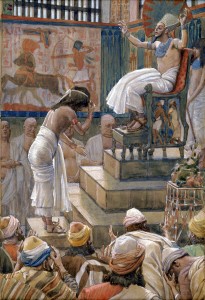
So everyone open your Bibles and go to Genesis. We’re hoping to end up around Genesis 50:20. In the preceding chapters, we learn about Joseph, one of Jacob’s 12 sons. His brothers really hated him and were filled with jealousy so they conspired to kill him before deciding instead to sell him into slavery. Jacob, believing Joseph had been killed, was left in anguish and grieving.

Joseph somehow becomes the most powerful man in Egypt next to Pharaoh. He does all sorts of wise and judicious things and saves all sorts of people from a brutal famine. Long story short, he ends up meeting up with his long-lost brothers again. They are really worried that he’s going to react poorly. And so:

But Joseph said to them, “Do not fear, for am I in the place of God? As for you, you meant evil against me, but God meant it for good, to bring it about that many people should be kept alive, as they are today. So do not fear; I will provide for you and your little ones.” Thus he comforted them and spoke kindly to them.

“As for you, you meant evil against me, but God meant it for good” is one of the most well-known passages in Scripture. The teaching that God causes good to result from evil is just basic, basic, basic stuff.

You don’t have to agree with this verse if you’re a reporter, but you should be familiar with it. If you are a reporter and you’re not familiar with the story of Joseph, or the story of Job, or the story of Jesus, you may be surprised at how easy they are to quickly catch up on. I’m not saying you’ll be able to plumb the depths in an evening, but just read Genesis, read Job, read the Gospels. These are foundational to understanding how the vast majority of the people you cover understand God’s will. With further study, you may learn about how Jews and Christians have struggled with understanding God’s will over the millennia. Turns out there is a lot written about it. Books, papers, you name it.

And here’s another thing: Meet someone who identifies as pro-life and ask them a few questions. You may learn that they believe all human life is equally valuable and sacred. You might learn that they affirm that human life begins at conception. You might learn that they really abhor the taking of human life, even at its earliest stages. You might learn that they’ve grappled with “the difficult cases” — whether unborn children should be protected if the circumstances of their conception involved rape or incest, whether unborn children should have any rights if their mother’s life is in danger. You might learn that there are different approaches to how they wrestle with these cases.

If you do these two things — bone up on just the very lowest level basics of Christian teaching on theodicy and meet a pro-lifer and find out what they really think — you might not lead your newscasts with a mangling of the news that some pro-lifers really believe (gasp!) that the circumstances of your conception and birth do not determine your worth and that every single child in the world is created and loved by God. You might learn about this newfangled ancient teaching that God causes good to result from evil.

I want to make it clear that if Democrats want to claim that Mourdock said God intends rape or that he didn’t say it was tragic, that’s their business. We have two weeks to go until election and people are getting a bit antsy. But reporters need to separate themselves from their deeply held ideological leanings and just report. There were bad things, such as the Huffington Post lying by saying that Mourdock told voters that God intends rape.

The Washington Post‘s Jennifer Rubin explained to reporters (who she suspected of partisan outrage on this story):

The essence of religious monotheism is that everything comes from one God, which naturally leaves humans befuddled when “Bad things happen to good people.” The faithful nevertheless persevere in their faith, believing that God is unknowable to human minds. This is the essence, for example, of the Book of Job, which I felt compelled to reread this afternoon. (It is a deeply disturbing story precisely because it raises these fundamental issues about the nature of God, good and evil, etc.)

At Business Insider, a reporter said this story exemplifies what she hates about media coverage of abortion:

Anyone is free to disagree with Mourdock’s position — and to make him explain and defend it — but the media’s surprise and outrage, disguised under the mask of “journalistic objectivity,” is disingenuous and irresponsible.

We all saw the biased coverage yesterday, the curious decision by the media to drum up outrage about Mourdock’s comments while downplaying other gigantic stories. “Abortion distraction for Romney,” said the CNN chyron at one point — precisely as it attempted to achieve just that. You really must read Andrew Ferguson’s attack on such journalism:

The Heisenberg Principle of Journalism puts the lie to all that. You see it at work whenever a news anchor announces that “this story just refuses to go away” or a headline writer insists that “questions continue to be raised” about the conduct of one hapless public figure or another.

The story refuses to go away, of course, because the anchor and his colleagues won’t let it; and the questions that continue to be raised are being raised by the headline writer and his editors. Reporters create more news than anybody, just by pretending they’re watching it unfold.

My favorite were the “stories” that said “Romney campaign says he still supports Mourdock, won’t ask Indiana Senate candidate to pull ad.” Do you have to be a willful partisan to take that approach to writing a story? (“Still supports” a consistent pro-lifer? You don’t say!) Or do you just have to not know that Americans views on abortion aren’t perfectly mirrored in the narrow confines of your newsroom? There were others all tied to the idea that Mourdock needed to apologize for his remarks. Mourdock’s views on abortion are less extreme — relative to the American population — than Barack Obama’s, which include thrice voting to keep a form of infanticide legal. When was the last time you saw a reporter suggest that Obama needed to do anything other than celebrate his views?

Like I said, we’re close to the election and that means that journalists struggle even more with keeping their political views in check. We’re human.

But since the forces in favor of aborting the products of rape have been overly represented in the last couple of days, let’s think of some good ideas for media coverage.

For instance, how about talking to any of the many fellow humans in our midst who are products of rape. They don’t have to be famous like Eartha Kitt was or like one of Angelina Jolie’s adopted daughter is or like Martin Sheen’s wife Janet. They might be just the normal people in our newsrooms, in our churches. We saw journalists make hay of the idea that God intended for them to be born and that their lives are gifts from God. Would we do that if they were in front of us?

Do Mourdock’s political opponents — up to and including President Obama — believe that these lives are not a gift from God? Do they believe that God didn’t intend for them to be born? Would stories framed that way lead the morning and nightly news? If they wouldn’t (and to be sure, I’m speculating about a fantasy world where all candidates are asked the same questions that consistent pro-life candidates are), what does that say about the news judgment displayed thus far? Are discussions of theodicy to be trifled with, mangled, used for partisan purposes? Are they maybe a bit more sensitive than the media outlets were letting on?

Painting via Wikipedia.

Galling MSM abortion extremism double standards

There are so many stories related to the media’s poor coverage of abortion that I couldn’t begin to catch up. I’ve wanted to write about what it means that the media always refer to abortion in “restrictive” rather than “protective” language. See, for example, here and here.

And I’ve wanted to write about the shameful collection of so-calledfact-checks” related to President Obama’s record on the Born-Alive Infants Protection Act.

But I haven’t had time. Before we get to today’s silliness, consider that Gallup reports that 52 percent of Americans support some restrictions on abortion, and an additional 20 percent think it should be illegal in all circumstances. That’s nearly three-quarters of the population saying they support at least some restrictions on abortion. Only 25 percent share President Obama’s view that abortion should be legal for any reason at any time in the pregnancy, including sex-selection abortions and partial-birth abortions.

Now, even though the vast majority of Americans favor some protection for unborn children from abortion, consistent pro-choice positions don’t generate media interest. Only consistent pro-life positions do. What’s the journalistic defense for that double standard, I wonder?

Yesterday, a pro-life news site revealed a 2004 fundraising letter from Michelle Obama, the topic of which was support for partial-birth abortion.

Also, yesterday, Democrats for Life pulled its endorsement of Tim Kaine for U.S. Senate. Now, I live in Virginia, and based on the mailers and TV ads I’ve seen, the Obama re-election strategy is highly focused on his support for abortion rights. It’s also true that Democrat Tim Kaine’s appeal in this state is based in part on the belief that he is a moderate on social issues. Democrats for Life pulling an endorsement for someone who used to be known as a “pro-life Democrat” is a story. But it’s not news at all.

What is news? Well, a GOP Senate candidate in Indiana apparently believes that all life — without exception — is a gift from God. Stop the presses! Freak out! Or, as Chris Cillizza breathlessly tweeted: “Richard Mourdock, call your office. http://wapo.st/QEMCMQ

Call your office? Hunh? (For a comparison of political importance, I’ll just note that Cillizza did not think the Reuters story showing that the White House situation room was sent an email at 6:07 PM on, er, September 11 with the subject line “Ansar al-Sharia Claims Responsibility for Benghazi Attack” meant that anyone needed to call their office.)

Here’s what happened. Apparently Mourdock was asked in a debate to explain why he’s consistently pro-life. He said:

“I struggled with it myself for a long time, but I came to realize life is that gift from God. And I think even when life begins in that horrible situation of rape, that it is something that God intended to happen.”

Now, it’s worth noting that no debates ever ask any consistent pro-choice candidates why they think there should be no protection for unborn children whose lives are ended simply because they’re female, or because they have Down syndrome, or because they’re inconveniently timed, or because of the circumstances of their conception. Nope, even though the vast majority of Americans seek some or total protection for unborn children, these questions are never asked. Not even of President Obama, whose voting habits while in the Illinois Senate were particularly extreme.

But if you’re consistently pro-life, then release the hounds. If you publicly affirm your belief that God loves every person equally, no matter what his or her origin, you’re painted as an extremist. You should call your office! And freak out! The AP headline was literally “Mourdock: God at work when rape leads to pregnancy.”

Back at the Religion Newswriters Association conference a few weeks ago, Amy Sullivan made an important point. She noted that religion reporters are good at what they do. But sometimes when folks on other beats try to cover religion, things can break down a bit. Obviously that would go double for discussions of theodicy such as Mourdock’s answer above, which is admittedly a challenge even for Godbeat pros.

Anyway, Sullivan disagrees with Mourdock but she tweeted, in response to the freak-out over his explanation of why he opposes abortion even if the circumstances of conception are tragic:

Is it really surprising that folks who believe all life is a gift from God believe that regardless of how it was conceived?

Will y’all read the Mourdock quote? He did not say God intends for pregnancy to result from every rape.

If a rape results in pregnancy, and pregnancy is a gift from God, then of course Mourdock thinks that pregnancy is from God, too.

Not sure why it’s worse to explain why you don’t support a rape exception than to simply oppose a rape exception.

Are the members of the political media so incurious as to not have thought about why consistent pro-lifers oppose all abortion? What did they think was the reason? I mean, really. Was it something terribly different than what Mourdock just said? I can’t imagine it would be, if a reporter was worth his salt or had, you know, talked to a single pro-lifer in his life.

Yes, it’s good to get politicians — whether they are so extreme as to oppose efforts to protect infants accidentally born after botched abortions or so extreme as to oppose abortion even when the baby was conceived via rape — to explain why they hold their views. Heck, it’s good to ask the politicians who are just generally pro-life or generally pro-choice to explain their positions, too.

But the inconsistency is galling here.

Mourning in Aurora, with a generic Catholic bishop

As always, the tragedy in Aurora led to quite a bit of writing — whether reporters knew it or not — focusing on issues linked to “theodicy,” a theological term that has frequently been discussed here at GetReligion. At the heart of all discussions of “theodicy,” by definition, are questions about the nature and origins of evil, seen in light of the existence of a good and loving God.

In journalism terms, what we are talking about is the search for the “why?” in the familiar news equation “who, what, when, where, why and how?”

When faced with giant, tragic events, police have to look for a motive at one level, while theologians look for motives at another. Journalists usually end up quoting both.

So no one should be surprised to see the following lede in The Washington Post, after Sunday services in Colorado:

AURORA, Colo. – Sunday was a day to mourn here — and ask, fruitlessly, why.

The bulk of the story, naturally enough, focuses on the search for logical, human motives in the life, background and recent history of the alleged gunman, James Holmes. However, the story eventually tuned in some of the faith-based messages spoken (and sung) in memorial services and religious rites in the stricken region. This is the end of the report:

At the memorial service, an array of speakers struggled to explain what had caused the attack. A Catholic bishop used the word “evil” six times.

Colorado Gov. John Hickenlooper (D) did not even want to try. “I refuse to say his name,” he said, to the loudest applause of the night. He sought to turn the attention to victims instead, reading their names and asking the crowd to remember them. At some names, family members cheered. Others brought cries of grief.

The scope of the tragedy was brought home at the end of the night The crowd was supposed to sing “Amazing Grace” as families of the dead filed out. But the song ended, and the families were still walking.

“Let’s do the first verse again, ‘Amazing Grace,’?” an emcee said. The crowd sang it again, then again. Then another time, just humming and repeating “praise God” until the last of the family members had left the plaza.

On it’s face, there is nothing unusual about this material. However, did anyone else find this reference a bit strange? The one that said: “A Catholic bishop used the word ‘evil’ six times.”

First of all, one would expect the topic of “evil” to come up early and often in remarks following a massacre of innocent people, including at least one young child. What amazed me is that generic reference to “a Catholic bishop.” I mean, how many Catholic bishops are there in the Archdiocese of Denver? Assuming that no one with a red hat drove in from the Southern half of the state, the answer is “two.” Also, if this is a “bishop,” instead of the “archbishop,” that means that these remarks were made by Bishop James D. Conley, the auxiliary bishop of Denver.

Sure enough, the bishop’s text (.pdf here) is up on the archdiocesan website. This memorial service prayer must be the source of the Post quote from the anonymous bishop — since it contains six “evil” references. Surely there isn’t another preaching and praying Catholic bishop on the loose out there? Gentle readers, how hard is it to learn the name of one of the city’s two Catholic bishops?

Here’s a key piece of that Conley prayer, with some of the “theodicy” language intact:

And now, let us pray:

Loving and merciful God, we praise you and we adore you for your great mercy. You are truth, goodness, and beauty. You are the source of all that is good and all that is holy. You hate what is evil.

You respond to evil, O Lord, with love. In your boundless love, you have conquered sin and death. Your victory over death is our hope — for we know that we do not live in a lasting city.

We entrust our beloved deceased to your love and mercy. We entrust our community to your comfort and peace. We entrust our fear, our doubt, our uncertainty, to your providential care, O Lord. Be present to us. Help us to love as you love and help us to build a community of peace.

I guess we can assume Conley is the strange, generic, anonymous bishop linked to this news mystery.

PHOTO: Catholic News Agency photo of Bishop James Conley speaking at the Aurora memorial rite.