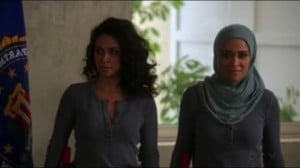
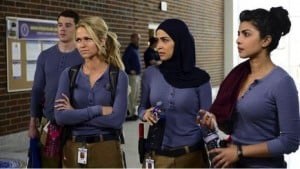
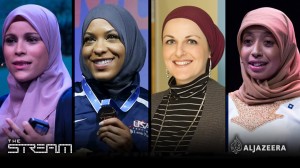
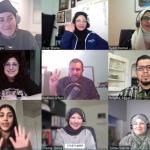
Here are some pretty awesome public service announcements. They’re in English, and I’m assuming for a western (possibly U.S.?) audience. Although I don’t know who made them, and I doubt that they’re actually shown on TV, I like the messages they’re sending. There’s the overt “Muslims are people, and we’re nice, too!” message, but there’s also the positive message that anyone can be Muslim. Especially when it comes to the women in the commercials.
Women of varying ages and ethnicities are included in this film. There are also several women with and without hejab, and those who wear hejab are wearing it in different styles. The message that Muslim women are all different individuals is one I think should be heard more often!
Here are the commercials. The first one highlights the plurality of a Muslim’s identity:
The second one is for “Different cultures, one belief”:
The third one is “Your neighbor, your friend”:

Tweet

Salaam Alaikum,These are so sweet!Though it maybe would have been nice to have a niqabi “speak” too, as they are probably the most malingned of all muslims.
Waleykum salaam, Safiya!While I don’t think we should award niqabis with a gold medal in the oppression olympics, I agree that having a niqabi would have been truly inclusive.
I would have also liked to see someone who looked more “white” if that makes sense. My hubby is a redheaded American man. It seemed like all those people could be or were non-White in the Western sense (brown hair, eyes, olive or darker skin). I say this because I believe it helps to break down the stereotype about what Muslims are. The German guy was close. MashaAllah I think this is a great effort and I hope it continues and becomes more mainstream. I don’t watch commercials, but that’s one I wouldn’t mind seeing.
Shawna, excellent point! Seeing Muslims as only olive-skinned people reinforced the idea that Arabs and Muslims are synonymous.
I’m very happy to see these ads! I’d suggest including some Asian and white Muslims as well.
Note: By “Asian” I’m referring specifically to East and Southeastern Asian, as opposed to Southwestern Asian, which is already represented.