in darkness and storm

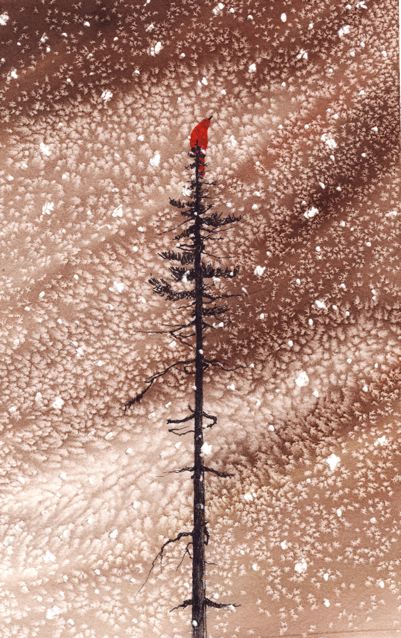
in darkness and storm painting by nakedpastor david hayward

“In Darkness and Storm” (watercolor & ink, 6″x10″)

(Prints are available here.)

Sometimes we simply must weather the darkness and the storm.

And sometimes, whether we like it or  not, we have to do it alone.

This is as it should be, because this is as it is.

About David Hayward

David Hayward runs the blog nakedpastor as a graffiti artist on the walls of religion where he critiques religion… specifically Christianity and the church. He also runs the online community The Lasting Supper where people can help themselves discover, explore and live in spiritual freedom.

  • http://triangulations.wordpress.com Sabio Lantz

    Wow! That is magically gorgeous!

  • http://nakedpastor.com nakedpastor

    :) thanks (:

  • Sara

    I agree! Beautiful!!

  • BW

    Yes, absolutely beautiful.

  • Pat

    I love both the poicture and the words David – thanks. Pat

    (BTW the link does not lead to your ETSY shop page!)

  • http://nakedpastor.com nakedpastor

    that’s because it sold already. prints are available though: https://www.etsy.com/listing/120717415/in-darkness-and-storm-fine-art-print

  • Carol

    Excerpt from Richard Beck’s book The Authenticity of Faith:

    What might it mean to say that faith is authentic? There are, I expect, a variety of answers to this question. In this book we have tried to frame authenticity in light of Freud’s criticism of faith. For Freud, faith is inauthentic, a form of illusion, because it is not educated to reality. Faith is inauthentic because, at root, it is a form of obfuscation, a dishonesty about the terrors, pain, and absurdities of life. The key psychological symptom of this dishonesty and inauthenticity is existential consolation. This is why both Freud and Marx compare faith to a narcotic. Faith is a kind of existential drug that has both analgesic and anxiolytic effects. Faith reduces the psychic suffering and anxiety associated with human existence. For Freud then, authenticity is about being willing to endure the sufferings and anxieties of life.
    So the question becomes, is it possible to have a faith that refuses to allow faith to become a means of existential consolation? Is it possible to have a faith that is less interested in positing a life after death or a hovering protective Deity than in confronting the terrors of life? Is it possible to have a faith where, due to existential honesty, psychic pain and anxiety are regular features of the faith experience? Is it, in short, possible to have a nonnarcotic faith?
    And what might such a faith look like? . . .

    But where James parts ways with Freud is in his positing of what he calls the sick soul. According to James, here is a religious experience that does not avoid but embraces the existential ambiguities of life. This is a faith experience that wants to confront and maximize evil. Here, faith is not functioning as a means of existential consolation. Rather, faith draws one deeper and deeper into the existential predicament.
    Does this sort of religious experience make any sense? Consider the analysis of the theologian Jurgen Moltmann as he describes how faith relates to the problem of suffering in the world. As Moltmann describes it (Trinity and Kingdom):

    It is in suffering that the whole human question about God arises; for incomprehensible
    suffering calls the God of men and women in question. The suffering of a single innocent child is an irrefutable rebuttal of the notion of the almighty and kindly God in heaven. For a God who lets the innocent suffer and who permits senseless death is not worthy to be called God at all. . . . The theism of the almighty and kindly God comes to an end on the rock of suffering. (p. 47)

    For Moltmann, in the face of this conflict—belief in God in the face of innocent children suffering—faith isn’t the effort to avoid the resultant doubt and anxiety. Rather, faith draws the believer toward a deeper participation with the suffering:

    The question of theodicy is not a speculative question. . . . It is the open would of life in this world. It is the real task of faith and theology to make it possible for us to survive, to go on living, with this open wound. The person who believes will not rest content
    with any slickly explanatory answer to the theodicy question. And he will also resist any attempts to soften the question down. The more a person believes, the more deeply he
    experiences pain over the suffering in the world. (p.49)

    Faith in this view is not leading us away from pain, anxiety, doubt, and suffering, toward the psychological narcotic of existential consolation. Rather, faith is leading us deeper into suffering, doubt, and despair. Faith makes the experience of suffering more acute rather than less.

    http://experimentaltheology.blogspot.com/2012/03/new-apologetics.html

  • Pat

    Glad you got a sale, even though it wasn’t to me! :-D It’s a lovely picture.