“Endowed with these qualities, the seeker becomes fit for the highest peace.” — Bhagavad Gita 12:20
Part 3 brings us to the final set of divine qualities — the qualities that refine the ego, purify intention, and anchor the seeker in unwavering peace. These are not outer behaviours but inner transformations. When lived sincerely, they change the very climate of the mind.
21. Tyāga — Renunciation of Doership
Tyāga is not about abandoning responsibilities; it is about releasing the inner whisper of “I did it.” When we cling to credit, the ego tightens. When we let go of authorship, the heart softens. This shift transforms work into worship and stress into serenity. Tyāga teaches: Do fully, release completely.
22–25. Freedom from Rejoicing, Hatred, Grief, and Desire
A desire-driven mind is constantly tossed around:
rejoicing when fulfilled,
hating what obstructs it,
grieving when it fails,
craving when it succeeds.
Krishna calls this the emotional seesaw.
True peace begins when the pendulum stops swinging. You still act, you still care, but you are no longer controlled by results. This freedom is not coldness — it is inner stability.
“He neither rejoices nor hates, neither grieves nor desires.” (12:17)
26. Renouncing Good and Evil (Externally)
This is one of the most misunderstood teachings. To renounce “good and evil” does not mean becoming immoral — it means dropping judgment. The real battlefield is within, not outside. The Gita asks us to stop labelling people and situations as good or bad and instead look inward: What attachment is this triggering in me? What desire is colouring my perception?
Spiritual maturity is the ability to see clearly without the veil of moral superiority.
Life constantly throws opposites at us. Most minds are dragged instantly by them. The Gita’s warrior stands steady — not because life is easy, but because their center is strong.
“Be the same to friend and foe, to heat and cold, to praise and blame.” (12:18)
Equanimity is the mark of one who has tasted their own Self.
28. Freedom from Attachment
Attachment is emotional glue. It turns love into fear, achievement into pressure, and relationships into dependency.
To love without attachment is to hold gently — offering freedom rather than fear. Attachment suffocates; love liberates. When we let go of clinging, relationships deepen naturally, because they are no longer weighed down by insecurity.
29. Equal in Censure and Praise
Praise inflates the ego; criticism wounds it. Both make us dependent on others for our sense of worth.
A spiritual practitioner learns to listen without absorbing. To accept feedback without emotional collapse. To stand firm in one’s intention even when the world misunderstands.
When censure and praise become equal, nothing outside can disturb the inside.
30. Mauni — Silence
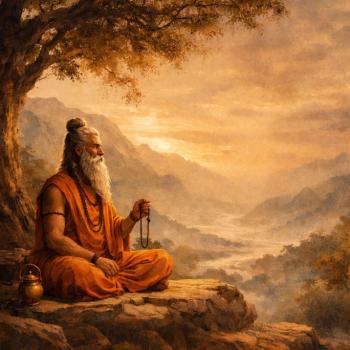
Silence is not the absence of speaking — it is the absence of inner noise. One can speak few words yet remain mentally restless; another can remain outwardly active yet inwardly quiet. Mauna is the stillness in which truth dawns. In silence, we hear the subtle voice of the Self.
31. Santoshta Sarvathā — Content with Everything
Contentment is not laziness nor apathy. It is a gentle acceptance of life as it is, combined with sincere effort toward what can be changed. When we do our best and drop the rest, a soft peace settles. Contentment is a fragrance that spreads from a heart aligned with its purpose.
32. Aniketha — Non-Attachment to Residence or Possessions
This does not mean homelessness; it means inner non-dependence. You may own a home, but the home does not own you. Possessions become burdens only when they become identities.
When the mind is free, everything becomes usable, nothing becomes binding. You move through the world lightly, like a traveler — grateful, not grasping.
33. Sthira Manah — Steadiness of Mind
A steady mind is not rigid — it is centered. It is like a lamp in a windless room, shining without flicker.
This steadiness comes from practice — meditation, reflection, disciplined living. Each time you return the mind to the present, it becomes stronger. Each time you refuse to be dragged by impulse, it becomes steadier.
34. Shraddhā — Faith, Reflection, and Inner Absorption
Shraddhā is not blind belief; it is lived understanding. It is the willingness to study deeply, live sincerely, and grow continuously. Faith gives strength where logic reaches its limit. It keeps the heart steady when life becomes unpredictable.
Shraddhā is the foundation on which all other qualities stand.
35. Surrender to the Supreme (Mām Paramam)
The final quality is surrender — not of effort, but of ego. Here “Me” refers to the indwelling Self — the divine consciousness that witnesses every thought.
Surrender is not defeat; it is freedom. Freedom from fear. Freedom from doership. Freedom from the burden of “I must control everything.”
When the small self bows to the Higher Self, life flows with grace. Every action becomes worship. Every breath becomes peace.
The Final Architecture: A Mind at Peace
These thirty-five qualities are not to be memorized; they are to be lived. Each one polishes a different facet of the personality until the mind becomes transparent, steady, and quiet.
A peaceful mind is not born — it is built. Not through struggle, but through awareness. Not through suppression, but through surrender. Not through perfection, but through presence.
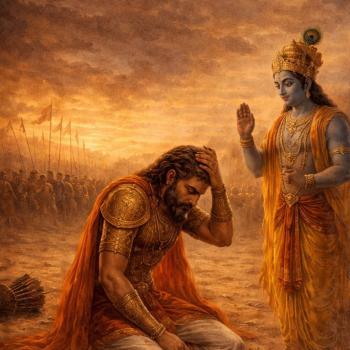
This is the mind of the modern Arjuna — strong, still, centered, and awake.















 Ad-Free & Subscriber Log-In