
This is why raccoons and frogs are not circus animal. You can’t train them. Read more


This is why raccoons and frogs are not circus animal. You can’t train them. Read more

Of course they could have been thinking about Genesis 1, and creation. Read more
Dogs are alright, but they are too high maintenance, unlike cats. Someone should invent Pampers for dogs. But these two pictures encapsulate the joy dogs have exploring and playing with other critters…. though the turtle appears to be freaking out. Read more

Many of the contrasts in Proverbs are based in nature of course, because the sage studies nature and human nature. For example, Prov. 26 begins as follows: “Like snow in the summer, like rain at the. harvest, so honor does not show up for a fool.” The sage has confidence in God, that he will protect his ‘little ones’ and ‘faithful ones’ hence “as a bird for wandering, as a swallow for flying away, so a groundless curse will dissipate,... Read more
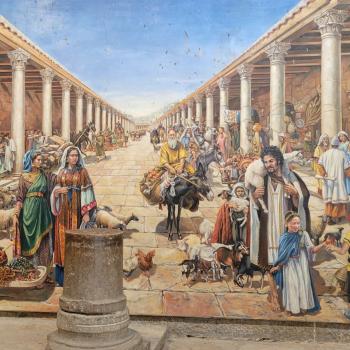
Prov. 25 begins with a statement telling us that the scribes of King Hezekiah (late eighth century B.C.) collected and present some proverbs of Solomon, and as Robert Alter notes, the word ‘too’. here (‘These too are proverbs of Solomon’) means there was a previous collection, and Alter suggests it is in Prov. 10. 25.2-3– “God’s honor is to hide a matter/ the king’s honor to probe a matter….but the heart of kings is beyond probing”. 25.11– “Golden apples in... Read more
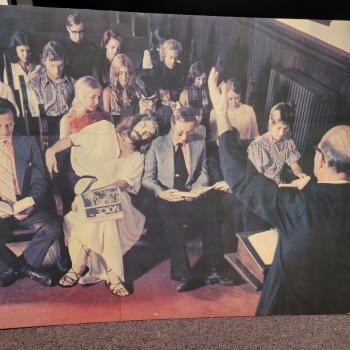
Some of the proverbs involve interesting analogies, for instance Prov. 19.12-13– “A roar like a lion, the wrath of the king, but like dew on the grass, his favor.’ Disaster to his father, a foolish son/ and a maddening drip, a nagging wife.’ Or in some cases personification gets a point across— ‘Wine is a scoffer, hard drink is rowdy; all who dote on them get no wisdom.” (20.1). Sometimes one gets the impression that the author of these proverbs,... Read more

The second half of the book of Proverbs makes quite clear the international character of wisdom literature, and how it was exchanged between countries, or at least between their rulers., for in chapter 30 we have the wisdom of Agur, and in chapter 31 an otherwise unknown king of Massa shows up. What we do know about Solomon’s court is that he did have international relationships (remember the story about the queen of Sheba). That story in 1 Kings 10... Read more

As Robert Alter points out, in Prov. 1-9 wisdom comes in the form of long form poems or didactice discourses, not unlike the discourses in John’s Gospel. By contrast, beginning in Proverbs 10 we have what is called gnomic wisdom– one lines, brief proverbs, enigmatic sayings, not unlike some of Jesus’ famous one liners in the Synoptic Gospels. All four Gospels portray Jesus as a sage, but the Johannine portrait is more like Prov. 1-9, and the Synoptic sort with... Read more
The Woman Wisdom poem in Prov. 8 takes an unexpected turn at the end where we hear: “And I was by him, an intimate, I was his delight day after day, playing before him at all times, playing in the world, His earth, And my delight [was] with humankind…. For who finds me, has found life, and will be favored by the Lord. And who offends me lays waste his life, all who hate me love death.” (this is Robert... Read more
Dr Witherington will be away from his blog from May 23rd to June 9th in Italy and Turkey, and will return to his series on Wisdom literature on June 9th. Read more

Select your answer to see how you score.







 Ad-Free & Subscriber Log-In