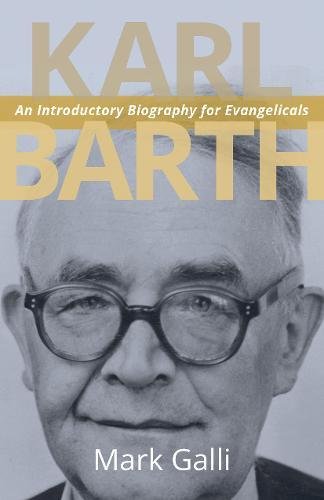
2017-09-26T14:46:17-04:00

Q. When we talk about God’s Word exegeting us, even while we are exegeting it, what would Barth, or evangelicals really mean by this? Merely that the Bible can change our thinking? Or the Bible can shape us morally and ethically in terms of our behavior? A. Both/and. We come to Scripture to find out, not what we think of it, but what it thinks of us. And once we find out it thinks we’re sinner in need of God... Read more

2017-09-26T14:39:53-04:00

Q. It is interesting that Barth was indebted to Anselm’s ‘fides quarens intellectum’ approach to Christian theology. And then there is his insistence that we can know nothing of God unless God reveals himself to us. Anselm would agree, but would add that God didn’t just reveal himself in his Word, though that is paramount, particularly if you mean by Word the living Word=Christ. God also revealed himself in creation, though in the end that revelation doesn’t save or transform... Read more

2017-09-26T14:34:19-04:00

Q. Barth sees the role of Christians as simply witnesses to God’s revelation and God’s work. Sometimes he doesn’t seem to have much of a concept of our being God’s hands and feet to get things accomplished, and sometimes his own actions belie his bold statements about God must do everything and we can only point to his doing it. What do you make of this part of his dialectic? A. What he is calling for, I believe, is humility... Read more

2017-09-26T14:09:36-04:00

Q. Talk to us about the relationship between Bonhoeffer, who saw Barth as something of a mentor, and Barth? If you read the works of both men, they seem very different persons, and to some degree with different theologies too. Bonhoeffer seems more Lutheran for one thing, or non-Reformed, to put it another way, though they certainly were both Biblocentric and Christocentric in their thought. A. Bonhoeffer was Lutheran, yes, no question. I have read a great deal of Bonhoeffer,... Read more

2017-09-26T14:05:40-04:00

Q. In the wake of Charlottesville and the neo-Nazi, white supremacist, KKK rallies (with chants of blood and soil, not to mention anti-Semitic slogans), it seems there are some lessons to be learned from what happened in Germany in the early 30s with the rise of a dictator who wanted to eliminate all opposition and disseminate propaganda to counter ‘fake news’ which in fact was not fake at all. Barth admitted he was late to see the danger of the... Read more

2017-09-26T13:48:42-04:00

Here’s another helpful post by Larry Hurtado. My personal view is that 1 Cor. 14.34-35 is probably not an interpolation, though that is possible. I suggest Paul is just correcting a problem of some married women asking questions in worship during the time of prophecies. Certainly, he’s not banning women from all speaking in church. ‘Abusus non tolit usum’. Paul and 1 Corinthians 14:34-35 by larryhurtado A couple of readers have asked for my comments on the news story on... Read more

2017-09-26T14:01:54-04:00

Q. “Dogmatics is reflection on the Word of God as revelation, holy Scripture, and Christian preaching…its primary object, therefore, is neither biblical theology, nor church doctrine, nor faith, nor religious awarenesss, but Christian preaching as it is actually given.” P. 64. In other words, dogmatics is not scholars talking to other scholars, but theology in service to God and the church— right? I’m struck by the fact that later dogmaticians didn’t much listen to Barth’s definition and its proper audience.... Read more

2017-09-26T13:55:46-04:00

Q. Where does Barth’s Reformed theology really come from if, as you say on pp. 58-59 he knew little of Calvin when he was invited to join the faculty at Gottingen (he had read at least some of Institutes at Marburg)? He certainly didn’t get it from his growing up in a pietistic family did he? And it didn’t come from his education at Marburg and elsewhere either. Was it the trauma of World War that drove him to abandon... Read more

2017-09-26T13:50:54-04:00

Q. How does dialectical theology (the embracing of paradox, or even what seems to be outright contradictions) help us understand Barth himself, as well as his thought? What does he mean by ‘the hidden god’ or even ‘the unknowable God’? A. To me it makes rational sense to embrace dialectical theology—and that, of course, is another paradox! That is to say, we grant that the infinite, uncreated God and his ways are finally unknowable by finite and created creatures. Anything... Read more

2017-09-26T13:40:50-04:00

Q. What has always struck me about that Romerbrief is that apart from the strong emphasis on the absolute transcendence of God (he is not part of creation but qualitatively distinct from it), and therefore the absolute necessity of the divine initiative in revelation for salvation, much less a reconciled relationship with God, this commentary doesn’t much sound like Paul. It sounds like abstract philosophical speculation about God, revelation, etc. Paul doesn’t do such speculation about God’s transcendence. He simply... Read more

Follow Us!


TAKE THE
Religious Wisdom Quiz

What Christian group is known for large-scale evangelistic crusades?

Select your answer to see how you score.


Browse Our Archives