

Most who feel called to ministry dream of big churches. But have you considered the benefits of bivocational ministry in a small congregation?
I know, I know—the thought of bivocational ministry gives aspiring megachurch pastors more than a touch of indigestion. I feel this deeply. When I was in seminary, I had similar dreams of glory. To me, becoming full-time clergy was the only “real” way to be a pastor. So, that’s what I did—and for most of my twenty-six years in the pulpit, it was full-time. That’s why I’m no longer convinced that full-time clergy is the healthiest norm for the church.

Bivocational Ministry—the Healthier Choice
To be clear, I still believe in pastoral calling. Some people are genuinely called and gifted to preach, teach, shepherd, counsel, and help communities follow Jesus more faithfully. I’m not arguing that churches don’t need pastors. I’m arguing against the assumption that the standard for ministry must be a full-time paid profession.
More and more, I think bivocational ministry may often be the better path. This isn’t because ministry is only worth part-time attention, but because it may help pastors and churches to stay focused on the things that really matter. Full-time ministry can create pressures and distortions that pastors might not even recognize themselves. Bivocational ministry is not a magic fix, but it does offer some real advantages.
Here are a dozen reasons why more people called to ministry should seriously consider going bivocational. (I wish somebody had told me sooner.)
1. It keeps pastors connected to ordinary life.
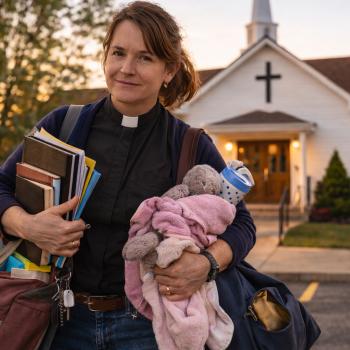
Any pastor will tell you that ministry sometimes feels like living in a bubble. Your life revolves around church culture, congregational problems, and that esoteric language, “Christianese.” As someone who has now worked both inside the church and outside it, I can tell you—they are two different worlds! Bivocational ministry helps pastors stay connected to the real-world pressures their people actually face.
2. It makes ministry more grounded.
A pastor who also works outside the church may preach and lead from a more human and less insulated place. Their teaching may be less abstract, less “churchy,” and more down to earth because it is rooted in everyday experience.
3. It reduces financial pressure and fear.
When a pastor’s entire income depends on the congregation, honesty can get expensive. Even good pastors can feel pressure to avoid conflict, soften hard truths, or keep the wrong people happy. Especially if you have a family to care for, the choice between “telling it like it is” and feeding your kids can be a hard one. Pastors whose main income is from another source enjoy a lot more freedom in their calling.
4. It keeps the churches smaller—and that may be a good thing.
Sure, bivocational ministry may limit growth. No church is going to take over their community if they have a part-time pastor. But who says bigger is always better? In smaller churches, people can actually know one another. Care can be personal. Community can be real. Bivocational pastors have a small enough flock to be able to keep up with them.
5. It pushes back against the corporate model of ministry.
Pastors aren’t called to be CEOs. They’re called to be caretakers of souls. Once pastors get large enough, pastors often stop functioning like shepherds and start functioning like executives. They spend more time managing staff, programs, budgets, and systems than actually caring for people. Bivocational ministry pushes back against that obsession with growth, efficiency, and control.
6. It helps keep clergy ego in check.
Let’s be clear—many pastors are humble people. But there’s something about being the center of attention that can turn even the humblest person into an egotist. When someone is paid to be “the spiritual person in the room,” it can distort their identity. Ministry can become status or performance. Bivocational ministry can help pastors remember that they are not a sacred class. They are ordinary human beings with a calling, not religious celebrities.
7. It resists celebrity Christianity.
The more ministry becomes a career, the more temptation there is to build a platform, grow a brand, and create a polished religious product. That can turn pastors into performers and ministry into image management. Part-time ministry makes that harder, which is probably a blessing.
8. It forces the church to share ministry.
In churches with full-time clergy, people often outsource ministry to the professional. Need care? Call the pastor. Need leadership? Ask the pastor. Need prayer? Let the pastor handle it. Bivocational ministry disrupts that pattern and reminds the congregation that they are there to take responsibility for one another.
9. It recovers the idea that ministry belongs to the whole church.
Many Christians talk a lot about the priesthood of all believers, but full-time clergy can undermine that in practice. No matter how much you give lip service to the equality of all Christians, you are functionally creating a clergy/laity divide. Bivocational ministry reminds the church that ministry is not just the job of the paid professional. It belongs to the whole body.
10. It challenges consumer Christianity.
When a pastor is seen mainly as a paid provider of spiritual goods and services, church members can begin to act like customers. Bivocational ministry can help reframe the church as a community of shared life and mutual care, not a religious business serving clients. Does that mean your church won’t be as attractive to potential parishioners with a consumer mentality? Yep—and I’ll refer you to my above statement, that small churches are a good thing.
11. It affirms the dignity of ordinary work.
A pastor who also teaches school, drives a truck, stocks shelves, works construction, or nurses patients is living proof that God is present in those places too. Bivocational ministry pushes back against the false divide between “sacred” work and “secular” work.
12. It may reveal what a church really is.
If a congregation cannot function without one full-time paid professional holding everything together, that may expose a deeper problem. Is it really a community, or just a weekly production? Bivocational ministry can force healthier questions.
The Pitfalls of Part-Time Ministry
So, there you go. Twelve reasons those who feel called to serve as pastors should consider bivocational ministry. I’m sure you could add a few more to my list. But are there no downsides to bivocational ministry? I’ll explore those in my next article, “What are the Pitfalls of Part-Time Ministry?”
This blog will remain here on Patheos. Patreon is simply a way to support my writing and access optional bonus material (practices, audio, and project notes). Join here: [https://www.patreon.com/cw/GregoryTSmith]
For related reading, check out my other articles:
- “Pastors Under Pressure”
- “Take Our Children to Work Day: Bad for Pastor’s Kids”
- “Pastors, Should You Hang Up Your Robes?”













 Ad-Free & Subscriber Log-In