

Pew Research shows that, across all types of churches, Christianity has been declining since 2007. That’s not breaking news, as the allure of a life with Jesus has been covered in national trades and podcasts and is a frequent topic for pastors on Sunday morning.
The key takeaway from Pew’s 2025 Religious Landscape Study was that the downward spiral in church attendance has been flattening over the past five years.
From 2019 to 2024, the Christian share of the adult population has been relatively stable, hovering between 60% and 64%.
The largest subgroups of Christians in the United States are Protestants – now 40% of U.S. adults – and Catholics, now 19%. People who identify with all other Christian groups (including the Greek and Russian Orthodox Churches, the Church of Jesus Christ of Latter-day Saints, Jehovah’s Witnesses and many others) total about 3% of U.S. adults.
That note from Pew is particularly important, given that another study brings us together today. Ryan Burge’s analysis of the General Social Survey via his ‘Graphs About Religion‘ shows that Protestant churches are the only type of church that is thriving today and experiencing growth.
Yes, really.
This isn’t “Protestant” as in “make-your-own-clothes-and-not-cut-your-hair” church, but the “led-of-the-Holy-Spirit-and-people-on-fire-to-serve-God” church. The numbers don’t lie. The days of 75-minute church services to get home in time for the football game may be coming to an end.
It seems Jesus is getting more of a priority these days. Doesn’t that hit close to home?
Before we learn why being alive is the way to thrive, I encourage you to stay aware of other faith-based issues that hit “close to home.” Subscribe to our free newsletter to stay informed about what’s happening in the Church and how real Christians can help defend the love and work of Christ.
Active vs. Passive

When it comes to every individual, do we really all worship the Lord? Do we lay our sins at His altar and ask for forgiveness of all our sins? Sure, this is a nation rich in Christian heritage, but how’s that working out? Religion is more segregated than ever before, and a relationship with God tends to be the ire of a joke series more than someone in love with Jesus.
To help understand Christendom, there are “active” and “passive” denominations.
Passive denominations have a type of church. They are rich in ritual, tradition, and custom. The pomp and circumstance are experienced through age-old hymns, sacraments and rites of passage. There is little emphasis on evangelism, building the universal church, or having a mutually beneficial relationship with Jesus Christ.
The sacraments are key to maintaining piety and a proper walk with God. There’s a homily meant to encourage others, but not necessarily to inspire action. Stand up, sit down, sing a song, and out you go. Now, let’s be clear: If any church ministers the life, death, burial and resurrection of Jesus Christ—and that believing in that is the only way to heaven to be with God in paradise—this is a Christian church.
And can we stop with the “What religion are you?” Followed by, “I’m Methodist.” Please?
Passive denominations would be classified as:
- Catholic (although many Protestants question their qualification status)
- Anglican
- Methodist (e.g., UMC not AME)
- Presbyterian
- Lutheran (e.g., ECLA, LCMS)
- Episcopalian
- Wesleyan
- Church of Christ
- Adventist
- ‘Quakers
- Mennonite
- Brethren
- Reformed
- Anabaptist
- Nazarene
- Disciples of Christ
- Orthodox (e.g., Greek, Russian, Serbian, Romanian, Coptic, Armenian)
- and even the Amish
(NOTE: Just because a denomination is passive, it doesn’t mean it can’t be one that originated following the Protestant Reformation.)
Now, the active denominations are the type of church that most people consider when the thought of “today’s church” comes to mind. Church becomes a post-Acts Chapter 2 celebration. The Spirit of God is cherished. Praise reflects modern musical trends or deep in the throes of worship. Congregants are welcomed—and often, expected—to shout acceptance of what’s being shared from the pulpit.
Many of God’s promises, Jesus’ commands and the works of the Holy Spirit are shared and anticipated to take place today. Think of people being active in their seats and with their relationships with God, and you have an idea what denominations are included.
Active denominations would be classified as:
- Baptist (e.g., Southern, National, American)
- “Seeker-Sensitive” (e.g., Christian Church, Community Church, Bible Church)
- Holiness
- Assemblies of God
- Church of God
- Foursquare
- AME
- Church of God in Christ (i.e., COGIC)
- Pentecostal (and UPC)
- “Non-Denominational” (e.g., Word of Faith, Spirit-Filled, Evangelical, Charismatic, Revival)
(NOTE: Yeah, that’s not a redundant typo. “Non-denominational” has become a denomination because it’s used as a means for separatist thinking)
The Winner of the Next Generation is…
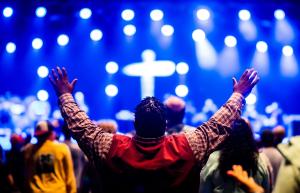
C’mon. What do you think? If you can fall asleep in a pew, kids aren’t going to that church.
However, it’s vital that the adults of those kids understand one primary aspect of this survey: Size does not matter when it comes to the type of church.
Typically, many megachurches (with 2,000 or more members) have big budgets, venue lighting, arena speakers, skilled musicians, and rock-star preachers. But, some of the most skilled preachers and singers can be found in an “old rugged cross” church where “Amen” is more of a question than a statement. (Amen, somebody?)
Megachurches, and all of their technological nuance, understand how to create FOMO—the fear of missing out. How many passive churches are catching people up on YouTube with “What you missed last Sunday” shorts? (Let alone, how many people going to a passive church even care?)
According to Ryan Burge’s analysis of General Social Survey data, nondenominational Christians made up about 5% of U.S. Protestants in 1972. Today, they make up roughly 30%. Pew’s 2025 Religious Landscape Study puts the number lower, at 18% of Protestants, largely because it uses a stricter definition. Either way, nondenominational churches now make up a major share of American Protestantism. (source: Relevant)
“Well, I have no clue what church it is when it looks like an office building and has a generic name with a cute brand.” According to the primary study, “Many of the country’s fastest-growing nondenominational churches are functionally charismatic or continuationist, even when they don’t use Pentecostal labels.”
People want to belong to a place that looks like them. Ever heard that before? Martin Luther King, Jr. famously opined, “The most segregated hour in America is 11:00 a.m. on Sunday morning.”
While there will always be a note of that in today’s churches, it’s more about comfort, heritage, and preference than segregation. Go to many of the active and passive churches, and you’ll find a potpourri of American flavor. Yet, most of that preference is focused on a high-octane and entertaining church that features a microcosm of today’s diverse community.
“The broader center of gravity inside American Protestantism appears to be shifting toward churches that are less institutional, less tied to denominational identity and more centered on experiential, Spirit-filled expressions of faith.”
Relationship Not Religion
Spend any time in any church, and you’ll discover what countless thousands have confronted before you — people will let you down.
- “Oh, this pastor is amazing”…and they have a calamitous fart-and-fall-down out loud scandal.
- “Oh, this church gets me”…and they attract people who end up being sanctimonious, hypocritical, or those oddballs licking the floor of the gymnasium.
- “Oh, this denomination is the best”…and that’s the central focus in the latest ABC News investigative report.
Active or passive. Black or white. Male or female. It doesn’t matter. Put your faith in people, and your faith will get popped like a balloon.
Sometimes, it’s a shame that the church is full of people because they are the sorriest examples of what it means to be a Jesus-loving, Bible-reading, spirit-filled follower of Christ. If the church were full of French Bulldogs, everyone would want to be saved! And that brings us to the path the younger generations are taking and why only a certain type of church is growing.
They want to be with Jesus personally, not corporately!
That’s it. Some folks will even find a corner in a magnamious megachurch that streams online, sells coffee, and has a youth church that feels like a nightclub. That corner isn’t where the barflies wander; it’s where one person goes to worship Jesus.
Church used to be a family experience. Those days are over because of the fragmented idea of what family means. People go to church because that’s where people go. Individuals worship the Lord because that’s what their spirit desires. And that’s when it clicks: Connecting with Jesus is no longer about religion; it’s all about relationship.
The younger generation has made it clear. They want to wear what they want, listen to what they want, chill with who they want, and be a genuine Christian the way no one older wants.
Ritual and tradition don’t permit that kind of free will. Some Protestant churches run by elder boards full of “Boomers” don’t either. People find comfort where they’re allowed to be themselves. And typically, that’s where they find the Holy Spirit, zero judgment, and limited boundaries.
It’s not always a recipe for success, but it has made more authentic disciples than not. If that isn’t your church, can it be? If that is your church, should it be?
Do you have that answer? If not, wait a while. The kids will let you know.













 Ad-Free & Subscriber Log-In