

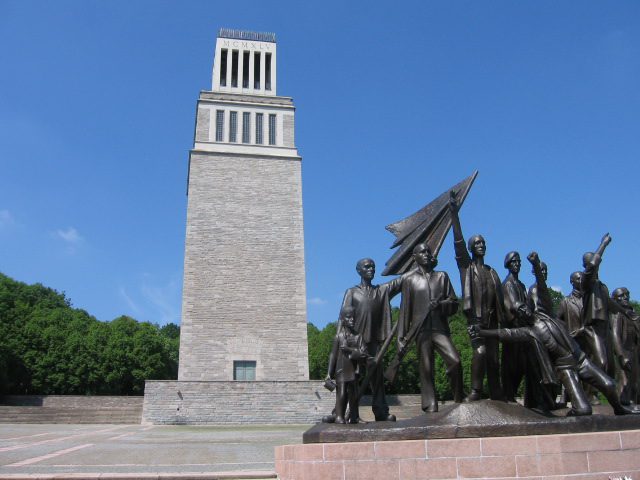
“If only it were all so simple! If only there were evil people somewhere insidiously committing evil deeds, and it were necessary only to separate them from the rest of us and destroy them. But the line dividing good and evil cuts through the heart of every human being. And who is willing to destroy a piece of his own heart?” (The Gulag Archipelago 1918–1956)
I continue to be hammered over at the Peterson Obsession Board for these two recent blog entries: “I Can Easily Imagine Worse Deaths” and “In which I once again object to certain rhetoric.” Supposedly, I admired the recently deceased Dr. James Dobson because he was a culture-warrior political ally of mine. They say, though, that I should have studied Dr. Dobson’s works more carefully before I came to his defense because he was actually an evil man who ruined innumerable lives. (Curiously, despite my supposedly deep affinity with him, I never actually read anything by him and I never listened to him.)
Opinions vary wildly about Dobson’s effect on families and parenting. Some plainly hate him but, just as plainly, others respect him and consider his legacy a good one. He was a controversial figure — more so than I had realized (because, as I’ve said, I never actually followed him) — and it’s quite easy to find opinions on either side.
So why, being as ignorant about him as I am about everything else, did I rise up to defend him?
I didn’t, actually. Neither Dr. Dobson’s recommendations about marriage and parenting nor James Dobson himself were the principal focus of those two blog entries, any more than the principal impetus behind my slightly earlier post “On Dealing With “Scum” Who’ve Entered Our Country Illegally” was a sudden personal desire to expound on issues in United States border policy.
My real concern was the use of dehumanizing words like scum, bacterium, imbecile, monster, toad, and filth for a human being. My real concern was seeing people metaphorically invoke sexual violence upon a person who held a different opinion, rejoicing in his death, and hoping that, if there is a hell, he’ll be tortured in it.
One of my many areas of profound discomfort with the MAGA movement is its tendency to use extreme language for those of whom it disapproves (e.g., traitor, treason, scum, and vermin, calls for imprisonment and even execution, and so forth). I myself have strong social, economic, and political opinions. In fact, I’m a committed political conservative with long-held free market views and a tendency toward libertarianism. Most social and political controversies, however, simply aren’t battles between the Sons of Light and the Sons of Darkness, and it’s extraordinarily harmful to view them in terms of total war.
There’s a Latin aphorism that comes to mind in thinking about some of the really vicious things that have recently been said about James Dobson: De mortuis nil nisi bonum dicendum est. Literally rendered, it means “Of the dead nothing but good is to be said.” It’s commonly abbreviated as Nil nisi bonum and is often freely translated as “Don’t speak ill of the dead.” The notion goes back originally to the sixth-century Chilon of Sparta, who was one of the famous “Seven Sages” of ancient Greece: τὸν τεθνηκóτα μὴ κακολογεῖν, he is said to have advised. “Of the dead do not speak ill.”
The sentiment probably goes too far — I’m not at all reluctant to criticize people like John Wayne Gacy and Joseph Stalin and the leaders of 1930s and 1940s Germany, for example; they deserve no blanket pardon simply because they died — but there seems to be an intuitively obvious bit of wisdom in it for most ordinary cases. After all, death puts an end to earthly character flaws and, anyway, the dead aren’t around to defend themselves. So a bit of charity is never out of place. And a bit of self-interest, as well: We should extend charity to others, where possible, because sooner or later we’ll want it for ourselves.
That is my issue. I have nothing invested in Dr. James Dobson himself. I neither encountered nor took his parenting advice. Whether it was bad or good, overall, I do not know. (I’m inclined to doubt that it was so uniformly and catastrophically wicked as it has been portrayed in the more apocalyptic online comments about Dobson, both because the breathlessly angry comments that I’ve read seem overdone and too partisan and because the praise of Dobson that I’ve read comes from people who seem neither obviously insane nor transparently depraved.) But I do heartily dislike the current fashion of demonizing those with whom we disagree. (And not merely because, in certain quarters, I myself have been a victim of relentless demonization over the past couple of decades.)

My wife and I drove up to Sandy yesterday, at the southern end of the Salt Lake Valley, and took in a late-afternoon performance of the musical Footloose at the Hale Centre Theatre. It’s not my favorite musical or play, but we enjoyed the performance. They always do a really good job. This was our second attempt to see the play. On the first occasion, our right rear tire literally blew up — presumably we had run over something on the freeway — and we spent the next two hours or so sitting on the right shoulder of I-15. The folks at the Hale Centre Theatre box office were extraordinarily kind in giving us tickets for yesterday’s matinee. They didn’t have to do that; the tire explosion wasn’t their fault or their responsibility.
Given my supposedly reactionary social and political views, by the way, I suppose that the fictional Footloose town of Bomont (prior, at least, to the arrival in it of Ren McCormack) ought to rank right up there with the fictional town of Stepford, Connecticut, as my idea of an ideal utopia. But it doesn’t.














 Ad-Free & Subscriber Log-In