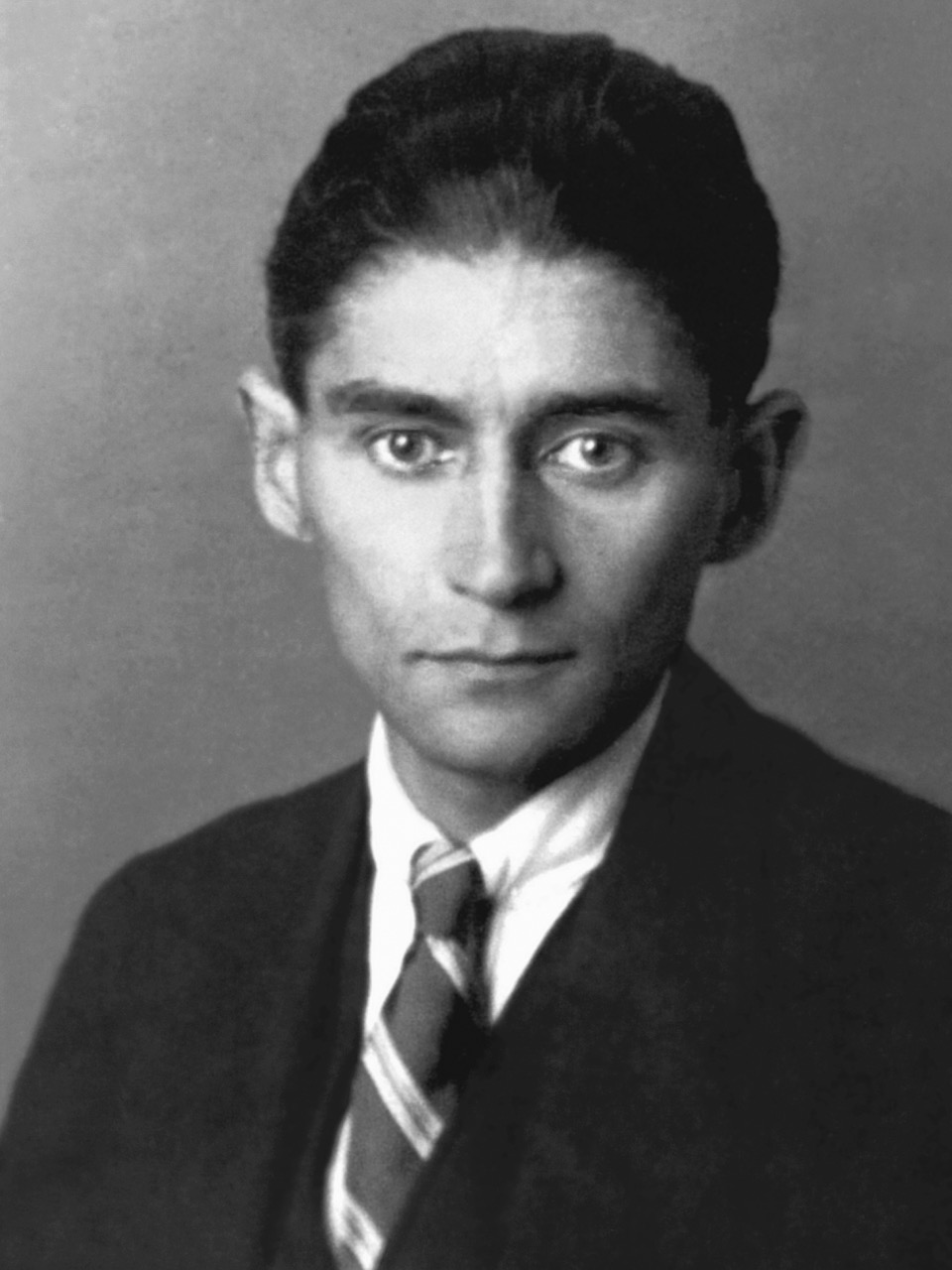
The last known photograph of Franz Kafka (1883-1924), probably taken around 1923 (Wikimedia Commons public domain photograph)
I’ve indicated here more than once that I try to make my blog practically useful to its readers by offering occasional comments on such things as movies, plays, pieces of music, restaurants, and travel destinations. Here, for example, is a short but important video about an airport that should definitely be avoided: “Kafka International Named World’s Worst Airport” The place seems almost Kafkaesque, doesn’t it?
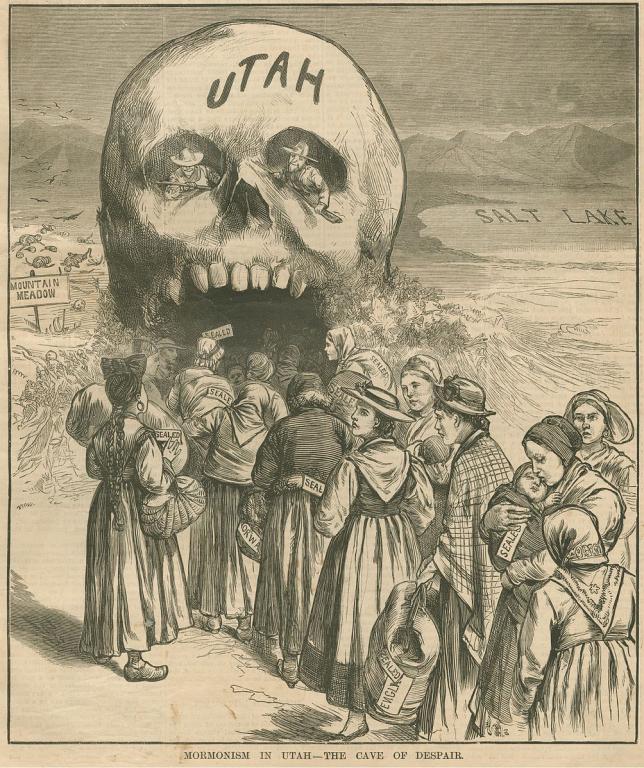
From “Frank Leslie’s Illustrated Newspaper” (4 February 1882)
This isn’t the first time that Mr. Bannon has made harsh comments about Latter-day Saints. I’m aware of at least one other occasion: In 2017, while campaigning on behalf of Alabama’s Judge Roy Moore for the United States Senate — an admirable person and an admirable cause if ever there was one! — he unloaded on us:
Washington Monthly (6 December 2017): “Steve Bannon Disparages Mormon Missionary Work: He suggested that Mormons who do missionary work in wartime are cowards who lack honor and integrity.” (I’m guessing that, among other things, Mr. Bannon was implicitly contrasting the Romney family’s lack of military history with Donald Trump’s distinguished record of military service.)
Let me note here, by the way, that, when my wife and I returned to Utah last Saturday from Oregon, we saw scores and scores of vehicles headed southward on I-15 between the Salt Lake Valley and Orem that were festooned with American (and various MAGA) flags. They were mostly traveling in the right lane. The vehicles were, I assume, going to the campus of Utah Valley University for some sort of memorial service or rally connected with the Charlie Kirk assassination. Moreover, there were people on several of the overpasses en route who were waving American flags. And, on the University Parkway overpass, which crosses I-15 toward the campuses of both Utah Valley University and Brigham Young University, we saw scores of American flags that were mounted on both sides of the bridge.
Steve Bannon is some sort of Catholic, not an Evangelical Protestant, so he’s not necessarily representative of the MAGA movement, and probably not of what can broadly be called “Christian nationalism.” (Although Judge Roy Moore, whom he supported for the Senate by bashing the Latter-day Saints, certainly is.). But members of the Church of Jesus Christ of Latter-day Saints who are sympathetic to the ideas of one or both of these cultural and political movements should be clear and without illusion about at least one thing: Many “Christian nationalists” and many of those who are connected to MAGA are, like Mr. Bannon, not especially enthusiastic about the Restored Church and not entirely welcoming toward Latter-day Saints themselves. We Latter-day Saints might find that a government predicated on “Christian principles,” as such folks understand them, would not be friendly to our temple-building, our chapels, our full participation in public life and electoral politics, or even, simply, to us. It’s happened before. It’s something to think about.
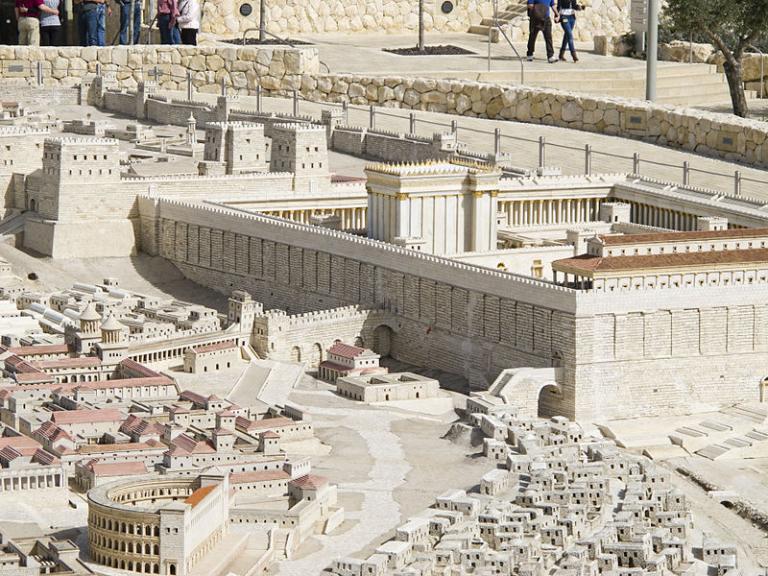
The temple of Jerusalem as it appeared in 66 AD, about three and a half decades after the crucifixion of Jesus and just prior to the Roman destruction of temple and city during the First Jewish Revolt. This wonderful outdoor model of late Second Temple Jerusalem stands on the grounds of the Israel Museum. (Wikimedia Commons public domain photograph)
Part of our book chapter reprint series, this article originally appeared in Seek Ye Words of Wisdom: Studies of the Book of Mormon, Bible, and Temple in Honor of Stephen D. Ricks, edited by Donald W. Parry, Gaye Strathearn, and Shon D. Hopkin. For more information, go to https://interpreterfoundation.org/books/seek-ye-words-of-wisdom/.
“On Mount Sinai, Moses received the command “Remember the Sabbath day to keep it holy. Six days shalt thou labour, and do all thy work: But the seventh day is the sabbath of the Lord thy God; in it thou shalt not do any work” (Exod. 20:8–10). In the ensuing three millennia, Jews and Christians have sought, to varying degrees, to keep this commandment alive in their communal and individual lives. . . In this paper, we will examine some of the ways Jews in the late Second Temple period (200 BC–AD 70), who also struggled with applying a command that was “ancient” even in their day, strove to find meaning for their time and circumstances.”
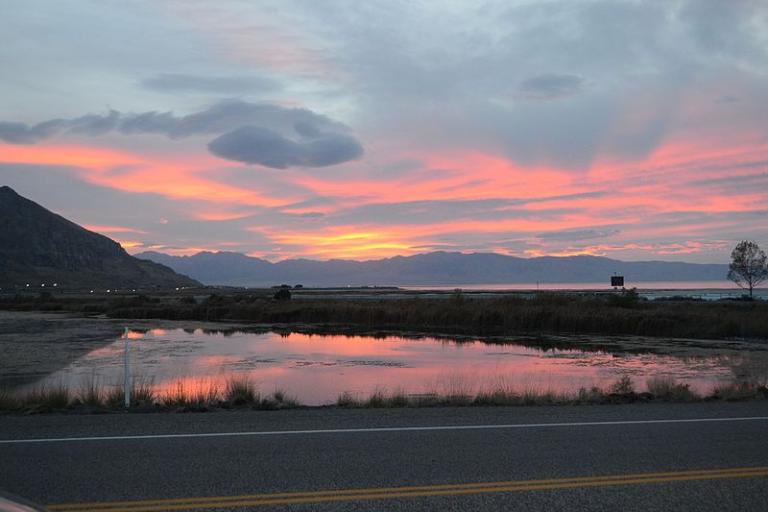
Sunset at the Great Salt Lake (Wikimedia Commons public domain image)
As it happens, I’m currently reading a new book by Robert A. Rees that’s titled Imagining and Reimagining the Restoration. It includes a chapter (“Imagining a Whole and Healthy Planet: Stewardship in Light of Matthew 25”) that I’ve already read and that is, in substantial part, devoted to the question of saving the Great Salt Lake. So I took special notice of the article by Bob Rees that appeared in the Deseret News on 17 September 2025, yesterday, the same day on which the article to which I linked just above also appeared: “Opinion: A citizen symphony for saving the Great Salt Lake.” It’s worth a look.














 Ad-Free & Subscriber Log-In