


Up yesterday — sorry! — on the website of the Interpreter Foundation: The Interpreter Foundation Podcast — December 15, 2025 — “Christmas, the Matchless Gift of God’s Divine Son”: It’s a discussion between Martin Tanner and Terry Hutchinson.
And here is my Christmas music selection for the day: I’ve chosen a thrilling Nigerian carol, Betelehemu, sung in the original Yoruba by — of all people! — the Tabernacle Choir at Temple Square: https://www.youtube.com/watch?v=N9gXWuqZcNw
Awa yo, a ri Baba gb’ojule (We rejoice for we have a trustworthy father)
Awa yo, a ri Baba f’eyin ti (We rejoice for we have? a dependable father)
(repeat)Ni bo labe Jesu? (Where was Jesus born?)
Ni bo labe bisi? (Where was he born?)
(Repeat)Betelehemu iluwa la, (Bethlehem, city of wonder)
Ni bo labe Baba o daju (That is where Father was born)Inyi, inyi, furo (Praise, praise, be to Him)
Adupe fun o, jooni, (We thank you, today)
Baba olo reo (Gracious Father)
It’s a spectacular crowd-pleaser. Listen to and watch the entire thing.
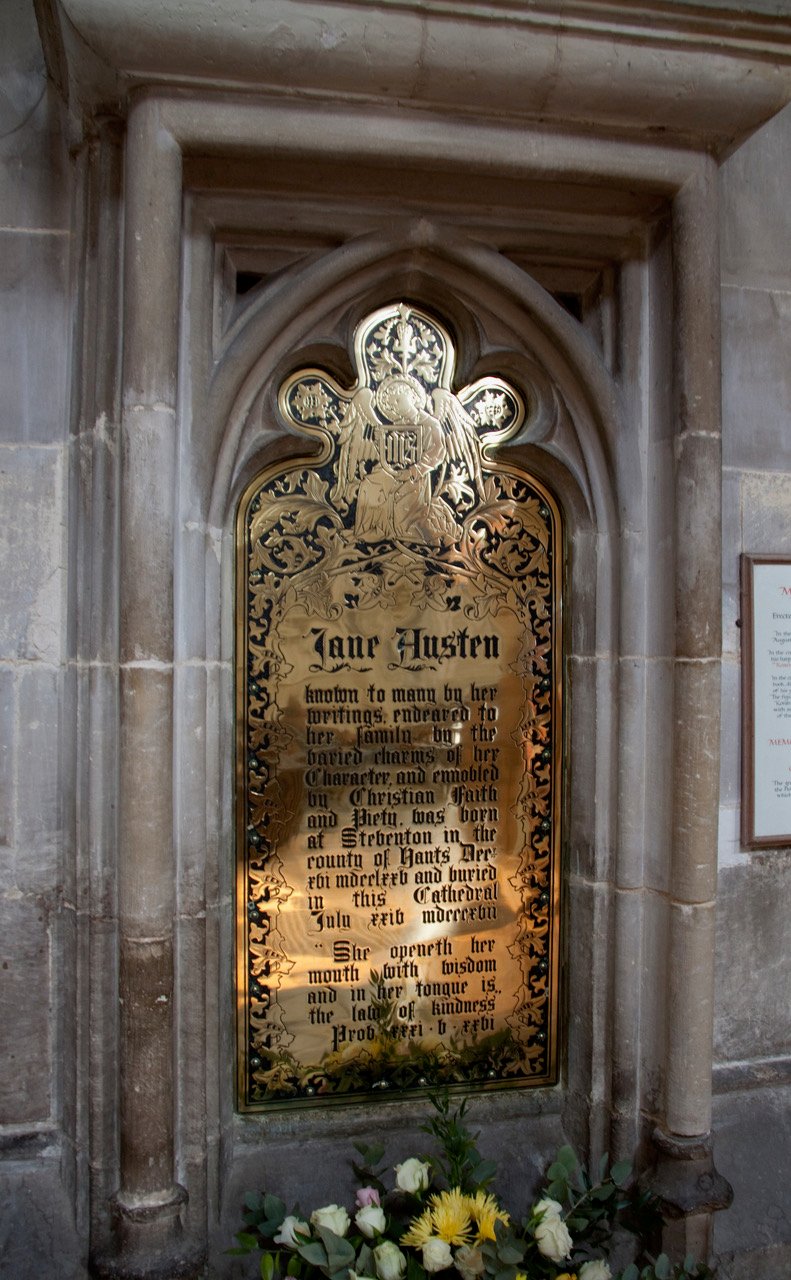
Last night, in honor of Miss Jane Austen’s 250th birthday, my wife and I watched the 1996 television-movie version of Emma, starring Kate Beckinsale and Mark Strong. We’ve seen it before, but not as often as we’ve watched a couple of the other versions. So it was relatively fresh to us, and, as always with Austen-based films, we enjoyed it.
The night before, anticipating Jane’s birthday, we watched Sense and Sensibility: A Modern Retelling (2025), which stars Camrey Bagley Fox (our Emma Smith) and two of her sisters. It’s a local Utah production that Camrey co-wrote and co-directed, involving her family and friends. We were invited to its premiere a while back but, owing to a conflict with a long-scheduled medical procedure for my wife, we were unable to attend. So it was nice to finally see it. It’s available online.
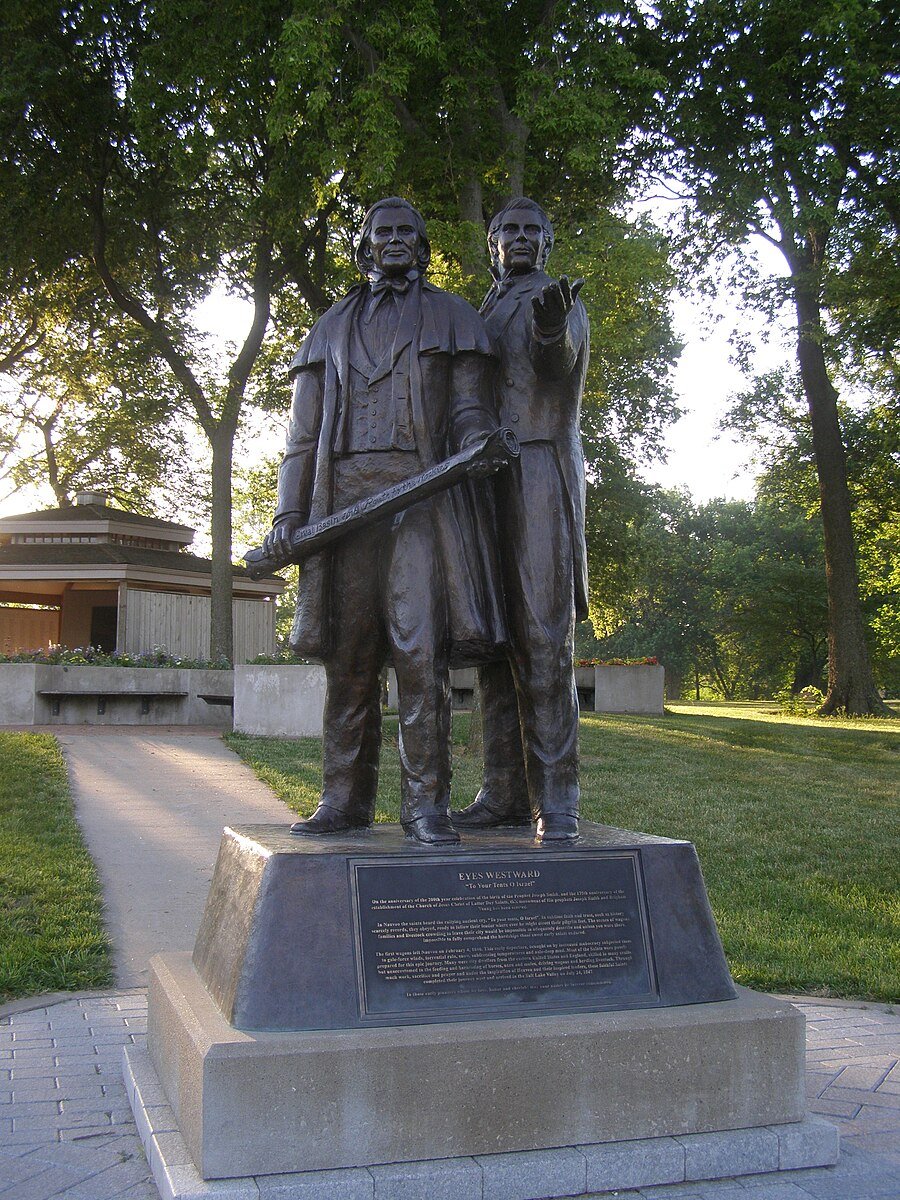
I’ve lately been thinking a little bit about what I call “polygamy denialism,” the claim that Joseph Smith never practiced plural marriage but, instead, opposed and fought it.
Notwithstanding what a pseudonymous critic recently (and with clinical accuracy) described as my lack of self-awareness, rationality, and empathy, I understand that even many believers in the prophetic mission of Joseph Smith find polygamy difficult, and I fully understand why they do so. Especially women, for obvious reasons. It’s something that faithful Latter-day Saints must face and with which they must negotiate their own modus vivendi.
But the evidence for Joseph having taught and practiced plural marriage seems to me overwhelming and beyond reasonable dispute. There’s good reason for the fact that, so far as I’m aware, not a single academic or professional historian who has given the matter any serious attention denies Joseph’s central role in the beginning of Latter-day Saint plural marriage. Moreover, the lengthy and important recent article by Paul Fields, Steven T. Densley Jr., Matthew Roper, and Larry Bassist (“Historical and Stylometric Evidence for the Authorship of Doctrine and Covenants 132,” in Interpreter: A Journal of Latter-day Saint Faith and Scholarship 67 [2025] : 1-70) has just significantly raised the evidentiary bar that polygamy denialists must clear if they hope to win even the slightest credibility for their case.
A corollary to polygamy denialism in the minds of some of those who espouse it is a strong tendency to blame Brigham Young and the early Quorum of the Twelve Apostles for the Church’s adoption of polygamous marriage — a position that has even led a few to the extreme accusation that Brigham Young, rather than the Carthage Grays and such rabble-rousing demagogues as Thomas Sharp, was behind the murder of Joseph and Hyrum Smith. Moreover, they suggest that he employed as his actual hitmen the apostles Willard Richards and John Taylor, the latter of whom, of course, later became the third president of the Church. And what was the supposed motive of the conspirators? Motivated by lust, they wished to see polygamy established among the Latter-day Saints. Accordingly, they needed to eliminate the principled opposition of the Smith brothers to such flagrant immorality.
I regard this point of view as flatly mad. But I also see it as toxic and dangerous. Once Brigham and his alleged apostolic co-conspirators have been judged guilty of imposing plural marriage upon the Church, of what other heresies and innovations — that is, of what other elements of the Church and the Restoration with which the accuser feels uncomfortable — might they not be found culpable? And, if they are viewed as grossly immoral and shamelessly dishonest (and perhaps even murderous), why should believers today pay any attention to them or, for that matter, to their chosen lineal successors? The apostolic keys held by Presidents Russell M. Nelson and Dallin H. Oaks, by every apostle and every president of the Church since 1844, were transmitted through the Quorum of the Twelve over which Brigham Young presided. My priesthood lineage runs through that quorum, and I suspect that the lines of authority for virtually every other holder of the priesthood in the Church do, as well.
In other words, I object to polygamy denialism not only because I think it plainly historically false but because I see it as leading, rather logically, to apostasy and schism. Indeed, I know of cases where it already has. Those who argue against the legitimacy of the Twelve in 1844 and 1845 are, if they are active members of the Church, felling the tree in whose branches they sit.
One of the recurring sub-themes of our Becoming Brigham series, which we anticipate launching sometime just past the middle of January 2026 — in other words, next month — is the remarkable loyalty and devotion of Brigham Young toward Joseph Smith. We didn’t impose this sub-theme on the project; it emerges naturally and, I would say, inevitably from the history that we’re recounting.
Brigham was known, and with reason, as “the Lion of the Lord,” but he was notably submissive to one man, the Prophet Joseph Smith. Illustrations of this are numerous, remarkable, and impressively consistent, to the end of Brigham’s life. The suggestion that Brigham Young opposed Joseph on plural marriage — let alone that he conspired to kill Joseph and Joseph’s brother — seems to me not only demonstrably and risibly false but, frankly, obscene. It could not possibly be leveled against a man who more clearly doesn’t deserve the accusation.
I am not saying that Brigham Young was perfect. Apart from the Lord Jesus Christ, I wouldn’t accuse any human being of perfection. Brigham was a flawed man with human limitations and weaknesses — as am I and as is everybody else, including those who denigrate him. But I’ve grown tired of people who seemingly cannot mention him without alluding to his having been flawed.
Such mentions have begun to remind me of what are called, in the Homeric poems, “ornamental epithets” (e.g., “rosy-fingered Dawn,” “lovely-haired Briseis,” “Odysseus of the many counsels,” “the wine-dark sea,” “swift-footed Achilles,” “grey-eyed Athena,” “leafy Zakynthos,” and “Agamemnon, lord of men.”) In Homer and similar poets, such repetitive epithets were used not just for their imagery and their beauty — I think that ῥοδοδάκτυλος Ἠώς (“rosy-fingered dawn”) is genuinely beautiful and evocative — but helped to fill out dactylic hexameter lines with ready-made, metrically useful phrases, serving as building blocks for bards that made composition and recollection easier in performance. In the case of Brigham Young, by contrast, the repetitive intonation of his “flawedness” yields and furthers the misimpression that he was a uniquely bad man. And that simply isn’t fair, just, or true.








 Ad-Free & Subscriber Log-In