

New today on the barely-still-breathing website of the Interpreter Foundation: Conversations with Interpreter: Jeff Bradshaw: “Two New Books on Abraham and Sarah”:
Jeffrey M. Bradshaw discusses two new commentaries on the life and ministry of Abraham, Sarah, and their families. The first of these books is part of his commentary series on Genesis, In God’s Image and Likeness, written with co-authors (and Conversations with Interpreter guests) Matthew Bowen and John Thompson. The second book is a shorter version called Look unto Abraham and Sarah. In this episode, Dr. Bradshaw explores the advantage of a commentary format for Latter-day Saints, pointing ways in which this format can help us become richer readers of the scriptures. He also discusses how the Abrahamic Covenant impacts women and men in our desires to become more like God and to follow the covenant example of not only Patriarchs like Abraham, but also Matriarchs like Sarah and Hagar.
More information on Volume 3 of In God’s Image and Likeness is available here: https://interpreterfoundation.org/books/in-gods-image-and-likeness-3, while more information on Look unto Abraham and Sarah can be found here: https://interpreterfoundation.org/books/look-unto-abraham-and-sarah.
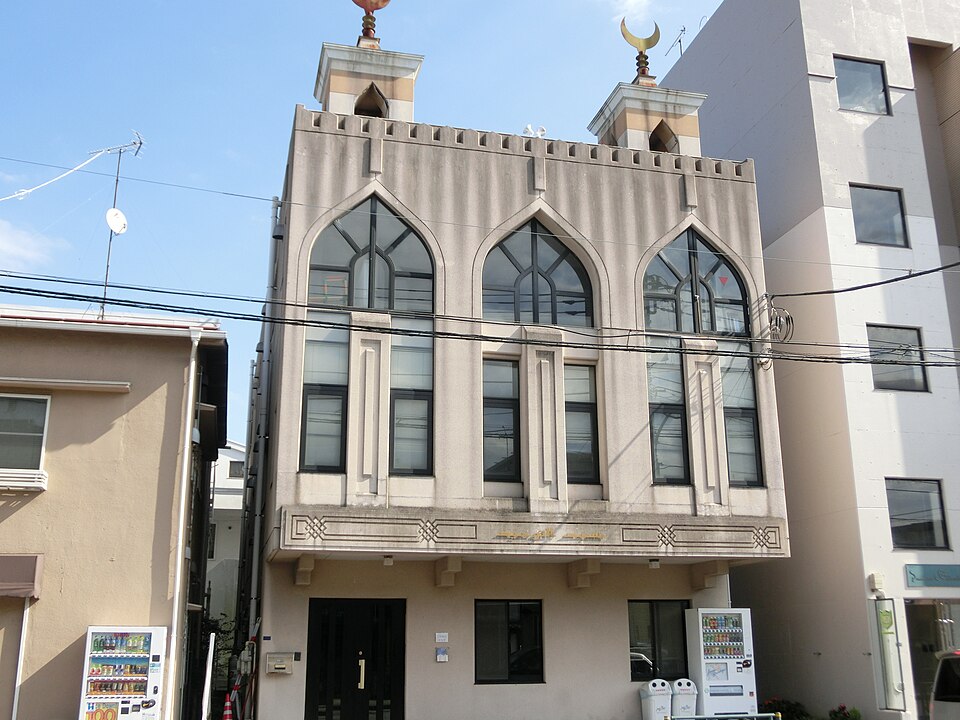
日本語: アルタウヒードモスク八王子
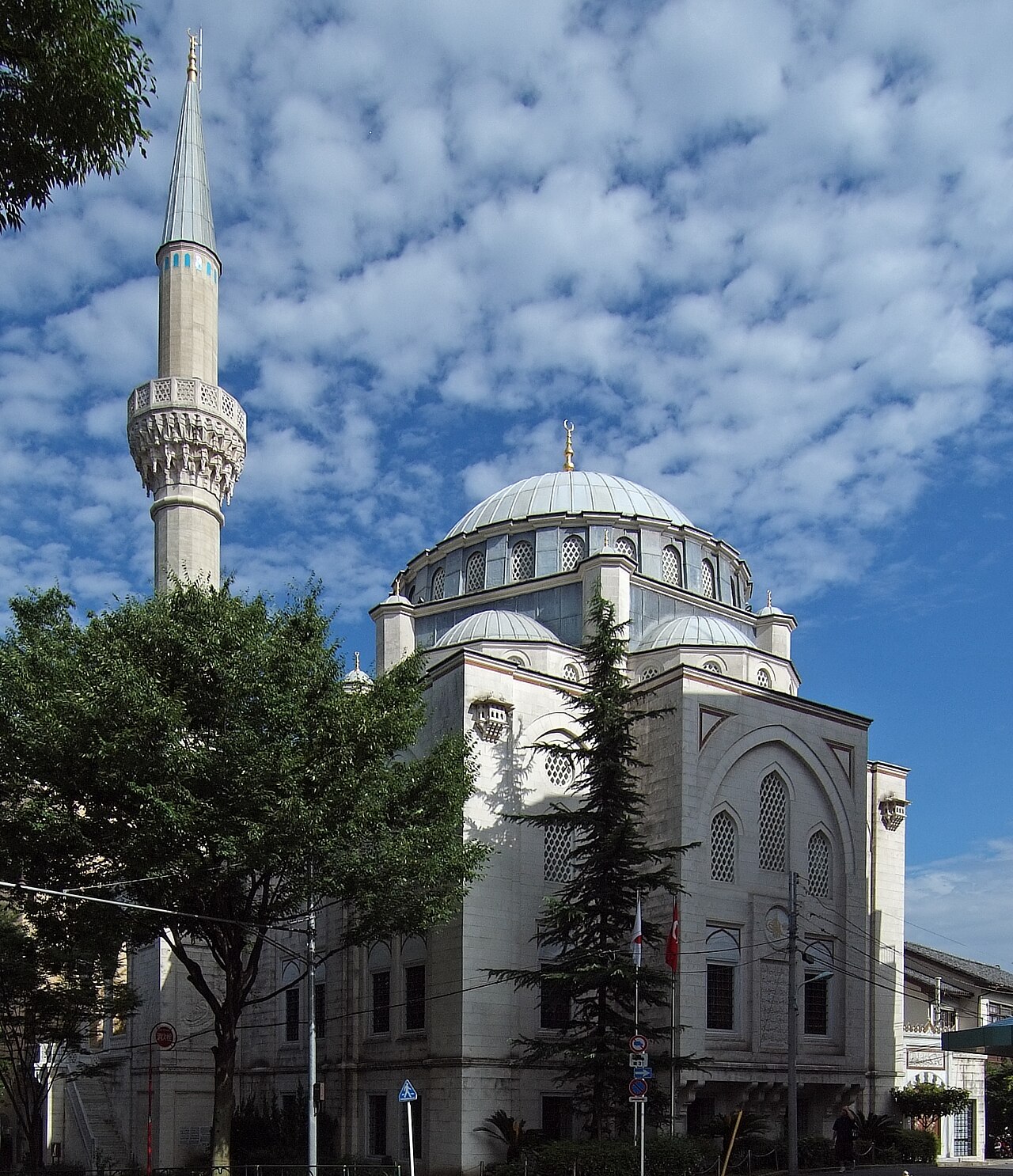
While dumpster diving the other day (for reasons obscure even to me) in a seriously and very unpleasantly anti-Muslim location online — see “At Least You Can Spray for Cockroaches” — I came across claims that Japan and the Japanese have been wiser than we in America have been with respect to Islam and Muslims. In what way? The Japanese have, so the claims go, banned the construction of mosques, and they have forbidden halal food and public Muslim prayer. But none of these claims is true. Article 20 of the Japanese constitution guarantees freedom of religion to all. (For some reason, there seem to be many easily-refuted similar claims regarding Islam, Muslims, the Japanese, and Japan that are circulating online: See, from Reuters, “Fact Check: Online list of Japan’s ‘restrictions on Islam’ includes false claims.”)
As of late 2024–2025, the Muslim population in Japan was estimated to be somewhere between 350,000 and 420,000, which would represent roughly 0.3% of the country’s total population. The Islamic community is said to be rapidly growing and to be composed, primarily, of foreign residents from Indonesia, Pakistan, and Bangladesh (about 90%), in addition to roughly 46,000–50,000 Japanese converts. These Muslims in Japan are served by about 115 mosques, marking a significant increase from just fifteen back in 2000 or so.
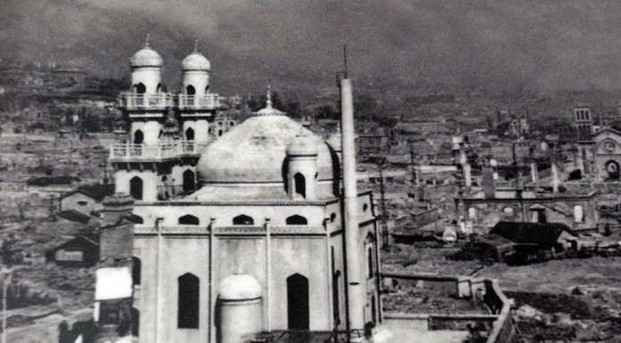
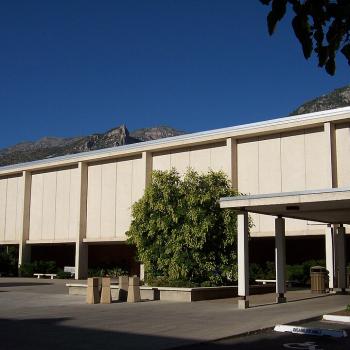
In honor of the supposed (and supposedly admirable) Japanese no-mosques policy, the theme of my illustrations for today’s blog entry is Japanese mosques.
And, while I’m at it, I’m proud of this recent news story from southern Utah: “LDS institute opens doors to host Ramadan gathering in St. George”
Incidentally, in that same odoriferous dumpster of anti-Muslim bigotry where I was browsing, horrified, the other day, two newly posted items caught my attention just now: Supporting the unconstitutional idea that Muslims should be banned from holding public office, one commenter irrelevantly points out that “This is not a Muslim country.” (It’s also, I would note, not a Catholic country, nor a Jewish, Latter-day Saint, Buddhist, or Methodist one.) Another observes, in that same context, that the Second Amendment to the Constitution offers a way to get rid of “disease.” You’ll perhaps remember the Second Amendment. It reads, wholly and in full, as follows:
A well regulated Militia, being necessary to the security of a free State, the right of the people to keep and bear Arms, shall not be infringed.
I’m appalled, horrified, and deeply disheartened by such examples of ignorant religious bigotry and fear, and I caution any Latter-day Saint who might be tempted by political ideology to join the anti-Islamic bandwagon that such language (“disease,” in this most recent case) can easily be turned, and has historically been turned, against believers in the Restoration. In the nineteenth century, Latter-day Saints were variously described as “diseased,” a “plague,” a “degenerate” threat, and a “foreign contagion.” This style of rhetoric was deployed to justify both extralegal violence and tyrannical legal action like the 1838 Missouri “extermination order.”
Among the seventeen Latter-day Saint left dead in Missouri as a result of the Haun’s Mill Massacre of 30 October 1838 were ten-year-old Sardius Smith and nine-year-old Charles Merrick.“Nits make lice” was a phrase that was used to justify their murder; unless prevented, children grow up to be adults.
It turns out that
- Taylor Frankie Paul’s lifestyle choices — her celebrated way of being “Mormon” — may not actually be optimal. See also “ABC Cancels Mormonism,” from The Onion.
- Even Chuck Norris wasn’t immortal. Do you remember when they wanted to put his face on Mount Rushmore? It never happened, because the granite was too soft.
- We’re probably going to get a gold Trump coin, not only during his lifetime but during his administration — somewhat in the manner of Julius Caesar and Queen Elizabeth II.
- I won’t be buying one.
- At least one response to Robert Mueller’s death was remarkably graceless.
- Dr. Ehrlich’s bestselling book was a Very Big Deal while I was in high school, but “Prophets of doom were wrong: More children in the world didn’t trigger mass starvation: Biologist Paul Ehrlich, author of 1968’s ‘Population Bomb,’ which predicted a dire global future, died on Monday”
- Episode 8 of Becoming Brigham is now up online. And the seven prior installments of Becoming Brigham remain available here at no charge. Please take a look at them and, if you like them, please spread the word. And, by the way, a one-minute teaser for Episode 9 (“A Place of Revelation”) is now also up for you to watch. (“Was it really the Gift of Tongues when Brigham Young first met Joseph Smith?”)

As is my frequent habit, I close this blog entry with a pair of dreadful discoveries from the Christopher Hitchens Memorial “How Religion Poisons Everything” File™:
- “Church Hosts US Caring Roundtable Discussions: Faith and humanitarian leaders discuss tools for sustainable peacemaking”
- “Analysis: Harvard and BYU scholars release report on faith as a catalyst for public education: A growing body of research is demonstrating the critical role that lived religion plays in supporting human flourishing. Success in public education is no different”












 Ad-Free & Subscriber Log-In