

“A whole civilization will die tonight, never to be brought back again,” President Donald J. Trump declared on Truth Social. “I don’t want that to happen, but it probably will.” He has set a deadline for the leaders of Iran to reach a settlement with the United States by 8 PM, eastern time, this evening.
As someone who taught elements of Persian history, art, architecture, literature, and philosophy throughout my career, I have to admit that I very much disapprove of what Mr. Trump said. I don’t believe that United States military forces are capable of killing Persian civilization, but I still dislike the sentiment and the tone. (If, though I think not, the intention really is to annihilate a civilization, it is bound to fail. But I also think of the sin of what the ancient Greeks called hubris — and of the punishing disaster that, in the ancient Greek tragedies, commonly follows such hubris.)
Seeking to destroy Hitler’s Third Reich was about ending that particular political evil, not about erasing the entire culture that had been created by Goethe, Luther, Grünewald, Leibnitz, Bach, Planck, Schiller, Gauss, Hölderlin, Kepler, Beethoven, Dürer, Kant, Meister Eckhart, Holbein, Lessing, Einstein, and Mendelssohn. We were not seeking to destroy Cologne Cathedral or the castle at Neuschwanstein — and we didn’t (just as, in Japan, we explicitly removed Kyoto from the list of possible targets for our atomic bombs because of its enormous importance to the history, culture, and religious heritage of Japan).
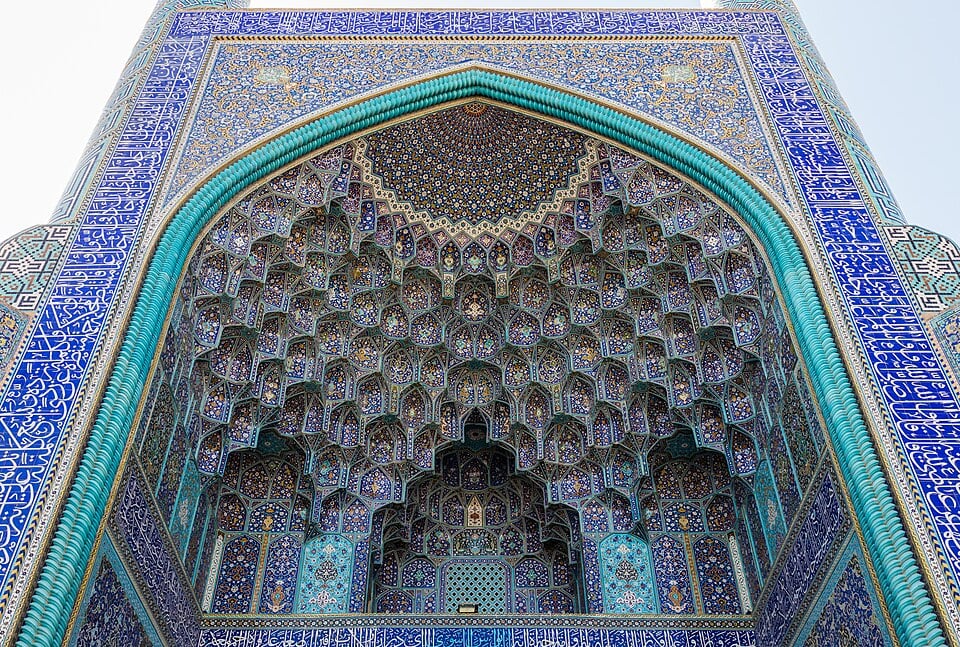
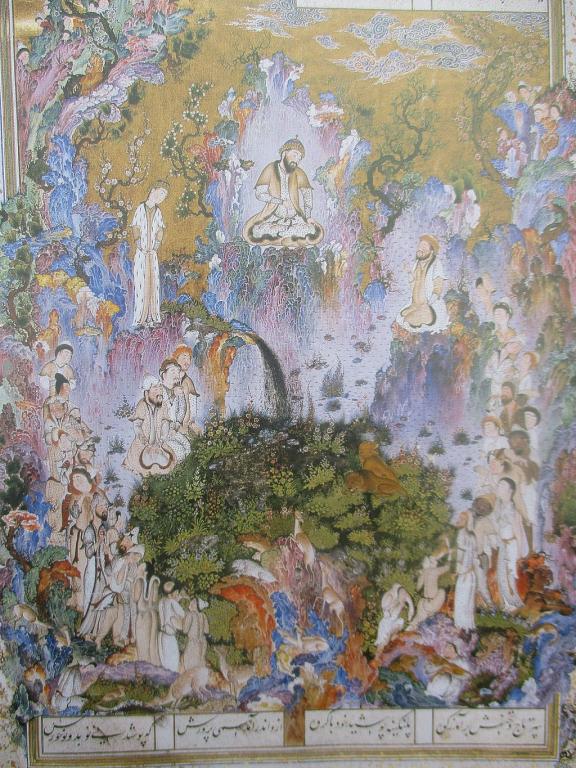
Likewise, while the elimination of Iran’s current theocratic tyranny would certainly be a major step forward for the peace and welfare of humankind, we’re not at war with Ferdowsi, Avicenna (Ibn Rushd), Nizami Ganjavi, Rumi, Sadegh Hedayat, al-Biruni, Hafez, Nasir al-Din Tusi, Saadi Shirazi, Omar Khayyam, al-Razi, Attar of Nishapur, al-Khwarizmi, Jabbir b. Hayyan, or Forugh Farrokhzad. And we surely aren’t — are we? — intending to destroy Persepolis or the Masjid-e Shah.
Talk about killing a “whole civilization” is wildly inappropriate. Moreover, as a purely practical matter, it’s hardly calculated to win the support of Iranians who may hate the regime that oppresses them but, as patriots, intensely love their nation and the great historical civilization that it has fostered. I know many such Iranians, and I wish them well.
On this, the first full day of my status as an official, Obsession Board-certified “cruel and sadistic bully,” I feel moved upon to prophesy: I predict that my Malevolent Stalker, who announced my new designation in a recent post at his online home and who is now well into his third decade of anonymous online attacks on me, won’t cease posting this sort of thing until he dies. I doubt that my own death (which, just to forestall speculation, isn’t yet clearly on the horizon) will slow him down even slightly. And I have precedent on my side: Thus far, over the past quarter of a century, nothing has slowed him down.
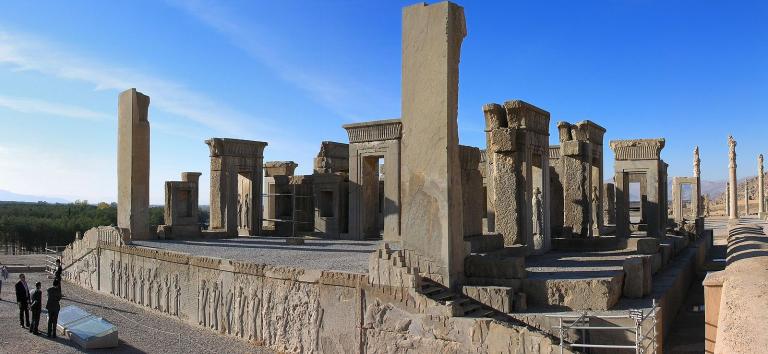
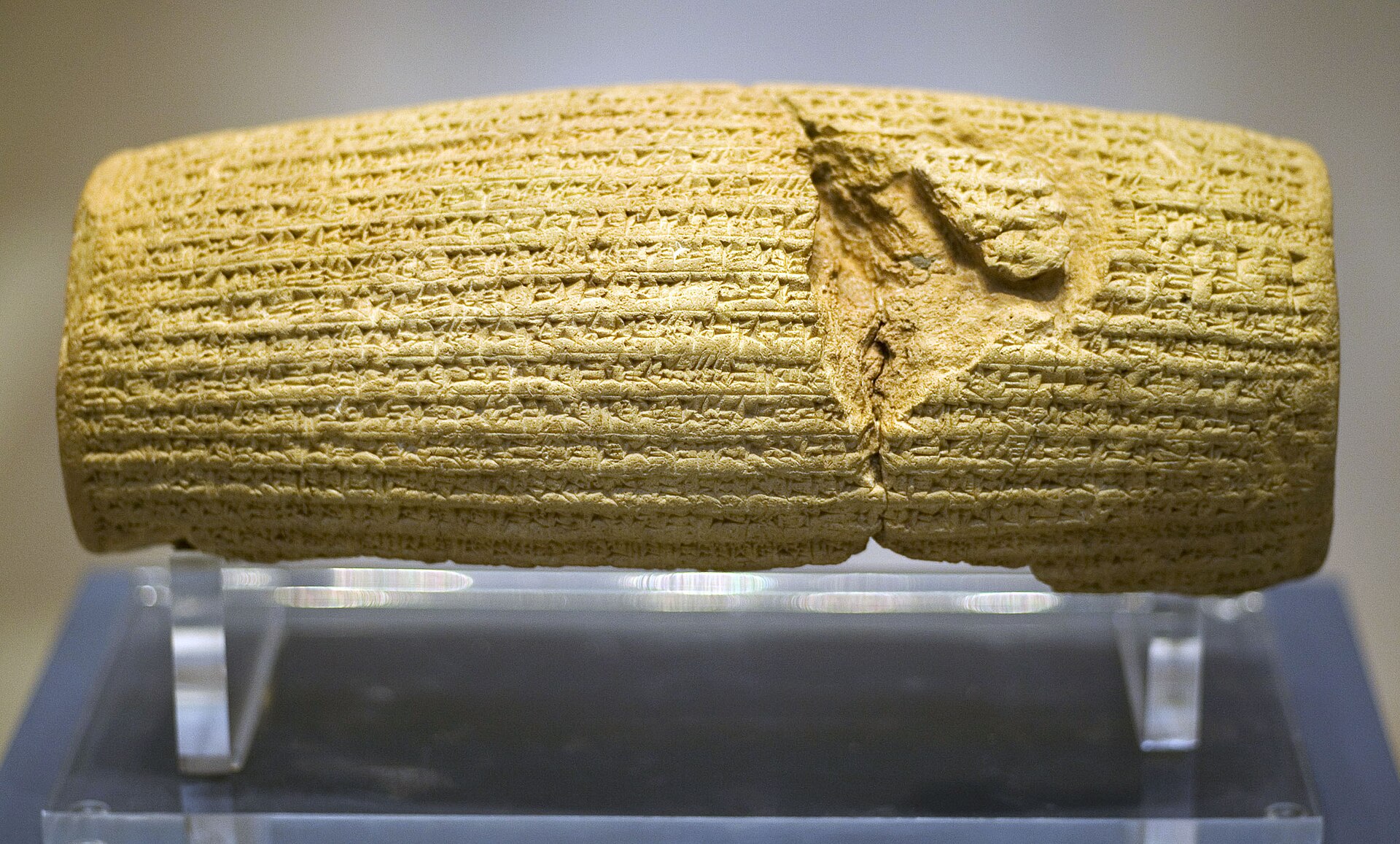
I think that I’ll offer a brief historical note here: Cyrus II of Persia (ca. 600–530 BC), who is commonly known as Cyrus the Great, was the founder of the Achaemenid Empire. He emerged from the area known as Persis, which roughly corresponds to the modern Iranian province of Fars. Persia takes its name from Persis, much as the modern Persian term for the Persian language, Farsi, derives its name from Fars., which is, as you’ve probably guessed, cognate with Persis and Persia. (Following the lead of one of my professors in graduate school, himself an Iranian, I don’t refer to the language as Farsi but, rather, as Persian — for the same reason that, when speaking English, I don’t typically refer to Deutsch, Español, Nederlands, Français, al-ʿarabiyya, or Nihongo, but, rather, to German, Spanish, Dutch, French, Arabic, and Japanese.)
Cyrus the Great (who reigned ca. 559–530 BC) defeated the Median Empire — aka the Medes — and eventually brought all of the ancient Near East under the control of the Achaemenid dynasty, expanding across most of West Asia and much of Central Asia to create what, at the time, would became the largest empire in history. He was the Persian emperor who not only allowed the Jewish people to return to Jerusalem and to rebuild their temple (see Ezra 1-6), thus marking the end of the Babylonian captivity, but ordered the return of sacred temple vessels taken by Nebuchadnezzar and provided state funds for the rebuilding:
Now in the first year of Cyrus king of Persia, that the word of the Lord by the mouth of Jeremiah might be fulfilled, the Lord stirred up the spirit of Cyrus king of Persia, that he made a proclamation throughout all his kingdom, and put it also in writing, saying,
Thus saith Cyrus king of Persia, The Lord God of heaven hath given me all the kingdoms of the earth; and he hath charged me to build him an house at Jerusalem, which is in Judah.
Who is there among you of all his people? his God be with him, and let him go up to Jerusalem, which is in Judah, and build the house of the Lord God of Israel, (he is the God,) which is in Jerusalem.
And whosoever remaineth in any place where he sojourneth, let the men of his place help him with silver, and with gold, and with goods, and with beasts, beside the freewill offering for the house of God that is in Jerusalem. (Ezra 1:1-4; compare 2 Chronicles 36:22-23))
Isaiah 44-45 has much to say about Cyrus, including this remarkable passage:
Thus saith the Lord to his anointed (לִמְשִׁיחוֹ֮, “to his messiah”), to Cyrus, whose right hand I have holden, to subdue nations before him; and I will loose the loins of kings, to open before him the two leaved gates; and the gates shall not be shut;
I will go before thee, and make the crooked places straight: I will break in pieces the gates of brass, and cut in sunder the bars of iron:
And I will give thee the treasures of darkness, and hidden riches of secret places, that thou mayest know that I, the Lord, which call thee by thy name, am the God of Israel.
For Jacob my servant’s sake, and Israel mine elect, I have even called thee by thy name: I have surnamed thee, though thou hast not known me.
I am the Lord, and there is none else, there is no God beside me: I girded thee, though thou hast not known me:
That they may know from the rising of the sun, and from the west, that there is none beside me. I am the Lord, and there is none else.
I form the light, and create darkness: I make peace, and create evil: I the Lord do all these things. (Isaiah 45:1-7)
The Achaemenid Empire’s greatest territorial extent was achieved later, under Darius (the Great) of Persia, whose rule stretched from southeastern Europe and northeastern Africa in the west all the way over to the Indus Valley in the east. He is mentioned in the biblical books of Ezra, Haggai, and Zechariah. Among other things (see Ezra 6), he confirmed Cyrus’s earlier decree to rebuild the temple of Jerusalem.
I can’t know, as I write, exactly what Mr. Trump has in mind for Iran. But I hope and expect that his talk of the “death” of “a whole civilization” is simply yet another instance of his exaggerations and his often intemperate language. If it isn’t, I mourn for Iran. And I mourn for America.












 Ad-Free & Subscriber Log-In