

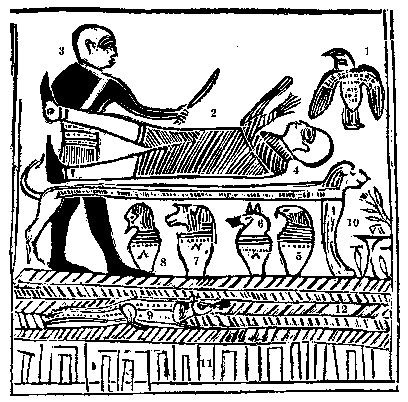
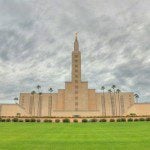
(LDS Media Library)
Newly up on the never-changing website of the Interpreter Foundation: “‘That Lineage’: Rival Priesthood Claims in Abraham 1,” in Abraham and His Family in Scripture, History, and Tradition,” written by Avram Shannon:
Part of our book chapter reprint series, this article originally appeared in Abraham and His Family in Scripture, History, and Tradition, edited by Jeffrey M. Bradshaw, John S. Thompson, Matthew L. Bowen, and David R. Seely. For more information, go to https://interpreterfoundation.org/books/abraham-and-his-family.
“The Book of Abraham is one of the books of our scripture most concerned with notions and ideas of priesthood. In the English standard works of The Church of Jesus Christ of Latter-day Saints, the word priesthood appears 182 times. Most of those references are, perhaps unsurprisingly, in the Doctrine and Covenants. However, priesthood appears twelve times in our short Book of Abraham (including the three instances in the facsimile explanations), suggesting that this is a term and concept that is important to the discourse in that book. So many references to priesthood as a concept are striking in a book as short as the Book of Abraham. The introduction in Abraham 1:2 illustrates the importance of priesthood to the entire work.”
I point out, too, that Avram Shannon is one of the co-hosts of the new Conversations with Interpreter podcast, installments of which are posted every Saturday on the completely moribund website of the Interpreter Foundation.
Last night, my wife and I attended a concert in the Recital Hall in BYU’s new Music Building, by “Bridge & Wolak.” They are a digital-accordion-and-accoustic-clarinet duo, and I have to admit that I wasn’t exactly looking forward to the evening. (At the beginning, they said that, so far as they know, they are the only accordion-clarinet duo in the world, which meant, they pointed out, that, if we didn’t enjoy the performance, we probably never need repeat it.
I was very pleasantly surprised. They were personable, entertaining, and very funny. And they are superb musicians. (Michael Bridge, the accordionist, earned a doctorate in musical arts from the University of Toronto, and Kornel Wolak, the clarinetist, received his doctorate from the Paderewski Music Academy in Poznan, Poland. And, as they each demonstrated more than once, they are both excellent pianists.)
I don’t believe that I’ve ever encountered a digital accordion before. As Bridge explained, it’s essentially a computer in the form of an accordion, and it can mimic just about any kind of musical instrument. In their opening “Baroque Suite,” a trio of pieces by George Frideric Handel (1685-1759), it was a convincing harpsichord. At various subsequent points in the concert — which ran from modernized Johann Sebastian Bach (1685-1750) through Frédéric Chopin (1810-1839), Sidney Bechet (1897-1959), George Gershwin (1898-1937), Benny Goodman (1909-1986), and Ennio Morricone (1928-2020), as well as traditional Bulgarian and Polish melodies, all of them newly arranged for digital accordion and clarinet (since nobody writes for digital-accordion-and-clarinet duos!) — Bridge’s accordion became a Wurlitzer organ, a church organ, percussion, a piano, brass, and so forth. It was really quite amazing.
For some reason, I found myself wondering during their opening Handel trio whether Handel ever heard the music of Bach. The two were born in the same year, 1685 — a good year for musical history! — in Germany, and were thus contemporaries. But Bach remained in Germany, in relative obscurity, while Handel spent much of his career in England. What a pity it would be if Handel didn’t encounter Bach. Which he might not have.
But then I began to think of all of the music that neither Bach nor Handel ever heard. Neither ever experienced Mozart, or Beethoven, or Brahms, or Mendelssohn, or Wagner, or Strauss, or Mahler, or Bruckner, nor, for that matter, any of the other composers on last night’s program. I’m so blessed to have experienced all of them, and many more besides.
But then I thought of the future Bachs, Handels, Mozarts, Beethovens, Brahmses, Mendelssohns, Wagners, Strausses, Chopins, Mahlers, Bruckners, and Gershwins that I will never hear, and the finitude of mortal human life forcefully presented itself to my mind yet again.
I can understand not believing that human personality survives death. I can’t really understand not wanting it to survive.
To draw from a rather different musical piece, which you may recognize:
From the day we arrive on the planetAnd, blinking, step into the sun,There’s more to see than can ever be seen,More to do than can ever be done.There’s far too much to take in here,More to find than can ever be found.But the sun rolling highThrough the sapphire skyKeeps great and small on the endless round.

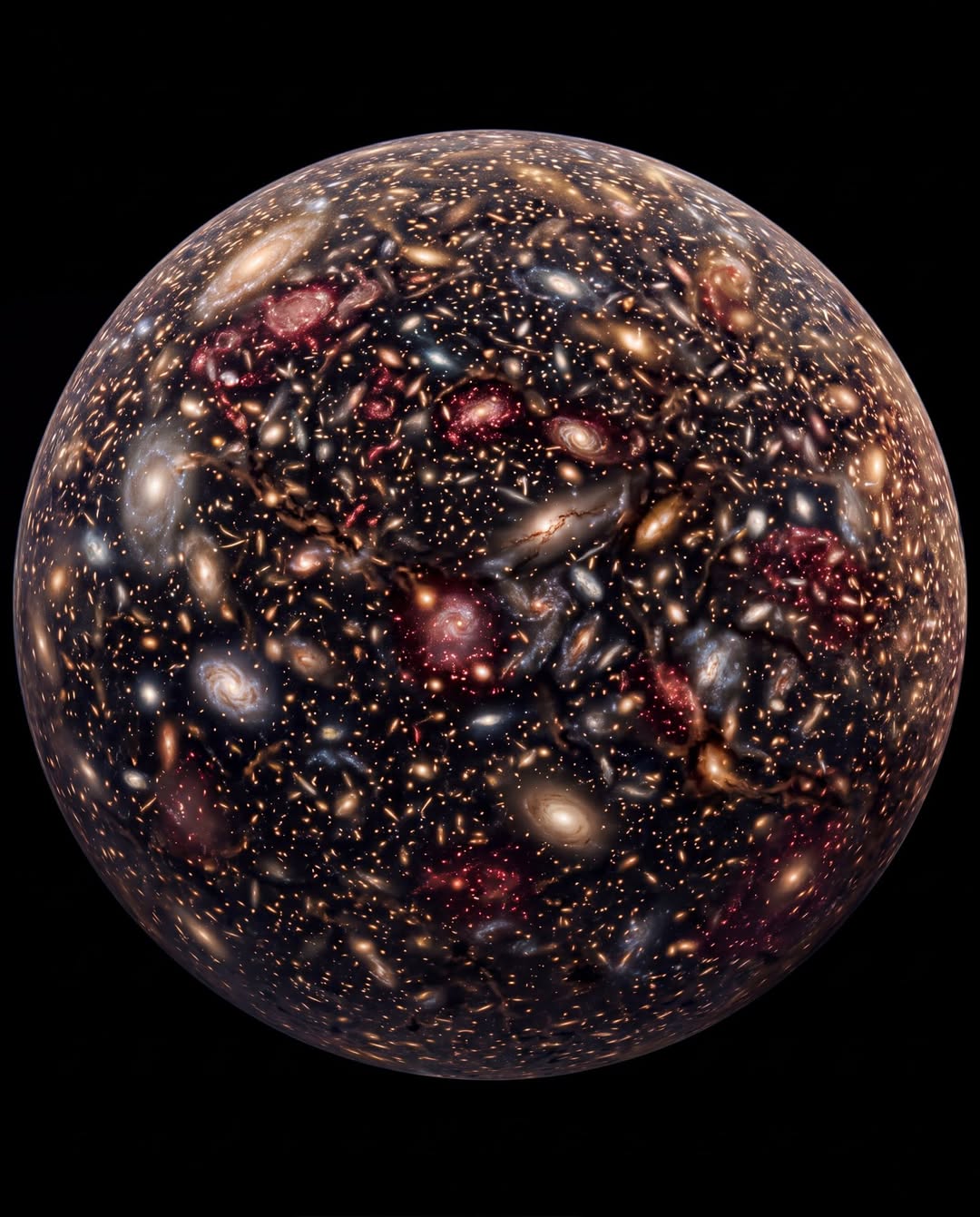
Some of the pieces that they performed were accompanied by videos projected onto a screen above and behind them. For their jazzified version of a piece by Bach, for example, they showed scenes from a spacecraft orbiting Earth, prefaced by Michael Bridge reading a quotation from the late astronomer and science writer Carl Sagan relating to the image immediately above. It ran somewhat like this:
Look again at that dot. That’s here. That’s home. That’s us. On it everyone you love, everyone you know, everyone you ever heard of, every human being who ever was, lived out their lives. The aggregate of our joy and suffering, thousands of confident religions, ideologies, and economic doctrines, every hunter and forager, every hero and coward, every creator and destroyer of civilization, every king and peasant, every young couple in love, every mother and father, hopeful child, inventor and explorer, every teacher of morals, every corrupt politician, every “superstar,” every “supreme leader,” every saint and sinner in the history of our species lived there-on a mote of dust suspended in a sunbeam.
The Earth is a very small stage in a vast cosmic arena. Think of the endless cruelties visited by the inhabitants of one corner of this pixel on the scarcely distinguishable inhabitants of some other corner, how frequent their misunderstandings, how eager they are to kill one another, how fervent their hatreds. Think of the rivers of blood spilled by all those generals and emperors so that, in glory and triumph, they could become the momentary masters of a fraction of a dot. (Carl Sagan, Pale Blue Dot: A Vision of the Human Future in Space)






 Ad-Free & Subscriber Log-In