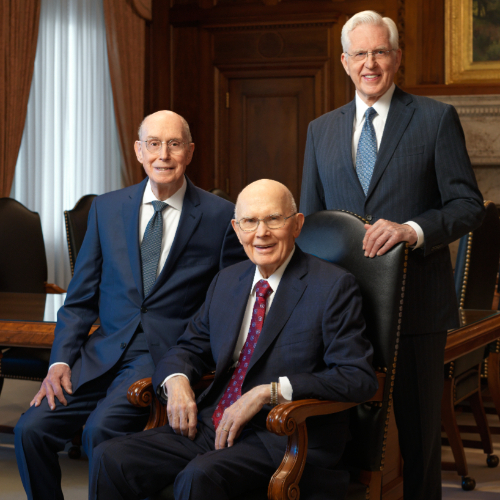
The official October 2025 portrait of the new First Presidency of the Church of Jesus Christ of Latter-day Saints. Seated is President Dallin H. Oaks. To his right is his first counsellor, President Henry B. Eyring. Standing behind him on his left is his second counsellor, President D. Todd Christofferson.
Two weeks after the close of the most recent iteration of General Conference, it’s perhaps time to take a concrete step toward ensuring that what was said there doesn’t altogether fade into complete oblivion. I choose to focus on the Sunday morning remarks of President Dallin H. Oaks, who had been sustained in the previous morning’s solemn assembly as the new president of the Church of Jesus Christ of Latter-day Saints. Not surprisingly, it being Easter Sunday, President Oaks focused on the resurrection of Jesus Christ. But he also devoted his remarks to something that is desperately needed in today’s America and, I think, elsewhere as well:
A video recording of his April 2026 remarks, accompanied by its full written text, can be found on the official website of the Church at “Alive in Christ.”
My question now is, How are we doing? How am I doing? In person. Online. On social media. Are we making any real effort toward following the counsel given by President Oaks? Are we having any success with ourselves? I speak primarily, of course to those — like myself — who sustain him as the prophet, seer, and revelator to the Church. It’s a serious question.
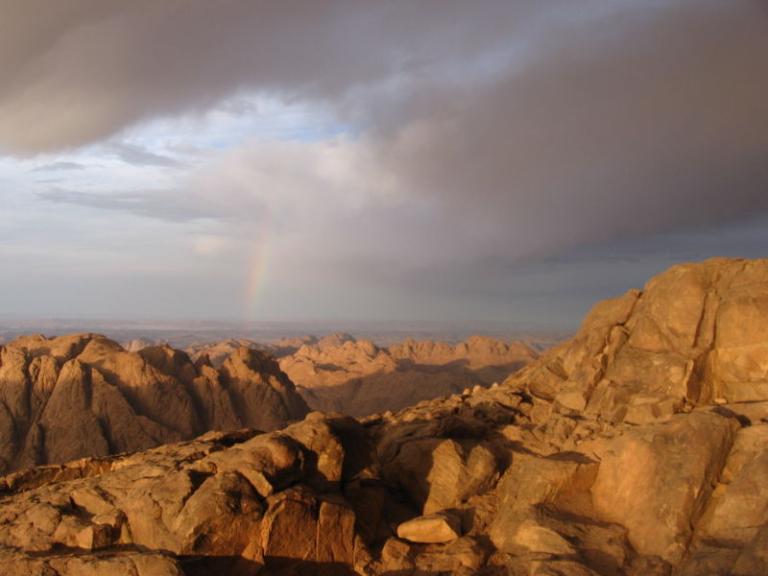
A distant rainbow as seen from Jabal Musa, in the Sinai — the traditional site of Moses’ encounter with God (Wikimedia Commons public domain photograph)
In this episode of Conversations with Interpreter, Jonathon Riley discusses his presentation and publication about Hebraisms in the Book of Moses. There has been a lot of discussion over the years about Hebraisms in the Book of Mormon, but Dr. Riley looks at the rich possibilities in thinking about the possibilities of an underlying Hebrew text for parts of the Book of Moses. The Book of Moses is an extract of Joseph Smith’s New Translation of the biblical book of Genesis, which makes it somewhat more complicated to look at, because not all JST changes are doing the same thing. However, Dr. Riley walks us through places where we can see a Hebrew substrate in the Book of Moses and shows ways in which this can enhance readers understanding of our scriptures.
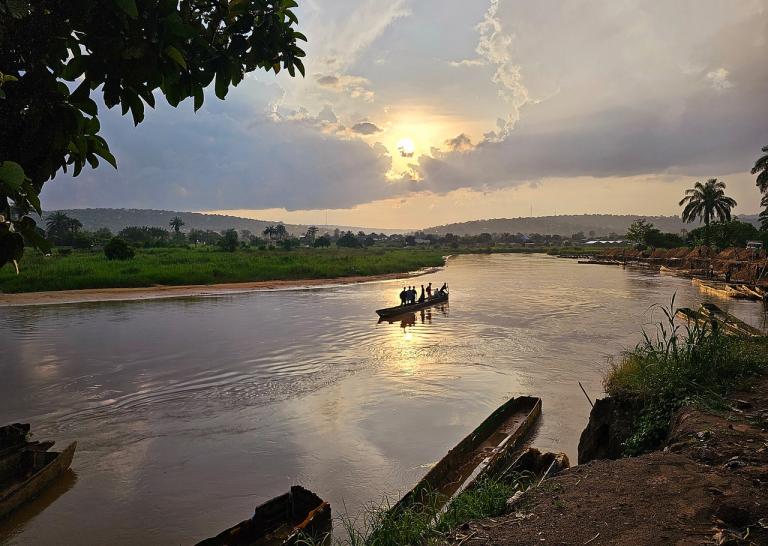
From James G. Jordan of Redbrick Filmworks, a view along the Congo River in the Democratic Republic of the Congo (formerly Zaire). He was there a few years ago, along with Russell Richins, for some shooting on the Interpreter Foundation’s ongoing “Not by Bread Alone” film project.
I found parts of this morning’s Tabernacle Choir broadcast moving. Particularly when small local Latter-day Saint groups from various African nations were shown, in pre-recorded segments, singing along with the Tabernacle Choir on “How Firm a Foundation.” I hope that some of you were able to watch it. The pre-show and post-show segments are also available here, I think.
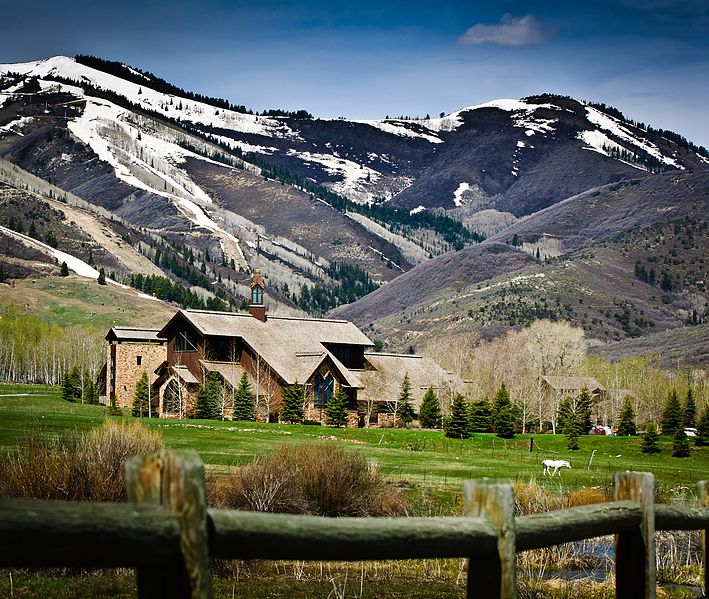
Relatively little snow fell here this year, and the mountains are still rather brown. (This Wikimedia Commons photo was taken in May, several years ago.) I’m really fond of this Catholic church — St. Mary’s — that’s located just outside of Park City, although it doesn’t appear to best advantage in this Wikimedia Commons public domain photograph because its spire doesn’t show up very clearly.
Important notice: My wife and I have been up in Park City this weekend with certain other family members, but no Interpreter Foundation funds have paid for this expedition. No donors were duped into covering our expenses, and no animals have been harmed (thus far, anyway) by our stay here.
In the meantime, the trailer for Episode 13 of Becoming Brigham runs for thirty-three seconds and is accessible online right now, at https://www.youtube.com/watch?v=lpC8KnpvPPg. The full episode will go up tomorrow, Monday.
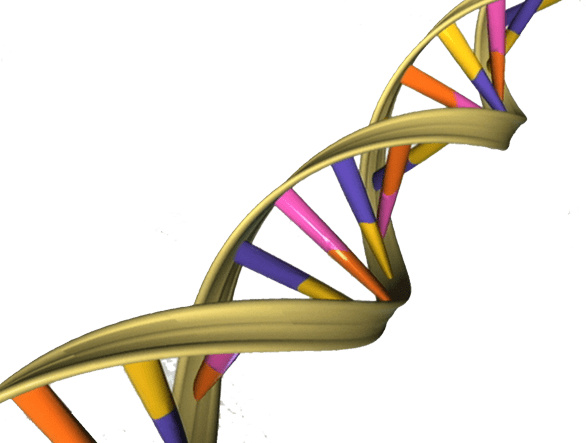
It’s scarcely coincidental that, if you scramble my name, “Dan,” you get “DNA.” I’m absolutely saturated with the stuff. (Wikimedia Commons public domain image)
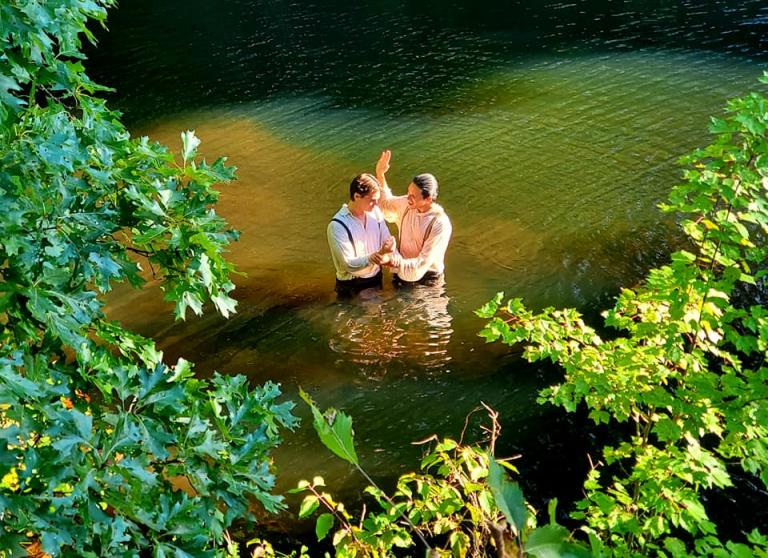
A depiction of Oliver Cowdery and Joseph Smith in the Susquehanna River, from the 2021 Interpreter Foundation theatrical film “Witnesses.” They are shown performing the very first authorized baptisms of this dispensation, just after the restoration of the Aaronic priesthood.











 Ad-Free & Subscriber Log-In