

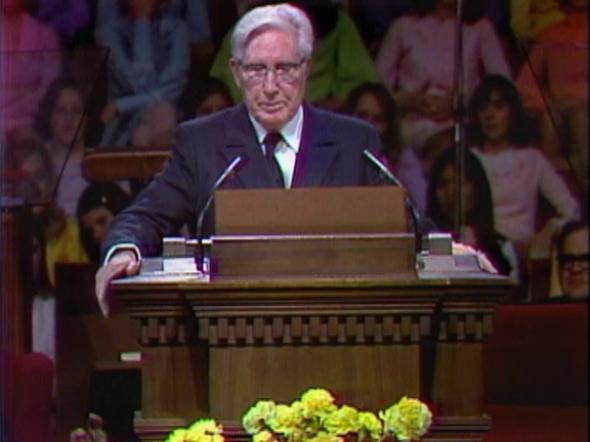
I pass on a little story that, among other places, I once saw in D. Michael Quinn’s The Mormon Hierarchy: Extensions of Power. I mention that particular source in order to win some credibility for the story. For some, Mike Quinn (perhaps alongside the now largely forgotten Grant Palmer) was the only honest historian of “Mormonism” in his day (as demonstrated by his departure from Brigham Young University and his eventual excommunication from the Church of Jesus Christ of Latter-day Saints), and his works seemed, for a long time, to have attained something like canonical status among certain people.
If I’m not mistaken, though, I believe that I also heard the story from the late Truman G. Madsen, who said that he had been told it directly by the person who experienced it.
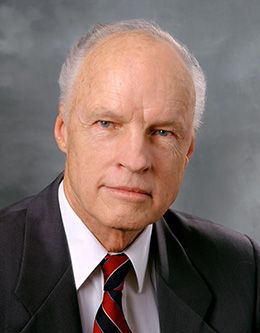
First, some background: From the time that I was consciously aware of such things until nearly my graduation from high school in California, the term The First Presidency flatly meant, in my young mind, the venerable trio of David O. McKay, his Canadian First Counselor Hugh B. Brown, and his Canadian Second Counselor N. Eldon Tanner. And, since President David O. McKay was in declining health by the time that I was paying attention, it was President Brown who was, to me, the most visible and most authoritative of Church leaders. I found him very, very impressive. And I still do.
Here’s the story: Having served for nearly a decade — at my age, his tenure in office seemed forever and eternal — as a counselor to the president of the Church, President Brown was released in 1970 upon the dissolution of the First Presidency at the death of President McKay and resumed his position in the Quorum of the Twelve Apostles.
He was somewhat depressed at his release from the Presidency (up until his time, men who had been called to that high position had typically remained there for the duration of their lives), as well as being himself in physical decline, and he sought divine consolation in prayer. And, thereupon, he had an experience that he later related to his nephew:
“He said it was not a vision, but the Lord appeared to him, very informal, the same as I was sitting talking to him. The Lord said, ‘You have had some difficult times in your life.’ Uncle Hugh responded, ‘Yes, and your life was more difficult than any of us have had.’ In the conversation Uncle Hugh asked when he would be finished here, and the Lord said, ‘I don’t know and I wouldn’t tell you if I did.’ Then He said, ‘Remain faithful to the end, and everything will be all right.’”
Good counsel for all of us, I think.
Hugh B. Brown has sometimes been invoked since his passing by liberal (and left-fringe) Latter-day Saints as something of a patron saint for doubters and dissidents, as if he were one of them who in some mysterious way worked his way into being First Counselor in the First Presidency of the Church. In fact, this has happened again within the past two or three months. (See here and here., both courtesy of the Salt Lake Tribune.) Such statements as the following are cited to justify his quasi-canonization by those who see themselves as more broad-minded than the common herd of Latter-day Saints:
“Only error needs to fear freedom of expression,” he said in a 1958 speech at Brigham Young University. “The ancients put that thought in the form of a prayer. They said, ‘From the cowardice that shrinks from new truth, from the laziness that is content with half truth, from the arrogance that thinks it has all truth — O God of truth deliver us.'”
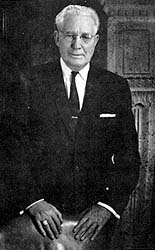
(1883-1975)
LDS.org
But it should never be forgotten that Hugh B. Brown was a believer who claimed revelation.
He was also an eloquent, intelligent, and well-read man. His parable of the currant bush is a classic, as is his marvelous Profile of a Prophet — which I actually know better in German as Das Wesen eines Propheten than I know it in English. (I’m not sure that I’d heard it in English before I played it multiple times for investigators on my German-speaking mission.). I commend both of them to your attention.
For obvious reasons, President Brown is, not as well known today as he was during his lifetime. So I would like to share a few passages from him here:
“Even as water carves monuments of stone, so do our thoughts shape our character.”
“Revealed insights should leave us stricken with the knowledge of how little we really know. It should never lead to an emotional arrogance based upon a false assumption that we somehow have all the answers — that we in fact have a corner on truth. For we do not.”
“No matter what your past has been, your future is spotless.”
“Every man is a diary in which he writes one story while intending to write another. His humblest moment is when he compares the two.”
“Sometimes during solitude I hear truth spoken with clarity and freshness; uncolored and untranslated it speaks from within myself in a language original but inarticulate, heard only with the soul, and I realize I brought it with me, was never taught it nor can I efficiently teach it to another.”
“Night never had the last word. The dawn is always invincible.”
And, once again, I quote the passage that I cited above, which I share this time in the spirit of faith, as Hugh B. Brown intended it, rather than in the spirit of doubting dissent and disaffection, as it’s sometimes abused:
“Seek the truth in all fields, and in that search you will need at least three virtues: courage, zest and modesty. The ancients put that thought in the form of a prayer. They said, ‘From the cowardice that shrinks from new truth, from the laziness that is content with half truth, from the arrogance that thinks it has all truth – O God of truth, deliver us.'”










 Ad-Free & Subscriber Log-In