

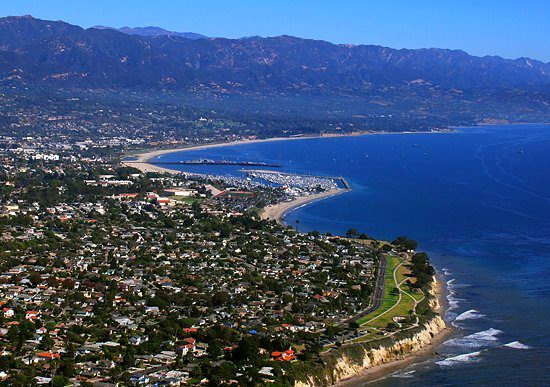
One of the book-discussion groups to which my wife and I belong is the venerable Gadianton Polysophical Marching and Chowder Society — that’s the authentic official name, although it’s rarely used — which has been meeting monthly since its founding by a group of junior faculty and graduate students adjacent to the University of California at Santa Barbara decades ago. We met last night, in fact. The focus of our discussion was Paul Reeve, Christopher B. Rich Jr., and LaJean Purcell Carruth, This Abominable Slavery: Race, Religion, and the Battle Over Human Bondage in Antebellum Utah (New York: Oxford University Press, 2024). As it happens, This Abominable Slavery is a major part of the inspiration for the topic of the address that I’ll give at the 2025 installment of the annual FAIR Conference this coming Friday and, along with Amy Tanner Thiriot, Slavery in Zion: A Documentary and Genealogical History of Black Lives and Black Servitude in Utah Territory, 1847-1862 (Salt Lake City: The University of Utah Press, 2022), will be my principal source. We are fortunate to have Thomas G. Alexander in our group; he chose the book and led the discussion, which I enjoyed very much.

(Wikimedia Commons public domain image)
This is a very noble thing to do: “American Jewish Committee to donate $25K to damaged Gaza church: The church has been housing and feeding a few hundred Christians and Muslims for nearly two years as the war continues.” And, with that as a background, I again call your attention to a way to help hungry children in Gaza.
“A man filled with the love of God is not content with blessing his family alone, but ranges through the whole world, anxious to bless the whole human race.” — The Prophet Joseph Smith
Meanwhile, this interesting article from the Deseret News will irritate some of my readers: “Perspective: The horizon is bright for the future of global faith: Compared to the days when combative atheism dominated public discussion, it’s hard to miss the array of signs and data hinting at a groundswell of religious resurgence”
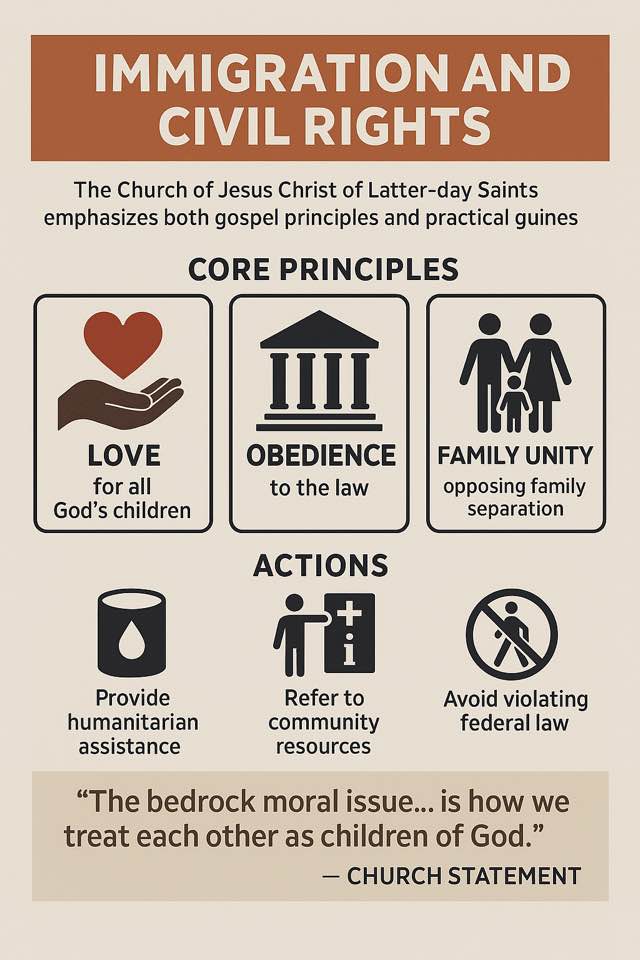
Richard Winmill posted this (accompanied by the image immediately above) on his Facebook page on 28 July and, with his kind permission, I reproduce it here:
Some have wondered why the Church of Jesus Christ of Latter-day Saints has not been more vocal in civil rights and immigration issues. Others mistake it as tacit approval of a status quo, whatever that might be at the moment.
Both positions are uninformed!
Talk is cheap. Watch what the Church does and read what it actually says.
https://www.deseret.com/…/church-statement-on…/
The Church of Jesus Christ of Latter-day Saints has taken a clear and compassionate stance on immigration and civil rights, rooted in gospel principles and practical guidelines. Here’s a breakdown of what the Church says and does:Core Principles
The Church consistently emphasizes three guiding values:
• Love for all God’s children — including undocumented immigrants
• Obedience to the law — while recognizing the complexity of immigration policy
• Family unity — opposing policies that separate families
These principles are reiterated in official statements and letters to local leaders, especially during times of heightened immigration enforcement.Practical Support
Local Church leaders are encouraged to:
-Use fast-offering funds to provide food, clothing, and medical care to those in need, regardless of immigration status.
-Invites service to marginalized and immigrant communities through its JustServe outreach programs.
• Refer families to community resources for legal and emotional support.
• Avoid actions that could conflict with federal law, such as housing undocumented individuals long-term or transporting them across regions .Legal Guidance
The Church’s Office of General Counsel provides detailed instructions to help leaders navigate federal laws while still offering humanitarian aid.. This includes:
• Avoiding legal sponsorship or testimony
• Ensuring Church buildings aren’t used to shield individuals from law enforcement.Historical and Moral Context
The Church has acknowledged its own history of seeking refuge across borders—such as when early Saints fled to Mexico in the 1840s and again in the 1880s to escape persecution. This backdrop informs its moral stance:
“The bedrock moral issue… is how we treat each other as children of God.” — Church statement, 2011Outreach Initiatives
In recent years, the Church has:
• Opened Welcome Centers in cities like Las Vegas and Mesa to assist immigrants with legal services, English classes, and citizenship pathways.
• Supported the Utah Compact, a set of humane immigration principles endorsed by civic and religious leaders.Apostolic Voices
Leaders like Elder Dieter F. Uchtdorf, himself a refugee, have spoken powerfully about the need to welcome strangers and care for the displaced .
https://www.ldsdaily.com/…/i-was-a-stranger-a-latter…/
These are my personal observations alone.
I still regard the speech given by Elder Patrick Kearon at the April 2016 general conference of the Church of Jesus Christ of Latter-day Saints as one of the most moving and most memorable conference talks of my life. He was, at that time, a member of the First Quorum of the Seventy He is now a member of the Quorum of the Twelve Apostles. Here is a link to his remarks: “Refuge from the Storm” (For which the subtitle reads: “This moment does not define the refugees, but our response will help define us.”)













 Ad-Free & Subscriber Log-In