

I recently read an interesting book by Paul H. Smith, entitled The Essential Guide to Remote Viewing:(Intentional Press, 2015). It’s a basic tutorial on, well, remote viewing — which is the alleged ability to perceive information about a distant or unseen target without relying on conventional sensory input but using only the mind. Thus, if it really exists, it’s literally a kind of extrasensory perception. The study of remote viewing is one of the areas of focus within the controversial field of parapsychology.
I first met Paul more than fifty years ago as a missionary in Switzerland. I pretty much lost track of him thereafter but, a couple of years back (or thereabouts), he came on one of the tours that my wife and I accompanied and, thereafter, he sent me a copy of The Essential Guide to Remote Viewing.
I certainly found it interesting. He not only believes in remote viewing but says, quite matter-of-factly, that he has done it many times and that — precisely as he indicates in the subtitle of his book — just about anybody can do it.
Lest you write him off immediately as a mere crackpot, permit me to share some of his background:
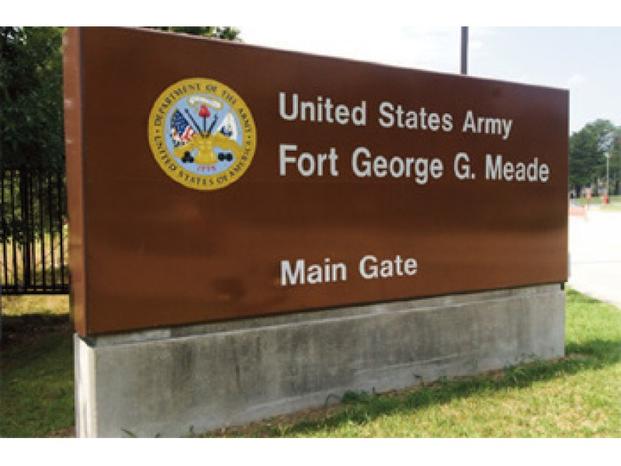
Paul retired from the United States Army in 1996 with the rank of Major. Prior to that, he was a part of the federal government’s “psychic espionage” program for seven years, starting first in 1983 with the Army’s “Center Lane” remote viewing project and then, in early 1986, moving with the program to the Defense Intelligence Agency (DIA). He served not only as a remote viewer himself — he is credited with more than a thousand training and operational remote viewing sessions during his time with the military unit at Fort Meade, Maryland — but as theory instructor for new trainees as well as recruiting officer, unit security officer, unit historian, and primary author of the program’s training manual. In 1990, he was transferred out of the program to participate as a tactical intelligence officer with the 101st Airborne Division in Operation Desert Storm.
Fort Meade, by the way, is also the home of such operations as the Defense Information School, United States Cyber Command, the National Security Agency, the Defense Information Systems Agency, and the U.S. Navy’s Cryptologic Warfare Group Six.
Paul is president and chief instructor of Remote Viewing Instructional Services, Inc. and a founding director, former board member, past vice-president, and twice past president of the non-profit International Remote Viewing Association. He also serves as a board member for both the Parapsychological Association and the Rhine Research Center.
Paul holds a bachelor’s degree in Middle Eastern Studies from Brigham Young University, a master’s degree in strategic intelligence (with a Middle Eastern emphasis) from the National Intelligence University, and a doctorate in philosophy from the University of Texas at Austin, where he concentrated on the philosophy of mind, consciousness, and the philosophy of science. His doctoral dissertation was entitled “Is Physicalism ‘Really’ Real?” His first book, Reading the Enemy’s Mind: Inside Star Gate — America’s Psychic Espionage Program (Tor Forge, 2005), was a Reader’s Digest Editors Choice and Book Bonus selection.
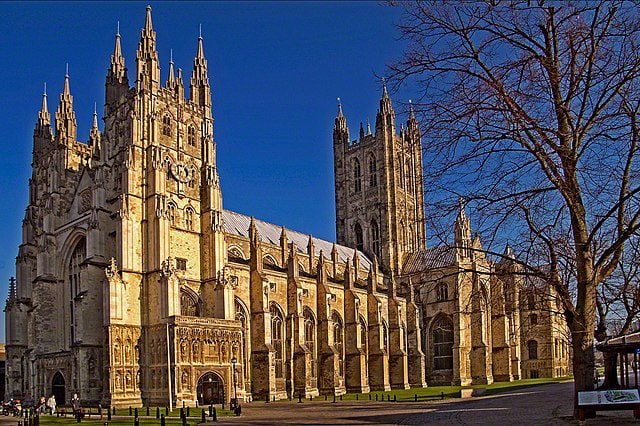
I want to announce a fourteen-day land tour that we’ll be doing next year, from 6-19 May 2026. I’ll be accompanying the group, yes, but please don’t despair or lose interest because of that: Kris Frederickson, a member of the Interpreter Foundation’s board, will also be there, as will the wonderful British Latter-day Saint guide and Church history expert Peter Fagg. Our focus for this trip will be somewhat different than for its previous iterations; we’ll spend time not only on Latter-day Saint history in England (especially the mission of the Twelve in 1837-1840) but on the history of Catholic and Protestant England (e.g., the coming of St. Augustine of Canterbury, the English Reformation, the Wesleys and the rise of Methodism, and George Fox and the Quakers). We also intend to organize an informative series of lectures preceding our departure. You can examine the itinerary here: Church History and Great Britain with the Interpreter Foundation.
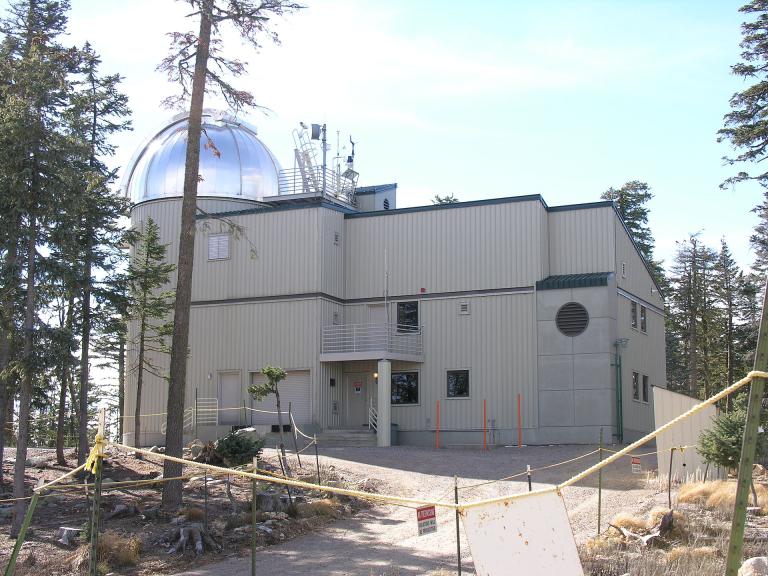
I was very pleased to see this profile, in The New Yorker, of Guy Consolmagno S.J.: “The Vatican Observatory Looks to the Heavens: It’s run by a Michigan-born Jesuit—and a meteorite expert—known as the Pope’s Astronomer.” Guy Consolmagno actually is retiring soon, by the way, though he will continue to work on staff; his successor has already been named. (See “Pope Leo XIV appoints new director of the Vatican Observatory.”)
Dr. Consolmagno spoke at the Interpreter Foundation’s 2016 Science & Mormonism Symposium: Body, Brain, Mind & Spirit, which took place on 12 March 2016 on the campus of Utah Valley University. You can watch a video of his lecture here: “Brother Guy Consolmagno SJ – Keynote Address: Astronomy, God, and the Search for Elegance.” He was a wonderful guest, and his remarks are well worth the time.
I had first become aware of Guy Consolmagno when I encountered some comments of his about “Mormonism.” Whenever he was speaking with various scientists and engineers about the relationship between science and religion, he said, they almost always identified two specific religions — Scientology and “Mormonism” — as “obviously wrong,” he wrote in his book “God’s Mechanics: How Scientists and Engineers Make Sense of Religion.”
His own personal experience, however, suggested an important distinction between the two: “No scientist of my acquaintance,” he remarked, “has ever had something good to say about Scientology — rather ironic, given its name. But as it happens, I know a number of techies who are Mormons, including my thesis advisor at MIT.”
That advisor was John S. Lewis, an expert on the composition and chemistry of asteroids and comets who received his education at Princeton University, Dartmouth College and the University of California, San Diego, where he studied under Nobel Laureate Harold Urey. He joined the Church of Jesus Christ of Latter-day Saints in Boston while a tenured faculty member at the Massachusetts Institute of Technology and he later served as a professor of planetary science at the University of Arizona. Dr. Lewis spoke at the Interpreter Foundation’s first conference on science and “Mormonism” in 2013. (See the video at “John S. Lewis on “The Scale of Creation in Space and Time.””). The text of Professor Lewis’s remarks at that Interpreter conference was published as “Science & Mormonism Series 1: Cosmos, Earth, and Man: ‘The Scale of Creation in Space and Time'” in an Interpreter Foundation proceedings volume: David H. Bailey, Jeffrey M. Bradshaw, John H. Lewis, Gregory L. Smith, and Michael L. Stark, eds., Cosmos, Earth, and Man (Orem and Salt Lake City, Utah: The Interpreter Foundation and Eborn Books, 2016).
Posted from Logan, Utah









 Ad-Free & Subscriber Log-In