

New in Interpreter: A Journal of Latter-day Saint Faith and Scholarship: Review of Edward K. Watson, Verifiable Evidence for the Book of Mormon: Proof of a Deliberate Design Within a Dictated-from-Imagination Book (Springville, UT: Brainy Press, 2022). 252 pp.; $32.95 (hardcover).
Abstract: Edward K. Watson provides a new twist in the textual evidence for the authenticity of the Book of Mormon. Drawing upon his expertise in working with argumentative and persuasive essays (collectively known as “structured essays”) and applying modern scholarship to the requirements for sound argumentation in such essays, Watson seeks to apply objective criteria and scoring methods to evaluate several of the many structured essays in the Book of Mormon. Watson argues that because such essays generally require considerable planning and revision, it would be very unlikely for them to have been created, rather than translated, by Joseph Smith dictating at high speed and without major revisions. While his analysis adds new dimensions to the complexity and depth of the Book of Mormon, I believe that his claims are overstated and not adequately supported, especially when he says that dictating structured essays would be “impossible” for any mortal. Nevertheless, Watson does provide interesting evidence on a long-overlooked aspect of the Book of Mormon that merits consideration.

Once again, you can read here about the presenters at today’s installment of the 2025 FAIR Conference, and read abstracts of the presentations. I would like to offer some of my own observations, but I only heard bits and pieces of many of the talks. One of the problems with being a relatively big fish — or a beached whale, as one kindly anonymous critic labeled me earlier today over on the Peterson Obsession Board — in a relatively small pond (a pond that is well represented at FAIR) is that lots of people want to come up, say hello, and talk for a few minutes. But I did have some wonderful conversations today. Anyway, here are the presenters and their titles:
- Brad Witbeck: “The Path of The Peacemaker”
- Zachary Wright: “The Case for Positive Contention”
- Al Carraway: “Making Jesus Tangible”
- Matthew Godfrey: ““O God, Where Art Thou?”: Working My Way Through Spiritual Silence”
- Barbara Morgan Gardner: “Lived Experience of Latter-day Saint (Mormon) Women”
- Moderated by Barbara Morgan Gardner: Panel Discussion: “Lived Experience of Latter-day Saint (Mormon) Women”
- Benjamin C. Peterson: “Why Doctrinal Purity Matters—and How to Avoid Doctrinal Drift”
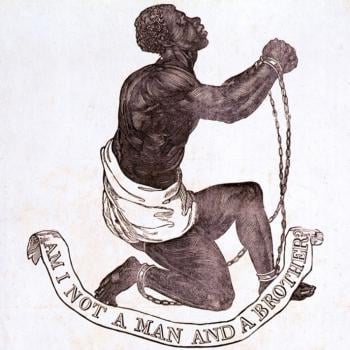
- Daniel C. Peterson (no relation to the above): “Brigham Young and Slavery”

During a noontime conversation today, Mark Ashurst-McGee kindly called something to my attention that I had not seen before. It comes from the website The Keep a Pitchin In, and it was written by Amy Tanner Thiriot, whose book Slavery in Zion provided a major element of the thinking behind my FAIR presentation late this afternoon. Here it is: “Guest Post: “Every Civil Right”: Eastern Visitor Scandalized by Racial Relations in Utah Territory”:
Despite her husband, Thomas L. Kane’s, long and important advocacy for the Church of Jesus Christ of Latter-day Saints, Elizabeth Kane had never come to terms with his involvement with the church.
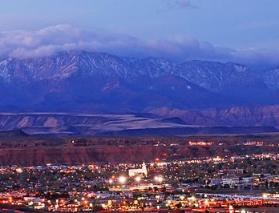
In 1872 Brigham Young invited the ailing Kane and his family to spend the winter in the pleasant climate of St. George in southern Utah Territory, so Thomas, Elizabeth, and their sons traveled to Salt Lake City from their home in Pennsylvania, and then headed south.
One member of the company was a man Elizabeth Kane described as a “colored gemman [gentleman]” from Philadelphia. Elizabeth often used pseudonyms for the people in her accounts, but the man she called “John” would have been New Jersey native Isaac James, a Latter-day Saint pioneer of 1847. Isaac James had moved from New Jersey to Nauvoo, Illinois, with James and Mary Covenhoven Ivins. In Nauvoo he married Jane Manning, a member of Joseph Smith’s household.
Jane and Isaac James went west to the Great Salt Lake Valley in 1847, where they became part of Brigham Young’s household. Isaac worked as President Young’s carriage driver. President Young described him as “a colored man who had worked for him for many years [and] . . . would confer any blessing to him he could, believing him to deserve it.” Little is known of Isaac’s movements after he and Jane divorced until he returned to Salt Lake City in the 1890s, but in 1872 he may have been going to California or to St. George, where James Ivins’s niece and nephew Anna and Israel Ivins lived.
Isaac or “John” was to ride with the teamsters in the supply wagons, but one of the members of the company noticed that he was suffering from rheumatism and took him into his own carriage so the ride would be more comfortable. Elizabeth was scandalized. Although her husband was an abolitionist her racial views were typical for the time: in her world of privilege, being of African descent meant being a servant and it offended her to see Isaac James riding and conversing with a “kind-hearted elder.”
Many days later, as Elizabeth went into the kitchen of the Gates hotel at Bellevue (Pintura), she was shocked to see Brigham Young helping Isaac James put on his coat. She wrote, “It was amusing to see John accepting every Civil Right ‘these yer Mormons’ admitted him to as tributes to his monogamic superiority. Never a word of those profuse apologies which the natural politeness of colored people under ordinary circumstances would have prompted, on receiving such a courtesy from a white man seventy years of age, passed from his lips.” She concluded, “He ‘stood severe in youthful beauty,’ and let the Mormon pontiff help him dress.”
I incorporated it, rather briefly, into my remarks this afternoon.
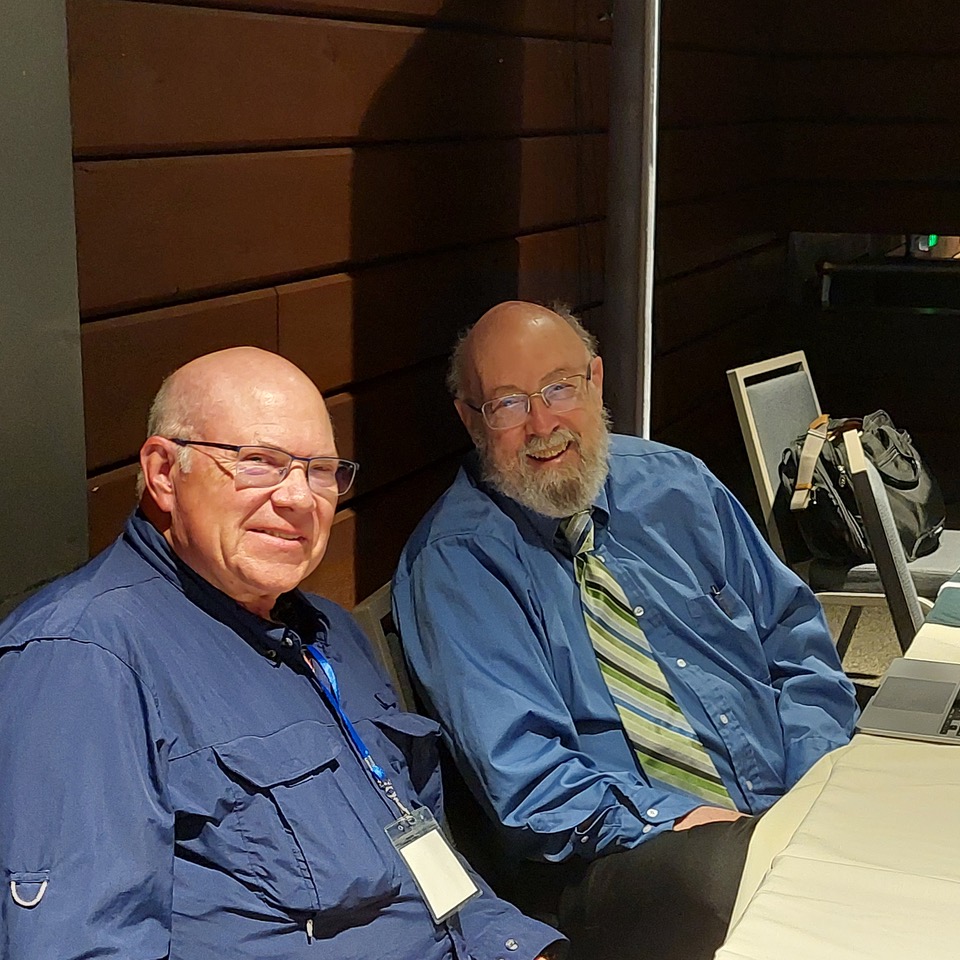
A few days ago, I posted an entry here about Paul H. Smith and remote viewing. It has been received over at the Peterson Obsession Board with all of the spirit of open-minded scientific inquiry that I had expected. To my happy surprise, though, Paul was in attendance at the 2025 FAIR Conference yesterday and today and we had a chance for conversation. I showed him something that had been posted about him by the pseudonymous “Physics Guy,” a non-LDS academic who sometimes participates over at the Obsession Board — a comment that, to my disappointment, is much more vitriolic than is typical of “Physics Guy.” Eloquently representing the accepted current consensus-paradigm, “Physics Guy” described remote viewing as “ludicrous nonsense” “without a shred of reality,” “utterly idiotic,” and “prime-grade pseudoscience” that comes from “over-promoted morons,” “shysters and hacks.” I long ago gave up the quixotic idea of trying to defend myself or speak for myself or even participate on the Obsession Board, but Paul tells me that he would be more than happy to correspond with “Physics Guy” and he accepted my offer to mention his willingness here. So I offer a publicly available email address that, I assume, will reach Paul: [email protected]. I hope that such a conversation will ensue. I myself would be very interested in it.













 Ad-Free & Subscriber Log-In