

It’s late tonight, so I think that I’ll share three passages that I marked during my reading, some time ago, of Richard Lyman Bushman’s book Joseph Smith’s Gold Plates: A Cultural History (New York: Oxford University Press, 2023):
John’s mother, Mary Whitmer, another plain-spoken witness, said she saw the plates when she went to do the milking. In 1878, years after the event, her son said that his mother had grown weary with the work of housing and feeding the translating contingent. In June 1829, Joseph, Oliver, and Emma squeezed into an already crowded household. Emma must have been pressed into service, but the two men were of no help. They spent their days in an upstairs room recording the translation. Mary Whitmer had reason to complain of the added burden. Mary’s son David told Orson Pratt and Joseph F. Smith in 1878 that as his mother was going to milk the cows, an old man carrying a pack met her in the yard. He recognized that “you are tried because of the increase of your toil,” and so “it is proper therefore that you should receive a witness that your faith may be strengthened.” Then he took the plates out of the knapsack and showed them to her. Whitmer said that seeing the plates “nerved her up for her increased responsibilities.” One of Mary’s grandsons, John C. Whitmer, added that “this strange person turned the leaves of the book of plates over, leaf after leaf, and also showed her the engravings upon them.” Then he vanished with the plates. . . .
Mary Whitmer did not record the experience herself, but she told the story to her grandchildren “on several occasions.” Her account was of a piece with other stories the Whitmers told. David Whitmer linked his mother’s angel to the “very pleasant, nice-looking old man” he had seen on the road while bringing Joseph and Oliver to Fayette. His nephew John also described the visitor as “a stranger carrying something on his back that looked like a knapsack” and “spoke to her in a kind, friendly tone.” (57)
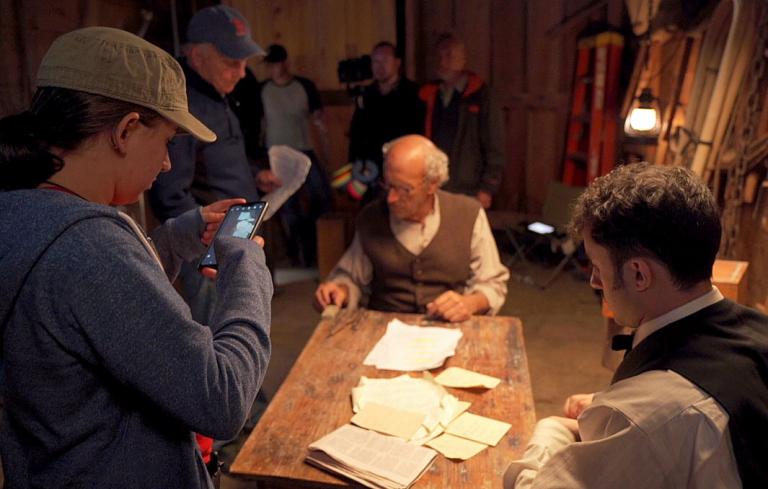
Mary Whitmer’s experience is depicted in the 2022 Interpreter Foundation docudrama Undaunted: Witnesses of the Book of Mormon, which is available for free viewing at The Witnesses Initiative.
John Corrill’s account of his 1831 acceptance of Mormonism tells of his methodical weighing of all the facts in a measured effort to determine its truth. In describing the Book of Mormon, he noted only that “eleven persons besides Smith bore positive testimony of its truth. After getting acquainted with them, I was unable to impeach their testimony.” (61)
Not everybody, of course, was so positively impressed:
In the South Bainbridge area, Abram Benton, an early critic, reported that Mormons proselyted “weak and silly women, and still more silly men, whose minds are shrouded in a mist of ignorance which no ray can penetrate, and whose credulity the utmost absurdity cannot equal.” . . .
A letter of Palmyra residents to the Painesville Telegraph in March 1831 claimed that no one in their area took an interest in “the ‘gold bible’ question” but “the dregs of community, and the most unlettered people that can be found any where.” (65)
We spent Thursday night, all day Friday, and Friday night in Park City with a group of our neighbors. On Friday night, we had really good Japanese food at Yuki Yama Sushi on Main Street and then walked uphill to the venerable Egyptian Theater for a concert. I didn’t organize this trip — the neighbors are obviously my wife’s friends, since, given my toxic personality and my depraved character, I myself certainly can’t have any friends — and, frankly, I didn’t even know that we were to attend a concert. And then, when I found out what the concert was, I confess that I was somewhat less than enthused.
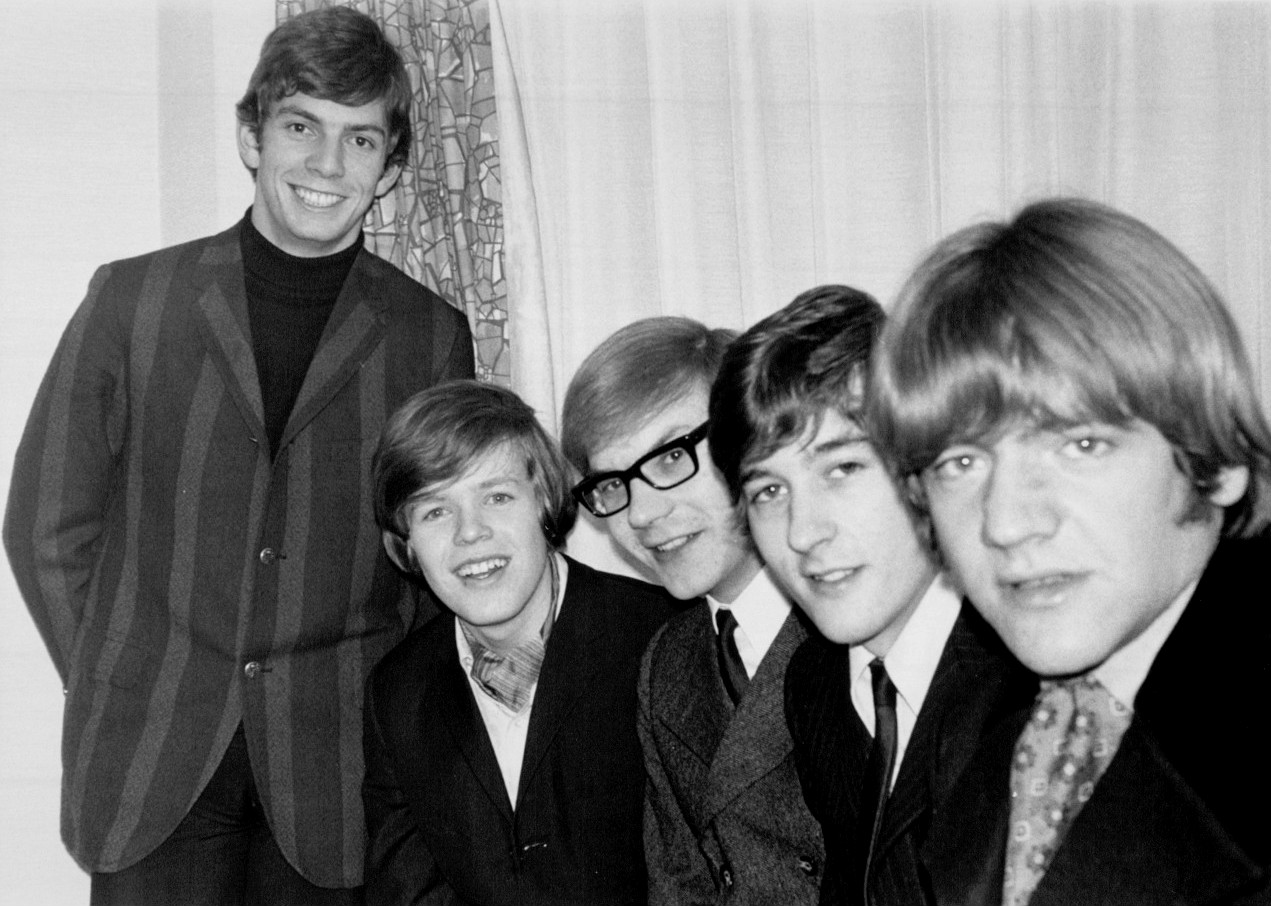
It was Peter Noone, the original Herman, and Herman’s Hermits. I expected it to be a nostalgic but fairly depressing walk down Memory Lane. But it wasn’t. They were extremely entertaining. Peter Noone is a consummate showman with lots of energy, and his voice is still very good. (I was unaware of it, but he’s had a pretty significant musical and theatrical career since his days as a teenage heartthrob during the British Invasion.) He performed a number of the classic Herman’s Hermits songs, but also classic pieces by other artists (e.g., by the Beatles, the Rolling Stones, and the Beach Boys), and he did a really funny but spot-on impression of Mick Jagger. I loved the show.
This morning, the board of directors of the Interpreter Foundation had its quarterly meeting — a quite productive one, in my opinion. There are some good things on the horizon. We met for the first time in Sandy, in a new venue that I like very much. After which, some of us went out for lunch nearby.
My wife and I then headed up to the Capitol Theater in Salt Lake City for a performance of The Screwtape Letters, a play produced by the Fellowship for Performing Arts. As the organization defines itself, it is a not-for-profit New York City-based production company that seeks to engage a diverse audience by producing theater and film from a Christian point of view.
I admire their mission very, very much, and I loved their 2021 film The Most Reluctant Convert: The Untold Story of C. S. Lewis — even though it preempted the film that Mark Goodman, James Jordan, Russell Richins, and I had recently discussed making about . . . well, about the story of C. S. Lewis’s conversion.
Unfortunately, I really didn’t like The Screwtape Letters. Nor did my wife. (Fairness demands, though, that I acknowledge the fact that everybody around us seems to have loved the play. It received an enthusiastic standing ovation.) I thought that the actor — there is only one speaking part, that of “Screwtape” — was somewhat difficult to understand and to follow. But that wasn’t my chief objection: I’ll admit that it’s been quite a while since I read C. S Lewis’s great epistolary novel (on which, obviously, the play is based), but my sense of the character Screwtape is quite different than his depiction in the play. I recall him as urbane, clearly hostile to The Enemy (that is, to God) and to humans but not in a volcanically angry way and, for a very long time, not obviously an enemy to his nephew Wormwood. In the play, though, Screwtape rages angrily and loudly almost from the very beginning. Maybe I need to re-read the book, but the “Screwtape” of the play seemed wrong to me.
Afterwards, Max McLean, the founder and leader of the Fellowship for the Performing Arts and the star (as the mature C. S Lewis) of The Most Reluctant Convert, came out on stage for a brief statement followed by questions and answers. I enjoyed that.

You might enjoy this item, from WUNC (North Carolina Public Radio). It’s less than seven minutes long: “Gov. Cox of Utah looked to his Mormon faith in hopes of keeping the state free of political violence. Is that possible now?” (“Writer Mckay Coppins talks about his article on Utah’s Governor Spencer Cox and the shooting of Charlie Kirk that took place in the state.”)














 Ad-Free & Subscriber Log-In