


Up today on the website of the Interpreter Foundation, which (by the way) is completely dead: “The Interpreter Insights Podcast — January 22, 2026: Insights into Genesis by Comparing Latter-day Saint, Jewish, Catholic and Protestant Beliefs”
In the January 22, 2026 episode of The Interpreter Insights Podcast, our host Martin Tanner discusses the book of Genesis from the viewpoints of Judaism, Catholicism, Protestantism, and Latter-day Saints. The audio track is also included in our podcast feed (https://cms.interpreterfoundation.org/feed/podcast).
This coming May, Kris Frederickson and I are scheduled to accompany a tour bearing the title “Church History And Great Britain With the Interpreter Foundation.” Moreover, this tour group will be accompanied by Peter Fagg, a superb licensed English Latter-day Saint tour guide who knows British history — and, in particular, Latter-day Saint British history — as well as anybody I’ve ever met, and who understands how to make that history come to life in a remarkable way. (We’ve traveled with him on numerous prior occasions and, if anything, he’s improved with the passage of time.)
That tour does not, however, explain my late-night viewing habits. You’re wondering about them, no doubt.
My wife and I typically need something late in the evening to help us wind down. And few things do that nearly as well as a nice British homicide. (For Christmas, I gave her a copy of Maureen Johnson and Jay Cooper, Your Guide to Not Getting Murdered in a Quaint English Village [California and New York: Ten Speed Press, 2021].)
Anyway, given that need, she and I have recently been re-watching the superb British series Foyle’s War. I’ve enjoyed its portrayal of England during and immediately after the Second World War. Somehow, it had never occurred to me that lowlifes, smugglers, leftist agitators, corrupt corporate businessmen, and murderers (to say nothing of saboteurs) not only continued to exist during the great idealistic, nation-unifying crusade against fascism but, in some cases, found ways to thrive. And Michael Kitchen, as Detective Chief Superintendent Christopher Foyle, is superb. I recall a review of the series from many years ago — in National Review, I think — that said of Mr. Kitchen that he could do more with the twitch of a lip or the lifting of an eyebrow than most actors can do with their entire bodies.
Some of the episodes deal with the sometimes very awkward relations between English locals and the American soldiers who were stationed there, like my father. Prior to his going over to the Continent with General Patton’s Third Army, he spent time in High Wycombe, located between London and Oxford, working, preparatory to the D-Day invasion, in photo reconnaissance interpretation. There are allusions in Foyle’s War to such work in High Wycombe. Last night, we watched an episode entitled “Trespass.” At one point in it, I was struck by certain distinct parallels to issues that we face today.
I want to assure anybody who might be considering whether or not to join our tour that we will not be visiting the Shetland islands. Absolutely not. We recently binged on episodes of the British murder mystery Shetland, and we’ve concluded that the place is simply too dangerous. The number of homicides there per capita — or perhaps better, per sheep — is astoundingly high.
We also won’t be visiting Miss Jane Marple’s home village of St. Mary Mead — located in Downshire, which is later known as Radfordshire — and we won’t go to Midsomer County, which straddles part of Berkshire and the northern portion of Hampshire. Both are deservedly well-known for the bizarre murders that occur in them almost weekly. Happily, avoiding them is made easier by their both being fictional.
We will, though, be visiting Oxford — notwithstanding the fact that, as illustrated by the interrelated detective series Inspector Morse, Lewis, and Endeavour, the Oxford University faculty appears to have been hired, to a significant degree, on the basis of its proclivity for murder.
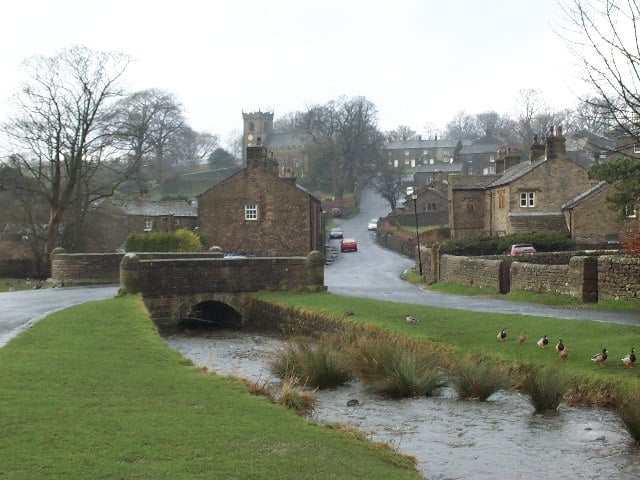
But we’ll also spend time in the picture-perfect Lancashire village of Downham. Not because it has any reputation as the murder capital of the Ribble Valley; so far as I’m aware, Downham is reasonably safe. We’ll visit it because it’s the place where Elder Heber C. Kimball enjoyed remarkable missionary success in the late 1830s and where, more recently, Elder Jeffrey R. Holland, while serving as the area president for the United Kingdom, would go to pray about the location of what was eventually built as the Preston England Temple.
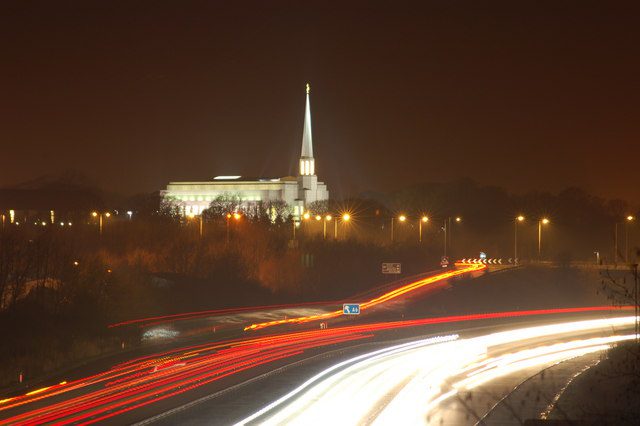
(Wikimedia Commons public domain image.)
I’m both pleased and dismayed to report that Junior Banza, who is one of our principal collaborators on — and a narrator for — the Interpreter Foundation’s Not by Bread Alone video series (for the equivalent French website, see here), which aims to preserve and to tell some of the stories of the pioneer Latter-day Saints in sub-Saharan Africa, has been called with his wife, Annie, to preside over the new Democratic Republic of the Congo Kinshasa North Mission;
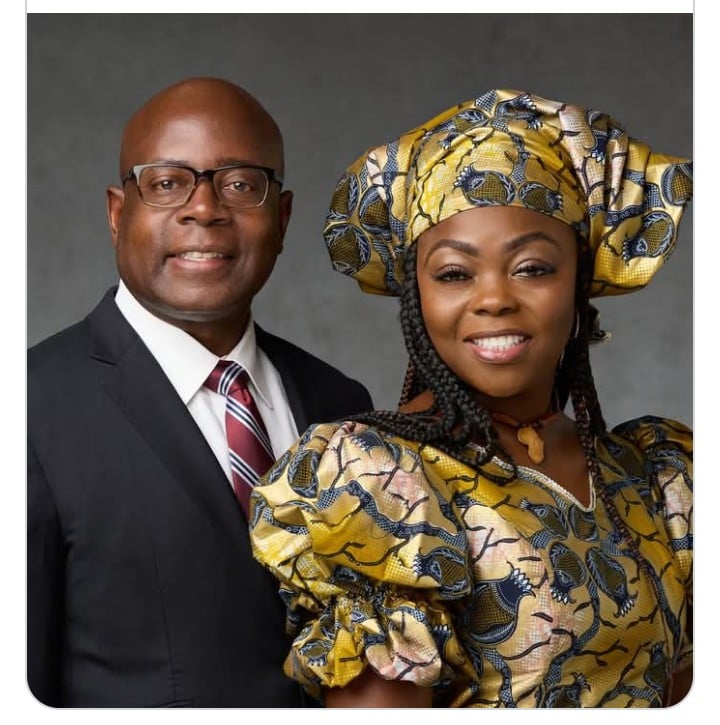
Président et compagne de la nouvelle mission de Kinshasa Nord, République démocratique du Congo:
Junior Banza, 54 ans, et Annie Banza, trois enfants, paroisse Sunset Ridge 4th, pieu de West Jordan Utah Sunset Ridge
Frère Banza est membre du grand conseil et a auparavant servi comme conseiller dans un espicopat, conseiller dans la présidence de l’École du Dimanche de pieu, président du college des anciens, secrétaire exécutif de paroisse, dirigeant de mission de paroisse et missionnaire dans la mission d’Afrique du Sud. Il est né à Kinshasa, en République démocratique du Congo, de Mucioko Wa Mutombo Banza et de Régine Mbuyi Banza.
Sœur Banza est conseillère dans la présidence de la Primaire de paroisse et a auparavant servi comme dirigeante d’activités de la Primaire, instructrice de la Société de Secours, instructrice de l’École du Dimanche, conseillère des Jeunes Filles et missionnaire dans la mission de la République démocratique du Congo. Elle est née à Mbuji-Mayi, en République démocratique du Congo, de














 Ad-Free & Subscriber Log-In