


Another new item has just gone up on the essentially comatose website of the Interpreter Foundation: Conversations with Interpreter: Episode 4: “Sons and Fathers: Abraham’s Family and the Two Altars of the Temple,” with John S. Thompson:
In this episode of Conversations with Interpreter, Thora and Avram speak with John Thompson about his paper from the 2025 Abraham and His Family Conference held at BYU in May 2025. Thompson, an Egyptologist who is a retired teacher for Seminaries and Institutes and a content creator for Scripture Central, discusses the idea that the life of Abraham as described in both Genesis and in the book of Abraham shows a progression in his covenant relationship with God. Thompson argues that this relates to Abraham’s almost being sacrificed and then being commanded to sacrifice his own son. Although the scriptures talk about this in terms of the relationship between sons and fathers, the pattern presenting in scripture is part of the experience of everyone on the covenant path. You can find the full paper, titled “Sons and Fathers: Abraham’s Family and the Two Altars of the Temple” at https://interpreterfoundation.org/conferences/2025-abraham-and-his-family-conference/videos/thompson.
And the rest is silence.
No. Wait a minute. It’s not. Here is a thirty-second preview of the fifth installment of Becoming Brigham, which will drop in full on Monday next: https://www.youtube.com/watch?v=PANEXykxNLo. And here is a link to the fourth installment, which went up this past Monday: “Becoming Brigham, Episode 4—WHY BRIGHAM YOUNG? An Introduction, Part One”

Seated from left are Justices Sonia Sotomayor, Clarence Thomas, Chief Justice John G. Roberts, Jr., and Justices Samuel A. Alito and Elena Kagan. Standing from left are Justices Amy Coney Barrett, Neil M. Gorsuch, Brett M. Kavanaugh, and Ketanji Brown Jackson.
Credit: Fred Schilling, Collection of the Supreme Court of the United States
Said President Trump:
They’re just being fools and lap dogs for the RINOs and the radical left Democrats, and not that they should have anything at all to do with it. They’re very unpatriotic and disloyal to our Constitution. It’s my opinion that the court has been swayed by foreign interest and a political movement that is far smaller than people ever think.
This is what Justice Gorsuch had said:
For those who think it important for the Nation to impose more tariffs, I understand that today’s decision will be disappointing. All I can offer them is that most major decisions affecting the rights and responsibilities of the American people (including the duty to pay taxes and tariffs) are funneled through the legislative process for a reason. Yes, legislating can be hard and take time. And, yes, it can be tempting to bypass Congress when some pressing problem arises. But the deliberative nature of the legislative process was the whole point of its design. Through that process, the Nation can tap the combined wisdom of the people’s elected representatives, not just that of one faction or man. There, deliberation tempers impulse, and compromise hammers disagreements into workable solutions. And because laws must earn such broad support to survive the legislative process, they tend to endure, allowing ordinary people to plan their lives in ways they cannot when the rules shift from day to day. In all, the legislative process helps ensure each of us has a stake in the laws that govern us and in the Nation’s future. For some today, the weight of those virtues is apparent. For others, it may not seem so obvious. But if history is any guide, the tables will turn and the day will come when those disappointed by today’s result will appreciate the legislative process for the bulwark of liberty it is.

Clark Gilbert, in this interview, referenced James Tunstead Burtchaell’s The Dying of the Light. Most people likely scrolled past that detail. They should not have.Burtchaell was not writing a culture war manifesto. He was documenting something historically observable. Many Christian colleges did not abandon their founding convictions through dramatic rebellion. They drifted. Governance changed. Hiring priorities shifted. Prestige incentives reshaped decision-making. Leaders believed they were strengthening their institutions. Over time, those institutions quietly became something different.That pattern is not unique to religious colleges. It is a structural reality for any institution.Today, universities openly debate whether their purpose is the pursuit of truth or the advancement of evolving social aims. Faith communities face parallel pressure to evaluate leadership decisions through cultural metrics rather than revelation.For centuries, the church and the university have approached truth differently but complementarily. The university pursues discovered truth through disciplined inquiry and evidence. The church bears witness to revealed truth through covenant and spiritual authority. Both require confidence that truth is real and binding.Burtchaell’s warning was simple. Institutions drift when they adopt the evaluative standards of the surrounding culture instead of remaining anchored to their founding purpose.That is the conversation Gilbert is engaging.Institutions rarely lose their identity all at once. They lose it gradually.The real question is whether we still believe institutions should be governed by their deepest principles or by the expectations of the moment.If that question makes us uncomfortable, it is probably the right one to ask.Not controversy.Stewardship.
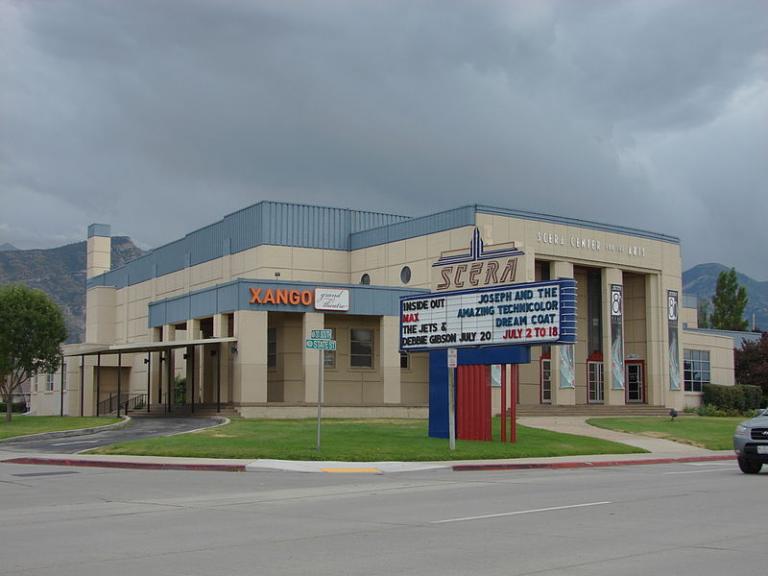
I’m pleased to announce that the short documentary film (15 min.) I produced recently for my friend Bill Boushka has been accepted for screening in the Zions Indie Film Fest at the SCERA Theater in Orem, Utah next week. (see image below) This film, called “He Is Risen”, documents the marvelous Easter Week Open House held last year at Bill’s stake center in El Paso, Texas. The movie is part of the “Short Documentary Block 2” group of films showing on Wednesday, Feb. 25th at 11:00 AM. Despite my being associated with this festival for over 20 years, this is the first time I’ve entered a film of my own.If you will be in the area and would like to attend in person, tickets are available here:One “advantage” of seeing it in person is that you’d be eligible to vote for it as “Best Short Documentary” – a festival prize (if you feel so inclined). If in-person attendance is not convenient, and you’d still like to see the film, here’s a link:












 Ad-Free & Subscriber Log-In