

Divine Mercy Sunday

This Sunday, April 12, 2026, is Divine Mercy Sunday. The main point for the readings this Sunday is that God’s mercy flows from the heart of the Risen Christ. Divine Mercy Sunday points to the reality that the Resurrection is God’s ultimate act of mercy. Let’s take a look at the readings for the Second Sunday of Easter.
Gospel Text – John 20:19-31
“On the evening of that first day of the week, when the doors were locked, where the disciples were, for fear of the Jews, Jesus came and stood in their midst and said to them, ‘Peace be with you.” When he had said this, he showed them his hands and his side. The disciples rejoiced when they saw the Lord. Jesus said to them again, “Peace be with you. As the Father has sent me, so I send you.” And when he had said this, he breathed on them and said to them, “Receive the Holy Spirit. Whose sins you forgive are forgiven them, and whose sins you retain are retained.”
Thomas, called Didymus, one of the Twelve, was not with them when Jesus came. So, the other disciples said to him, “We have seen the Lord.” But he said to them, “Unless I see the mark of the nails in his hands and put my finger into the nailmarks and put my hand into his side, I will not believe.”
Now a week later his disciples were again inside and Thomas was with them. Jesus came, although the doors were locked, and stood in their midst and said, “Peace be with you.” Then he said to Thomas, “Put your finger here and see my hands, and bring your hand and put it into my side, and do not be unbelieving, but believe.” Thomas answered and said to him, “My Lord and my God!” Jesus said to him, “Have you come to believe because you have seen me? Blessed are those who have not seen and have believed.”
First Reading – Acts 2:42-47 – The Life of the Early Christian Community
This passage describes the earliest Christian believers living in deep unity. They devote themselves to the apostles’ teaching, communal prayer, shared meals, and radical generosity. Their life together becomes a visible sign of God’s presence, and their joy attracts others to the faith. Faith is lived in community, not isolation. God’s presence produces joy, generosity, and unity. The resurrection transforms how people live together.
Responsorial Psalm – Psalm 118:2-4, 13-15, 22-24 -God’s Saving Power
This psalm is a song of thanksgiving for God’s deliverance. The psalmist acknowledges being pushed to the brink but rescued by God. The famous line about the “stone the builders rejected” becoming the cornerstone points to God’s surprising, transformative action. God rescues those who call on Him. What seems rejected or defeated becomes the foundation of God’s work. “This is the day the Lord has made” — a call to rejoice in God’s saving action.
Second Reading –1 Peter 1:3-9 -Faith Tested, Joy Made Real
Peter encourages Christians who are suffering. He reminds them that through Christ’s resurrection, they have a living hope and an inheritance that cannot fade. Their trials are real, but they refine their faith like gold. Even without seeing Christ physically, they love Him and rejoice. Joy is possible even in suffering because Christ is alive.
Gospel Reading –John 20:19-31 – Divine Mercy
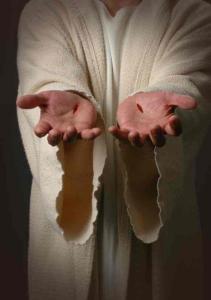
Jesus appears to the disciples behind locked doors, offering peace and the Holy Spirit. Thomas, initially absent, struggles to believe until he encounters Jesus personally. Jesus blesses those who believe without seeing. The Risen Christ brings peace into fear. Our faith grows through encounter. Believing without seeing is honored and blessed.
The Catholic View
The Resurrection creates a new way of living. Because Jesus is risen, everything changes — how we live, how we hope, how we see God, and how we see one another. The readings proclaim that the Risen Christ transforms fear into peace, suffering into hope, rejection into new beginnings, and isolated individuals into a joyful, Spirit-filled community.
Divine Mercy is the radiant truth at the heart of the Resurrection: that God meets humanity not with judgment, but with compassion that restores, heals, and renews. On this day, the Church proclaims that no wound is too deep, no doubt too heavy, and no failure too great for the mercy of Christ, whose risen presence breaks through every locked door of fear. Divine Mercy Sunday invites us to trust in that love, to receive it with open hearts, and to become living signs of it in the world.
Please share your thoughts about this article in the “Comments” section.
Peace
If you like this article, you might also enjoy:
Triduum: The Heart Of The Liturgical Year
Church and State: Protecting Religious Freedom
What Are PFAS and Why Should You Care?









 Ad-Free & Subscriber Log-In