

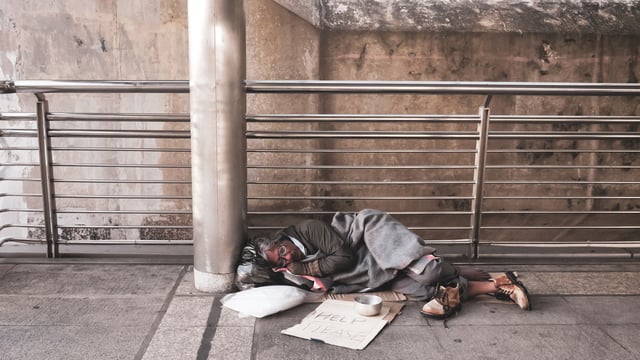
NYC’s homeless population is growing, not shrinking. A large influx of migrants during the Biden years has exacerbated New York’s homelessness crisis, much like in other major cities. Mayor Zoran Mamdani has proposed a new plan to increase homeless shelters across the city. This has been a controversial proposal as the Mayor seeks solutions to get people off the streets. Let’s take a look at the situation.
What Is Mamdani’s Plan?
Mamdani is advancing a shelter‑building plan that expands new shelters across all five boroughs under an “equitable siting” policy and restructures the intake system by closing the deteriorated Bellevue facility and redistributing services citywide. Mandani is building his plan on three pillars:
- Massive expansion of affordable and supportive housing:
- A 10‑year, $100 billion plan to triple city‑financed affordable housing production.
- Use of public land (including hospital campuses) for housing.
- Restarting and expanding supportive housing projects such as Just Home and Justice‑Involved Supportive Housing (JISH).
- “Equitable Siting” of shelters:
- Every district must host shelters.
- No neighborhood is exempt.
- Long‑delayed shelters (e.g., Bensonhurst) are being pushed forward.
- The city argues this is necessary to reduce overcrowding and distribute responsibility fairly.
- Integration of shelter, mental‑health, and justice‑involved services:
- Supportive housing tied to health systems.
- Shelters paired with mental‑health and stabilization services.
- Emphasis on reducing street homelessness through Safe Havens and specialized shelters.
In addition, the city is relocating the Men’s, Women’s, and Family Intake Centers. This is part of the citywide intake overhaul happening in spring 2026. Most of the controversy around these shelters stems from residents who oppose them in their neighborhoods.
Shelters and Locations
- Men’s Intake Center will be at 8 E. 3rd Street (Manhattan), opening May 1, 2026.
- Women’s Intake Center is at 114 Snediker Avenue in East New York, Brooklyn.
- Adult‑Family Intake Center will be at 333 Bowery (Manhattan), opening May 1, 2026.
- 320 Pearl Street Safe Haven (Lower Manhattan).
- Bensonhurst Men’s Shelter (Brooklyn) is scheduled to open in 2027.
- “Just Home” Project Restarted (Jan 2026).
- Justice‑Involved Supportive Housing (JISH) has no target opening date yet.
- Public Land for Housing is currently being explored.
Currently, bed capacity in New York City is ~90,000 beds of all types. After expansion, the capacity is expected to grow to ~94,000 beds by the end of 2027. The additional sites scheduled to open by the end of 2027:
- Safe Haven additions – 106 beds
- New shelters (2026) – an additional 500-1,500 beds
- Bensonhurst (2027) – 150 beds
- Supportive housing (JISH + Just Home) – an additional 350 beds.
Homeless Growth Rate in NYC

The number of homeless people in New York continues to grow:
- January 2025 shelter census: ~83,000 people (rounded from prior-year charts).
- January 2026 shelter census: 90,902 people.
- This averages out to ~9-10% year-over-year growth.
- Growth rates have increased 26% from 2019 to 2025, indicating the migrant influx has had a significant impact.
- Based on current forecasts for bed availability of 94,000 by the end of 2027, and the current growth rate, we would need beds for ~108,000 to 110,000 people. That is a very significant gap and would exacerbate the humanitarian crisis in New York City if the current growth rate continues.
New York State Assistance
The state is also supporting short‑term stabilization through:
- Housing Access Voucher Program ($50 million)
- Empire State Supportive Housing Initiative ($46 million)
- Homeless Housing and Assistance Program (capital funding for new units)
The New York State Division of the Budget approved the FY 2026 assistance budgets, but the 2027 budget remains unapproved. It is important to remember that these budget items are statewide, although NYC commands the highest percentage due to need. These programs will help reduce shelter pressure by moving people into housing more quickly.
The Catholic View
Matthew 25:31-39 is among the most quoted verses in Scripture:
“When the Son of Man comes in his glory, and all the angels with him, he will sit upon his glorious throne, and all the nations will be assembled before him. And he will separate them one from another, as a shepherd separates the sheep from the goats. He will place the sheep on his right and the goats on his left.
Then the king will say to those on his right, ‘Come, you who are blessed by my Father. Inherit the kingdom prepared for you from the foundation of the world. For I was hungry and you gave me food, I was thirsty, and you gave me drink, a stranger and you welcomed me, naked and you clothed me, ill and you cared for me, in prison and you visited me.’
Then the righteous will answer him and say, ‘Lord, when did we see you hungry and feed you, or thirsty and give you drink? When did we see you a stranger and welcome you, or naked and clothe you? When did we see you ill or in prison, and visit you?’ And the king will say to them in reply, ‘Amen, I say to you, whatever you did for one of these least brothers of mine, you did for me.’”
Supporting Services Need To Scale
Looking at the rising homelessness in the city, it is easy to see only the numbers, the policies, and the strain on systems. The current growth rate is not sustainable. New York City operates under a court‑mandated Right‑to‑Shelter consent decree. President Trump has signed an Executive Order (EO) that requires individuals to agree to conditions, such as mental health commitments and support, before receiving housing. The Right-to-Shelter approach must be adopted by all shelters in NYC and nationwide, in my view.
More effort and coordination related to mental health screening/care and review of criminal history must also be addressed, but the primary focus is on making beds available. Scripture teaches us to see something deeper: the face of Christ in the one who has no place to lay their head. Our charge as disciples to take care of one another is clear. The humanitarian crisis on the streets of New York City must be resolved.
What’s Next?
Three major bodies are actively studying the causes of NYC’s homelessness surge:
- NYC Council’s General Welfare Committee – city‑level investigation.
- Coalition for the Homeless – independent research and policy analysis.
- NYS Comptroller’s Office – statewide housing insecurity analysis.
The root causes of the growth must be addressed in parallel with an effort to increase capacity. Please consider donating to the following organizations to help:
- Coalition for the Homeless (NYC) – The oldest and most respected homelessness‑advocacy and direct‑service organization in NYC.
- They provide meals, crisis services, housing support, and legal advocacy.
- WIN (Women in Need) – NYC’s largest provider of shelter and supportive services for homeless women and children.
- The Bowery Mission – A Christian ministry serving people experiencing homelessness with meals, shelter, residential programs, and spiritual care.
- Catholic Charities of New York – Provides emergency shelter, eviction prevention, case management, and family stabilization services across NYC.
- NYC Relief (now The Relief Bus) – A Christian ministry offering mobile compassion services, prayer, and practical support.
- Volunteers of America – Greater New York – Operates shelters, supportive housing, and re‑entry programs across the city.
- Breaking Ground – NYC’s largest supportive‑housing developer and operator; also runs Safe Havens and street outreach.
- The Salvation Army – Greater New York Division – Provides emergency shelter, transitional housing, food assistance, and spiritual support.
Please share your thoughts about this article in the “Comments” section.
Peace
If you like this article, you might also enjoy:
Triduum: The Heart Of The Liturgical Year
Divine Mercy Sunday: Mercy From The Risen Christ
What Are PFAS and Why Should You Care?












 Ad-Free & Subscriber Log-In